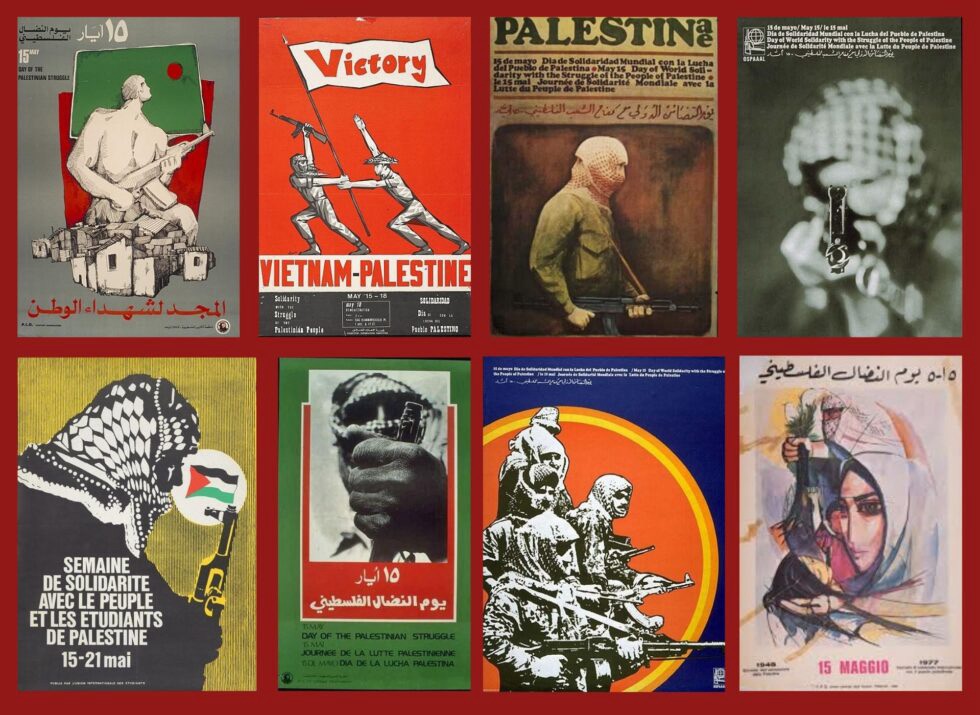
Please consider reading the above article printed on masarbadil.org by Khaled Barakat, member of the Executive Committee of the Masar Badil, the Palestinian Alternative Revolutionary Path Movement, was originally published inArabic at Al-Akhbar:
Every year, as the fifteenth of May approaches, Palestine returns to the forefront of global memory as an open wound since 1948. Images of displacement, massacres, the destruction of Palestinian villages, and the uprooting of the people from their land are revived under a name and a slogan that has become firmly entrenched in political and media discourse: the “Nakba.”
The difference between the two expressions is not superficial. “Nakba” refers to catastrophe and defeat, while “Day of Palestinian Struggle” refers to resistance, continuity, and popular will. The first focuses on what colonialism did to the Palestinian people, while the second focuses on what Palestinians do to confront and uproot colonialism. Between the two discourses lies a profound difference in the construction of political consciousness, especially among the new generations in Palestine and the diaspora. – Khaled Barakat
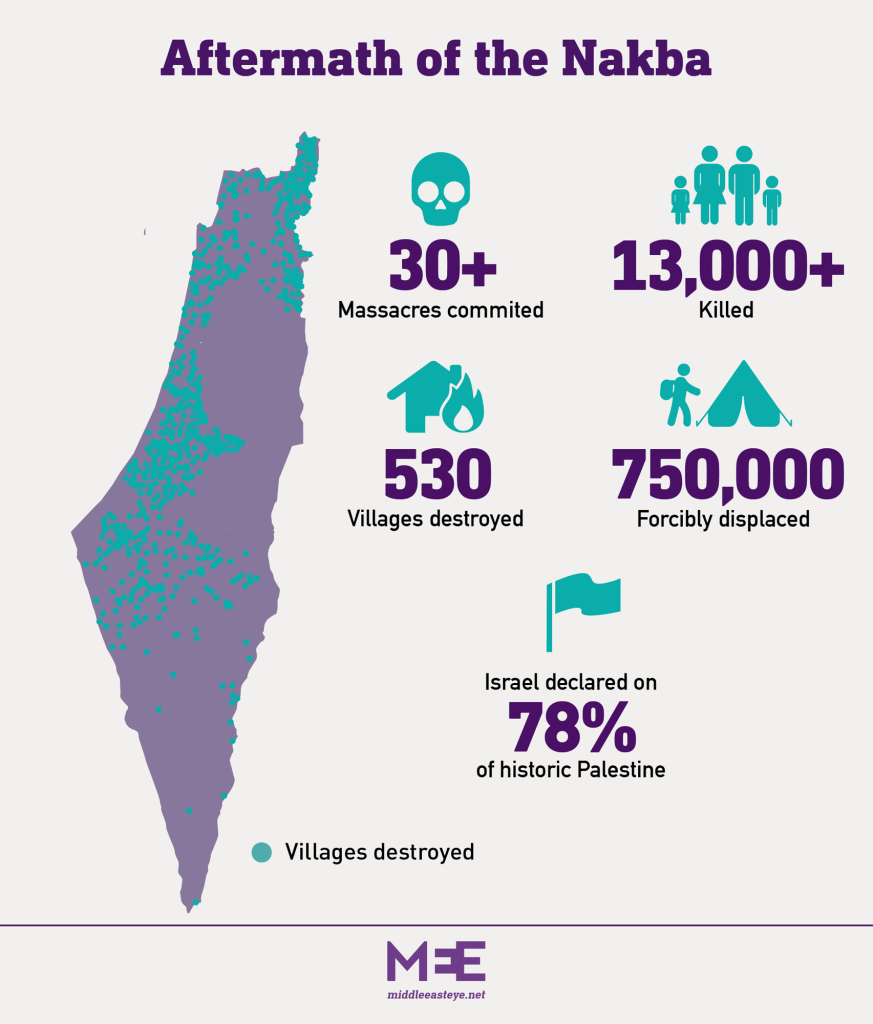
Nakba refers to the ethnic cleansing, genocide and apartheid of Palestine by Zionist militias to make the land clear for the creation of Israel in 1948.
This premeditated military campaign resulted in the murder of thousands of Palestinians, the destruction of hundreds of villages and the displacement of nearly 80 per cent of Palestinians from their homeland.
The violence went on for more than a year, and the result was the creations of the State of Israel taking over 78 percent of historic Palestine.
West Bank and Gaza made up the remaining 22 percent. This too fell into Israeli hands later and remains under Israeli military rule today.
What is also disgusting is that Britain had a hand, still has a hand, in all of this, due to the “Balfour Declaration”.
For 100s of years Palestine was part of the Ottoman Empire. During the First World War, Palestine was captured but the British. The League of Nations then gave Palestine to the British to mandate. Not taking into account the wishes of the Palestine people, the British were given control of the land, making decisions for the native population until it was decided they were deemed capable of being an independent state. How colonialist is that?
Great Britain, didn’t care about what was right. Didn’t care about the Palestinians who have lived within their homeland for centuries. Nope.
The British Mandate incorporated the “Balfour Declaration” that pledged to establish “in Palestine a national home for the Jewish people”, who made up less than 10 percent of the population at the time.
So all the time Palestine as under the mandate, 1923- 1947, the British were working with Zionists to suppress and eradicate Palestinians, through whatever means necessary, to create a homeland for Jews. Facilitating the immigration of European Jews to Palestine, providing weapons for Zionist’s and training them to kill, all increased the occupation of Palestine by Jews and suppressed the native people, Palestinians.
Once Britain announced its plan to end the mandate in 1947, they left it up to the UN to decide the fate of Palestine. The United Nations decided to partition Palestine into two : 55 percent to a Jewish state, and 45 to an Arab state, while keeping Jerusalem under international control.
It sickens and angers me that other states play god over other states. What right do they have to take away the land and home of the Palestinians?
Palestinians were not consulted over the proposal which never materialised. Because once Britain announced its withdrawal, Zionist groups began their attacks on Palestinians to have complete control over all of Palestine for the return of the Jews.
Nakba was the result.
I do not declare to know the full history. I’ve probably butchered the history as I’ve tried to share it here. Please go and read up on it yourself as it wouldn’t be the first time that histories are shared as ‘facts’ and are really just ‘lies’, manufactured to make the oppressors the victims and heroes.
One thing I am sure about as fact is that the Palestinian people have been brutalised and persecuted from time, kicked and killed out of their own country to make way for ‘the promised land’ of a another people, and that somehow makes it all okay?
Zionists called it a ‘transfer’ of people to other places. I call it genocide. Innocent people killed indiscriminately to create the State of Israel, was wrong then and continues to be wrong today.
What’s one small improvement you can make in your life?
I’ve been noticing how my work/ being has been reactive. There’s been a sense of scarcity and time urgency that’s been guiding my thoughts and actions. There’s been a hopelessness. Because some incidents are out of my control but which have impacted me. There’s been feelings of not being appreciated, feeling a lack of trust and working without purpose, moving away from my core values and moral compass.
I might have been using food or drink to numb my way through the shit. Through the ‘work’, not allowing myself to feel and be present. Really present to all the feels.
Do you feel me?
I know I need to take a step back and really look at the life I’ve been living. This is the only life I have and cannot be relived. I have a deep desire to change the system. To abolish the system and live otherwise.
And yet in order to change the system, I have to change my life, how I live my life. The way / how I live has to reflect the way/ how I want the world to be.
What does this mean in reality?
How I am just as much as what I do within the system will have an effect on system change. I have to be living my life with intention and purpose. Making sure I’m living my values, that I’m not compromising my integrity. That each decision I make is coming from that place of love and trust and hope.
That I’m not shutting down but open to togetherness but also trusting my gut that when I say ‘no’ it’s not from a place of malice but from a place of capacity and boundaries.
I’m learning, I’m sharing and I’m growing. Alone and in collaboration.
And I’m feeling and shifting into the practice and recognition that this is coming from a place of love and care rather than exhaustion and pain.
Small steps. Small acts. Small makes up the large. Small scales up to large.
I’ve got to be practicing the world I want to see now in my own life. Daily. Practice.
Love not hate.
Cooperation not competition.
Conversation rather than condemnation.
More care less harm.
More listening less violence.
The turn towards Mother Nature rather than against her.
A recognition in the value and worth of every human being regardless of race, class, gender, religion, ethnicity, age, sexuality, body type and body and mind abilities.
This is why my favourite pattern within nature, apart from the wave, is the spiral. Again and again, experience shows me how we may feel that we are going around in circles doing the same things, making the same mistakes and never learning or moving forward.
But I beg to differ. I believe life’s journey is a spiral. Each year we go around, and it may feel as if we’re not moving. We’re not making any progress or making our mark. But I see it as coming back around over similar track but we have changed. Through the movement of time and experiences and knowledges, we’ve changed since the last time we were in this spot. It’s not the same spot. Things have shifted. and so we’ve changed. We’re not right back at the same point but moved further into the spiral. Not in a hierarchal way, , ascending or even descending, but more of a going deeper, more connected and centred movement of the journey.
Each rotation in the cycle, in the spiral throws up more learning and more insight that if we’re paying attention we can use on our life’s journey with more consciousness, connection and joy.
I share this because I’ve just recognised how I’ve moved through the spiral this year to come to further understandings and wisdom.
This time last year, preparing for anti-racism facilitation, I was reading What White People Can Do Next by Emma Dabiri.
It was from reading this slim volume of wisdom that I fell into ‘solidarity’ is needed within the anti-racism movement. In fact I started using a anti-racism is anti-capitalism. Solidarity between oppressed and marginalised groups in society is the way forward.
I went on a journey from here, maybe a spiralling into despair, as I searched for a group or organisation to be a member of, in solidarity across different sections of society. I was looking into the communist party, unions, anti-racism organisations, trying to find a place where I could belong and be in solidarity with others.
In my search, I found racism and sexism, individuals and groups still perpetuating the racial capitalist system. Still working with hierarchies and the unconscious bias that they were better than me, than they knew more than me therefore should control me.
I become demoralised and retreated. I put away my radical thoughts and ideas, convincing myself that it was better to be alone and true to my ideals than compromise and waste my time explaining or highlighting blind spots to so-called comrades.
And then these part few days, solidarity has raised its head again but through a different door. Through the door of abolitionism.
Ours is a fight against powerful systems of violence and terror.
In recognising the interconnectedness of systems of state violence, abolition can be the basis of a new solidarity: one that acknowledges specific experiences of violence in particular communities, whilst building a unified, internationalist resistance.
Abolition doesn’t understand the concept of solidarity as an airy-fairy call for different oppressed groups to ‘just get along’. Solidarity is a vital strategic response to the prevalence and ubiquity of state violence.
Abolition Revolution by Aviah Sarah Day and Shanice Octavia McBean
As we have witnessed in the recent council elections, with the surge in the popularity of Reform. This isn’t because this party has set out a manifesto of policies that will solve the issues of poverty, unemployment, economic crisis, the state of the NHS, the policing in our schools and stop crime such as rapes and murders. No this party, it just playing out the age out trick of creating the ‘enemies within’. The ‘enemies within’ can carry all the responsibility for what’s wrong within British society today. The immigrants, the refugees, the gangs, the nasty women, the people with darker skin who are innately hardwired for crime. The general public, usually predominately working class white people, can blame others, other oppressed and marginalised people for all the woes of society. Smokescreens and mirrors, instead of people coming together, across class, race, gender, sexuality, religious lines, in solidarity and challenging racial capitalism and state control and violence which are geared towards keeping the majority of people in poverty at each other’s throats instead. While a few, usually white cis-gendered men, retain wealth, control and power.
I say Reform, but the present ‘Labour’ government operates the same way. They’re all apparatus of the State working to keep power and control through violence and terror in the hands of the few.
So for them the problem is not the historic experience of racism and the legacies of slavery and colonialism: it’s Black ‘gangsters’ on our streets. It’s not disinvestment from and neglect of working class communities: it’s Syrian migrants in our hospitals. It’s not military and imperial domination of vast swathes of the world: it’s Muslim extremists in our schools. Constructed ‘enemies within’ like these provide a constant justification for the use and expansion of state violence in order to maintain control; they tie people’s lived experience of the world to divisive narratives that weaken the collective consciousness of ordinary people. – Abolition Revolution by Aviah Sarah Day and Shanice Octavia McBean
I see the value of solidarity now, in building power in the direction of marginalised groups because it weakens the State’s power and control which is based on divisive narratives that weaken the collective consciousness of everyday people. The marginalised and oppressed.
Now maybe if I had this knowledge, last year, cycling and spiralling looking for my tribe, I might have stuck it out a little longer. Allowed our differences and bias to take a back seat because I believed we were working together across solidarity lines. Maybe.
This year though, with another trip around the sun under my belt, and another spiral deeper into my learning, I believe my solidarity within these groups would have still faltered as within and outside of these groups because they are not spurred on from the foundations upwards and onward with an abolitionist revolutionary thought and praxis.
I see now that these groups are looking toward reform rather than abolition. They are satisfied with tinkering with the edges. Gaining small concessions rather than a total overhaul. It’s like asking for and being satisfied with a more comfortable prison cell as a demonstration of change in how the State handles inmates instead of defunding/ abolishing the prison industrial complex all together.
I see that now as I continue to spiral towards consciousness, again and again. Onwards.
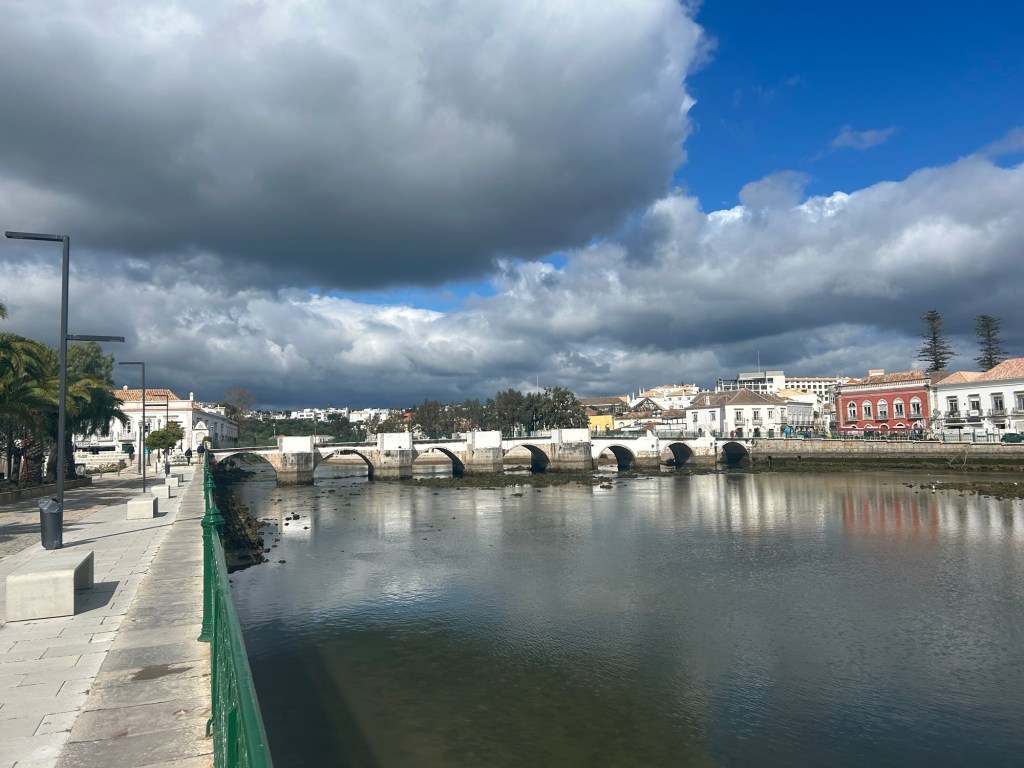
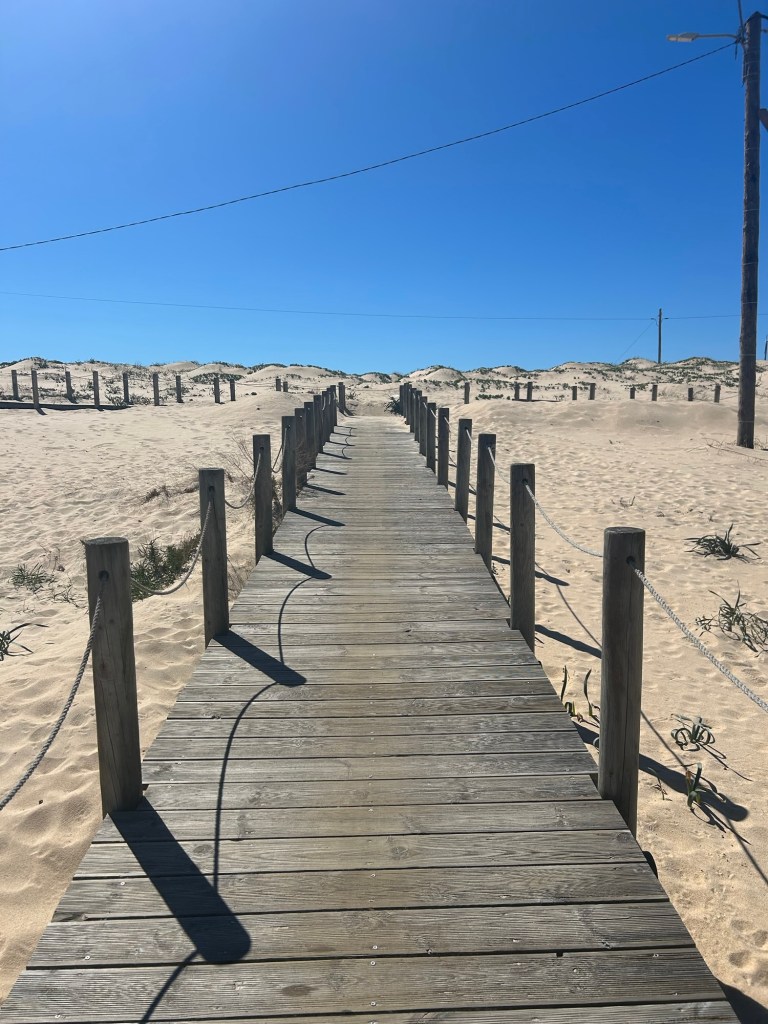
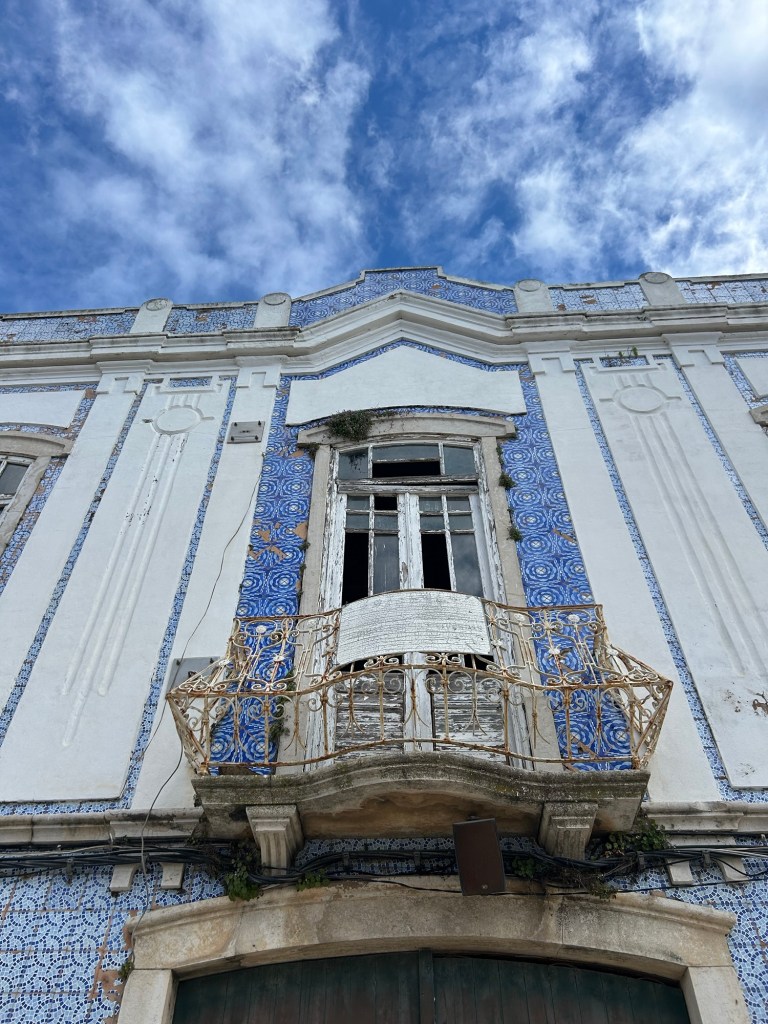
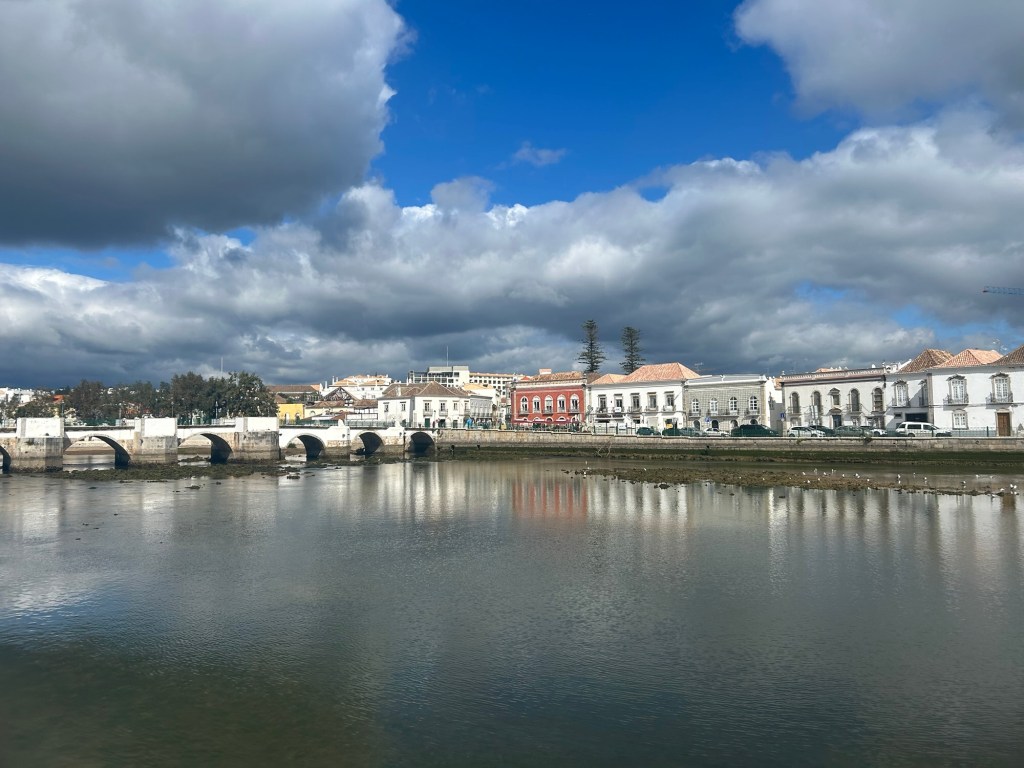
As the north-east is gripped in another cold snap, with wind and rain, in May, I’m desiring a return. A return to Faro, Portugal, where in March, I enjoyed a few days of warmth, relaxation and inspiration.
After making plans for the year, 2026, April was a time to reflect and reset after the first quarter of the year.
April didn’t go to plan.
April is always a funny, awkward, weird month for me, what with it being cut up with Easter holidays. And both my babies being born in April. This year was also another April birthday as we welcomed Nath’s partner into the fold.
April is something and nothing.
April, I thought it would be a good time to review the situation. It happened I suppose but not to the depth and width that I would have like. That I probably needed.
April has come and gone.
Come the end of the month and I don’t feel any further forward. And it feels like last year, when I couldn’t get traction after an elongated winter hibernation. Every month that came along was like a reset, a restart as I had no momentum.
I’m not sure if I’m that bad this year but there’s that lingering feeling of what am I doing? Where am I going?
April, Who am I?
I could blame the menopause as I feel as if I’m in that stage of life now. Everything is slowing down or giving up working ‘properly’ bodily, emotionally and psychologically.
Some days I’m missing the plot , dropping the ball, checking all the way out.
In these moments of losing myself, or any kind of sense of self and direction, I fall back into trusted routines and rituals.
I go back to the start, back to ‘go’ and don’t collect my £200. But restart anyway.
I invest in my morning rituals. Those habits that ground me and set me up for the rest of the day.
Waking up early, getting some fresh air into the house and my lungs. Making fresh ground coffee and grabbing my visual journal and letting everything spill onto the page. Get ready and walk out. Walk where? Anywhere. Just be outside and give thanks to be able to {BE}.
May. This is my plan for May.
To stick close to my morning routine and everything else can follow. The sea and Mother Nature are in there too, no doubt.
Hopefully, putting down this trusted track will help support getting me back to myself.
Sweeping violins. A Southern Belle, pretty and shallow, chatters on as young men flock around her feet, captive. *Fiddle de de.* Relishing in colour, technicolor; rich reds, blues and greens of the gallant Old South. Pan out see mansions surrounding by plantations. Bonnets and ribbons. Dances and horses. Cotton.
I first read Gone with the Wind by Margaret Mitchell while completing an extra year at college. Gaining extra ‘A’ levels while I waited on my then boyfriend to make the grades.
I identified with Scarlett O’Hara, the bitch of a heroine, not Mammy. I definitely was no mammy. Not here to fetch and clean and be loyal. I definitely was not obese and coarse and ugly, or ‘have a shiny, glossy face of contentment as she be the most happy slave alive.’
Of course as I’ve gotten older, I’ve learned where I’m placed in society. It’s okay to fantasise being the white heroine but I’ll never really be her. Better learn my place – to be there for the pleasure and enjoyment and whim of the white folk – and smile.
But what about my own pleasures and pains? Apparently they don’t exist. Apparently I’m incapable of such things, such finer characteristics. My reality states/shows otherwise.
It’s quitting time. I’m retreating into the woods in Aberdeenshire for the next week. I’m taking this opportunity as a reset. A chance to focus on my pleasures and pains. Drink on Mother Nature and give thanks for this life I have which isn’t being subservient/ submissive/ subjection to anybody.
I refuse the Mammy as well as the Scarlett, as they are both constructions and constrictions to control the female body.
I’m much more interested in the overspill, the excess, the unruly body. The blackwoman body that I live with/in daily and how nature supports me on this journey.
As a wind of flames sweeps through Georgia; menacing reds and oranges against a bleak dark sky swirl and crackle in time with fast ascending music. Real danger and Butterfly McQueen (real name not character name that would be Missy) flits around like a blue arsed fly worrying with no sense or plan.