Writing as resistance, reclamation and ritual

From Eleanor over at The Wildheart Papers:

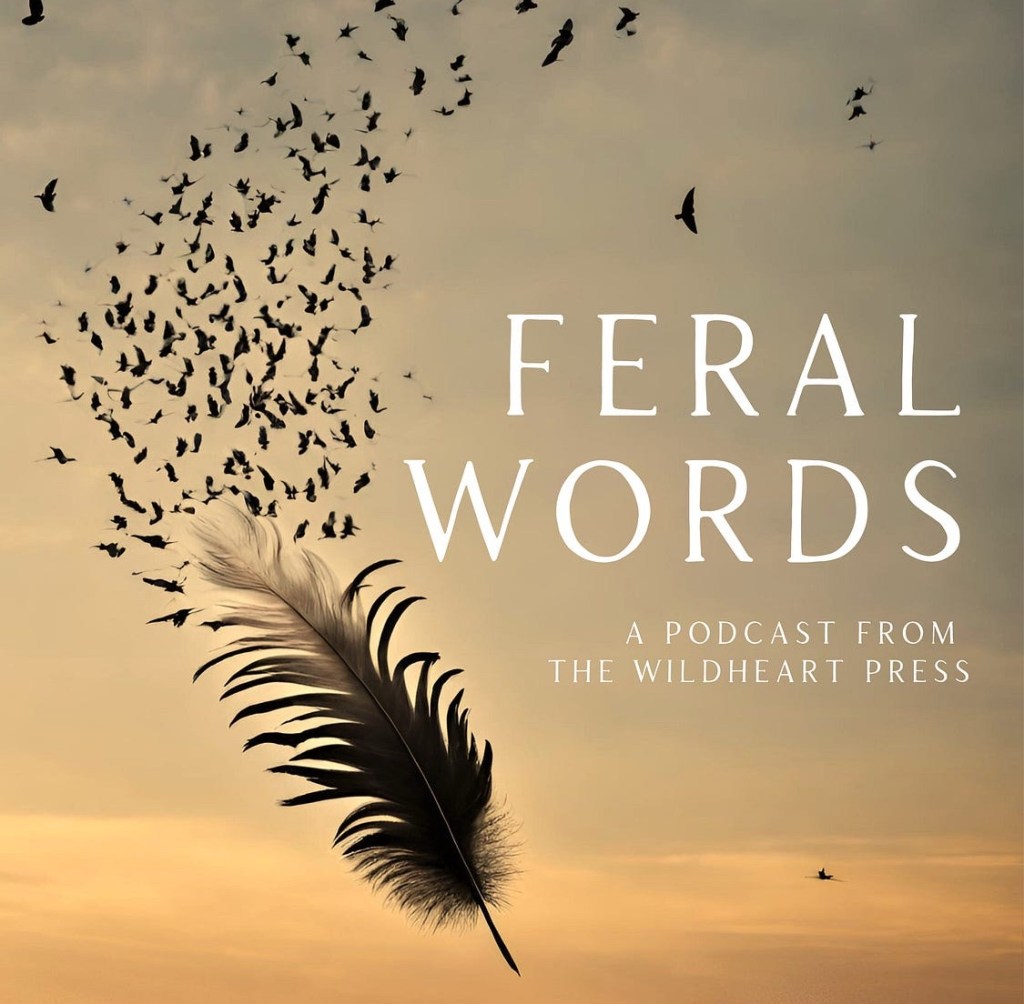
“This week I’m joined by the inspirational Sheree – writer, creatrix, and space holder – whose work is steeped in ancestral memory, fierce tenderness, and a deep reverence for the wild, both within and around us.

Sheree walks the edge between the personal and political, the sacred and the embodied, calling forth the untold stories that live in Black women’s bodies and lineages. 

In this soul-stirring conversation, we explore:

🌿 Honouring a daily writing practice while moving with the seasons of creativity
🔥 Reclaiming voice – how writing can be both resistance and healing
🖤 The story behind for black birds pushing against glass
🌊 Writing beyond structure, beyond ‘shoulds’ – from a place of truth and essence

This episode is a balm and a call to courage for anyone who longs to write from the wild, rooted place within.

🎧 Tune in now wherever you listen to podcasts or head straight to the Feral Words page.

And don’t forget to explore more of Sheree’s work over at Living Wild Studios – especially her regularly updated blog, which is a rich and reflective companion to her creative work”.

The Sinners Series – 003

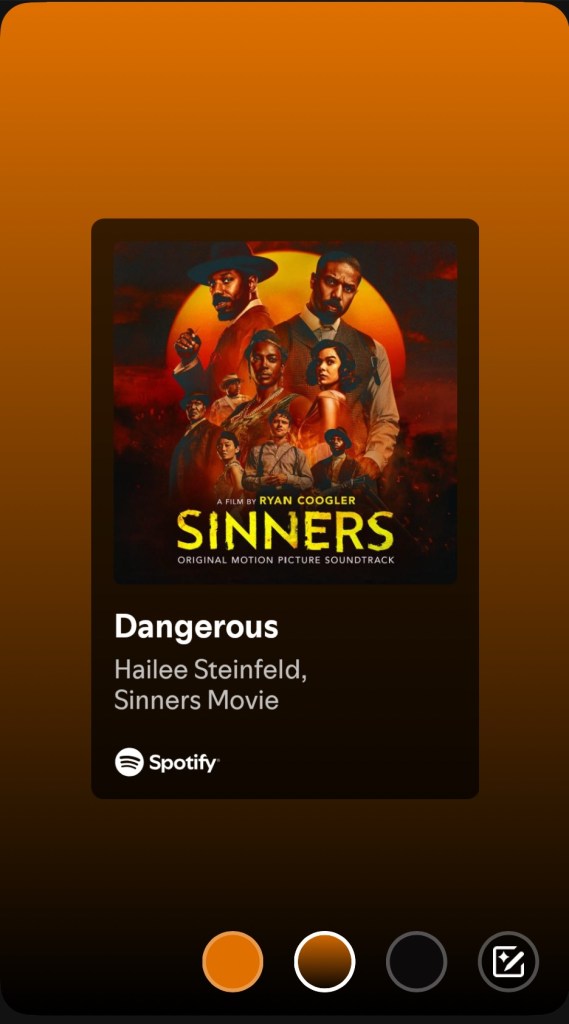
The second time I went to see Sinners, again it was fitting it in before going away somewhere else. But I knew I had to see it again.

A different cinema, and much fuller this time. I was sat between two black women out for one of theirs birthday’s and a white couple.

The black women introduced themselves to me. Something that has never happened before to me in the pictures. I thought it was a lovely gesture. It meant I could also tell them that they were in for a treat.

Again I got lost in the world of Sinners. Even thought I’d seen it before, I still jumped at the frightening bits. And I say frightening bits, the bits that are in there to make you jump. There’s blood but most of time the biting by the vampires is done off screen or you see it from behind and hear the noises.

I love this movie for so many reasons but I think the first thing is how Coogler plays with the genres and conventions and expectations. This is a mixture of genres ; horror, action, romance, musical etc. Coogler takes creative liberties with what’s gone before to create something rich, unique and full.

I love how this is a massive permission slip to any creative to go with their own flow. Bring in all the possibilities you want to express your point. It applies to the Creatrix in me because when the energy flows, when I’m in the zone and listening, the creations knows no boundaries or limits or rules. It just be.

Sinners is just that. And more. It’s layered , culturally and spiritually explorative and travels through time and space with music as the connection.

This second viewing of Sinners was important because for the first viewing, I had to rush off into try dark and catch a bus, therefore missing the multiple endings. So this time, I stayed put and also told those around who were fixing to leave, ‘there’s more.’

I’m not going to spoil the film for you by telling you what happens in the multiple endings but please don’t leave until the very end. Even if the lights come up, hang on in there to the very end. Even if they’re coming in to clean up after you, hang on in there to the very ends.

The Sinners Series – 002

I’d seen the trailers. And forgot. It was already out a week or so when I realised and I only had a small window of time before I was off on my travels again.

So on the spur of the moment. I booked my ticket, walked and bussed there. A late night showing. I’d be coming home in the dark.

I should say, I have a love /hate relationship with horror movies. I get scared easily. I’m very impressionable. And images especially horrific ones haunt me afterwards. But I also enjoy being scared. In a weird twisted way. It’s an adrenaline rush.

This film has vampires. And I was travelling home alone. Considering walking ( I didn’t my after all).

The cinema wasn’t really full. I settled in and right from the beginning of Sinners directed my Ryan Coogler, I knew I was going to be in for a treat. The cinematic colours and quality of the film, shot in IMAX and 70mm film, pulled me into the world created.

Set on 1932 in the Mississippi Delta, during Jim Crow, a musical supernatural action film was a beauty to behold. Michael B Jordan playing a double role as the twins Smoke and Stake, I was gripped.

Of course I jumped and screamed all at the right parts but I also got lost in the characters and their relationships and the horror of it all. The death, grief, pain and joy.

If you haven’t seen Sinners, please go see it. Best movie for this year, best movie by far for a long time. This is a movie I have no qualms about haunting me.

My bedtime lover(s)

A book is much more faithful than a lover I think.

A book can open you up to so many different experiences at the same time as reaffirming everything you’ve been feeling and thinking and struggling with.

I’m not sure a lover can do all that for me. But many more than one lover could?

Hence spending copious amounts of time in bed with books.

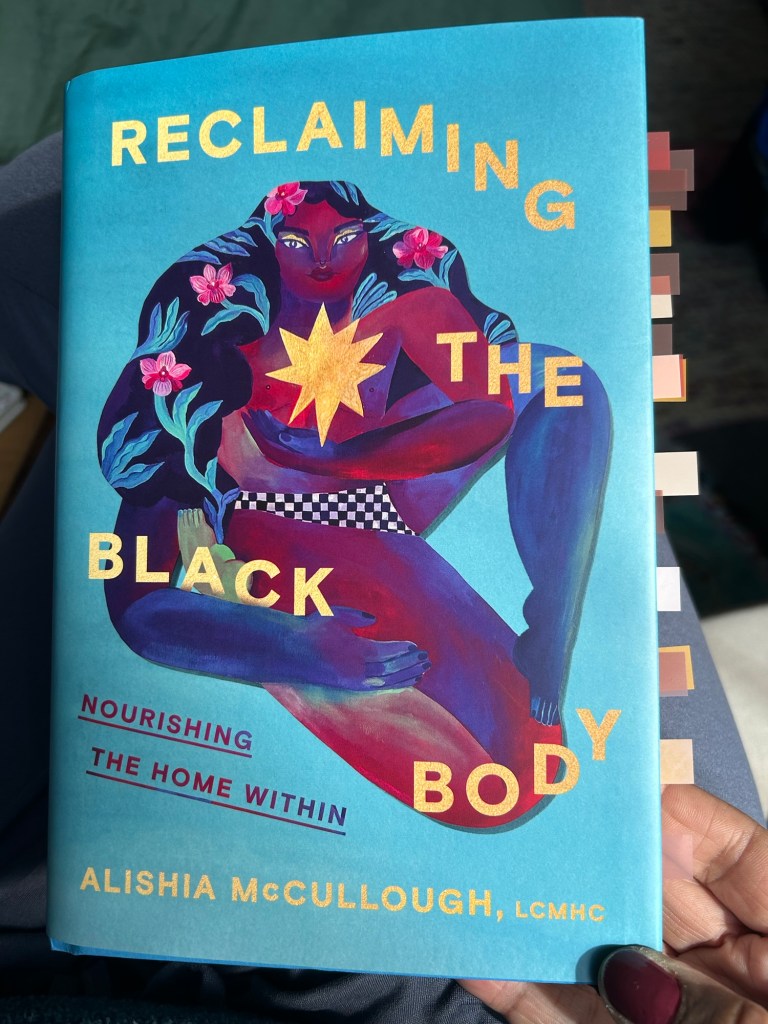
Reclaiming the Black Body: Nourishing the Home Within by Alisha McCullough is one of my current reads.

I used to be of the persuasion to read one book at a time. Devote all my time, focus and attention to one book in order to reap the glory/ knowledge/ whatever!

But these past few years, as I’ve become thirsty for stimulation and attempting to find like-minded people/ theories/ lovers, I’m moved into reading multiple books simultaneously, also known as “syntopical reading”.

And these books are not on the same topic either. They range from poetry around grief, non-fiction on gardening, personal essays around deep time, romantic and crime novels and short stories about myths and history. The list goes on!

I’m so enjoying this eclectic and multiple reading practice as it’s keeping me engaged, creating unique and original connections and it’s keeping me feeling loved.

By me.

So one of my current squeezes is Reclaiming the Black Body and I’m devouring it in small digestible bites because it is speaking to my soul.

This book is calling to attention the deep-seated, long-time, disproportionate amount of trauma, violence, marginalisation, discrimination, and adverse childhood experiences of Black women and femmes, and confounded by misognoir and racism, how we have learned to cope with it all through increased imbalanced eating behaviours.

Usually called “eating disorders” but even using that language implies that the individual is to blame and implying that some of us are just not equipped to nourish our bodies and do not know how to look after ourselves.

‘Disorder’ implies stigma and comes from the Western health ‘care’ system which from time has excluded and harmed Black people.

So this book is a balm for the wounds of silent struggles Black women and femmes have been going through around eating imbalances including myself. And is a vindication that we’re not fucked up and broken and just beasts, being less than human but that we are doing our best with the tools that we have to strive and thrive within a system that is hell-bent, historically and now, to demonise the Black body.

I will continue to cosy up with this book and others in bed, night and day, as reading is hitting the spot!

Not really sure when the moment of fear took hold but maybe it was after some deep conditioning

I developed a fear of taking up space in my own body.

I wish I could pinpoint the day, the moment that this fear took over my life.

Maybe it was after another beating from my dad for asking why?

Maybe it was after another meal where I didn’t like the food but was forced to eat it?

Maybe it was after my dad’s expected death and the silence that followed?

Maybe it was after another day at school of fighting the bullies who called me a fat black cow?

Maybe it was after those suggestions from my family to stop eating chips and bread and to eat something better?

Maybe it was after my ‘so-called’ school friends laughed and teased me because when I jumped my boobs jumped too?

Maybe it was after when I was still a girl I had a woman’s body that bled monthly?

Maybe it was after I walked down a street and a strange man leered at my body as something to have?

Maybe it was after I’d devoured my teen magazines and saw only white skinny girls getting the guys?

Maybe it was after we went roller skating and I couldn’t roller skate but spent time on my butt?

Maybe it was after that trip to Paris and the French guy I liked didn’t even look at me?

Maybe it was after I’d convinced myself that being smaller and whiter inside would help me to be smaller and whiter outside?

It hurts living on our knees

This piece originally was published over on Medium with Binderful. I’m drawing this piece into the Living Wild Studios archives. Because I can!

Image credit — Donovan Valdivia

How difficult is it for one body to feel the injustice wheeled at another? Are the tensions, the recognition, the disappointments, and the failures that exploded in the riots too foreign?

Claudia Rankin

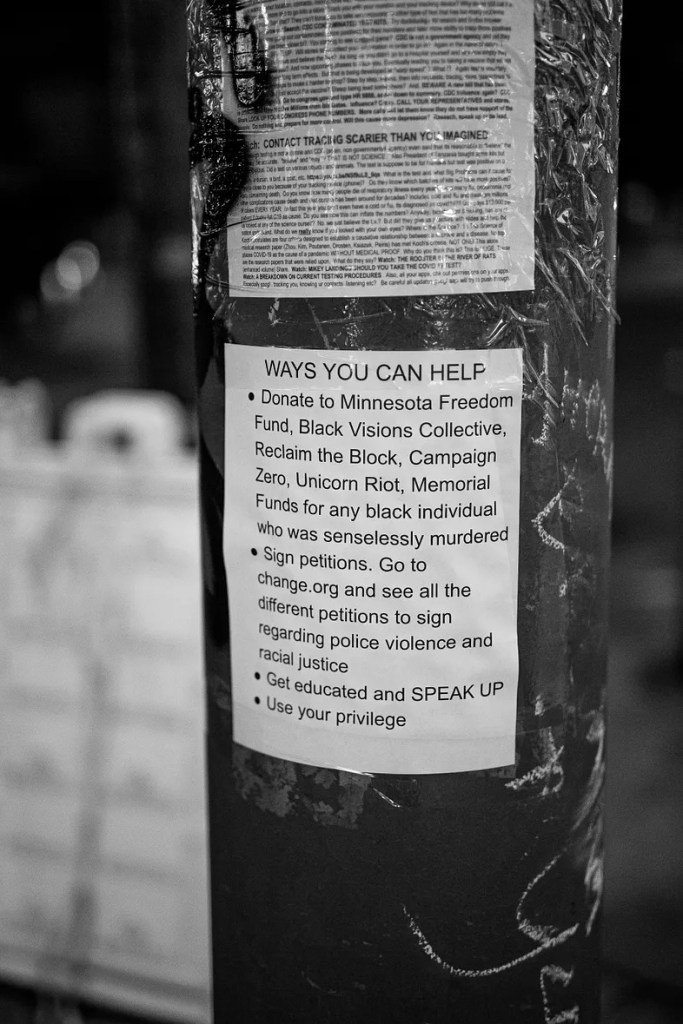
In August 2014, there’s a summer of “hands up, don’t shoot” protests, in Ferguson, Missouri, in response to the unlawful shooting of Michael Brown Jr.. In November, Darren Wilson, the white Ferguson police officer responsible for Brown’s murder isn’t indicted. In December, filled with rage and helplessness, I organise the first ‘Black Lives Matter’ protest in the North of England; a political poetry reading at our city centre library. Together artists and writers, cram into a hot room on the top floor of a building made of glass, and pour out our rage and pain through our writings. Black people’s words. Our ancestors’ words.

I’m criticised by one Black woman, in particular, because I invite white poets to read. They could only read the words of Black people as this event is centring our lives. Black lives. A white people’s presence is not what this Black woman wants. She wants a safe Black only space. I respect and understand her views. We all want a safe space for Black people. But I feel we can achieve so much more when we work together, Black and white, to solve our society’s problems. 
I know where she’s coming from though; a place of pain and suffering and hatred. As Black people, for so long, we have endured so much hate and violence from the hands of white people. For far too long, we have been excluded from a share in the economic wealth our ancestors paid for with their lives to create. We’re sick and tired of being excluded from the abundantly spread societal table which our ancestors give the skins off their backs to forge. And this hurts.

In March 2017, there’s a ‘Stand Up to Racism’ demonstration in London, Miss Ella, my seven year old daughter, and I dance behind the sound system truck, towards Trafalgar Square. Crowds behind metal barricades line our route, with the Metropolitan Police shepherding us along. We shout, ‘Refugees are welcome here.’ Miss Ella, dressed as her superhero, Black Widow, looks as if she’s just stepped out of a Black Panther’s meeting. With her long brown hair blowing in the wind and her peachy fist punching the air, she’s learning long before I did how to use her voice to bring about change. She carries her homemade banner stating, ‘Black Lives Matter,’ high with pride and courage. Along the way, a white woman with screwed up face screams at us to shut up and go back home to where we come from. Disallowing our protests, devaluing our presence here.

I recognise where she’s coming from; a place of her ignorance and pain and hatred. As white working class, for so long, she’s been fed the lies that Black people and immigrants come over here and take their homes and jobs. For so long, the poverty they’re experiencing is down to these Black illegal criminal and not a capitalist system rigged in favour of a few priviledged people. We’re just as sick and tired of this too. And we know it hurts.

In May 2020, there’s ‘Black Lives Matter’, protests around the world. In response to the recent killings of George Floyd, Tony McDade, Ahmaud Arbery, and Breonna Taylor, to name just a few, the streets are talking through fire and smoke. Thousands take to the streets, Black and white, to demand justice for all our Black brothers and sisters who have been and continue to be murdered by state sanctioned violence.

I’ve grateful for their voices and bodies. This time, I protest through my words and art. As the Covid-19 pandemic still poses a real threat here in my part of the world. I’m a Black, fat woman carrying yet another target on my back. While protesting, the odds of getting molested and arrested, and not surviving the experience is higher for me than any white person. Just as the odds are greater for me of dying from the Coronavirus than a white person.

Black, Asian, and ethnic minorities in the Western world are dying at a disproportionately higher rate and number than white people during this pandemic. Many explanations for this reality have been voiced with the blame thrown at the feet of Black people. That it is our unhealthy bodies and behaviours which are spreading this disease, conveniently not addressing the inherent racism and systematic inequalities that have operated for over 400 years that has brought about this dis-ease, making our weathered bodies more susceptible to this virus.

We rather die on our feet than keep livin’ on our knees,’ taken from the James Brown song, ‘I’m black and I’m proud’, I feel this as we see thousands of Black people (and white people) take to the streets, even though there’s a greater risk to their lives than ever before. But I recognise where’s they’re coming from. We’ve had enough. We’ve endured enough. We’re not prepared to accept Black lives being devalued anymore.

Waiting to be allowed in

This piece was written back in 2020 and published on Medium. I’ve brought it over here to be part of my writing archive. I also feel that the case needed restating frequently. Did I say daily?

We queue with our shopping basket. This is the norm now. But we don’t complain. It keeps everyone safe. We’re at the front of the queue, for a change. My daughter and I. We’ve only come to the one shop. I let her ride her bike into town. She needs the exercise as she’d be happy in front of her screen all day. I probably would too, as at least she’s inside safe, connecting with her friends, and I get a moment to myself.

Front of the queue, but we hold back as the woman in front of us has just gone into the shop. There’s someone coming out at the same time. The store security guard is standing in the mix too. We allow a gap to form between us; the woman and the entrance and our bodies. Coming across from an adjacent shop, a man and woman stride. Stride into the front of the queue, ready to walk into the shop. I raise my voice just above my normal speaking voice to say to them, There’s a queue. We’re waiting to go into the shop too.

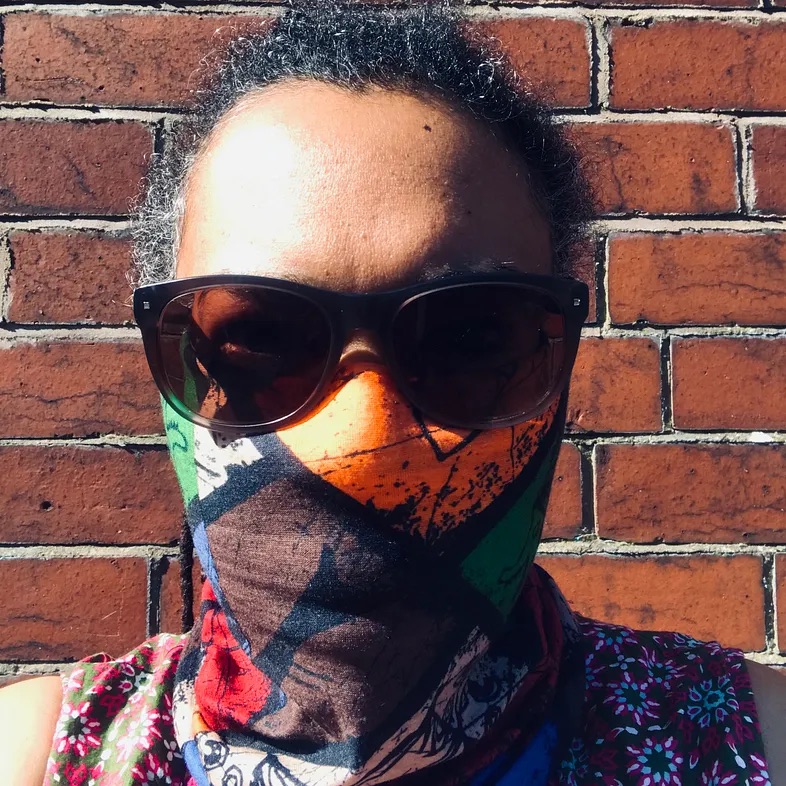
I think I’m smiling but how can they know? How can anyone tell if you’re smiling when you’re wearing face protection? By your eyes. I think by the eyes, you can tell if someone is smiling. It’s a warm, sunny day. I’m wearing sunglasses. Maybe they can’t see my eyes. They can only use my voice as means of communication.

Sorry, they say. We thought the queue was going the other way. They walk to join the queue behind us. I say, in a tone of voice which I think says I understand, No, the lady in front of us has just gone in and we’re waiting back here to giving everyone some space.

In the time it takes for the couple to walk and wait behind us, at the recommended 2 metres, the woman of the couple has already started saying in a loud enough voice for us to hear, Some people are just getting angry about the situation now, and there’s s no need for it. We walk into the shop.

Note: The angry Black woman stereotype portrays a black woman as sassy, ill-mannered, and ill-tempered by nature.

Walking back home, Ella walking with her bike, I approach what happened outside the shop, asking Ella if she heard what the woman said about people getting angry.

She was referring to me. I explained. She saw me as an angry Black woman. Do you think I was angry because you’ve seen me angry?

My daughter knows me. She knows I wasn’t angry and says so.

When you live in a society where you’re powerless, perceived as worthless and inferior, those who have power, believing themselves to be superior, spend their time telling others how they handle the situation isn’t right. They tell you that how you speak or act or response isn’t appropriate. You are wrong. They gaslight you, forcing you to doubt yourself; your actions and capabilities. You are at fault, always. You are wrong. You are silenced.

Back home, I talk to my husband, who’s a white man. I think if he’d been with us, the woman behind us, wouldn’t have uttered the angry line. He disagrees. She sounds like a woman who would have gotten annoyed if anyone had checked her behaviour, he said.

He has the right to think and say that. And maybe he’s right. Who knows? But to accept this explanation, I’d have to disallow what I feel about the situation. I’d have to make allowances once again for someone else’s behaviour, reaction and treatment of me. I’ve spent a lifetime of making allowances for other people’s treatment of me. How can I be sure that when they treat me unfairly, or discriminate against me that this isn’t how they treat everyone else? I don’t know. All I have is the way they make me feel. My lived experience as a Black woman.

All I know is that when I’m walking down the street and someone is coming towards me, it’s me who walks into the road to maintain social distancing. It’s me who walks into the gutter to keep us both safe. Would they do the same? I don’t know. I can’t take the risk to wait and find out either.

I’ve been socialised, fed the stereotype of the angry Black woman for so long, I police myself. I play my part. I don’t raise my voice. I don’t protest or question. It’s part of my make-up to check myself so I appear in society as passive and non-confrontational and unseen.

I remember my place.

On A Reading Tip

Quantity over quality is a characteristic of whet supremacy culture. Say like with social media, we are wired to focus on the numbers. The number and amount of followers, likes, comments gives us the buzz. Keeps us returning usually. Rather than the quality of interactions. The quality of connections.

But in this instant when I say I’m on a reading tip and boast that I’ve read 12 books already this year, fiction, poetry and non-fiction, I’m taking the buzz of the numbers because I know they were quality reads.

Last year saw me fall off my reading horse. Reading was only happening when I had an extended amounts of time off the clock. Summer reading mostly. I didn’t have the bandwidth or desire to read at any other times. I was too antsy and not able to settle, as too many demands were pulling on my attention.

So I’m really happy that this hibernation season has seen me dive back into books. Physical and digital books. I do not care which as long as I’m reading, expanding my thinking and formulating new pathways of understanding and connection.

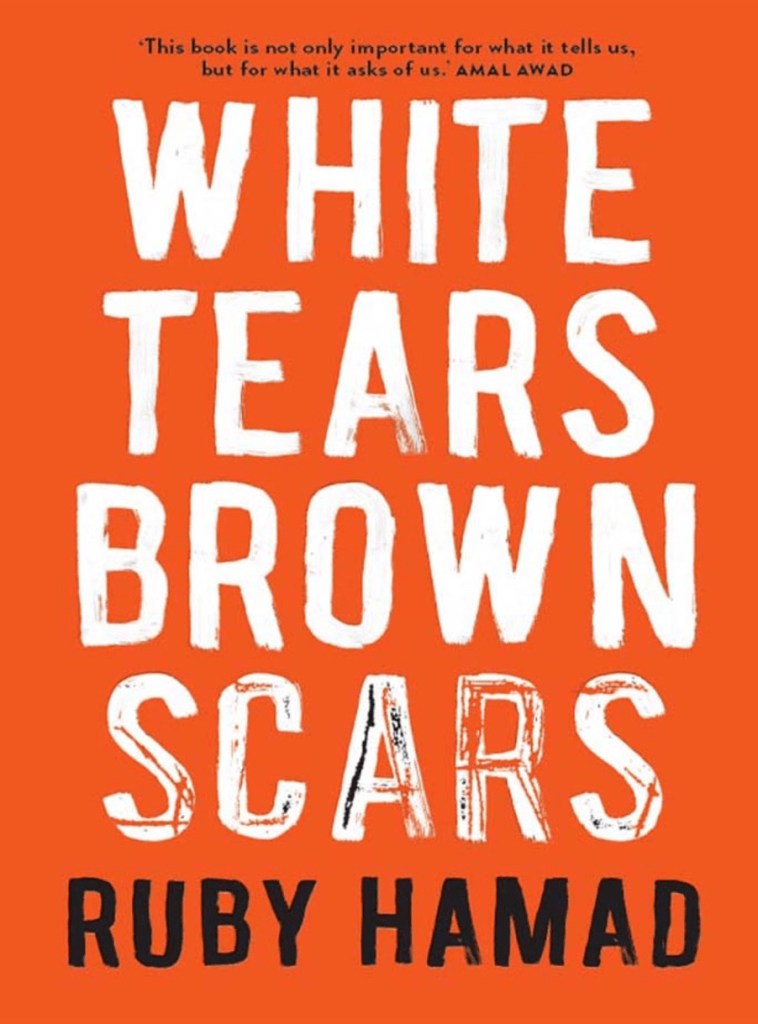
So White Tears Brown Scars by Ruby Hamad was completed yesterday. And it so feeds into my experiences with white women. Even though they’ve caused offence, been racist that is, it’s me who’s consoling them and making sure their feelings are not too hurt. Or it’s me having to apologise because my reaction to their racism or them touching my hair without my consent has been deemed far too aggressive and not very collaborative by the organisation or group I was working with.

They are used as a weapon, white tears, to shut down the conversation. To get the white person out of an uncomfortable situation and out of having to look at themselves and their behaviours.

It was so validating to read this book and recognise that it doesn’t just happen to me and that this is a centuries old tactic of the damsel in distress. And that damsel is white as Black and Brown women have never been deemed woman enough to protect. And all this shit is wearing thin with Black and Brown women. Believe.

This book was an extension of an article Ruby Hamad wrote back in 2018 for The Guardian. You can read it there and just know that one Black woman, Lisa Benson, who was working as a journalist at the time got fired for simply sharing this article because it was deemed ‘an attack on white women’. White tears in action right there!

The Black Madonna(s)

Original post, Patreon April 10, 2024

I’m onto the second reading of this book. I think I heard Christena Cleveland on a podcast talking about her journey and I knew I just had to get her book. I’ve used the saying myself, “God is a Blackwoman.” But I didn’t know there was a book all about it.

The book explores Cleveland’s spiritual/ religious journey as she falls out of love with Christianity as its essentially fathetskygod/white make good and is used to uphold white supremacy, patriarchy and capitalism. Basically just looking out for white cis males.

The book also follows Cleveland’s four-hundred-mile walking pilgrimage across the Auvergne to visit eighteen Black Madonnas. The book manifests Cleveland’s transformation through the Sacred Black Feminine, healing her Black female embodied soul.

Each chapter takes the reader on a journey in the present as Cleveland walks and also into the past as she reflects on her upbringing within her family, the church and society. How she grew up feeling unloved by God, unseen and not looked after. Each chapter also introduces the reader to a Black Madonna, each one Cleveland encounters along her pilgrimage.

It was when I read Chapter 5 and Cleveland introduced us to ‘She who cherishes our hot mess’, the Black Madonna Our Lady of the Sick in Vichy, that I got it into my head I needed to go see this one for myself.

Now I’ve seen the Black Madonna in Le Seu, Barcelona. Even climbed a mountain to see the Black Madonna of Montserrat, just outside Barcelona. But this time, this need felt different. A lot has changed for me since I’ve last seen these Black Madonnas and a lot more life experiences to heal from/ through/ round/over/in.

The Black Madonna of Vichy was decapitated during the French Revolution but the people who were oppressed loved her. They tracked down her head and built her new body out of walnut and put her back together again.

I love this story and it spoke deeply to my soul because I know what it feels like to be separated from my body in an act to fit in. To be disconnected from my body, living in just my mental space and not listening to my physical pains and discomforts but soldiering on. Denying my needs and wants as these are seen as weaknesses, produce feelings of shame and are not welcome here. Squeezing myself into smaller and smaller spaces so as not to take up any room and apologising for the space I do take up.

Been there, done that. Now I intentionally practice being with/in my body. I enjoy an embodied presence in the present. My head has been reattached to my body and I’m allowing my body to lead the way with practice. I’m no lover afraid to express my needs and wants or to walk away if these are not being met.

So once I realised I was definitely coming to Paris this year, I made the arrangements to go that extra mile or two ( well 450 round trip) to see ‘She who cherishes our hot mess’ in the flesh.

It would involve a 3 hour train journey each way. An over night stay and a little hope skip and a jump up to the Notre Dame des Malades, the new church where she stands.

And for a minute there I thought the church was locked …

I’ll leave it here for now because trying to see this Black Madonna turned into a bit of a crusade to see her again and again during my time in Paris. More to follow!