Creating a Black Feminism Archive

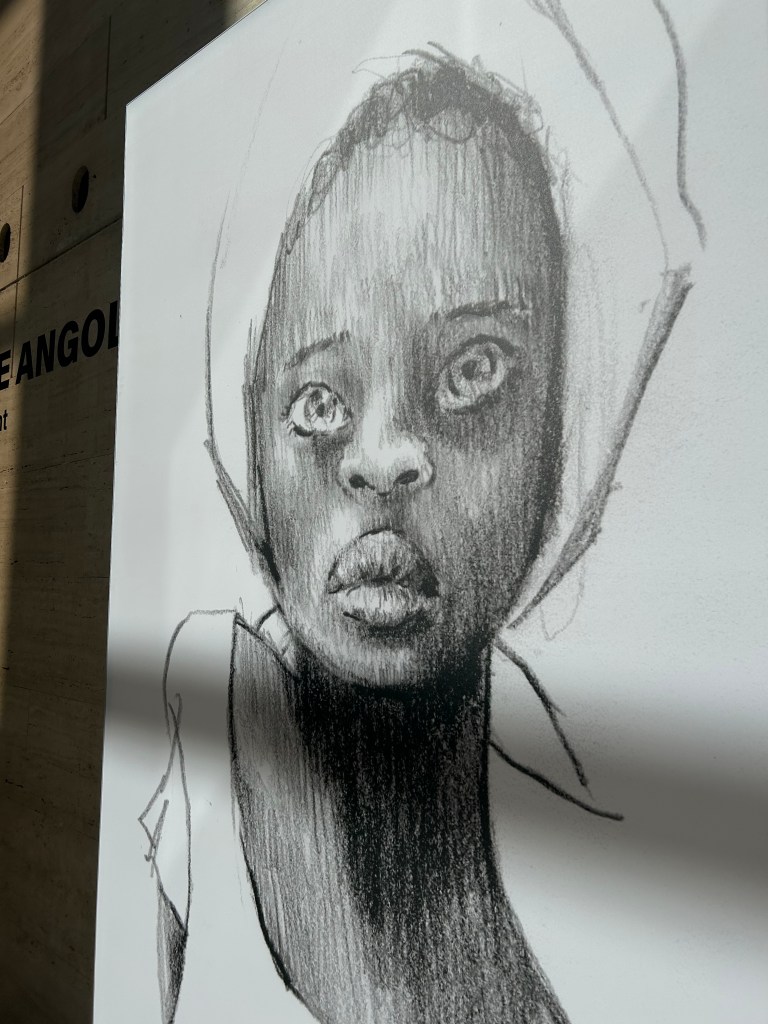
Joaquina de Angola

Okay where to begin..
That has been the issue – worried about where to begin has stopped me beginning.
But now I’ve got to begin as I need to get it out of me onto
the page, in order to create some kind of sense of it all.
So maybe I’ll begin with the Combahee River Collective (CRC).

I’m diving into the realms of Black Feminism- thought and theory and practices.

I’ve already been in the thick of it for years, with me first coming to Black Feminism through my degree and then masters and then this forming the foundation really of my PhD when I traced the tradition of Black British Women’s Poetry. But retaining knowledge and theory is difficult when I keep putting new things in my brain.

I don’t want to be an expert on Black Feminism but I do want to revisit it and consider it’s premise again in light of recent readings and experiences.

So I begin with the Combahee River Collective Statement, 1977. And I’m not saying that this is the beginning of Black Feminism. But I’m using it as a marker along the way.
I figure if I keep this statement in clear view, using it like a signpost then I can’t stray too far off the path.

This exploration of Black Feminist thought is going to be a new folder within this website’s portfolio as this is area of research is something I plan to keep returning back to and adding to as I continue to re-familiarise as well as extend my thinking and practices around Black Feminism.

So what is the Combahee River Collective Statement all about.
Well first you can was the full statement here.

It has been argued that this statement issue by a collective of Black women in Boston in 1977 who came together after witnessing an recognising the racism within the women’s movement and the sexism within the race/ civil rights movement, was based on the reality that Black women’s experiences cannot be reduced to either race or gender but have to be understood on their own terms.

Combahee River Collective Statement introduced to the world terms such as “interlocking oppression” and “identity politics.” Formed in 1974, The Combahee River Collective (CRC) was a radical Black feminist organisation which took it’s name from Harriet Tubman’s 1853 raid on the Combahee River in South Carolina that freed 750 enslaved people.

It might have been The Kimberlé Crenshaw in 1989 who coined the phrase “intersectionality” but it was CRC who articulated the analysis that underpins the meaning of intersectionality. The idea that multiple oppressions reinforce each other to create new categories of suffering, these interlocking oppressions, happening simultaneously, renders the Black woman’s position in society unique and most direr.


As the statement begins:

“The most general statement of our politics at the present time would be that we are actively committed to struggling against racial, sexual, heterosexual, and class oppression, and see as our particular task the development of integrated analysis and practice based upon the fact that the major systems of oppression are interlocking. The synthesis of these oppressions creates the conditions of our lives. As Black women we see Black feminism as the logical political movement to combat the manifold and simultaneous oppressions that all women of color face.”

It goes on to state:

“Merely naming the pejorative stereotypes attributed to Black women (e.g., mammy, matriarch, Sapphire, whore, bulldagger), let alone cataloguing the cruel, often murderous, treatment we receive, indicates how little value has been placed upon our lives during four centuries of bondage in the Western Hemisphere. We realize that the only people who care enough about us to work consistently for our liberation are us. Our politics evolve from a healthy love for ourselves, our sisters and our community which allows us to continue our struggle and work”.

CRC comes to the conclusion that:

“We might use our position at the bottom, however, to make a clear leap into revolutionary action. If Black women were free, it would mean that everyone else would have to be free since our freedom would necessitate the destruction of all the systems of oppression”.

And this would come to pass through the practice of the revolutionary politics of Black Feminism.
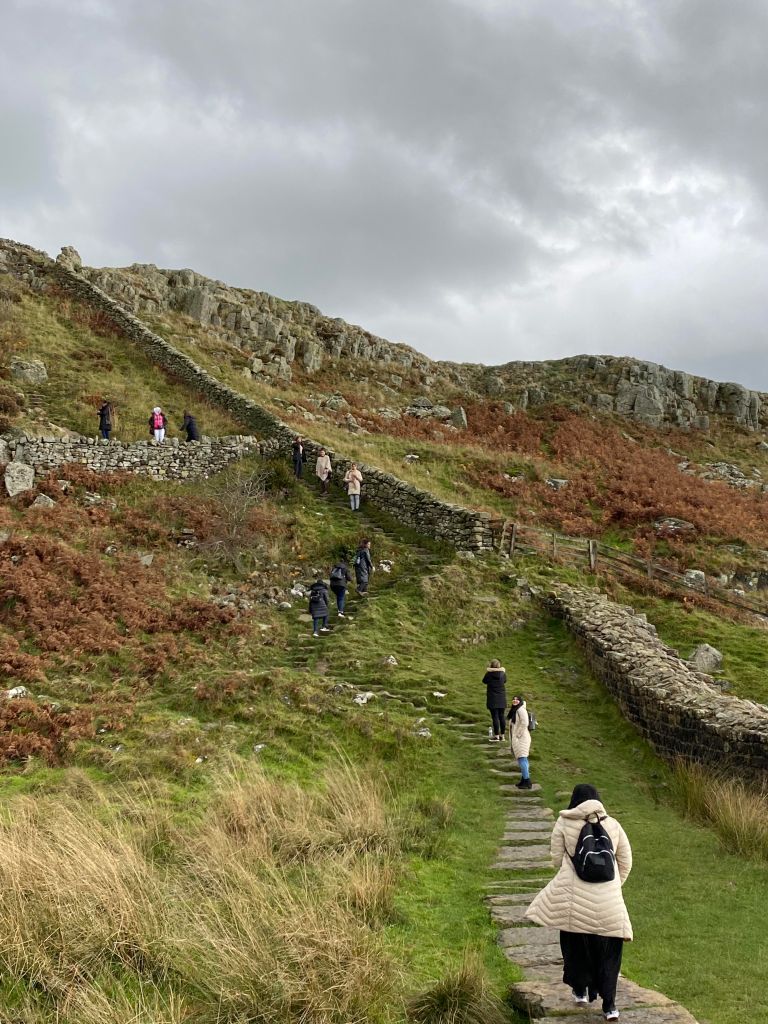
Solvitur ambulando

Solvitur ambulando – “it is solved by walking.” Coined by the 4th-century-B.C. Greek philosopher Diogenes while attempting to response to the question of whether motion is real. Diogenes got up and started moving. He walked to try and solve the problem.

“It is solved by walking.”

The women from The Angelou Centre Walking

I read yesterday that there are no new beginnings. No beginnings because when we start something, we are already coming at it from the middle. We’ve already been in the thick of it, knee deep in the things that are important to our lives. The issues that hold our attentions and hearts. So when we start working on them, we’re already in the middle of the experience for us.

When we finish the project it’s not the end it’s just a marker on the journey. The journey will continue beyond this or that point. We keep on trying to make sense of our lives. To experience what is in our bodies, hearts and souls as long as we live. Is this not the whole point of our human existence? Of our creativity?

To get clear on our view of the world, or even our experience of the world as we move through the world and share these asides, moments and realisations with others through our creativity?

Solvitur ambulando

Diogenes of Sinope

There is nothing that cannot be solved through walking. There is a latin quote that says this phrase in just two words but who am I to know latin or even to hold this knowledge in my head. It is a foreign language, a foreign culture to me, living in my Black body but it is still passed off as something I should know. As an educated person in Western society that I should know. Not that it is alien to me and is not mine.

My heritage and culture, is denied to me, or is hidden, or re-constructed on a pile of lies. It takes my time and effort to unearth it all, for me and for others. Still through all that effort, to unearth and bring to light, fact and fiction, it’s not recognised. It’s not valued and is dismissed as not being good enough.

White Supremacy Culture is alive and kicking, And I keep kicking up against it no matter what I do or be. Try to do or try to be. I’ll always be found wanting.

La Jablesse

La Jablesse, Zak Ove

After Zak Ove

Come, follow me, young man, into the forest. Come. You like the sway of my hips, and my secret smile?

Then come, follow me, if you want to see more, to touch more. I’ll be all yours in the hidden forest away from the waging tongues.

Pay no mind to my necklace of antique nails or the weathered ropes I wear like a scarf or shawl. It’s just my unique style.

Come. Not yet. Don’t peak under my wide brimmed hat or under my long skirts. Patience, you naughty boy.

Come follow me and I’ll be all yours in time. Brass horns and trumpets I adorn because I love to make merry and dance.

African mask I wear because I know where my people come from. Smelling of jasmine and rose with a hint of decay. Come.

Pay no mind to the way I walk, one foot on the road and one beached tree trunk for a cow’s hoof in the grass. Come.

Come into the forest, deep into the forest where the trees are tall and thick and no one will hear you scream as you are lost and fall down a ravine.

Listen, I need you, handsome young soul, to keep my own beautiful. I feed off your fear and lostness and fall.

Listen I’m happy to own my own narrative again. They call me La Jablesse- she-devil.

Listen, I say, I’m a woman in control of who she be and who she chooses to take to forest, to bed, and to death.

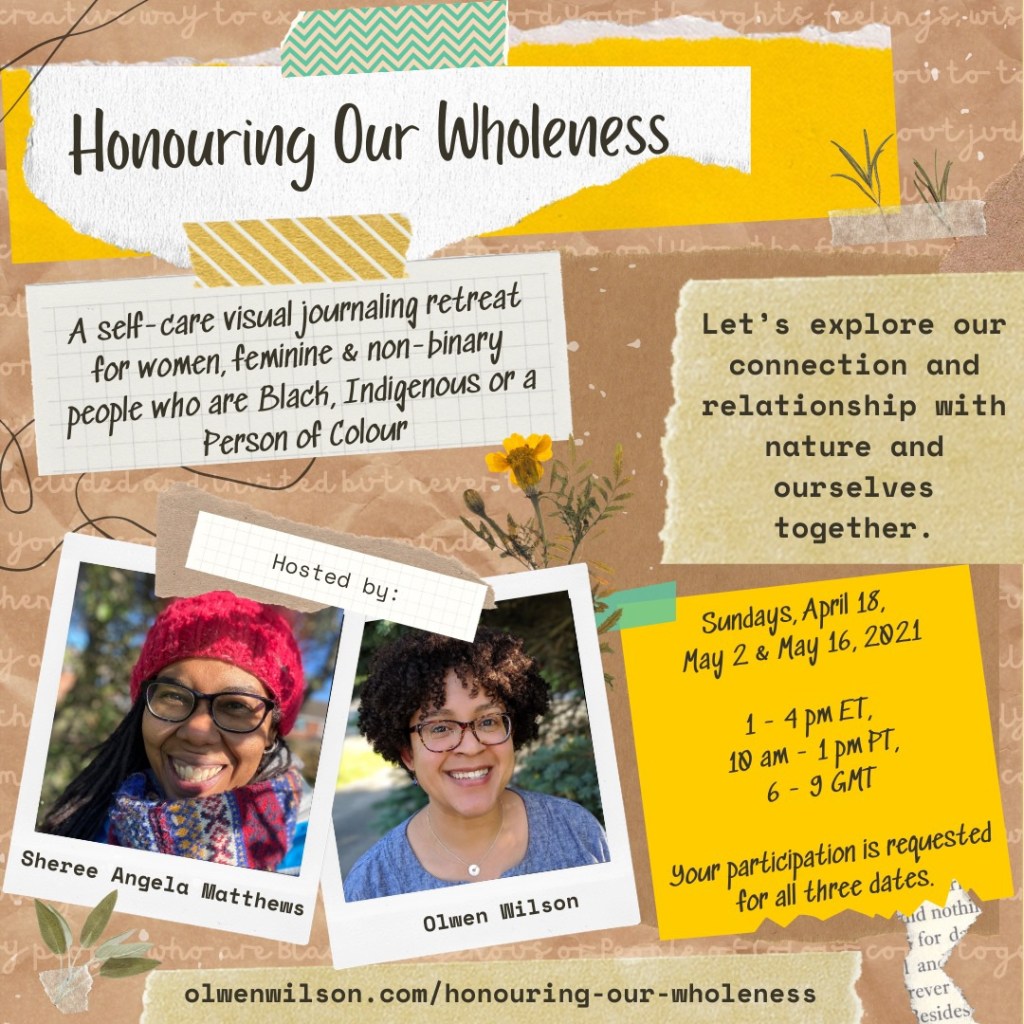
Honouring Our Wholeness

Consider this. You might have an idea that takes seed, but as it grows and develops it blossoms into something amazing which you could never envision when you started.  One such seed, which was planted way back in June 2018 during the Iceland Creative Retreat with Olwen Wilson, is finally coming to fruition today.

Honouring Our Wholeness , hosted by Olwen Wilson and myself is a self-care visual journaling retreat for women, feminine and non-binary people who are Black, Indigenous or a Person of Colour.  This is time away from the busyness of our lives to create in community within a space where we are recognised, safe and nourished. We will take inspiration from our connections with nature and ourselves. 

Imagine really being seen, heard and acknowledged!

Over a six-week period, we plan to meet on Zoom on Sundays, April 18, May 2 and end on May 16, 2021, from 1 – 4 pm ET/10 am – 1 pm PT/6 – 9 pm GMT.

During each three-hour session, there’ll be plenty of opportunities to play in our visual journals to really dig into the joy of creating for ourselves. Visual journaling is a simple but effective practice which has seen me through so many ups and downs and life experiences. And I’m so excited to be sharing this practice with Olwen through this offering. 

Both, Olwen and I have immense experience of expressing our thoughts and feelings through our visual journaling practice. Reaping the benefits of listening to and observing our interior worlds and environments around us. But the power and wisdom of this practice we can’t keep to ourselves as we constantly share our joy of visually journalling with others through workshops, retreats and social media.

Anyway, I’ve said enough. Head in over to the Honouring Our Wholeness information page where there’s further details and how to apply. We’re accepting applications right the way through to 26 March 2021.

How much is this going to cost you?

Honouring Our Wholeness , a virtual retreat specially created to provide an empowering and rejuvenating space for women, feminine and non-binary people who are Black, Indigenous or a Person of Colour is a unique offering which comes with a unique price tag.

Price for participants – £0/ $0 ( Thanks to funding).

Olwen and I do hope you’ll join us.

Apply Now

Honouring Our Wholeness

A self-care visual journaling retreat for women, feminine and non-binary people who are Black, Indigenous or a Person of Colour.

Hosted by Sheree Angela Matthews and Olwen Wilson

Sundays, April 18, May 2 & May 16, 2021

1 – 4 pm ET, 10 am – 1 pm PT, 6 – 9 GMT

Your participation is requested for all three dates.

Cost: Free

Let’s explore our connection and relationship with nature and ourselves together.

Apply Now

The Prompted By Nature Podcast Interview

AE128121-BBFB-4CA2-A2CF-2E44061824E2

I had the pleasure of being part of the Prompted By Nature podcast this month. It was good to have a chat about my relationship with nature and the work I’ve been completing within the region, with Earth Sea Love, offering opportunities to Black, Asian and ethnic minority women and girls to enjoy experiences with/in nature.

We talk about amongst other things:

* The importance of BAME visibility and representation in natural spaces and the marketing of nature-based brands as well as the need to motivate a new generation of black women leaders
* The financial side of accessibility in nature
* Land as holding trauma and associations with enslavement
* Nature as a space of oneness

I’ve just listened to the podcast for the first time and I was smiling along with the conversation, as it is so good. I share a lot and there are some words of wisdom that we could all take away. Check it out here. Thanks.


Sharing Your Work – 003

“ When women speak truly they speak subversively – they can’t help it: if you’re underneath, if you’re kept down, you break out, you subvert. We are volcanoes. When we women offer our experiences as our truth, as human truth, all the maps change.” – Ursula Le Guin

Sharing Your Work – 002

“ I think deep down we know that our creativity is not just for us. The creative power flows through us and it’s not meant to stop there. We need to keep the faucets open and allow the gift of creativity to circulate, so that it can touch other people. So it can grow beyond our own limited reach. “ Anna Lovind, The Creative Doer

Spreading the Joy

A little old house

There was an old woman who lived in a little old house. The little old house had a little old garden where the little old robins enjoyed to rest. This little old woman had a very harsh winter when her little old garden was covered in snow. So much snow that the robins didn’t come to visit until the snow had almost gone. The little old woman was so sad in her little old house with her little old garden all covered in snow with no robins to sit and watch. So she had an idea.

The next time the little old woman spied a robin in her little old garden, she crept out so quiet as can be. Tip-toe, tip- toe through the snow until she was right up on this little old robin sitting on the little old bird table in her little old garden. And as quick as you like, the little old woman hit the little old robin with a little old frying pan, swept it up and into the house. Where after the little old woman stuffed the little old robin into a plump little thing. She then stuck him on her little old bird table in her little old garden so she could look upon that little old robin all year long.

.

The Birthday of Our Ancestors

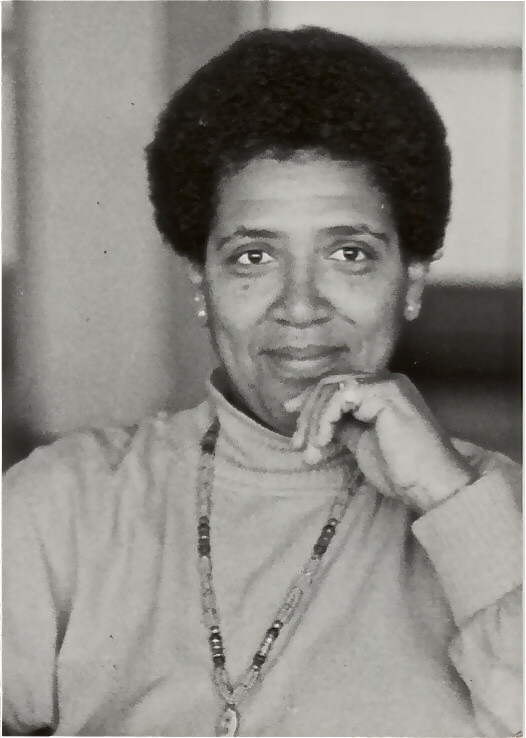
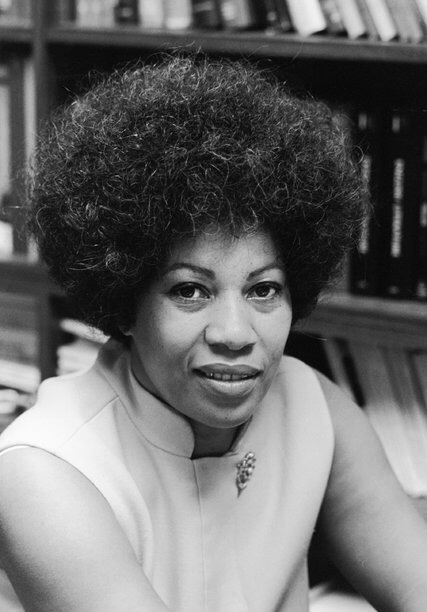
18 February is the birthday of two iconic Black Women who have had a tremendous influence on my life and writing.

Happy Birthday Audre Lorde and Toni Morrison


“In our work and in our living, we must recognize that difference is a reason for celebration and growth, rather than a reason for destruction.” – Audre Lorde


“Wanna fly, you got to give up the shit that weighs you down.” – Toni Morrison