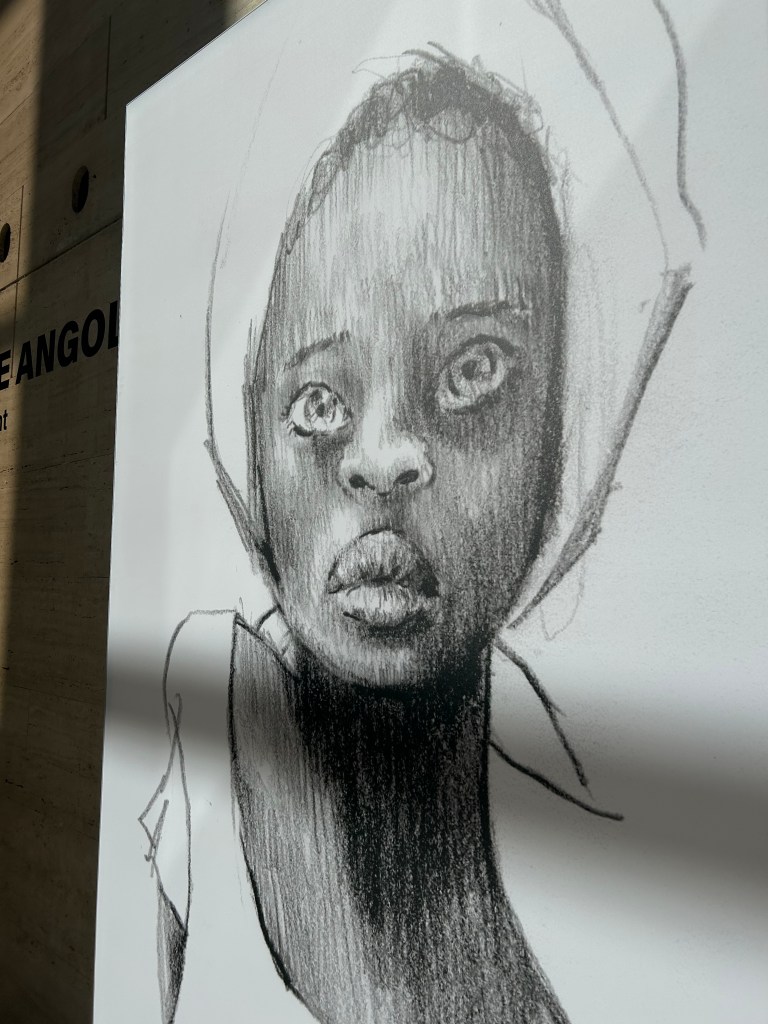
Creating a Black Feminism Archive

Joaquina de Angola

Okay where to begin..
That has been the issue – worried about where to begin has stopped me beginning.
But now I’ve got to begin as I need to get it out of me onto
the page, in order to create some kind of sense of it all.
So maybe I’ll begin with the Combahee River Collective (CRC).

I’m diving into the realms of Black Feminism- thought and theory and practices.

I’ve already been in the thick of it for years, with me first coming to Black Feminism through my degree and then masters and then this forming the foundation really of my PhD when I traced the tradition of Black British Women’s Poetry. But retaining knowledge and theory is difficult when I keep putting new things in my brain.

I don’t want to be an expert on Black Feminism but I do want to revisit it and consider it’s premise again in light of recent readings and experiences.

So I begin with the Combahee River Collective Statement, 1977. And I’m not saying that this is the beginning of Black Feminism. But I’m using it as a marker along the way.
I figure if I keep this statement in clear view, using it like a signpost then I can’t stray too far off the path.

This exploration of Black Feminist thought is going to be a new folder within this website’s portfolio as this is area of research is something I plan to keep returning back to and adding to as I continue to re-familiarise as well as extend my thinking and practices around Black Feminism.

So what is the Combahee River Collective Statement all about.
Well first you can was the full statement here.

It has been argued that this statement issue by a collective of Black women in Boston in 1977 who came together after witnessing an recognising the racism within the women’s movement and the sexism within the race/ civil rights movement, was based on the reality that Black women’s experiences cannot be reduced to either race or gender but have to be understood on their own terms.

Combahee River Collective Statement introduced to the world terms such as “interlocking oppression” and “identity politics.” Formed in 1974, The Combahee River Collective (CRC) was a radical Black feminist organisation which took it’s name from Harriet Tubman’s 1853 raid on the Combahee River in South Carolina that freed 750 enslaved people.

It might have been The Kimberlé Crenshaw in 1989 who coined the phrase “intersectionality” but it was CRC who articulated the analysis that underpins the meaning of intersectionality. The idea that multiple oppressions reinforce each other to create new categories of suffering, these interlocking oppressions, happening simultaneously, renders the Black woman’s position in society unique and most direr.


As the statement begins:

“The most general statement of our politics at the present time would be that we are actively committed to struggling against racial, sexual, heterosexual, and class oppression, and see as our particular task the development of integrated analysis and practice based upon the fact that the major systems of oppression are interlocking. The synthesis of these oppressions creates the conditions of our lives. As Black women we see Black feminism as the logical political movement to combat the manifold and simultaneous oppressions that all women of color face.”

It goes on to state:

“Merely naming the pejorative stereotypes attributed to Black women (e.g., mammy, matriarch, Sapphire, whore, bulldagger), let alone cataloguing the cruel, often murderous, treatment we receive, indicates how little value has been placed upon our lives during four centuries of bondage in the Western Hemisphere. We realize that the only people who care enough about us to work consistently for our liberation are us. Our politics evolve from a healthy love for ourselves, our sisters and our community which allows us to continue our struggle and work”.

CRC comes to the conclusion that:

“We might use our position at the bottom, however, to make a clear leap into revolutionary action. If Black women were free, it would mean that everyone else would have to be free since our freedom would necessitate the destruction of all the systems of oppression”.

And this would come to pass through the practice of the revolutionary politics of Black Feminism.
Women and Wetlands

Last night I was part of a panel discussion which tackled the subject of women and wetlands.

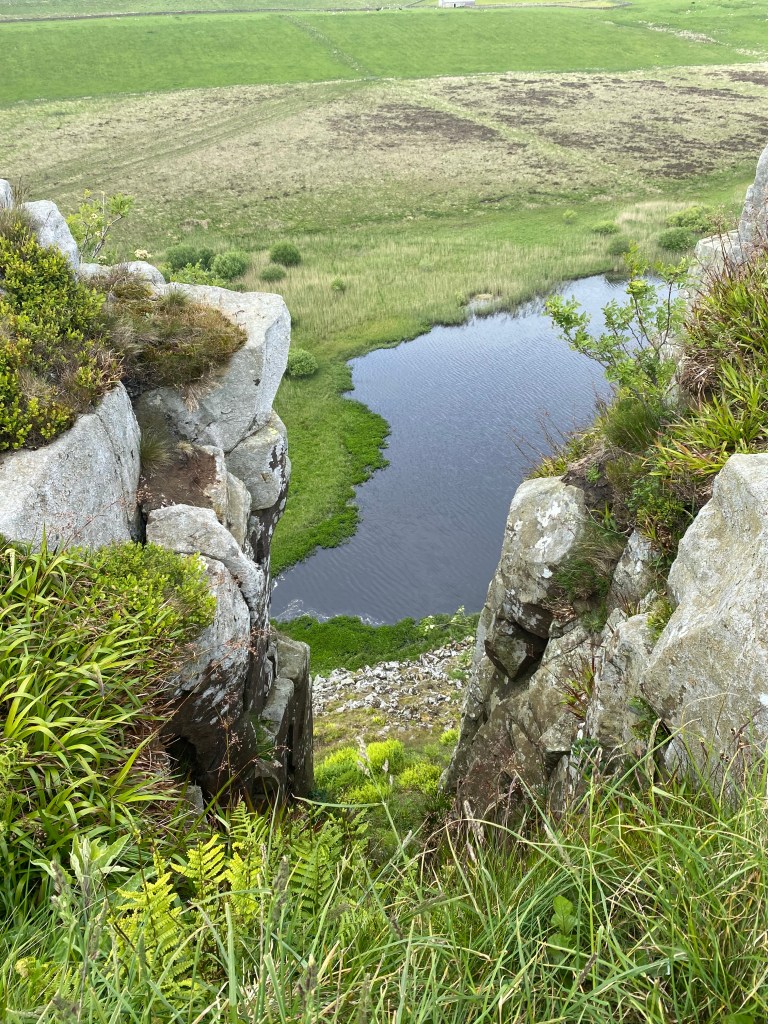
Crag Lough, seen from Peel Crags, Hadrian’s Wall

I was asked by Elizabeth-Jane Burnett at Northumbria University to be part of this event and share my work around my residence at Northumberland National Park and my explorations of peat bogs.

I wasn’t really sure what to expect about this event or what I was going to share. But on reflection now, I’m so glad that I was invited to take part because I learned so much about peatlands within the UK, around the world and the special place they hold within the global climate crisis.

So much of my language around nature and the environment has been formed through white supremacy culture which has been biased on colonialism and imperialism and capitalist consumption. And of which I am at great pains now to unlearn and find a new language or it is just a re-memory of the language of my ancestors where there is no separation between us and nature.

Something that was raised last night by Khairani Barokka, which was totally new to my knowledge and way of thinking was that within indigenous communities gender was much more fluid and diverse. The binary system of male and female/ he and she which we take as a given now, as the norm, is a construction and part of the colonist program.

That the idea of “the coloniality of gender,” which might have seen the binary gender system in Europe but was not the case for indigenous populations around the world who were brutalised, moved off the lands and eliminated through genocide. This is going to require more reading on my part but it will be completed eagerly as it’s more evidence of how this system to live and breathe is a construct of power for a few white people over the rest of us all.

I share an extract of my presentation here.

I’m hopeful but …

After my last blog post ‘I’m hopeful …’ I’ve done some reading and I’m not liking what I’ve been reading.

Call me ignorant, call me naive. Call me blinded by love for the common people rather than being critical or cynical or overly politcally.

In my last post I mentioned Extinction Rebellion ( XR) and the work they’ve been doing with non-violent action to put climate change back on the agenda. And they’ve had some measure of success with the all party agreement on calling a state of emergency on climate change as well as a massive influx of people wanting to be involved in the movement. Hell, I’ve even thought about getting involved.

What I’m learning is that XR is predominately white and middle class. This is a long-standing critique of the British environmental movement being too white and middle class and not enough inclusivity.

There should be more black and brown bodies taking part in XR protests and actions. But if XR’s strategy is arrests then I’m fucked, because historially the evidence indicates, my black body would be treated far differently in police custody to a white body. Fact. So you’ll have to excuse me from getting involved in that way. I admit it, I’m scared of what would happen to me if I was arrested.

The main issue I have with XR is that the climate issue is a racist issue and this just isn’t being addressed enough for my liking.
The people of the global south, the poorest people of the world as well as where the majority of people of colour live are experiencing the effects of climate change the most. Communities in the global south bear the brunt of the consequences of climate change, whether physical – floods, desertification, increased water scarcity and tornadoes – or political: conflict and wars and racist borders.

The people and movements of the global south deserve more than mentions in speeches. They should be leading the protests for climate justice. Climate change is the result of colonialisation and
neocolonialism ( more to come on this point).

“Extinction Rebellion US have already added a fourth demand  – a just transition that prioritises the most vulnerable people and indigenous sovereignty; establishes reparations and remediation led by and for Black people, Indigenous people, people of colour and poor communities for years of environmental injustice, establishes legal rights for ecosystems to thrive and regenerate in perpetuity, and repairs the effects of ongoing ecocide to prevent extinction of human and all species, in order to maintain a liveable, just planet for all.” source

And in the words of Wretched of The Earth, a grassroots collective for Indigenous, black, brown and diaspora groups and individuals demanding climate justice and acting in solidarity with our communities, both here in the UK and in Global South, “The climate movement will be decolonial or it will be nothing”.