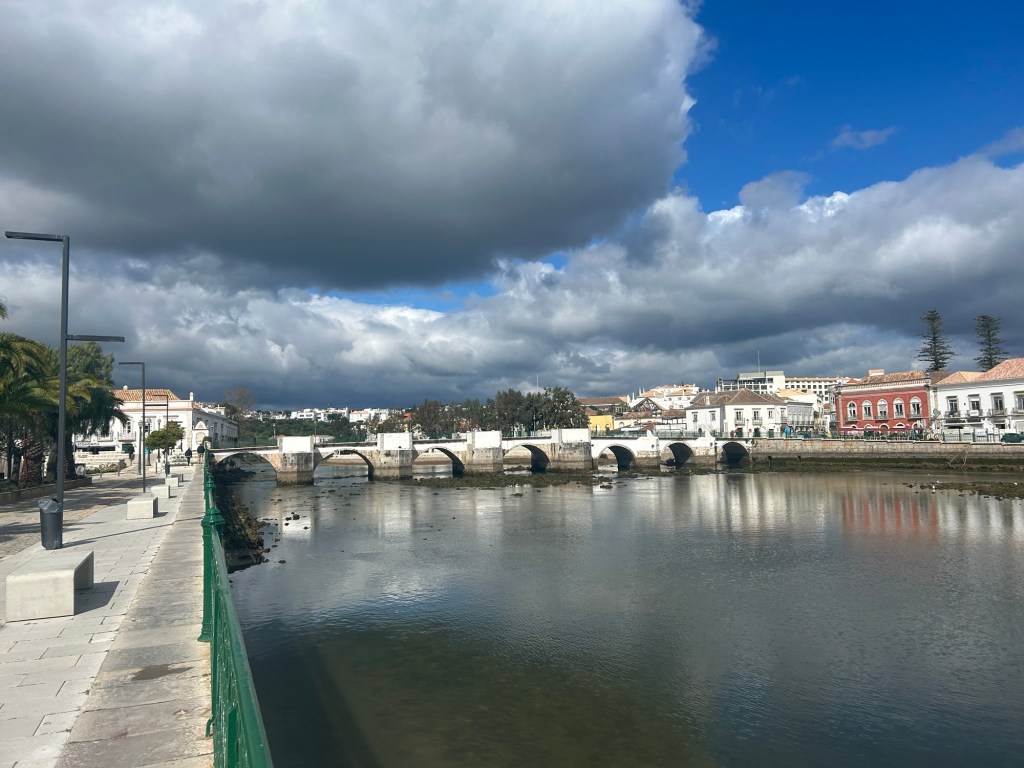
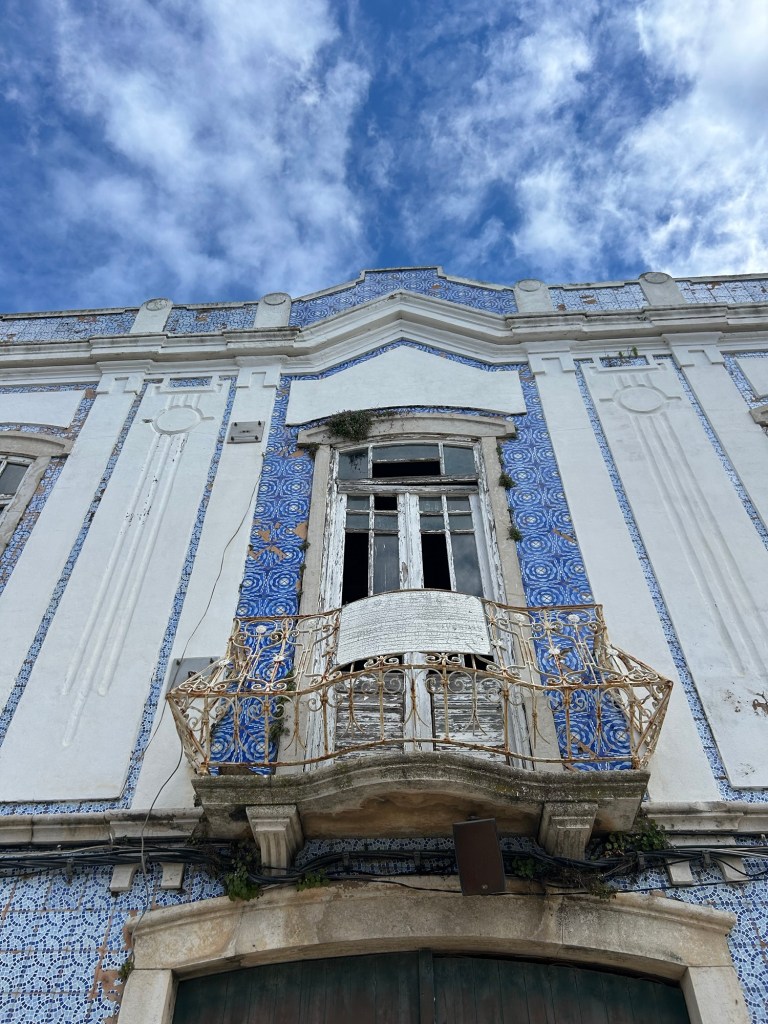
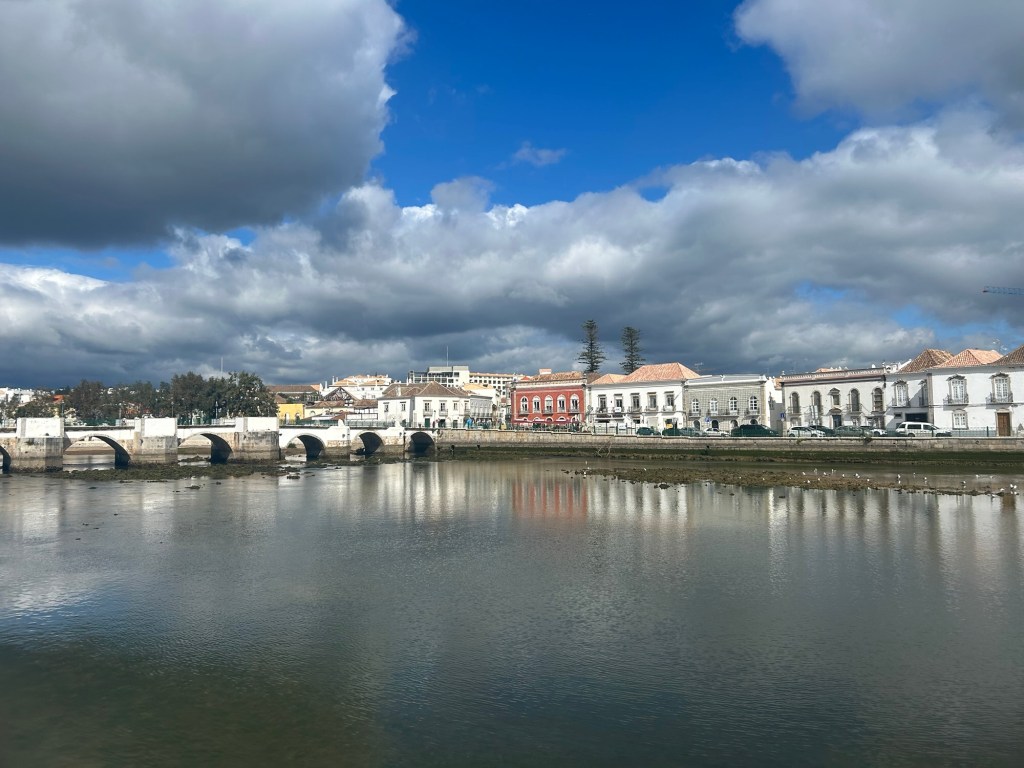
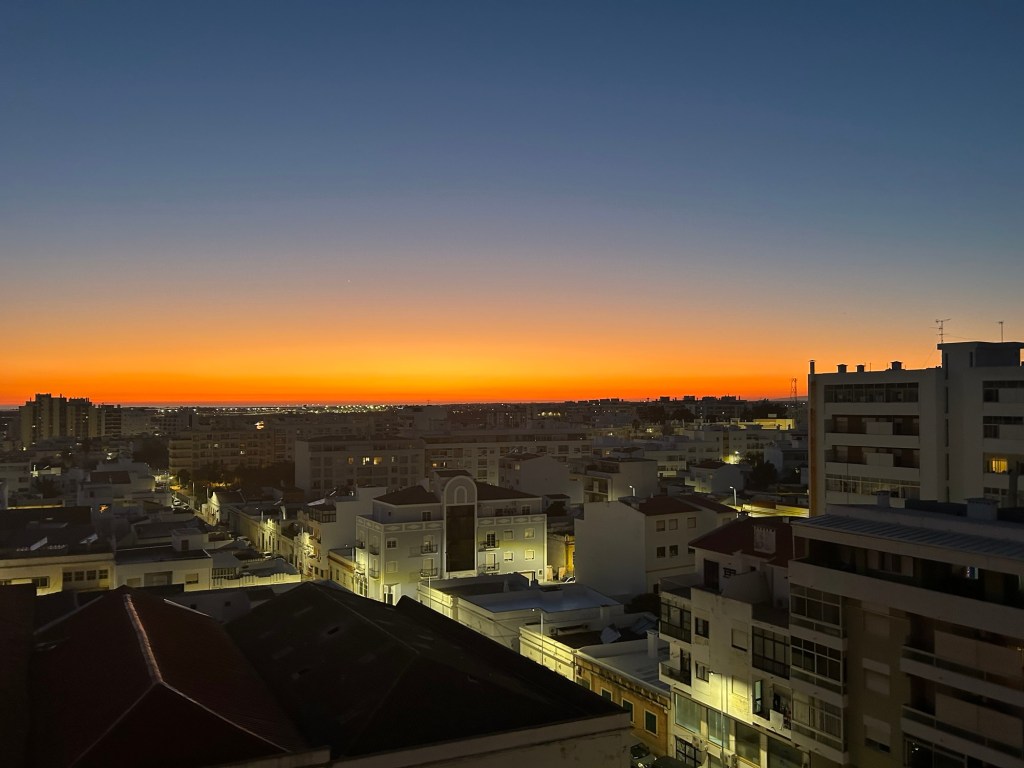
As the north-east is gripped in another cold snap, with wind and rain, in May, I’m desiring a return. A return to Faro, Portugal, where in March, I enjoyed a few days of warmth, relaxation and inspiration.
Nothing I’m flicking through is feeding my desires. Nothing is filling the void of just wanting to switch off and forget my troubles. Pap TV is what I usually call it. The stuff that renders me brain dead.
And then I happen upon The Alabama Solution. This is how I be sometimes. I feed an itch, a curiosity.
I shared the other day about my abolitionist tendencies. Well this Oscar nominated documentary is furthering those occupations.
Man oh man, this documentary hard hitting. And I dare anyone to watch it and say those inmates deserve the inhumane treatments, the injustice they receive in prison. I dare you.
There is a tendency to think people who do the crime should do the time and deserve everything that comes their way. They’re in prison so must have done something to be there and what befalls them in there, well they had it coming.
They be evil. They be degenerate. They be monsters. Lock away, throw away the key. We say.
This indoctrinated, conditioned response to crime and punishment, criminals makes us, the general public, no better that the ‘monsters’ we are condemning. That we are putting away and not caring about.
They be human beings, with flaws, vulnerabilities dealing with issues with no help from anyone else.
No chance of redemption or rehabilitation because they are left to rot. Or are exploited, farmed out as cheap or free labour.
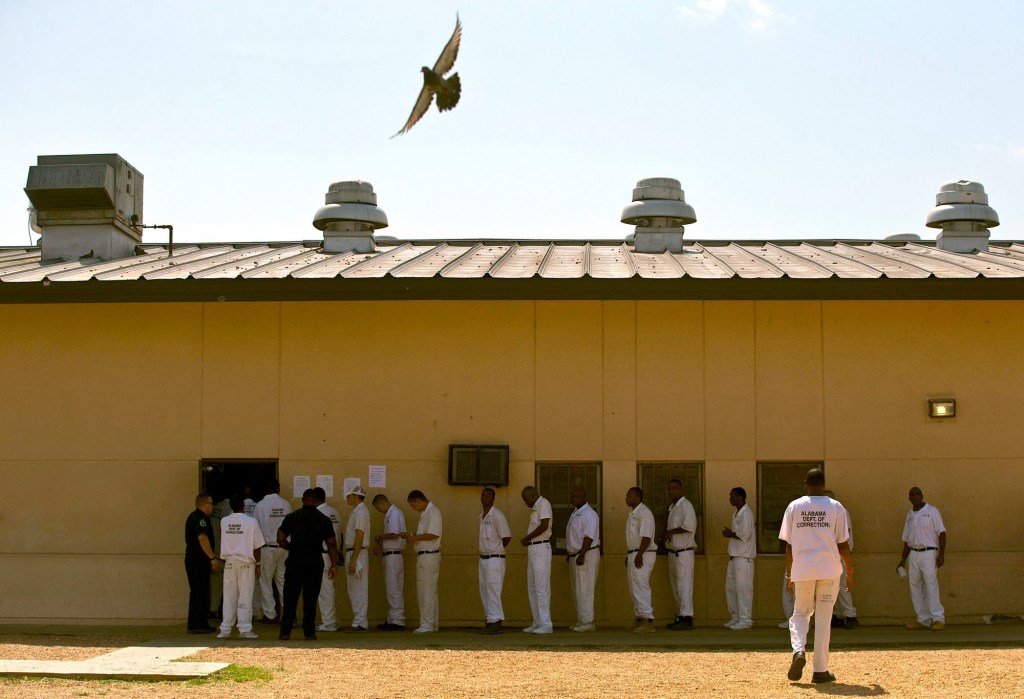
This here documentary The Alabama Solution explores the lives of the incarcerated. The viewer gets to see what it’s really like in the prisons in Alabama. How they are beaten and killed and no one is held to account.
What is remarkable is that these men are behind bars, classed as the underclass of society, the forgotten people, not by their families I may add, but they still manage to coordinate a mass strike across all of Alabama’s prisons in protest of the treatment they receive behind bars. In a peaceful way , they are demanding that their human rights be recognised and that the Federal Government steps in to compel the state of Alabama to treat their prisoners right, with respect and dignity.
Prisoners from all backgrounds, 20,000 strong refuse to work as slave labour anymore in 2022.
They downed tools. They rationalised that instead of meeting violence with violence they chose to hit them where it hurts, in the economics/ money, rather than hit them in the mouth.
Straight away the Governor was trying to break the strike. After a couple of days, rationing their food. Prolonging feeding for up to 14 hours a day and then when they did feed them just small amounts of food. But together the men shared the food they’d been stocking piling . As a community they came together to make sure no one starved. There was unity. Unity never see like it within prison system as it suits the system to have them fighting each other. Divide and rule. Divide and conquer.
But together, standing together strong, there’s power there and that’s dangerous. And has to be suppressed.
How come we, the general public, the majority not behind bars haven’t been able to organise a strike? A withdrawal of our labour to bring the system to a stop?
One of the main spokesperson for the prisoners, Robert Earl, who had already been beaten to near death for being an activist for prisoner’s rights and lost the sight in one eye for it, was taken from his cell in a head lock and taken to solitary confinement.
Again a similar tactic is being used, a tactic used from time in the Civil Rights Movement for example, cut off the head of the movement, the leaders and the strike will fold.
And you think it would happen, as the prisoners are vulnerable, no one can see what goes on behind closed doors. No one listens to them as they are criminals, they lie and are untrustworthy. Right?
They’re murderers and rapists. But that doesn’t happen. As this action, this strike is more than one man. Someone else steps in to take th baron, to keep rallying the cry that the strike continues until the demand are met.
And the demands are not unreasonable demands. They’re not asking to be all set free. They’re asking to be recognised as human beings with rights. To be respected and protected from violence within prison. Violence from the guards who are supposed to be supporting their rehabilitation.
But how are you gonna rehabilitate anyone if you’re beating on them?
I must go back and complete my watch of this programme now and see how the strike goes. However, this strike was in 2022 documented in The Alabama Solution documentary which was a decade long project of capturing the conditions in prison by the incarcerated cell phones.
I’ve just read that the 3 main instigators of this strike, including Robert Earl, have been placed back into solitary confinement as of January 2025 in retaliation for their activism and standing up for the rights of incarcerated citizens. And probably because of their involvement in the documentary.
You see what I did there. Citizens, human beings, not criminals. The language we use is part of our conditioning. Language is power. And I refuse to continue to use such dehumanising language in reference to people who are incarcerated. They are still people with needs and wants, desires drams, pain and sufferings.
Solitary confinement. No contact with family. This is an abuse of power behind bars. Out of public view and no reasons are given for these movements/ punishments. Solitary confinement is a form of torture. It is not a safety and security issue to the individual but it is an abuse of power by the authorities and highlights what a vulnerable position incarcerated people are in when behind the pros walls. This is another example of the denying of human rights.
There is talk of another strike happening this year, the withdrawal of labour. This can only mean that conditions have not improved within the Alabama Department of Corrections prison facilities. So I already know the ending, what the conclusion of this documentary will be. But I will watch it to the end.
Not as a spectator in the spectacle but as a witness for these incarcerated citizens as they, by any means necessary, attempt to get their voices, their issues, concerns and fears outside of those walks. The least I can do is watch and listen and share.
Sweeping violins. A Southern Belle, pretty and shallow, chatters on as young men flock around her feet, captive. *Fiddle de de.* Relishing in colour, technicolor; rich reds, blues and greens of the gallant Old South. Pan out see mansions surrounding by plantations. Bonnets and ribbons. Dances and horses. Cotton.
I first read Gone with the Wind by Margaret Mitchell while completing an extra year at college. Gaining extra ‘A’ levels while I waited on my then boyfriend to make the grades.
I identified with Scarlett O’Hara, the bitch of a heroine, not Mammy. I definitely was no mammy. Not here to fetch and clean and be loyal. I definitely was not obese and coarse and ugly, or ‘have a shiny, glossy face of contentment as she be the most happy slave alive.’
Of course as I’ve gotten older, I’ve learned where I’m placed in society. It’s okay to fantasise being the white heroine but I’ll never really be her. Better learn my place – to be there for the pleasure and enjoyment and whim of the white folk – and smile.
But what about my own pleasures and pains? Apparently they don’t exist. Apparently I’m incapable of such things, such finer characteristics. My reality states/shows otherwise.
It’s quitting time. I’m retreating into the woods in Aberdeenshire for the next week. I’m taking this opportunity as a reset. A chance to focus on my pleasures and pains. Drink on Mother Nature and give thanks for this life I have which isn’t being subservient/ submissive/ subjection to anybody.
I refuse the Mammy as well as the Scarlett, as they are both constructions and constrictions to control the female body.
I’m much more interested in the overspill, the excess, the unruly body. The blackwoman body that I live with/in daily and how nature supports me on this journey.
As a wind of flames sweeps through Georgia; menacing reds and oranges against a bleak dark sky swirl and crackle in time with fast ascending music. Real danger and Butterfly McQueen (real name not character name that would be Missy) flits around like a blue arsed fly worrying with no sense or plan.
At different times of my life, I was either really into drawing or gone off the boil from drawing.
Basically, if I allowed my drawings to come into contact with other people, that’s when my drawing would go off the boil. I wouldn’t do it, I’d let the practice slide because someone or other had said my drawing wasn’t very/any good.
Or they’d looked at what I’d shared and start giving me pointers on how to improve it. How to shade ‘properly’ or how to get things into ‘proportion’. Basically saying that what I was doing, instinctively and true to me, was wrong.
For large stretches of time, I didn’t allow myself to draw, to play because in comparison to others, my work just didn’t match up. Didn’t look like theirs.
And then one time, while feeling less than, while feeling the odd one out, not accepted or appreciated, I picked up a pen and started drawing again. I found solace and safety in the lines I drew.
Faces, I love drawing faces. Usually of black women. Seeing myself reflected.
I completed a 100 days of black women one time, a few years ago now and I loved where this challenge took me. It took me to a place and peace of accepting my drawings. My style, my subjects and themes, my shading and perspectives.
Fuck man, we’re all individuals, unique and no way are we supposed to or should be drawing all alike, to a certain standard or brief.
My drawings are an expression of me, and how I see/ move through this world.
I’m dealing with it. I’m embracing it. And fuck everyone else!
I’ve been coming later and later to my creative sketchbook practice this month.
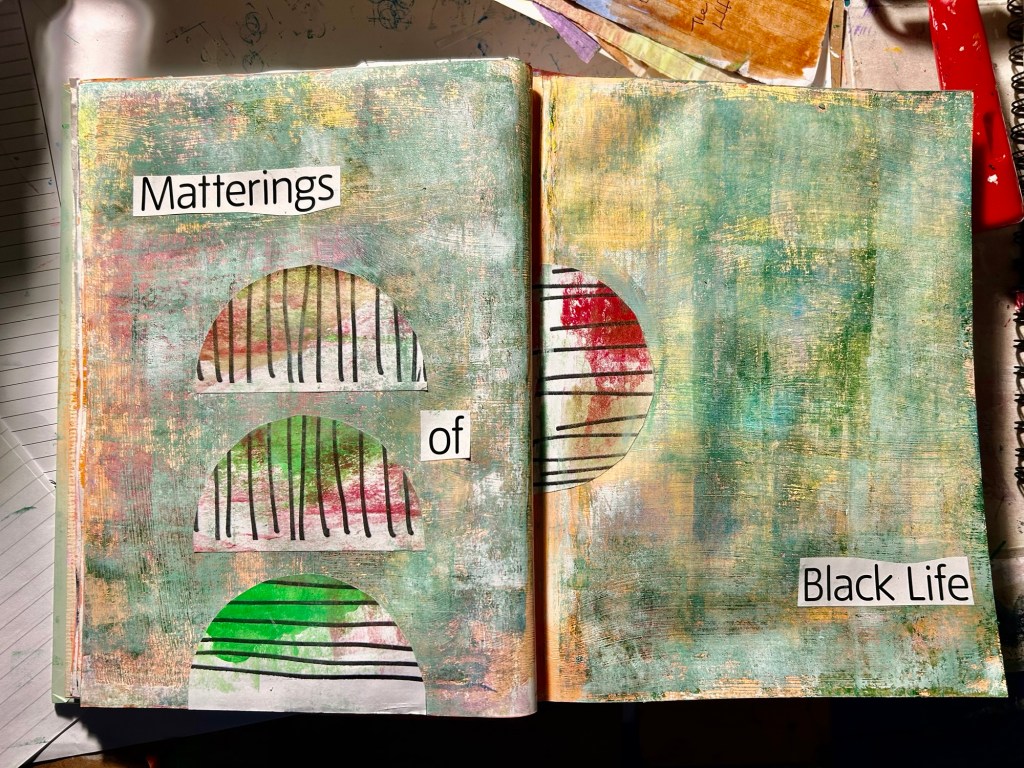
It’s day 123. 123 days since I started this practice of play within my creative sketchbook. Daily.
This piece tonight is significant because it chimes with my word of the year/ focus of the year being AFROSURREAL.
The right now. Capturing the now.
AFROSURREAL has been bubbling below the surface all year so far. I’m thinking it’s about time to share my musings and thinkings here in a mini series of posts.
Everything is overlapping and I’m fixing to gain some clarity knowing fine well that the practice of writing it out will only throw up more questions than answers.
The Matterings of (ordinary) Black Life is the practice. The push back against the colonial, historical categorisation of black people as subhuman. As stereotype as no life beyond the construct.
Right now. Black life. Black aliveness.
I’m living a/my reality which isn’t acknowledged or if is then it’s challenged/ denied/ erased.
It’s important to storytell, mythmake, historicise and archive within these liminal spaces. Centre the margins where these matterings happen.
Through the reconstruction and recalibration, healing and reparative processes challenge the exclusions and colonial impulses to conquer, control and exploit.
Expect to read more around AFROSURREAL and the overlaps with my other obsessions as through my research and readings and writings, I attempt to come to some understanding of myself and my creativity, moving backward and forwards between the now and beyond.
Describe one positive change you have made in your life.
It’s a luxury I know. It’s probably frowned upon. It’s probably not seen as productive within white supremacy culture. It’s probably classed as dangerous. I know it’s where the best insights happen.
In the morning. In my bed. In a book (non-fiction at that).
As I mentioned yesterday, I’ve taken to my bed. Well really, I don’t leave my bed, in the morning, until I’ve had a thorough lazy read. A slow imaginative wandering through my current squeeze of a book.
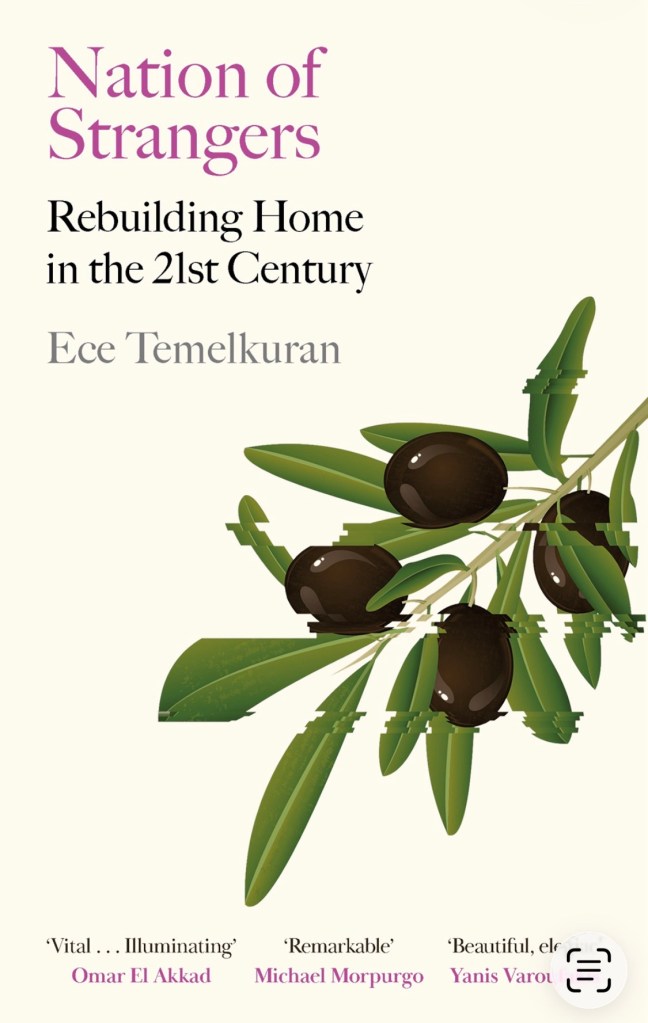
A Nation of Strangers by Ece Temelkuran, an exiled Turkish author who is unhomed but can see how we’re all becoming unhomed , one way or another, due to the rise of fascism.
Climate refugees, political dissenters, people seeking asylum from persecution, may be where our minds go when we think of the homeless. And yet, within these times of far right practices, war and genocide, the silent majority may still be in their homes but feel no longer at home.
Home is no longer what we knew it to be. Home is no longer safe and stable. Home is terror and fear. Home becomes strange. We become strangers and unhomed.
Some of us have never felt at home even when we have made our homes here in the UK as the message has always been we’re not welcome here. We do not belong here. Even if born here.
We search for a language to talk, to share our feelings and experiences of being a stranger within our own lands. It’s a practice.
I continue to practice reclaiming my mornings. Reclaiming the slow rise, reclaiming the time and space to read at leisure. Finding some refuge, some peace within a cocoon of sheets and pillows. Warm and cosy and safe for now.
“When Brian asks me about the word exile as we sit in front of the audience, the words come out of me as if a film ribbon were spooling off its reel. ‘Let me list why this exile thing is no longer plausible and, in fact, already a stale joke. One: Exile is not as sexy as it has been, despite what some still want to assume. I know Westerners still like to think of Europe as the safe haven for the oppressed intellectuals of the Global South, but that is giving too much credit to Europa when thousands are pushed back into the sea to die. Putting the spotlight on “the exile” to divert from “the refugee” operates as a crisis management tool, if not a branding strategy for Europe’s self-image. The Europeans’ need to believe that the continent is still a civilised haven is as critical as the refugees’ need for safety. Two: Exile is a title of nobility that generates undeserved attention. The undocumented refugees, the precarious majority of the unhomed, don’t even get a chance to relay their name so it can be put on their tombstone, whereas an exile is asked too often. Alas, many of us accept the invitation to go on and on about ourselves. We are the boring windbag aristocrats of the greater society of the unhomed. Three: The title exile gives you only two chances in life – you are either kept hostage by your personal melodrama or enslaved by the constant urge to reject your tragedy. Life cannot be diminished into such an unending test of dignity, and it certainly cannot be confined to the limits of the self. Four: If one accepts the title exile, one can never arrive home. But the fifth and the most important reason is …’ For a split second, I catch a glimpse of the listening faces. They are mostly activists, people who are already at work to build a new world, a new home. And it is hard to put your finger on it, but when you know, you know – they are with me, we are in sync. Also, now that ‘the most important’ has already escaped my mouth, I am at that delicious moment of no return. I gear up. “Yes, the most important reason is that you are no different than me. Do you, I mean, let’s be honest here, do you really think you are more at home than me? Of course not. Otherwise, why would you, as beautiful human beings of the earth, be trying to change the world and talk about building communities all the time? Why would you imagine shelters from, rather than movements against the new fascism building around the globe? Don’t you think there is already a sense of defeat there? Aren’t you already admitting that the world is not your home anymore but a hideous jungle from which you need to seek shelter? Yes, we are many in our discontent, but still, we cannot make enough of a majority; we cannot shape the political reality into a new home. We are not powerful enough to make this world our home again, not yet. From where I sit, you are no less homeless than me. Or, if you like the word better, we are all exiles already. Misfits, outcasts, the displaced and the disowned. We are the strangers of the world”
I applied to Arts Council England for a Developing Your Creative Practice grant mid 2025. It was unsuccessful.
Undeterred, I resubmitted it under the project grant scheme. I was notified of being successful just before Christmas 2025.
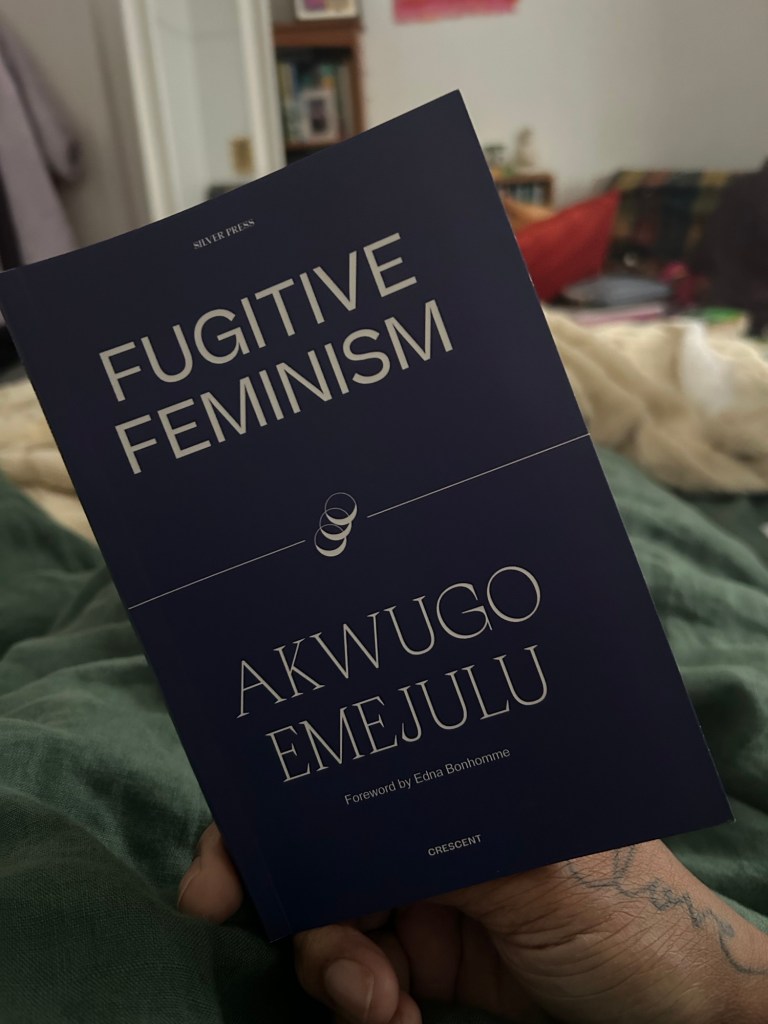
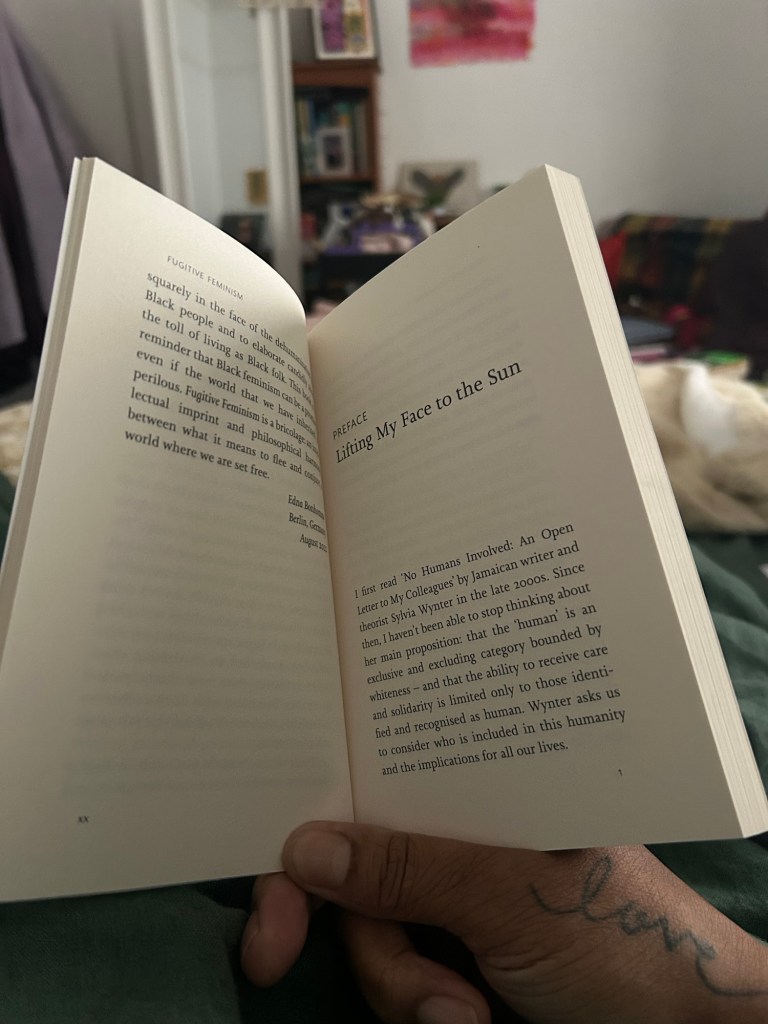
Practicing Creative Fugitivity is its name, and it involves researching fugitive practice. It also involves reading in community Fugitive Feminism by Akwugo Emejulu.
A study circle of women of the global majority.
When did you first learn that you were a non-human?
The question that opens the first chapter of the text Fugitive Feminism.
A question that hits me in my gut with its open, blatant honesty and curiosity.
A question which niggles at a truth that I’ve not wanted to face up to as it would mean that I’ve spent a lifetime trying to demonstrate, prove, live up to an unattainable category of being human.
Human as a category was never created to include someone like me within it.
Human = Whiteness
Human v Non-Human
You can’t have the light without the dark.
All constructs to create hierarchies. A hierarchy where white, EuroAmerican, able bodied, middle class, cis-gendered, college educated and suburban men reign supreme. Superior.
Conceptual Other. No Humans Involved. The Lack of the Human.
Black women. Outside. Out Outside.
Our exclusion determines the borders/ boundaries of the human.
But consider this …
If Black women were free, it would mean that everyone else would have to be free since our freedom would necessitate the destruction of all systems of oppression.
Combahee River Collective
Where the excitement lies for me and others, is once we realise that Black women cannot be human, then with the support of this book in community, let’s consider what if ‘human’ cannot and should not be reclaimed?
Speculate. Speculation. Speculative.
How might we divest from the human?
That the non-human Other actually decentres the human. Move beyond human to something otherwise.
Something else.
Becoming ( something else).
Thinking of how to be/ how to live beyond the binary of human v non-human could produce the means of improving our community/society/our planet.
Centring the human ( v non-human/ othering all else) has got us into the shit we’re facing now in terms of ecological disaster.
Finding a way to decentre the human, divest from what this concept / construction means and how it operates has to be the way forward.
Fugitive Feminism is the doorway into another way of being. A portal into an alternative world built upon the Black Feminist politics of liberation.
The path ahead is not clear or defined. It’s slippery and ambiguous. It’s experiential and experimental. Yet full of possibilities. Caring not harmful possibilities.
Speculative. Suggestive. Spacious.
And it starts and continues with the act of refusal. Refusal of the way things are right now.
Refusal of being defined by others to fit into their definition of humanity ( whiteness).
Refusal of being extracted and exploited for the benefits of a few.
Refusal of being non-human.
Refusal of being outside of humanity.
Refusal of the whole concept of human/whiteness/ fascist.
Refusal of these limitations when i, we, i and i can be something else beyond humans.
I go to my local probably about once a week if not more. I was brought up next to a library, in Bradford and in Newburn. They were places I could go to for some sense of freedom and adventure.
The librarians knew me and would recommend books to me and events. They wouldn’t rush me, I was welcome to stay as long as I wanted.
Today, I love to pop in to see the book sales at my local libraries. As I have a few on my doorstep now. I flit between them, collecting worn and torn books that I repurpose.
I was brought up to know it was ‘wrong’ to write in books. They were sacred in our home. Probably because we were poor and if we bought books, usually from the indoor market in town, we knew it was money we couldn’t afford to spend on books. But my parents spent it anyway, as they valued books, learning and education. It was our way out of poverty.
I wonder what they would say now, if they saw what I did to books?
10p is all I pay for big, colourful children’s books, withdrawn from library stock. I have to feel the paper first though before I buy them. Even if only 10p, too shiny the page and the paint won’t grip it as well. The paint just swirls around and doesn’t stick.
I like my pages rough and matt finished. Ready to absorb whatever I put down on it.
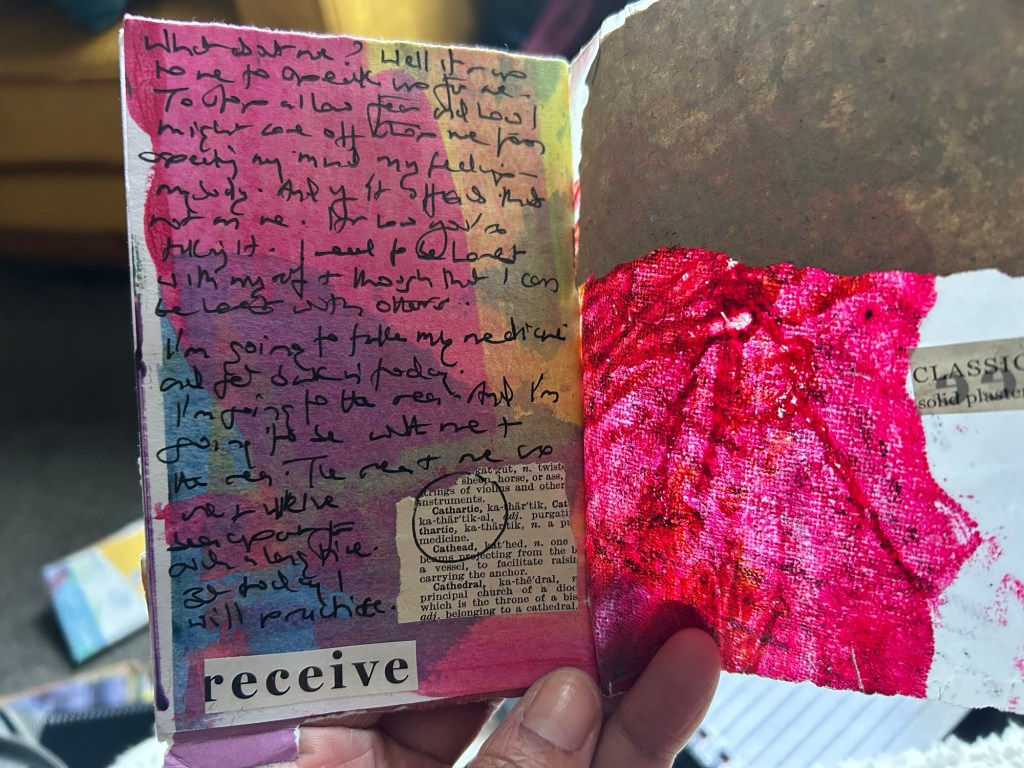
This sketchbook was my side hustle for the last month. Side hustle to my main creative sketchbook. Here I just lay down colour and see what happens.
I like when what’s underneath the paint bleeds through. I like when the different layers of paint and pencil and pen bleeds through to the surface too.
It’s like a palimpsest. The marks beneath is the feeling I’m after. The haunting, the trace, the evidence of time and the passage of time. The archive is present now.