I applied to Arts Council England for a Developing Your Creative Practice grant mid 2025. It was unsuccessful.
Undeterred, I resubmitted it under the project grant scheme. I was notified of being successful just before Christmas 2025.
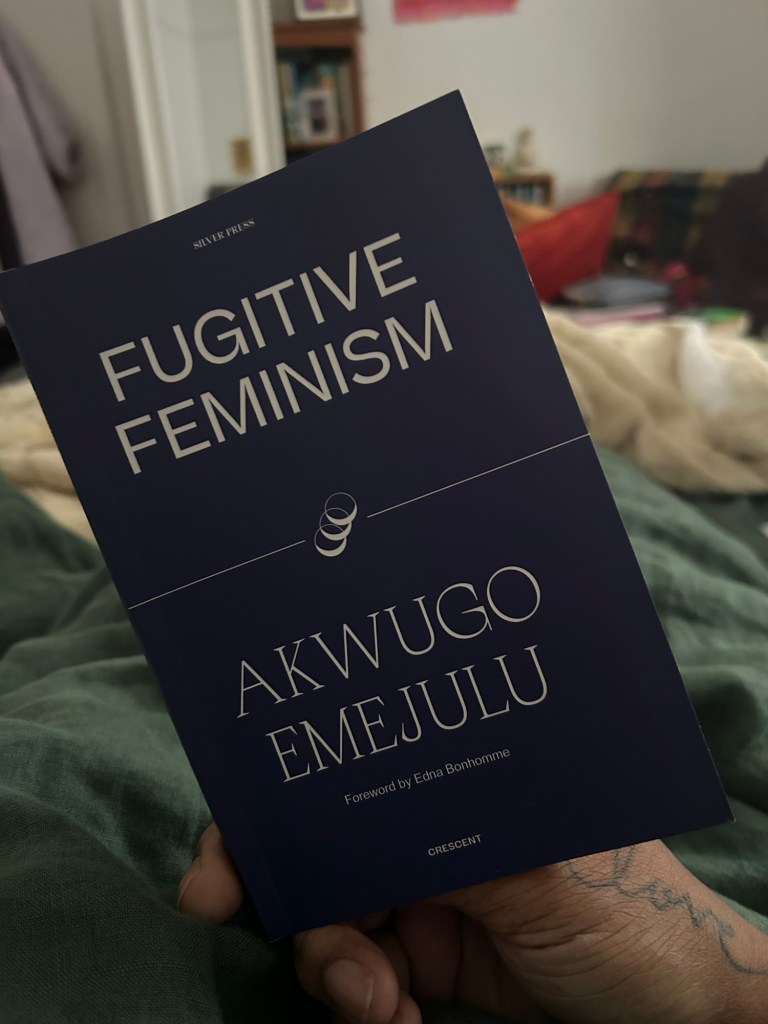
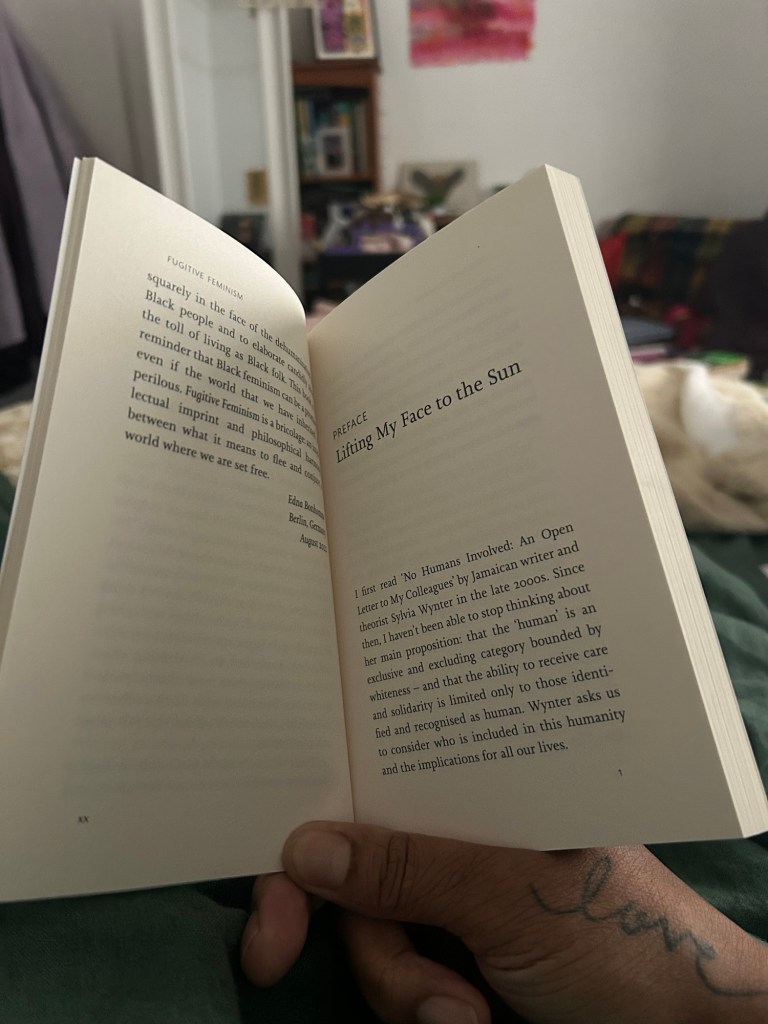
Practicing Creative Fugitivity is its name, and it involves researching fugitive practice. It also involves reading in community Fugitive Feminism by Akwugo Emejulu.
A study circle of women of the global majority.
When did you first learn that you were a non-human?
The question that opens the first chapter of the text Fugitive Feminism.
A question that hits me in my gut with its open, blatant honesty and curiosity.
A question which niggles at a truth that I’ve not wanted to face up to as it would mean that I’ve spent a lifetime trying to demonstrate, prove, live up to an unattainable category of being human.
Human as a category was never created to include someone like me within it.
Human = Whiteness
Human v Non-Human
You can’t have the light without the dark.
All constructs to create hierarchies. A hierarchy where white, EuroAmerican, able bodied, middle class, cis-gendered, college educated and suburban men reign supreme. Superior.
Conceptual Other. No Humans Involved. The Lack of the Human.
Black women. Outside. Out Outside.
Our exclusion determines the borders/ boundaries of the human.
But consider this …
If Black women were free, it would mean that everyone else would have to be free since our freedom would necessitate the destruction of all systems of oppression.
Combahee River Collective
Where the excitement lies for me and others, is once we realise that Black women cannot be human, then with the support of this book in community, let’s consider what if ‘human’ cannot and should not be reclaimed?
Speculate. Speculation. Speculative.
How might we divest from the human?
That the non-human Other actually decentres the human. Move beyond human to something otherwise.
Something else.
Becoming ( something else).
Thinking of how to be/ how to live beyond the binary of human v non-human could produce the means of improving our community/society/our planet.
Centring the human ( v non-human/ othering all else) has got us into the shit we’re facing now in terms of ecological disaster.
Finding a way to decentre the human, divest from what this concept / construction means and how it operates has to be the way forward.
Fugitive Feminism is the doorway into another way of being. A portal into an alternative world built upon the Black Feminist politics of liberation.
The path ahead is not clear or defined. It’s slippery and ambiguous. It’s experiential and experimental. Yet full of possibilities. Caring not harmful possibilities.
Speculative. Suggestive. Spacious.
And it starts and continues with the act of refusal. Refusal of the way things are right now.
Refusal of being defined by others to fit into their definition of humanity ( whiteness).
Refusal of being extracted and exploited for the benefits of a few.
Refusal of being non-human.
Refusal of being outside of humanity.
Refusal of the whole concept of human/whiteness/ fascist.
Refusal of these limitations when i, we, i and i can be something else beyond humans.
I go to my local probably about once a week if not more. I was brought up next to a library, in Bradford and in Newburn. They were places I could go to for some sense of freedom and adventure.
The librarians knew me and would recommend books to me and events. They wouldn’t rush me, I was welcome to stay as long as I wanted.
Today, I love to pop in to see the book sales at my local libraries. As I have a few on my doorstep now. I flit between them, collecting worn and torn books that I repurpose.
I was brought up to know it was ‘wrong’ to write in books. They were sacred in our home. Probably because we were poor and if we bought books, usually from the indoor market in town, we knew it was money we couldn’t afford to spend on books. But my parents spent it anyway, as they valued books, learning and education. It was our way out of poverty.
I wonder what they would say now, if they saw what I did to books?
10p is all I pay for big, colourful children’s books, withdrawn from library stock. I have to feel the paper first though before I buy them. Even if only 10p, too shiny the page and the paint won’t grip it as well. The paint just swirls around and doesn’t stick.
I like my pages rough and matt finished. Ready to absorb whatever I put down on it.
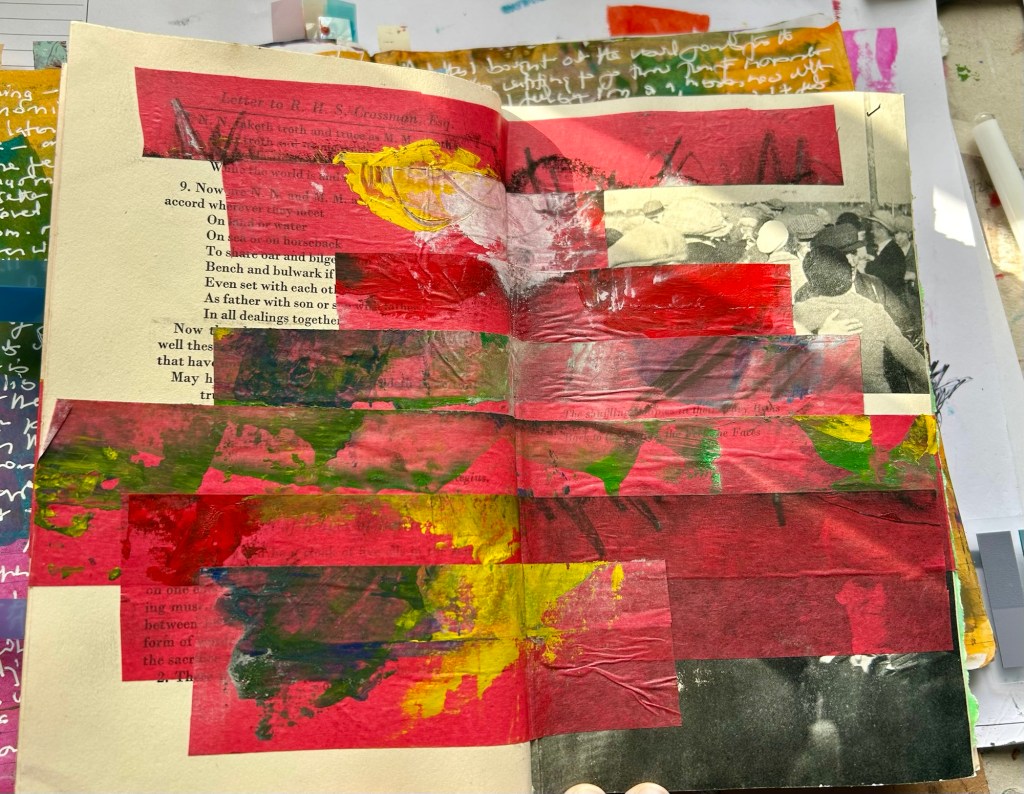
This sketchbook was my side hustle for the last month. Side hustle to my main creative sketchbook. Here I just lay down colour and see what happens.
I like when what’s underneath the paint bleeds through. I like when the different layers of paint and pencil and pen bleeds through to the surface too.
It’s like a palimpsest. The marks beneath is the feeling I’m after. The haunting, the trace, the evidence of time and the passage of time. The archive is present now.
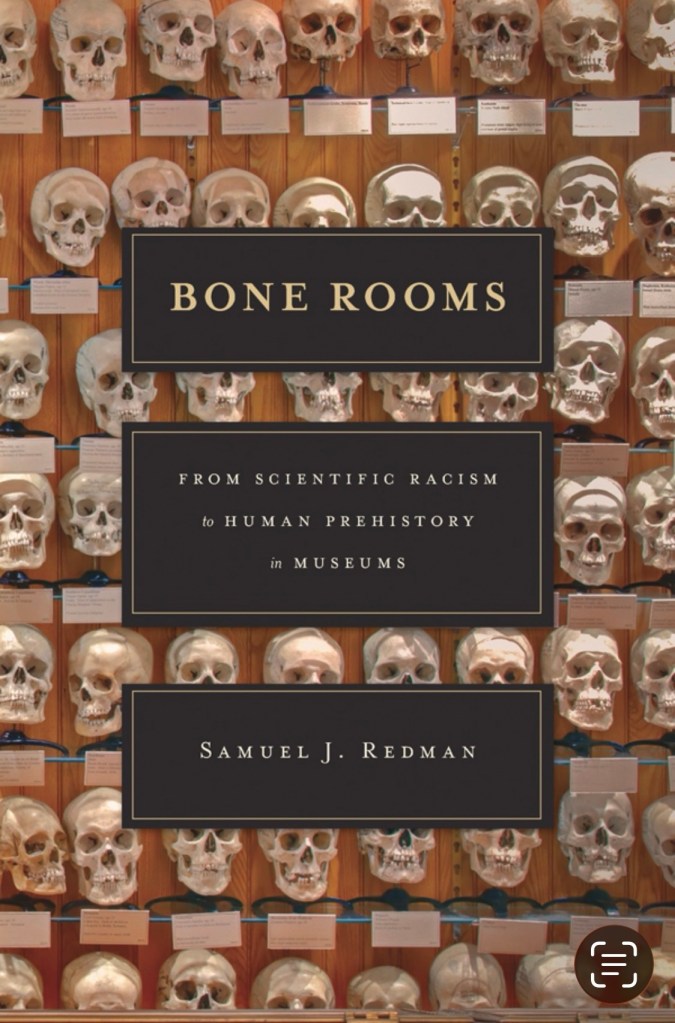
I started reading this book, hardback, a few years ago from the university library. It got recalled before I could finish it.
I was reading it after reading about how for decades the remains of two MOVE children had been kept at Penn Museum and later Princeton University illegally.
How they were using these children’s remains ( bones) in an online course for demonstration purposes as if they were nothing. Just fine specimens to illustrate a scientific point and not actually once being human and that their family was still alive and none the wiser. They thought they’d buried their children after they were bombs but piece of them were missing. And this wasn’t a mistake or oversight, the family had been lead to believe that all remains had been released to them to lay their children to rest.
I took an interest in this case along with the fascination of bone collecting/ salvaging/ pillaging to study and use as evidence of race hierarchies.
I even started a creative hybrid piece around it all as a means of trying to understand it as well as shed light in the continued extraction and exploitation of black bodies even beyond death.
I got out earlier than expected from my gig today. So I used the time to get to the library and pick up a book I’d spied
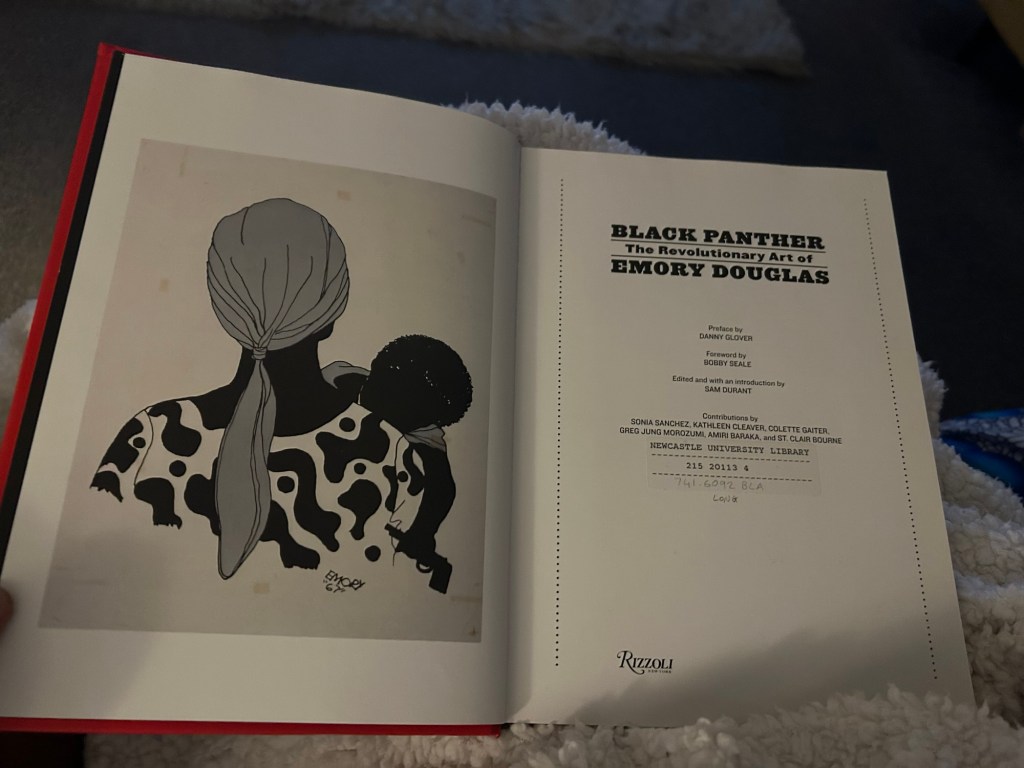
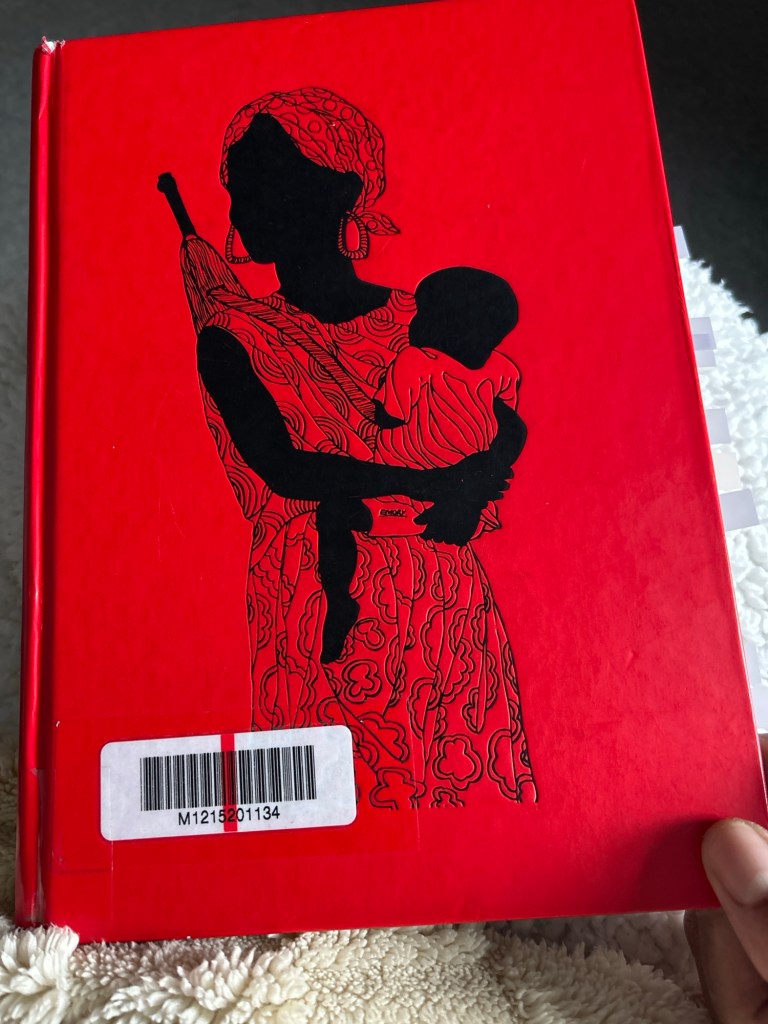
Black Panther: The Revolutionary Art of Emory Douglas.
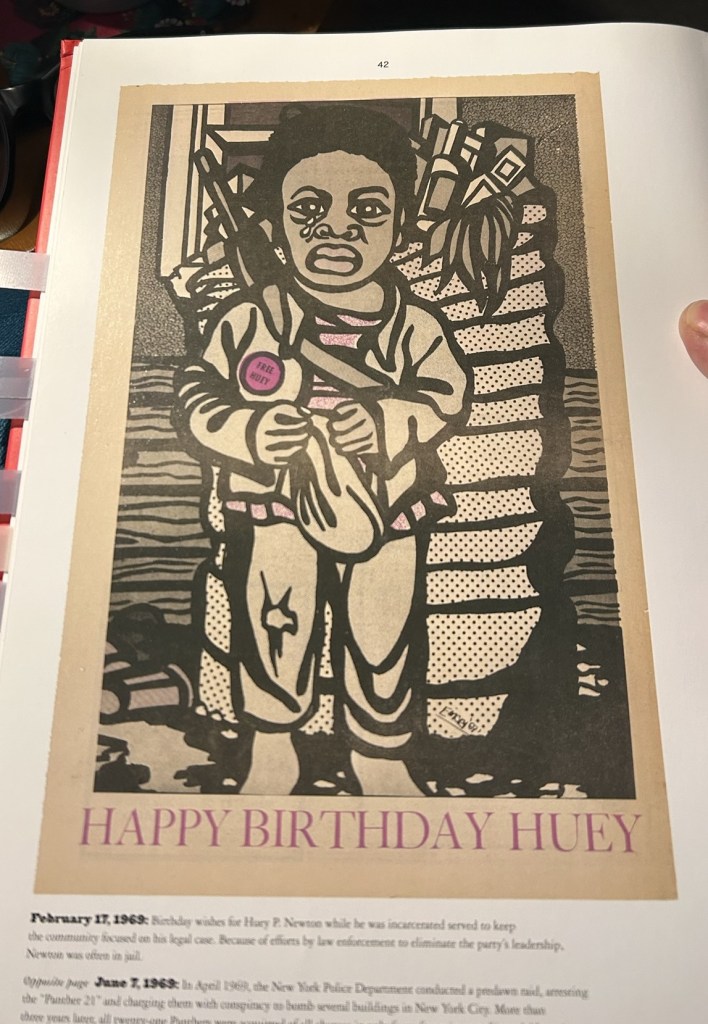
I’ve seen the posters created by Emory Douglas as part of exhibitions such as in the Soul of the Nation: Art in the Age of Black Power (2017), but never before have I seen his extensive artwork all together.
This monograph edited and introduced by Sam Durant is a gem.
Along with my exploration of Paul Amos Kennedy Jr. last year (and continuing into this year too) and this dive into the artworks of Douglas gets me thinking that I might be feeling the need to create some social justice/ black power artworks myself.
Who knows. My interest has been caught and this book is feeding me with inspiration to the max.
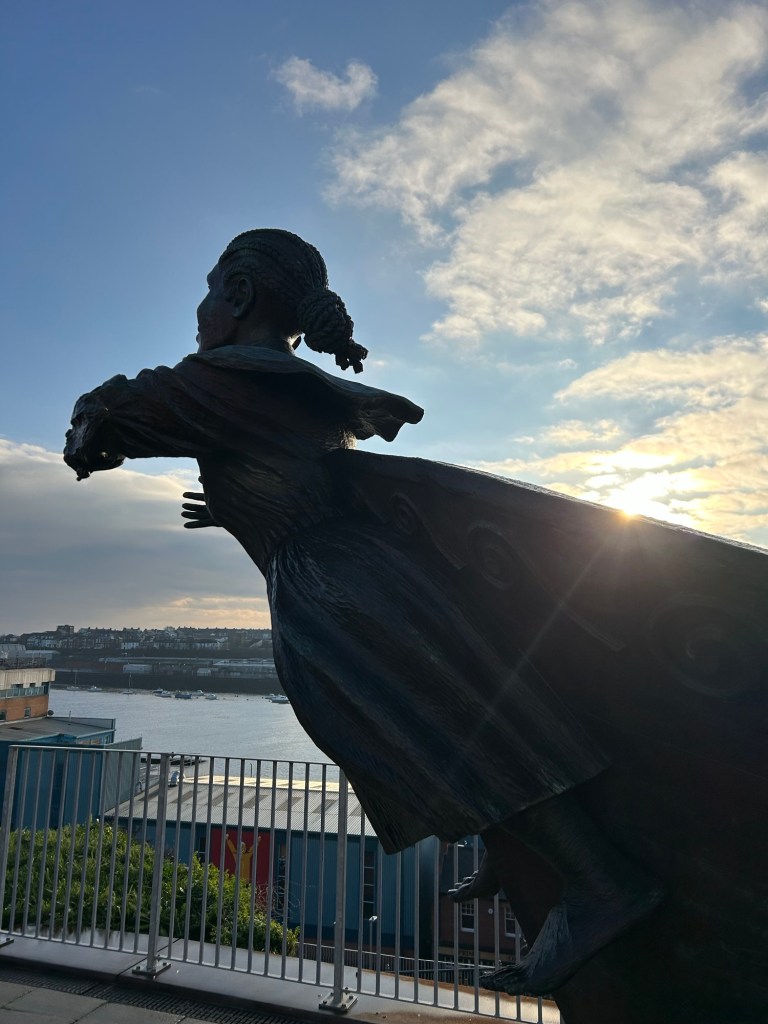
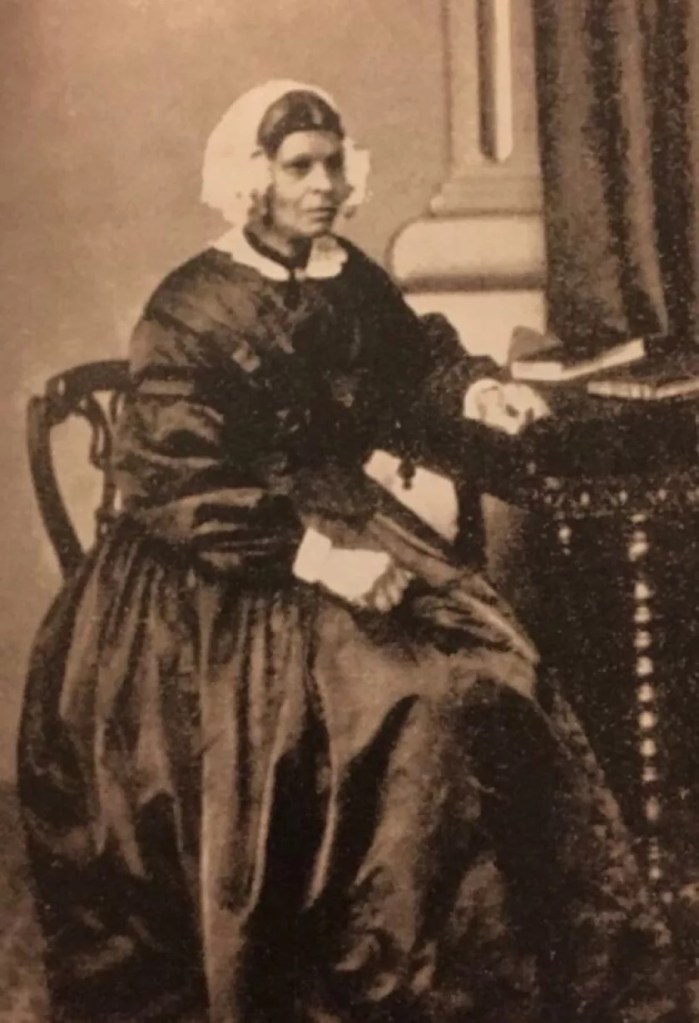
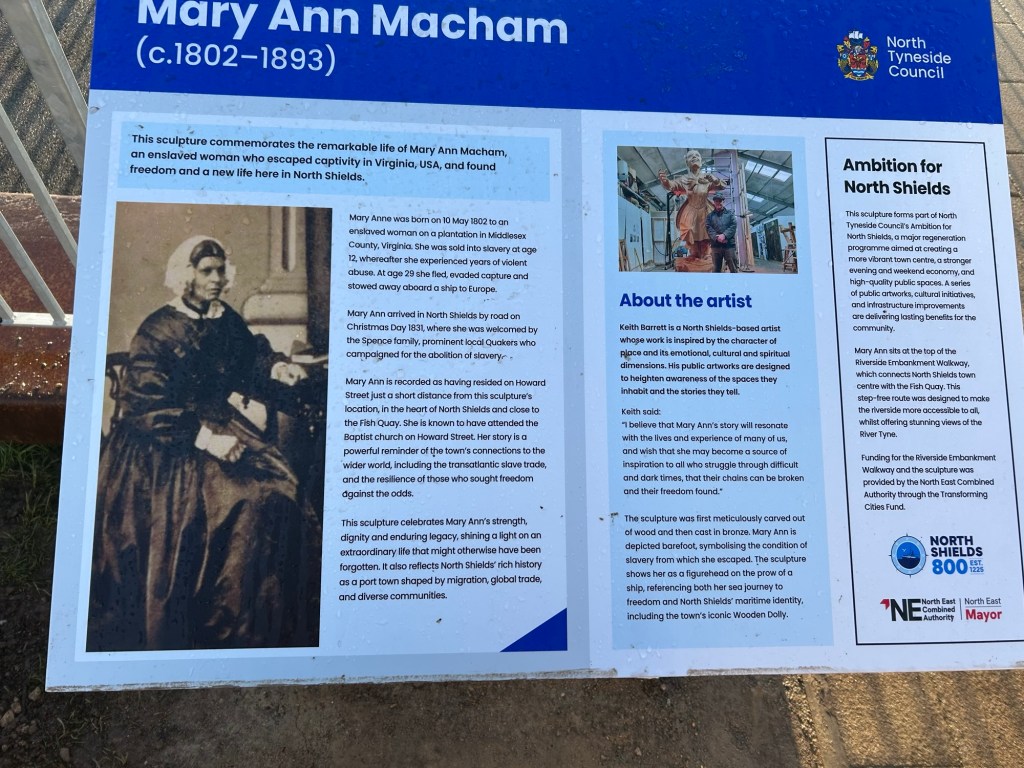
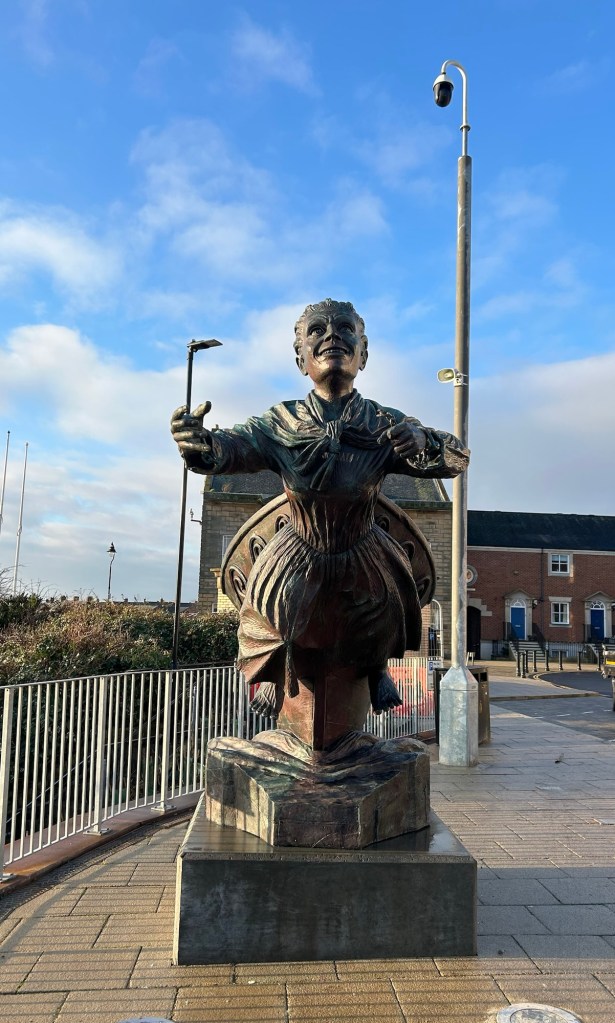
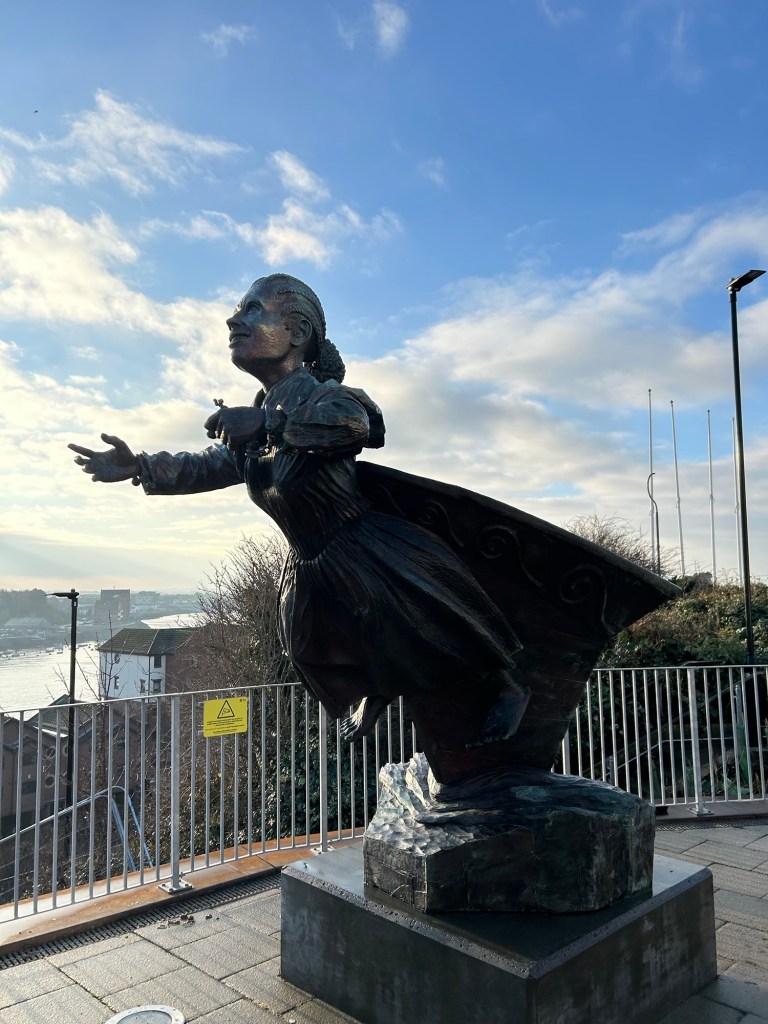
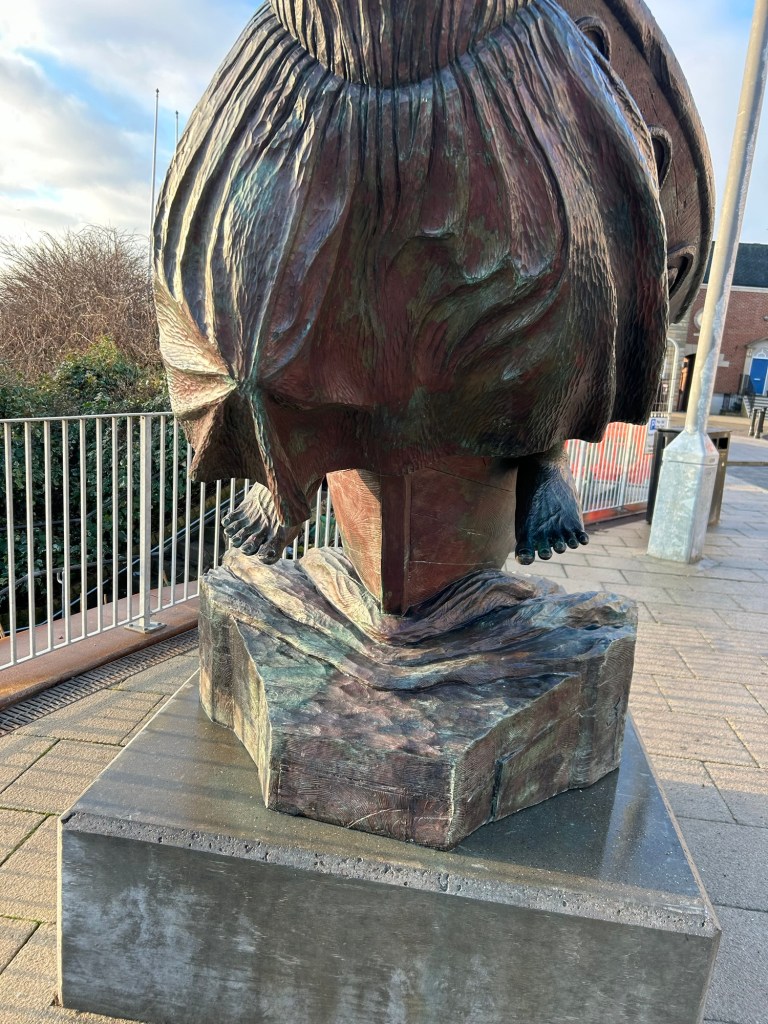
Walking into North Shields the other day, walking towards the Fish Quay where there is now accessible access connecting the centre of town down to the River Tyne, I caught sight of this sculpture of Mary Ann Macham.
I first learned about Mary Ann in 2007, when I was researching the North-East’s involvement in the transatlantic slave trade to mark the bicentenary of its abolition.
I was writer in residence within the Literary and Philosophical society, researching their tracts and unearthing the names and lives of the once enslaved people who passed through and/or settled here.
I wrote a poem about Mary Ann, her escape and travel up to the North, and with the help of the Quakers, made a life for herself through working in service and getting married and living in North Shields. This was back in 1831 when she arrived here and lived for a further 60+ years as a free woman.
An aside here is how the Quakers at the forefront of the abolition movement here in the North- East, were against the slave trade and worked for the abolition but still held the racist beliefs of the day that white people were still superior to black people.
Mary Ann Macham told her story to a member of the Spence family, who she was in service to. There’s a lot that can be argued about the practice of black people, telling their stories to white people who wrote them down and how accurate these are as a true representation of their stories. But this is all we have now as ‘evidence’.
African Lives in Northern England completed research on Mary Ann Macham before this public statue and the local groups ‘found’ her.
I should be grateful and overjoyed that finally Mary Ann Macham is being remembered. That there is a public statue dedicated to her and that she is being reclaimed as part of the local community.
But something just doesn’t sit well with me. Maybe I’m being far too critical. Or maybe I’m just coming at it from a black woman’s point of view living within white supremacy culture?
The press releases for this unveiling of the statue in November 2025, proceed to paint the impression that Mary Ann Macham has just been discovered. That this was hidden history that the locals have just uncovered and became fascinated with and had to find out more about. But unknown to whom?
If they had done their research they would have seen and also acknowledged the work completed in the past to shine a light on Mary Ann. But the story goes that they have just discovered her story. Or decided to just focused on only part of her story/life? Mary Ann Macham ( later Blyth through marriage lived until she was 92 years old).
The local Sculptor Keith Barratt who created the piece has said to the local media that he wanted this sculpture to show that “she came from a place of great pain, but it’s also a story of human liberation, of breaking the chains and I feel that this is something universal that many people will understand”.
I suppose I have issue with how Mary Ann is framed within the story of her own life, which she doesn’t have control over maybe a bit then but definitely not now with how she is remembered.
I Love North Shields has more details about her life and attempts to create a bigger picture of her life before enslavement and after as a free woman living her life here in the north east. But frequently it has to be argued, the majority of time, Mary Ann is trapped within the ‘slave’ narrative perpetuated by white people. Although seeing her as ‘brave’ for plotting her escape, they still frame Mary Ann, tell her story within the role of once enslaved, and needing the help and support of kind Quakers. Sounds a lot like white saviorism. Then and now.
It’s almost like Mary Ann is stuck, encased in bronze, and barefoot to symbolise the condition of slavery. Enslavement she escaped from physically during her life, but trapped forever within this role in memorial because the white imagination cannot see/ grant Mary Ann her full humanity . The fullness of her life.
Time and time again, the mainstream constructs the stories they want to shed a light on and tell about people of the global majority which suits the narratives they’ve been running for centuries. The narratives where we don’t have agency or self-definition but are the objects, less than and victims. This is a means of control and domination.
This is why it’s important that we take every opportunity to tell our own stories. To control our own narratives. To leave these as archives for the people that come after we so they can be in no doubt that we lived big, beautiful, full lives on our own terms.
And is it me, or does the statue of Mary Ann Macham make her look like she’s white?
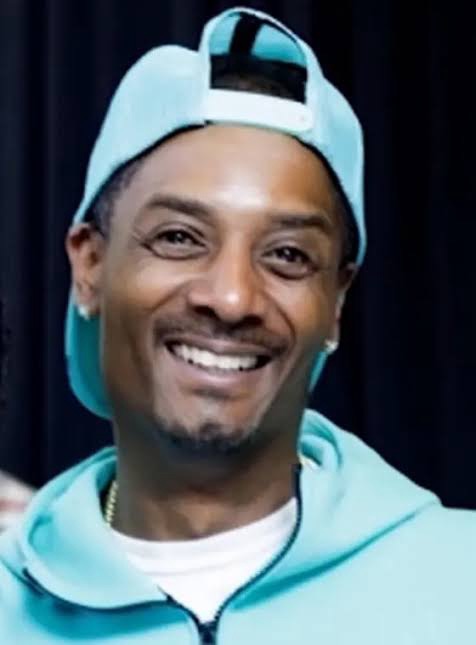
I’ll tell you the truth, I heard about Keith Porter Jr. 1 day ago.
Keith Porter Jr., a 43 year old father of two girls. He loves fishing and spending time with his family. Laughing.
Keith fundraised for battered women’s shelters, supported street artists, advocated for health services. With real family and friends, real daughters and a real presence in his community, Keith Porter Jr. is no longer with us.
Rest in Power Keith.
On New Year’s Eve, in Northridge, Los Angeles, Keith was seeing in the new year with family and friends in his neighbourhood. Tradition was to fire a gun into the air in celebration.
An off duty ICE agent, heard the shots, and inserted himself into the situation. A situation he shouldn’t have been in as an ICE agent is supposedly trained in compliance, transportation, custody paperwork. Immigration.
ICE is not designed or trained in community engagement responses. community law enforcement.
It is argued that after a short verbal exchange, the ICE agent shot and killed Keith.
Official reports from federal agencies say the ICE agent was responding to an ‘active shooter situation’. The department of homeland security says Porter fired at the agent before he was killed (in cold blood).
Watch how they change the narrative. Remember Keith Porter Jr. the man laughing with his family, caring and empathetic will become the monster who deserves to be dead.
Family and community advocates dispute this claim, stating that there is no independent released video evidence showing Keith Porter Jr. posed an imminent threat or fired at the agent.
Rather than lethal force, this off duty ICE agent should have done his citizen’s duty and called local Police as this was not an immigration issue. This was not his jurisdiction, his authority.
Keith Porter Jr. became an imminent threat only when this ICE agent turned up.
ICE has no community engagement training. They might have authority but not in the community, they don’t have the judgement and empathy to be on the streets. But obviously this ICE agent, off duty, thought otherwise.
Nearly two weeks ago Keith Porter Jr. was shot and killed. And people, the average person, even those online are just starting to find out about this murder. Only after Renee Good’s cold bloodied murder.
There is selective outrage in America. As I wrote last week, I have no issue with the response to Renee Good – that’s how we should be respond in this situation.
But
#SayHisName
Keith Porter Jr.
His family had been struggling to get his story, his unlawful killing into the current media cycle. This just compounds what I’ve been saying about the lack of visibility in mainstream media of black people being unlawfully killed by law enforcement.
Be honest have you heard of Keith Porter Jr? But you’ve heard of Renee Good?
There are arguments we can put in place here . You might not have heard his name, Keith Porter Jr. because he was killed by an off duty ICE agent not on duty with a large crowd there. Might be because there’s little video evidence circulating around. But the main reason is because Keith Porter Jr. was a black man.
This is part of the reason for not using #SayHerName for Renee Good.
No one’s even heard of Keith Porter Jr. No national attention for his murder but within 24 hours everybody knew Renee Good’s name.
This is the very reason #SayHerName was created for the invisible black women and black men who are causalities of the state, of state terror.
And it’s only now that white people are waking up to this terror when black people have been enduring if for centuries. This is why I argue to consider the language used and to give credit and recognition for where it originated, why it was created in the first place.
And yet the same stories are being used to justify the unlawful killings of Renee Good and Keith Porter Jr. They were both pointing weapons at ICE agents, posed a threat and had to be eliminated.
I say
2 different people
2 different cities
but the same structural problem.
Later down the line this might get read as the one bad apple or one bad moment. But this is clearly a system which once hidden no longer neededs to remain hidden.
A system that is built without limits or accountability.
De facto special powers bestowed by the Trump administration on ICE that seem to supersede police powers. ICE is now inserting itself into everyday life and every day neighbourhoods. And as we are witnessing this very presence is killing people. Killing more and more people who weren’t even their targets.
But that no longer seems to matter.
As I’ve said before and I’ll say again, I don’t have an issue with the response to Renee Good – that’s how we should be responding in a situation like this. I just argue that the others, and there’s a long list that is growing of people who have been killed by ICE during this administration, deserve the same energy that is surrounding the murder of Renee Good.
As last time I checked, these are not animals, criminals or just talking points but human beings. Real human beings with grieving families. And this is something that gets forgotten in the media.
We need to continue to have these conversations and we need to keep fighting, on the small and large scale, against fascism near and far.
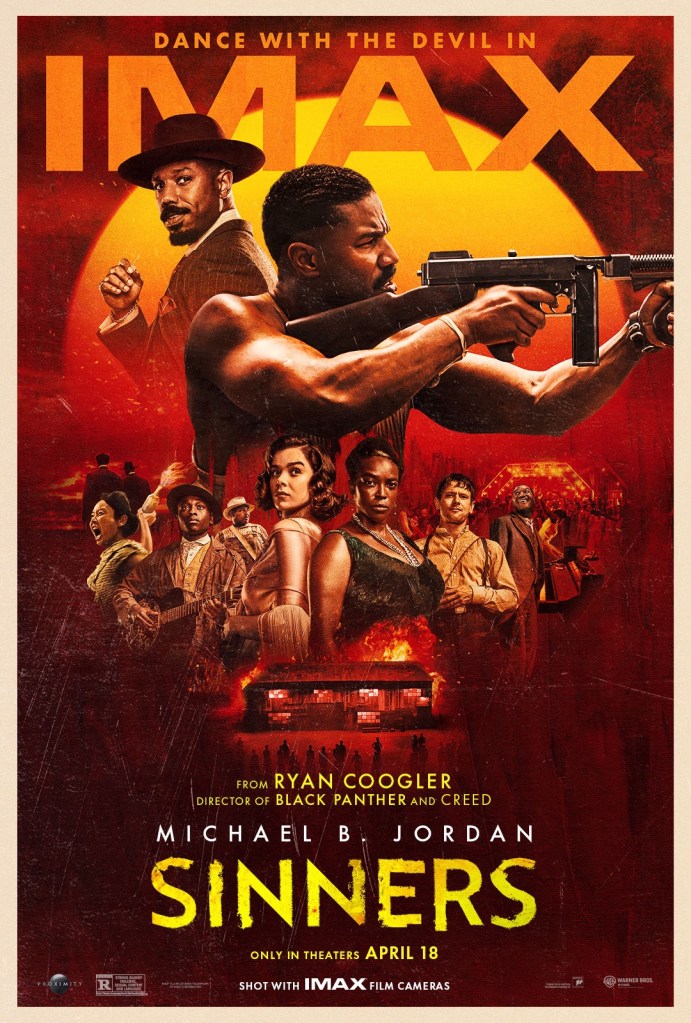
With it being awards season and all, I felt called to watch Sinners again. This might have been my fifth or sixth time. I’m sorry, I’ve lost count. It still hasn’t lost its magic. The film just keeps on giving for me. To me.
This time, I’m struck by how many times freedom is mentioned. How to get free? How to be free? How to protect that freedom?
I think Sinners explores the price of freedom. The price of being free. There’s always a cost for attempting to live life on your own terms.
From the beginning, we might be introduced to sharecroppers, working for the white men, still on plantations. But this will be a self-sustaining community. More than bodies for working on the farms, the land they do not own. But they have each other. Each character is developed at the beginning of the film. The viewer is allowed to get to know them and see them in their element. They be vibrant and they be fixing to be free. Free from the restrictions of white supremacy culture, capitalism, patriarchy the whole shebang. And this isn’t without pain but also joy and laugher and love.
Sinners is what happens when a community, when people are living their own lives and are infiltrated by others, who want what they have. Outside threats come to ruin the day. Vampires come and covet what this community has. Sammie. Sammie has a gift, the gift of music that connects him with all ages. Griot.
Delta Slim’s says, “With this here ritual, we heal our people. And we be free.” This is the power of music and how a community can tell their stories through music. And outside forces, in this case vampires, who hear, see, realise this power, are threatened by it as well as want it. Want to control it take it away from this black community who are gain strength and sustainance through it all. And be free.
Sammie’s gift, the music, the very culture needs to be/ has to be protected from these outside threats at all costs. As culture, its very existence is threatened from being sucked dry by the devils coming tonight.
So as a people, as black people, we do whatever we can do to tell our own stories, protect and preserve our music, our culture as through this we heal. And we be free.
If you’ve been around here for a few years then you’ll know that I choose a word each year to act as a guiding source for the year ahead.
I hold this word lightly as a beacon to support my movement through the year as I navigate through society, this world, with the ebb and flow of commitments, responsibilities, projects and inspirations.
Last year, fugitivity took hold of me and kept me refusing those things that have already been refused of me throughout the year.
Fugitivity and visual journaling went hand in hand in 2025 to the point that I was able to create a loophole of retreat, a space of freedom and play for most of 2025. No doubt fugitivity is changing my life and remains in my rucksack as I traverse into 2026. The year of the horse ( more on that later).
So what is my word of 2026?
Usually I have something chosen at the back end of Oct moving into November. It just comes to me, lands and takes up root as something that just feels right. And something I want to carry for a year or more and explore.
That didn’t happen this year.
I had the feeling of being ‘unapologetic’ to the max but that felt, as a word, so dated. I feel it has been co-opted by mainstream and capitalist culture that to hear it now feel so twee for me. It’s original radical power being neutered.
Then we had radicale ( with an ‘e’) meaning to get to the basic root of something. Its natural origin. It’s fundamental and essential, changing from the roots. As well as radical being judged as unconventional, pushing things to the limits.
But again this word didn’t sit well within my gut. I wasn’t feeling it.
For me my word of the year has to be embrewed with feelings as well as be able to stand the test of time, the year and beyond, as well as act as talisman, inspiration and haven. Words of the past has included voice, water, shakti, open, listen, love etc.
I have a tall ask for my word of the year but none of my words of the year so far has let me down. I suppose it’s a difficult act to follow after fugitivity as this practice has changed my life in so many ways.
But choose a word of the year I will because after so long in this practice, I would feel naked walking into 2026 without some word(s) at my back as support and/both motivator.
I’m making the commitment here now to go with – AfroSurreal – as my words of 2026.
Of course AfroSurreal is much more than a word it’s a whole artist and literary movement which blends the weird and absurd with the reality of blackness. That the reality of blackness, being black today is surreal.
AfroSurreal is also a way of {BEING} that roots me further into the RIGHT NOW. Creating the future that has to happen right now.
I’ll be exploring more and sharing about AfroSurreal over the next couple of days to get my basis understanding and direction down. And then look out for more posts about how I’m moving and shaking with AfroSurreal(ism) for the coming year.
I’m excited to see where this word will take me. A good sign if any that I’m chosen the right word ( movement) for 2026.
 Living Wild Studios