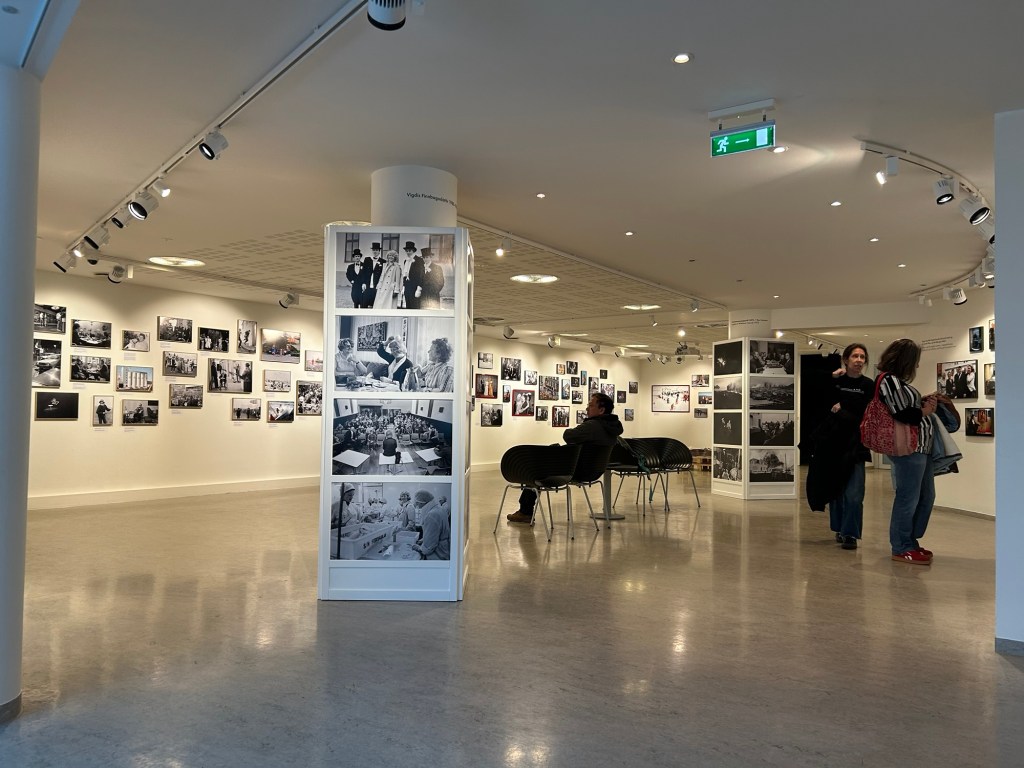
The last time I was in Iceland was June 2018. I was here running a creative retreat for women. On the Thursday of the week away, I facilitated a workshop at Reykjavik Museum of Photography. Probably shared what I created during that session on here somewhere. I know it included my mum and a glacier.
It was an amazing retreat, with everything provided for the participants. Even brought in my friend Sarah as the caterer. It was a week that had great highs and achievements with the costs being me exhausted and in debt.
I’ve always wanted to return to Iceland since then but a global pandemic, divorce and financial insecure got in the way. Until, I really got sick of saying, one day, and just booked the flight back in September 2024 and making sure it happened.
Always on a shoestring, but still doing it because I’m worth it, I’m staying in Reykjavik for the week. Staying in a hostel again and watching my budget. But it’s good to be back.
My first time to Iceland was 2016, the year after the shit hit the fan experience which will be 10 years ago tomorrow.
It was standing in this photography museum that I began to see myself again as a creative. Iceland helped me heal after that episode in my life and it was here that I made a promise to get my work within this space. With the women’s retreat I achieved that dream, not only working here but also sharing my words within the space.
Things don’t happen easily. There needs to be a vision and the hard work behind it. I’m not afraid of hard work. I’m more afraid of having dreams and never allowing them to come true. Because of outside barriers and obstacles I raise up within.
I came to Iceland a ruined woman. But I still had the strength of character and belief in self to grow and take risks and invest in myself.
Investing in myself is never wasted. I’m here for a week, a week that promises rain, wind and dropped temperatures. I could allow it to stop play. But I won’t. I’m here and I’m here to fill my pot by any means necessary.
I’ve always felt nervous when meeting new people. Not because I’m worried about what they’ll think of me, but because at some point in the conversation I will no doubt be asked the question, “So, where do you come from?”
When a white person asks me, this question comes with the implicit assumption that I am not ‘from here’. They might think this is a simple question to ask but it is not a simple question for me to answer.
Should I say Bradford, West Yorkshire, where I was born and brought up until the age of ten? Or the North-East Coast where I live now with co- parenting my daughter? Or even London, where I went to University and got in touch with my ‘black’ side? Or Trinidad, Ghana, Barbados, Nigeria, and Sierra Leone where my ancestral roots lie?
When I was younger in the 1970s and living in Bradford, my dad didn’t talk about Trinidad, but we knew it was the land of his birth. One of the reasons we knew this was because of the black crushed velvet scroll that hung in our front room depicting the islands of Trinidad and Tobago. We didn’t even know he had siblings until, after 25 years of no contact, he received a letter from his sister, Tantie Gladys living in the United States, which started a new relationship with ‘family’.
After my dad’s death in 1981, all the silences changed. Our mum told us the stories our dad had told her but had decided not to tell us about his land, his family, his home. We moved to Newcastle then, to be closer to mum’s family.
It was being closer to my grandparents, listening to them talking and seeing photograph after photograph, that I began to understand my heritage. My maternal great granddad, my nana’s dad, was from the Gold Coast, now Ghana. Charles Mason was billed as the first black man in Newburn, our small village.
I knew that someday I would visit my ancestral lands, Trinidad, Ghana, Barbados, on my granddad’s side, and Sierra Leone and Nigeria, a new piece of information which places my Trinidadian family as descendants of slaves.
“Where will you be buried?” asks a friend. For her the answer is simple; born in England, lives and works in England, dies in England, buried in England. But for me, it’s a tricky question because frankly, I’m not sure where I’m from. I live in Nirth-East England, but I don’t call it home; it’s my base. I wouldn’t call Bradford home, even though I still carry the Yorkshire accent around with me.
‘Home’ as a concept is problematic as it makes visible such notions as gender, diaspora, identity, culture. ‘Home’ as a term includes the sense of ‘knowing home’, what and where home is. It also encompasses that feeling of ‘being at home’ or away from home. But most importantly, ‘home’ includes that matter of ‘belonging’. There are multiple and fluid meanings of home, from private to public, from physical to imagined. The idea of home is plural, a conflicting site of belonging and becoming.
‘Confused’ is one word that should be on my passport. In 2007, I took the plunge. I approached a visual artist friend and said, “I’m going to Trinidad and Tobago. Want to come?” At the time, I wasn’t sure what I was planning. I was excited, worried, nervous and scared. When I tried to visualize myself there all I could see was the touristy, travel brochure images of the Caribbean; blue sky, blazing heat, turquoise sea, crystal white sands and swaying palm trees. All my knowledge of my heritage was based upon Westernized sources, framing the islands in a certain way.
Having completed a visit to the Caribbean, I can not really imagine what it is/was like to live there, to be born there and grow up there, as my ancestors did. I am second and third generation of immigrants, depending of which side of my family is in focus. I do not have that first hand knowledge of ‘home’, be it the Caribbean or Ghana, but I do of England. As
Avtar Brah says, ‘home’, is a mythic place of desire in the diasporic imagination. Nostalgia is a sentiment of loss and displacement. My experience of my ancestral homelands is limited. In terms of nostalgia, I have a longing for places that are far removed from my everyday but are part of my identity. I may gain an impression of these places through my travels to them or through my family members, sadly all of which are now dead, except my sister. I have that sense of loss of place and of people. I use my writing to create those lost worlds.
There is a photograph of me, in holiday gear (green and white striped top and white cargos), grinning like an idiot, clinging tightly with two hands, onto the arm of a man I’ve just met ten minutes ago in Laventille, Port of Spain, Trinidad. My smile speaks of satisfaction, joy, relief and belonging. This man is a cousin I did not know I had. This embrace is one of ownership. He is family and he is mine. He is part of my past, my present in that photograph, and my future. The past is in our futures, in our nows. I carry with me the baggage of the past into my present and future. My Laventille visit was like going to collect baggage from the left luggage department,finding and claiming baggage that I didn’t know I had lost, but is now vital to me in my task of trying to know myself better.
This feeling of belonging, this split identity/mixedness of being/feeling British, Caribbean, African without exclusive claim to any of them is something difficult to live with, to function with.
This is an updated and redrafted extract taken from my 2010 PhD thesis, ‘A Drift of Many-Hued Poppies in the Pale Wheatfield of British Publishing’ Black British Women Poets 1978 – 2008
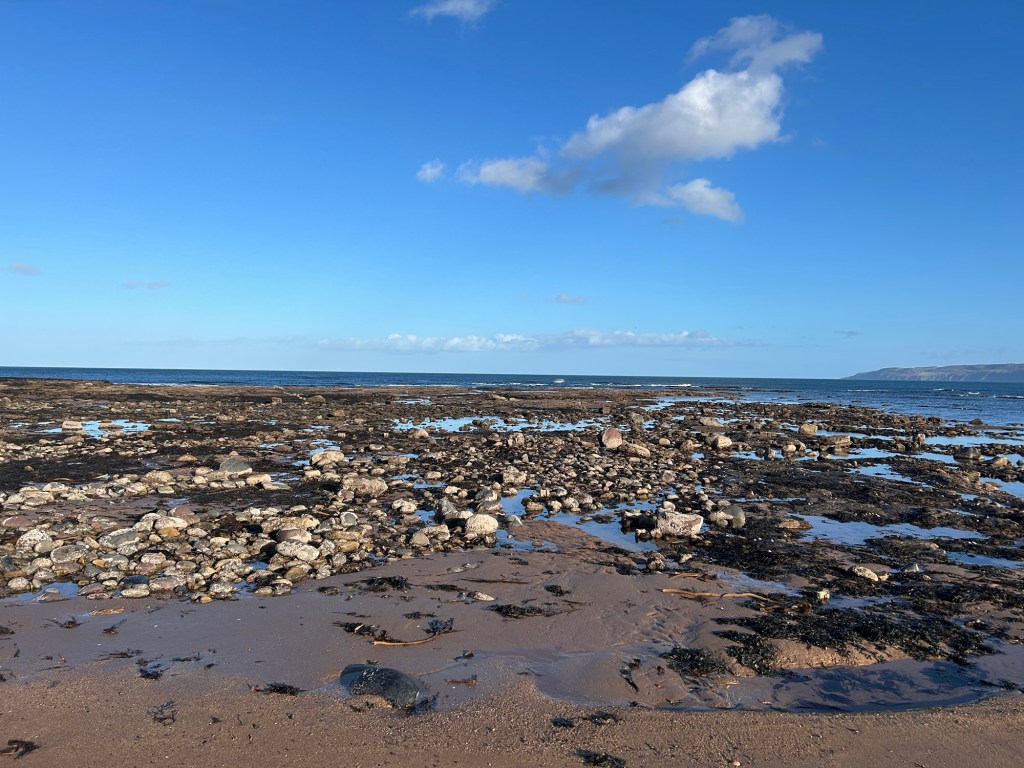
For years, I used to travel into Scotland, maybe with work in Dunbar or Edinburgh, and stop off on route at this beach, Thorntonloch Beach.
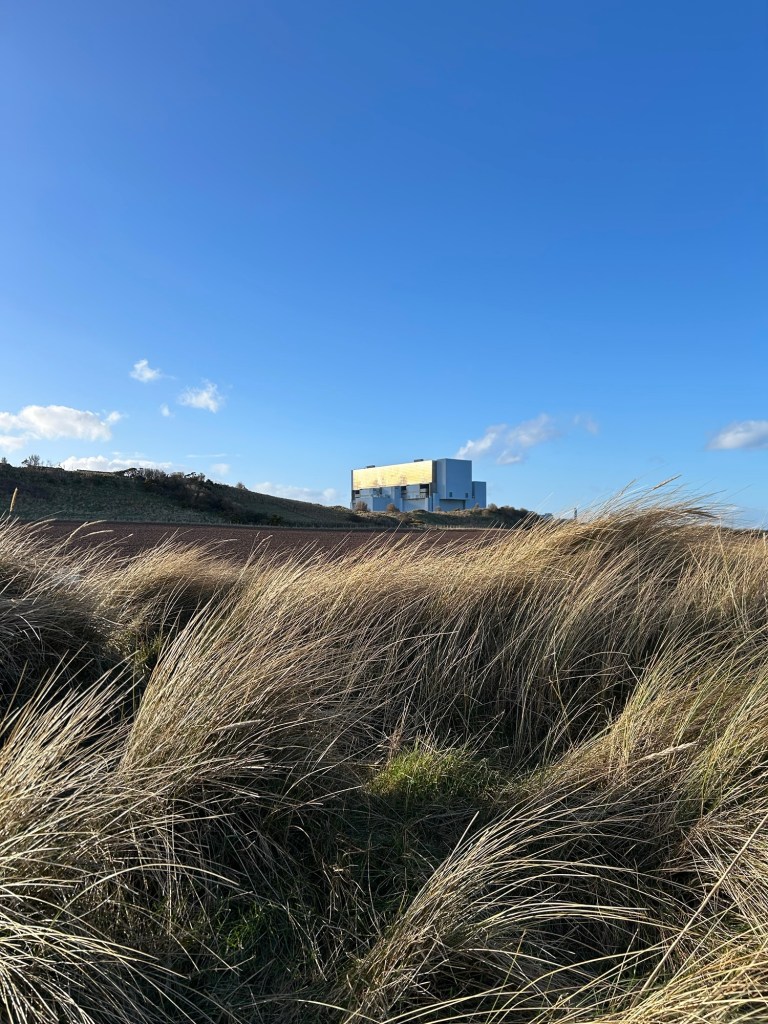
It’s nothing spectacular, apart from stretching out at the feet of Torness Power Station, but it would be a good place to stop and stretch my legs and calm my spirit.
I remember stopping there on my first trip to Iceland and being all giddy as I watched the waves roll in. That was May 2016.
I say all this because for the last few years and the last few trips across the border, I haven’t stopped and walked this beach.
I do not know why. Maybe I didn’t want to step back into a former Sheree. Maybe I didn’t want the hassle of sand in my toes. Or maybe I just didn’t register why I really used to stop at this beach.
I used to stop at this beach, to just be. To breathe. To be present.
Torness Power Station, Dunbar
And this time as I skip across the border, I pull over, park up and just be with the beach and sea.
A few days in the Emerald Isle, staying in Dublin. Walking my little legs off and soaking up the culture and Guinness ( with a dash of blackcurrant).
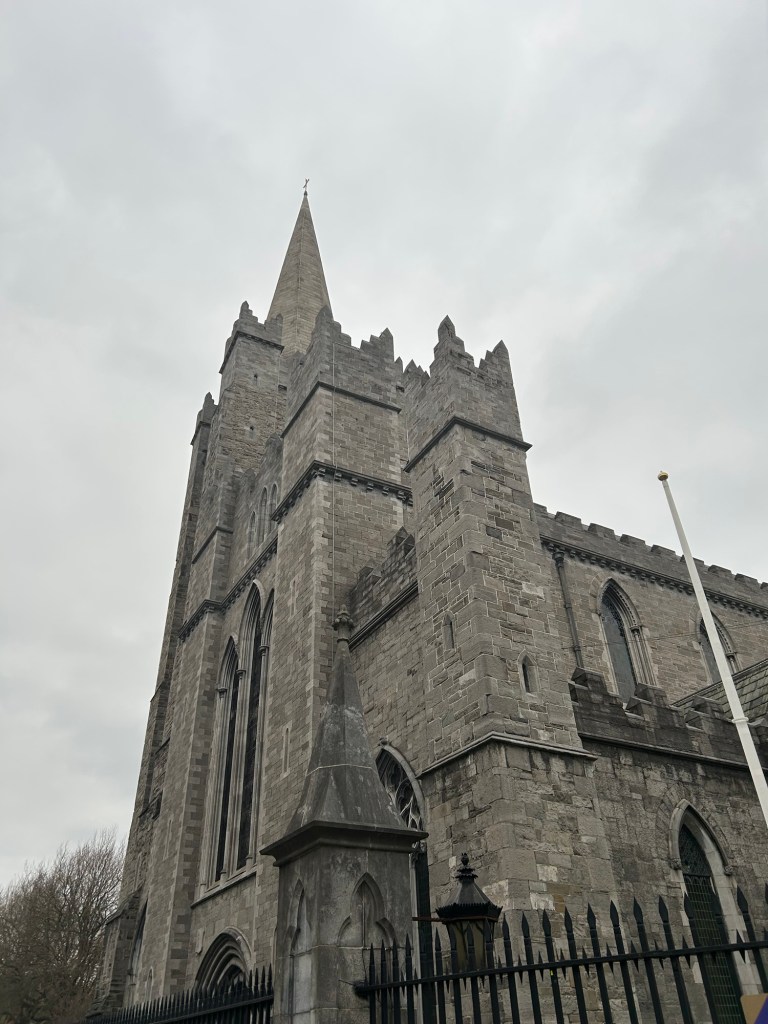
Here is St. Patrick’s Cathedral. Probably the first building to get my heart a pumping. And I’m thinking gothic. I’m going back to my GCSE studies and Northanger Abbey by Jane Austen. And it just really thrilled me. It touched my romantic horror capabilities. The terrible beauty of this world.
It’s a striking Cathedral, made from limestone and is constructed in a gothic style. I recognised its mystery and gloom and yet a feeling of light too. An 800 year old building probably constructed in an ancient well used by St. Patrick himself.
It’s such a beautiful construction as well as having a moody kind of vibe of pointy arches and buttresses and heavy weathered stone. I was just as in my element as I walked the streets of Dublin. And just as the limestone, is greying and dark, but still a hint of lightness, so was the city itself: full of heart with an underbelly of poverty and suffering. A terrible beauty.
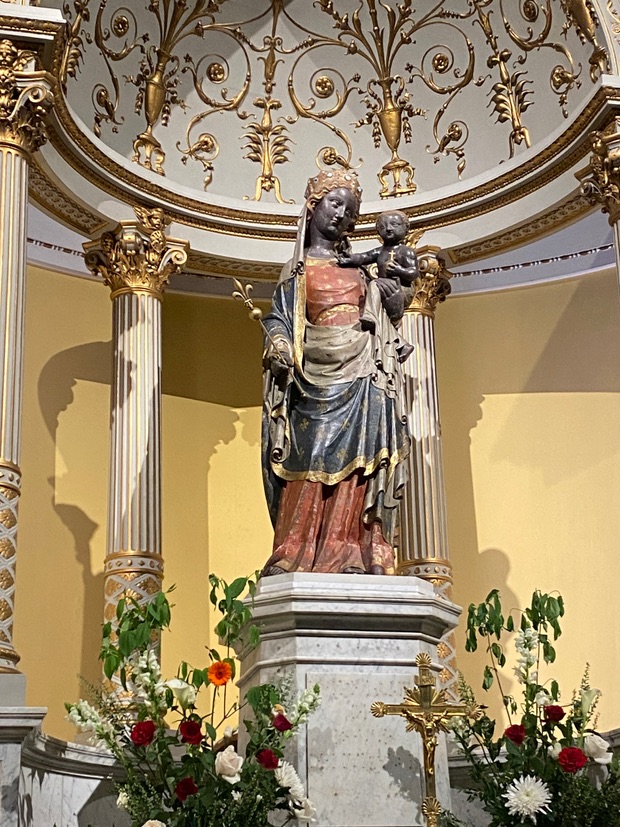
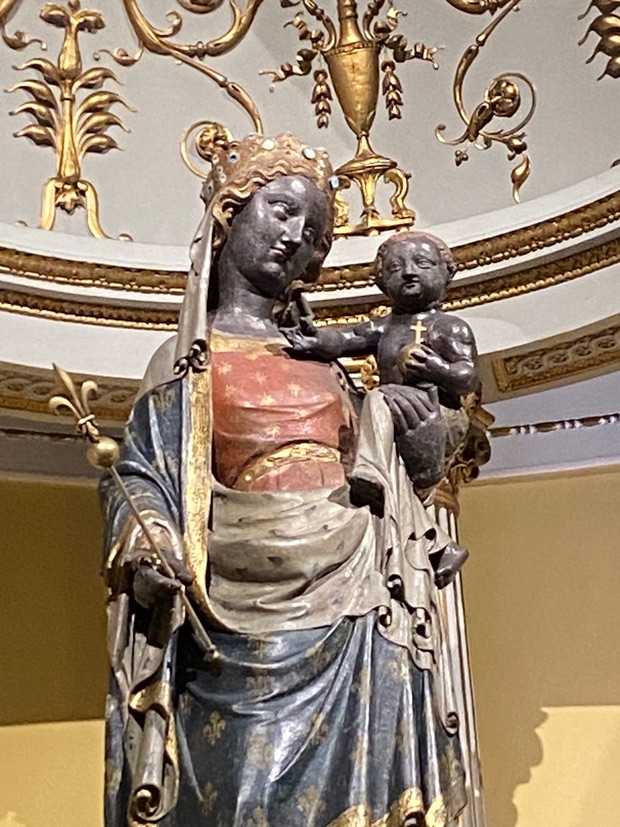
1. While visiting Paris in April, I’d made arrangements before I left to visit Vichy and visit the Black Madonna there in the Old Church, chapel Saint-Blaise.
I’m returning to my relationship with the Black Madonna here but still exploring this connection. This pull I sense towards these Black Virgins.
2. This chapel has always been a magnet in Vichy due to this Black Virgin of the 14th century. She is known for her miracles.
3. I’ve not brought with me the Christena Cleveland book, God is a Black Woman but I know I’ve written about this particular Black Madonna here before.
4. It was during the French Revolution, that she was burnt and only her head remained, thanks to a ten-year-old child who saved her from destruction.
5. There have been times that I have lost my head. Or been disconnected from my body. There have been times that it’s felt that I’ve been burnt at the stake. That my life has gone up in flames.
6. In 1802, her head was placed on a wooden base covered with the old cloth until 1931 when she was given a body again. Became a full bodied statue thanks to the sculptor Emma Thiollier.
7. No- one stitched me back together. Forged that (re)connection with head and body. I had to do that myself. Over years and over turbulent waters.
8. Vichy is known as the “queen of spa towns” with five healing thermal mineral springs.From the Roman times, people used to bathe in the waters, later to just taking to drink from the spring. It was only later after legends linking the healing qualities of the water to a white fairy that Christians connected the blessed waters with their miracle working Black Madonna of the Sick.
9. I’ve always thought of the sea as my medicine. She has healed me more than once. Healing is not a one time deal. It’s a practice and a process. But I’ve not been taking to the waters of late. I’ve not been taking my medicine.
10. I turn up here, create stories as a part of my healing journeys which are never linear. Spirals and circles instead.
My mind and body are hurting with the constant stream of information and images of this and that atrocity, and there is very little space to breathe, rest and take stock. I’ll be honest, I’ve been checking out. Checking out into Netflix boxsets, mindlessly watching episode after episode, numbing the pain and feelings of being inadequate , or not doing enough, being enough. Enough.
I don’t know about you, but it’s an overload at times of these times, which feel cruel and oppressive, evil and violent and unbelievable and yet we accept. There are no quick fix solutions but my heart and soul wants to feel that all will be well.
Society and culture ( the whole world) at the moment feels toxic and dangerous and I’m all for just slowing down and connecting in more deeper, honest and nourishing ways. I’m still leaning into my joys. Still bending towards the light as I don’t want to lose myself in this crippling spiral.
I’m slowing down alone and I’m slowing down in groups that I’m supporting and who are supporting me. I’m not by-passing the pain, the harsh realities, the genocides ( as there are multiple happening at the same time just now or have always been going on), but I’m also acknowledging how much I can endure and not beating myself up if I choose silence instead of performance. I know this is a privilege which I recognise, voice and keep checking.
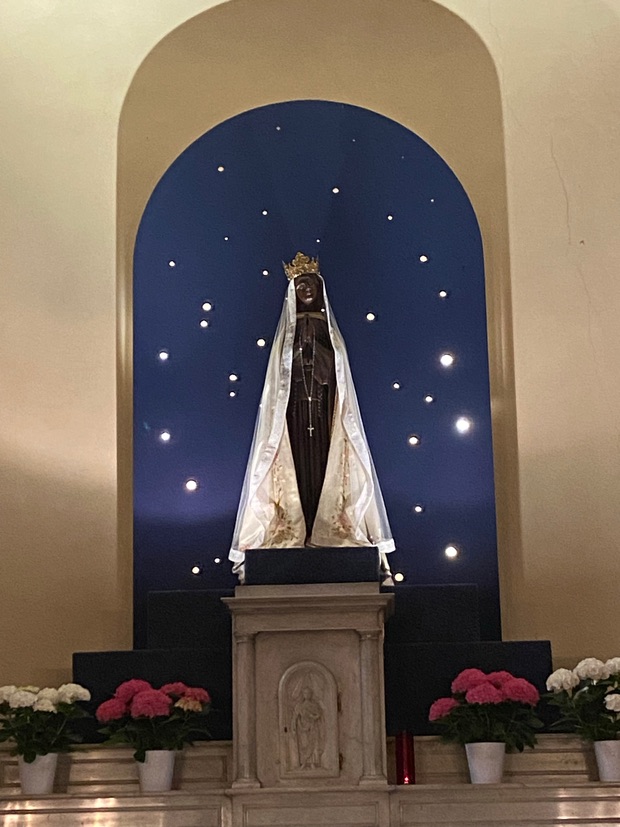
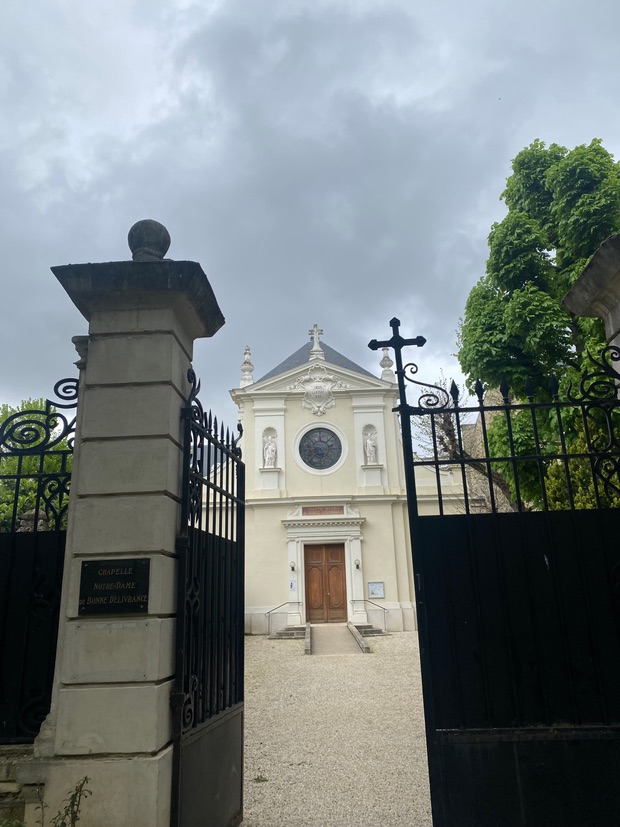
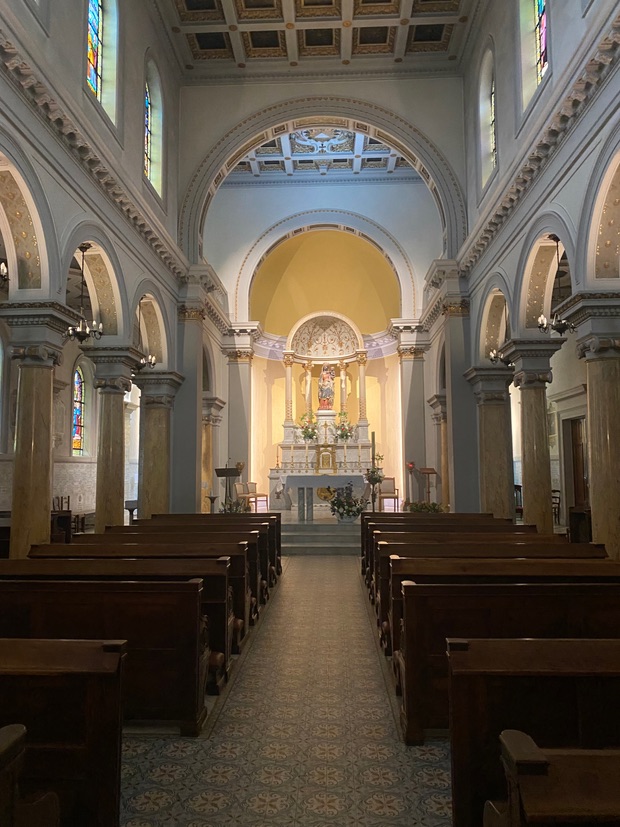
Below I share the images from my Paris trip of Our Lady of Good Deliverance, often referred to as the Black Madonna of Paris. Over a 6 miles walk to see her, I covered more miles within my mind with my thoughts and feelings wondering and wandering, which were silenced or put to one side when I met this Black Madonna. I had the small chapel , in the suburb Neuilly-sur-Seine, all to myself when I visited. I walked around, I sat and looked and I lit a candle and remembered my ancestors and give thanks for this deliverance.
Deliverance: being rescued or being set free. How apt she comes back to me today. How I must have unconsciously known I needed her guidance today, needed her love and reassurances that liberty, salvation, change is possible. I’m not religious or spouting anything remotely religious or pious. I’m not preaching or looking to convert.
I’m spiritual and believe in love. I believe in the good in people and try to connect there on that common ground rather than separation and hatred.
What I do know is this isn’t a neat, tie-it-all-up-ending, with ‘this is what I want to say and you to take away’ as that would be another construct and false prophet.
I just know starting to look/ believe that ‘God is a Black Woman’, that the Black Madonnas are here to support and love us through difficult times ( as well as good times, our pleasures and joys) feels like a blessing to me that I will continue to lean into during these slowing down, turning away from exploitative and extractive society and culture times and continue to nurture others ways of {BEING} in this world.
I’m onto the second reading of this book. I think I heard Christena Cleveland on a podcast talking about her journey and I knew I just had to get her book. I’ve used the saying myself, “God is a Blackwoman.” But I didn’t know there was a book all about it.
The book explores Cleveland’s spiritual/ religious journey as she falls out of love with Christianity as its essentially fathetskygod/white make good and is used to uphold white supremacy, patriarchy and capitalism. Basically just looking out for white cis males.
The book also follows Cleveland’s four-hundred-mile walking pilgrimage across the Auvergne to visit eighteen Black Madonnas. The book manifests Cleveland’s transformation through the Sacred Black Feminine, healing her Black female embodied soul.
Each chapter takes the reader on a journey in the present as Cleveland walks and also into the past as she reflects on her upbringing within her family, the church and society. How she grew up feeling unloved by God, unseen and not looked after. Each chapter also introduces the reader to a Black Madonna, each one Cleveland encounters along her pilgrimage.
It was when I read Chapter 5 and Cleveland introduced us to ‘She who cherishes our hot mess’, the Black Madonna Our Lady of the Sick in Vichy, that I got it into my head I needed to go see this one for myself.
Now I’ve seen the Black Madonna in Le Seu, Barcelona. Even climbed a mountain to see the Black Madonna of Montserrat, just outside Barcelona. But this time, this need felt different. A lot has changed for me since I’ve last seen these Black Madonnas and a lot more life experiences to heal from/ through/ round/over/in.
The Black Madonna of Vichy was decapitated during the French Revolution but the people who were oppressed loved her. They tracked down her head and built her new body out of walnut and put her back together again.
I love this story and it spoke deeply to my soul because I know what it feels like to be separated from my body in an act to fit in. To be disconnected from my body, living in just my mental space and not listening to my physical pains and discomforts but soldiering on. Denying my needs and wants as these are seen as weaknesses, produce feelings of shame and are not welcome here. Squeezing myself into smaller and smaller spaces so as not to take up any room and apologising for the space I do take up.
Been there, done that. Now I intentionally practice being with/in my body. I enjoy an embodied presence in the present. My head has been reattached to my body and I’m allowing my body to lead the way with practice. I’m no lover afraid to express my needs and wants or to walk away if these are not being met.
So once I realised I was definitely coming to Paris this year, I made the arrangements to go that extra mile or two ( well 450 round trip) to see ‘She who cherishes our hot mess’ in the flesh.
It would involve a 3 hour train journey each way. An over night stay and a little hope skip and a jump up to the Notre Dame des Malades, the new church where she stands.
And for a minute there I thought the church was locked …
I’ll leave it here for now because trying to see this Black Madonna turned into a bit of a crusade to see her again and again during my time in Paris. More to follow!




 Living Wild Studios