Cinnamon sky rumbles
as electric clouds jag
over glass shop fronts.
Scarlet waves fire street
corners, claiming them forever.
Coppers and politicians
worry the faultlines
left behind.

Cinnamon sky rumbles
as electric clouds jag
over glass shop fronts.
Scarlet waves fire street
corners, claiming them forever.
Coppers and politicians
worry the faultlines
left behind.


In pursuance of the powers vested in me by section 32 of the Police Act 1964, I, Right Honourable William Whitelaw, one of Her Majesty’s Principal Secretaries of State, hereby appoint the Right Honourable Lord Scarman to inquire urgently into the serious disorder in Brixton on 10 to 12 April 1981 and to report, with the power to make recommendations. *
Stories keeps being told, this is a tolerant country. It’s official.
Britain is tolerant, fair and just. There isn’t a race problem. Never was.
People who are different are treated the same. Tolerated. As long as they don’t make a difference.
Small minorities are accepted as long as they stay small.
Get to ‘swamping’, and then these minorities become a threat.
They start to threaten the whole fabric of the superior British characteristics.
Tolerance, liberty and civic duty. Values out the window, when the nation’s anxieties are raised.
Fear. And the country’s doors are closed.
The drawbridge raised.
Their shields are driving them back.
* The Brixton Disorders, 10-12 April 1981, Report of an Inquiry, By the Rt. Hon. The Lord Scarman, O.B.E, November 1981

Writing comes from reading, and reading is the finest teacher of how to write.
Annie Proulx
April is National Poetry Month. Yes and as I’ve mentioned a good time to write poetry. But for me writing and reading/ reading and writing goes hand in hand.
Not only am I inspired by other people’s words, I’m invited into other worlds, internal and external worlds. Possibilities around structure, themes, ideas and voices are opened up for me.
Reading feeds my soul. Something I forget from time to time when things go awry ( I love that word ‘awry’. I first came to this word through Lucille Clifton’s poem, ‘Signs’).
You see what reading can do to my writing? Introduce new vocabulary. Expand my horizons. Make me smile.
So along with the writing this month, I’ll be reading poetry. I usual read at least one poem a day, after signing up to Poetry Daily , a few years ago now and not unsubscribing as I have in the past.
Add to that one poem a day, collections of poems, whole book collections and then you’ve got yourself a sweet honey pot of inspiration and ideas and joy.
So look out for the poetry I’ll be reading and sharing here over this coming month.
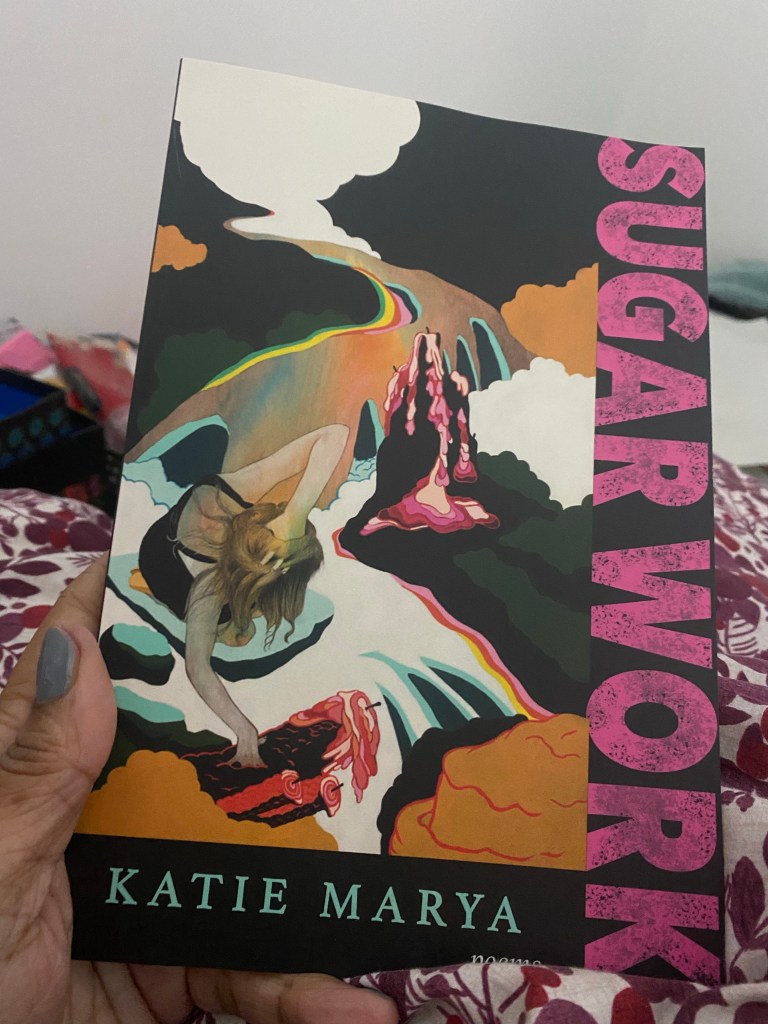
Today, I dive into Katie Marya’s debut collection, Sugar Work, which came to my notice through Poetry Daily, with her poem titled, ‘A Response to the 2018 IPCC Report’.What I loved about this poem was how issues about the environment through the report were being looked at from a slanted angle. Through our bodies and babies and families and friends. How in order to see what we are doing to the planet it has to come to our doorsteps, our bodies first. But of course we are all connected.
I’ll let you know what I think as I go on with Marya’s collection. I’m looking forward to diving in.
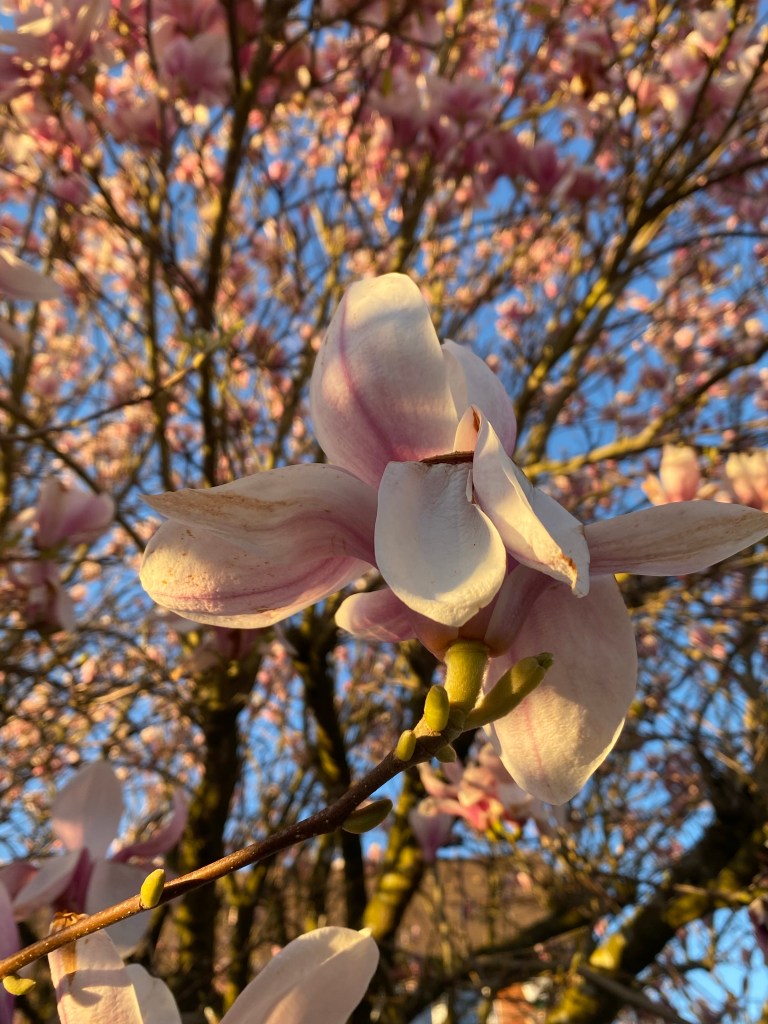
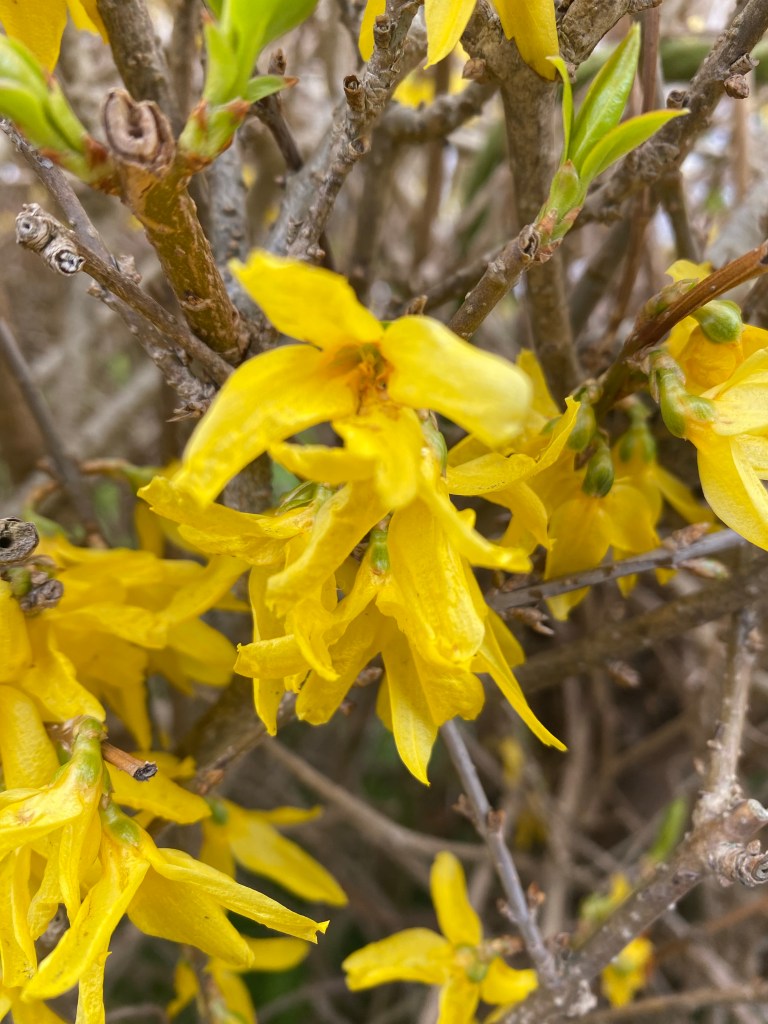
Happy April. Time for showers, blossom and light. Oh and poetry.

As I mentioned last week, I’m honouring National Poetry Month with the challenge of writing a poem a day.
I’ve set myself this task many times over the years, and I’ve always been amazed at the creations along the way. Poems have emerged onto the page that I didn’t even know were in me and needed expressing.
So today I come to the page with an open heart and a rough idea of the themes or issues I want to explore. But who knows with the creative process. Anything could happen.
Anyway day 1 – PAD/ 001
Trying to understand “the difference between poetry and rhetoric”
After Audre Lorde
The contested site of black settlement in England
is shrouded a heavy fog of amnesia. The wrong colour,
the wrong body, the wrong sound.
Read the history books, you’d think we just landed
the day before last. 400 years of being here, lost
in the mire, weighted down with size 10, Dr. Martens.
Like transplanted birds of paradise, West Indians
struggled to put down roots. Alien soil. On corners,
skylarking and limin’, jobs, homes and a little bit of peace
denied; harsh whispers on the bitterly cold wind.
The contested site of black settlement in England
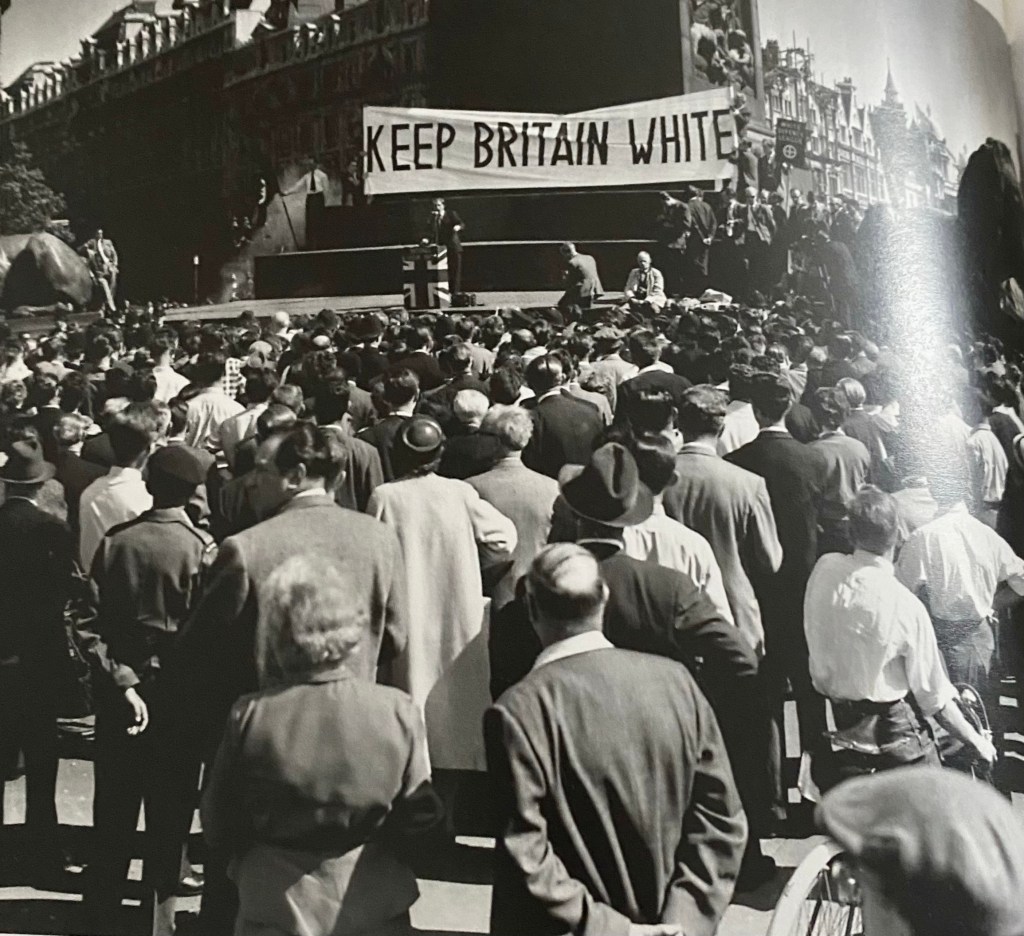
is captured in stills. Images speak for themselves.
Black faces filling the frame; black blooms pressed
against hothouse glass. But still an absent presence in failed memories.

I recently talked about the coming of April and how more poetry would be appearing on here as I attempt to ‘play with words’.
You can not imagine the delight as well as confirmation I received this morning while reading an article for the commissioned essay I’m writing at the moment around (Black) Motherhood.
A bone of contention with me is when I see the words ‘mother’ and ‘motherhood’, even though I have birthed children, I do not see these terms applied to me. ‘Mother’ and ‘motherhood’ come with the connotations of white and whiteness for me.
Test it yourself. Be honest. When I first mentioned ‘mother’, what image came to mind for you? If not a white woman and child. I’ve seen image after image of the idea of motherhood, the natural beauty of ‘The mother’ and nine times out of ten the image is of a white woman and child. As if a Black woman is not/ cannot be seen as a mother, even though a Black woman is the source of the whole human race. Go look that one up!
Anyway, I’m going off topic here ( but not in terms of the hybrid essay I’m writing for the forthcoming special Demeter Press collection, The Mother Wave: Matricentric Feminism as Theory, Activism, and Practice (2023)).
Reading this article this morning, ‘ Conjuring the Ghost: A Call and Response to Haints’ by drea brown, there is a mention of poetry lying in the body, coming from that dark place within where our true spirits lies hidden and growing, argues Audre Lorde. But poetry is also our way, Black people’s way, or theorising and making sense of things. Through our stories, narratives, riddles, poetry; playing with words and language, we not only gain an understanding and reimagining of our lives but these are also tools of surviving.
As Black women, speaking from my lived- experience here, through our creativity, through our playing with language in such a spirited way, we enter in the process of not just theorising and strategising but also self-making and through this practice passing this on to others. Passing on this power to others. It’s what we do, have been doing through time. Starting with the mothering we do of ours and others babies

Spring’s in the air. Filled with love. There’s magic everywhere. When you’re young and in love- The Flying Pickets ( well that’s who I heard sing it first and I’m sticking to it!)
April is just around the corner. The blossom will be blossoming. And I’m returning to my first love; poetry.
We’ve been in and out of love over the years, poetry and I. Sometimes she hasn’t treated me well, while other times I’ve neglected her and gone off with some other genre of writing.
I don’t even know if we’re good together, as I was brought up on dead white men’s poetry and I could never measure up to them and their creations. And then somewhere along the way, I gave up trying to.
But when I’m facilitating writing workshops, I say poetry is just ‘playing with words’ in order to break down the fears and insecurities we may be bringing into the creative space. ‘Playing with words’ eases the pressure and injects a bit of fun into the proceedings.
So I’m taking my own advice and going to spend April playing with words each day on the hope of creating some kind of whole at the end of each day.
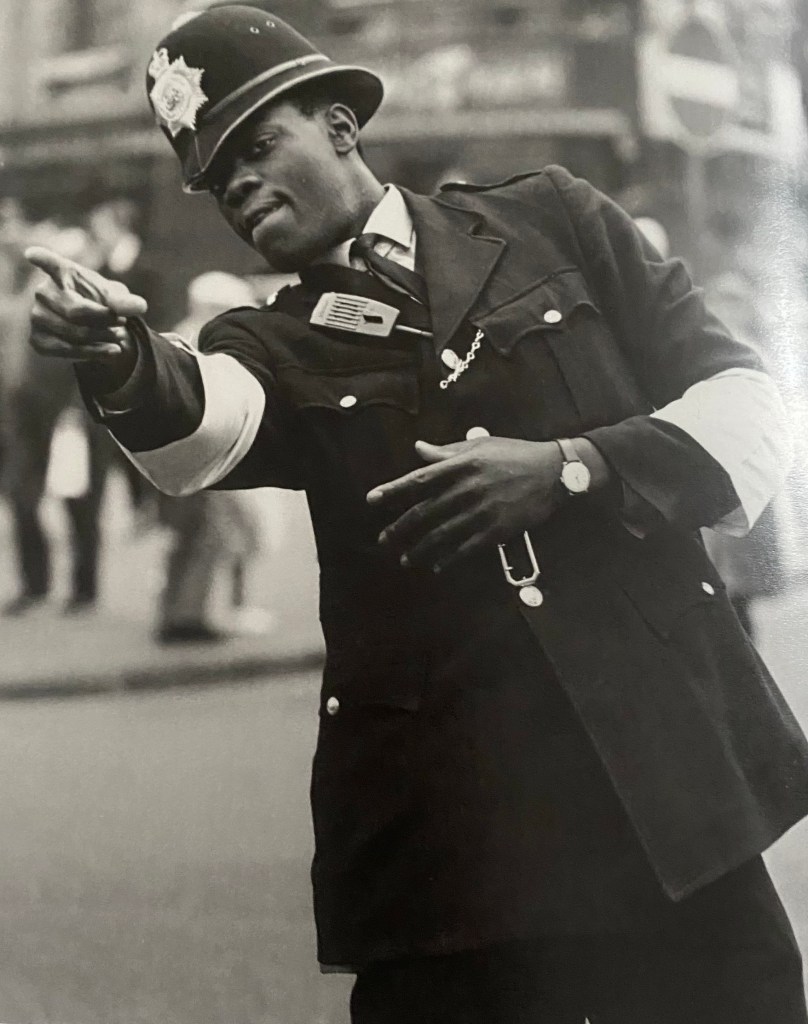
For more ease of creation, I’ve decided to base my creations around one theme/ focus/subject which is loosely around Black British history through the photographs of the past that are in the public domain along with an exploration of the Race Relations, Commonwealth and Immigration Laws which came into effect during the 60s and 70s.
I’ll also be touching upon the uprisings that also happened during these turbulent times as a demonstration of push back against the messages of go back home even though for the second generation of immigrants onwards this has been the only home most of us have known.
So this is the intention, as I also attempt to tap into the surging, fresh Spring energy of the season, to reconnect my ancestors’ bodies with nature through the process of playing with word to create poetry this April.
I hope to document some, if not all of my creations here as a means of accountability and in the spirit of sharing stories.

When light drips from the moon, I wonder what she sees in me.
As her light stalks through cracks, does she feel the longing threaded through the hairs of my arm, and slicing through the rim of my smile?
When light bulges from the moon, thrumming the water of my weight, does she sense my hunger for a lover’s hips touching my inner thighs, for a breath down my neck, in caress?
When the moon’s light fingers me from sleep, to wind circles over my skin, moth light, white light, does she taste
the salt in my bones
the sugar in my sweat
the howl in my throat?
“Sometimes it can be the fear of writers block that keeps us from writing. We believe we don’t
have the words. We get stuck. My one word answer; repetition. I learned the value of
repetition through being a parent. Mothering is deep study in practices of repetition. Doing
and saying the same things over and over again. Recently I listened to Black feminist and
performance memoirist Gabrielle Civil2 speak on repetition. She offered a spiritual as an
example;
Sometimes I feel like a motherless child
sometimes I feel like a motherless child
a long long way from home
What being a mother taught me is that the repetition is not for nothing. And the point that
Gabrielle Civil makes is that it is not, in fact exactly the same thing over and over again, but
subtly different each time. It is building. It is, she says, accumulating to get you to something
new.” Taken from Creatique, Foluke Taylor.

I am becoming whole.
sorry I wasn’t there for you when you needed me most