I’m hopeful but …

After my last blog post ‘I’m hopeful …’ I’ve done some reading and I’m not liking what I’ve been reading.

Call me ignorant, call me naive. Call me blinded by love for the common people rather than being critical or cynical or overly politcally.

In my last post I mentioned Extinction Rebellion ( XR) and the work they’ve been doing with non-violent action to put climate change back on the agenda. And they’ve had some measure of success with the all party agreement on calling a state of emergency on climate change as well as a massive influx of people wanting to be involved in the movement. Hell, I’ve even thought about getting involved.

What I’m learning is that XR is predominately white and middle class. This is a long-standing critique of the British environmental movement being too white and middle class and not enough inclusivity.

There should be more black and brown bodies taking part in XR protests and actions. But if XR’s strategy is arrests then I’m fucked, because historially the evidence indicates, my black body would be treated far differently in police custody to a white body. Fact. So you’ll have to excuse me from getting involved in that way. I admit it, I’m scared of what would happen to me if I was arrested.

The main issue I have with XR is that the climate issue is a racist issue and this just isn’t being addressed enough for my liking.
The people of the global south, the poorest people of the world as well as where the majority of people of colour live are experiencing the effects of climate change the most. Communities in the global south bear the brunt of the consequences of climate change, whether physical – floods, desertification, increased water scarcity and tornadoes – or political: conflict and wars and racist borders.

The people and movements of the global south deserve more than mentions in speeches. They should be leading the protests for climate justice. Climate change is the result of colonialisation and
neocolonialism ( more to come on this point).

“Extinction Rebellion US have already added a fourth demand  – a just transition that prioritises the most vulnerable people and indigenous sovereignty; establishes reparations and remediation led by and for Black people, Indigenous people, people of colour and poor communities for years of environmental injustice, establishes legal rights for ecosystems to thrive and regenerate in perpetuity, and repairs the effects of ongoing ecocide to prevent extinction of human and all species, in order to maintain a liveable, just planet for all.” source

And in the words of Wretched of The Earth, a grassroots collective for Indigenous, black, brown and diaspora groups and individuals demanding climate justice and acting in solidarity with our communities, both here in the UK and in Global South, “The climate movement will be decolonial or it will be nothing”.
I’m hopeful …

Now I think people are listening.

With the rise of Veganism for the sake of the environment, people taking notice of Extinction Rebellion Protests, and yet another damning UN report, there is no doubt that we, human beings as a species, are decimating all the other species on this planet as well as this planet herself, Earth.

A UN global assessment report which I read about in The Guardian today blatantly details how we are destroying nature at an alarming rate.

“The health of the ecosystems on which we and other species depend is deteriorating more rapidly than ever. We are eroding the very foundations of economies, livelihoods, food security, health and quality of life worldwide,” said Robert Watson, the chair of the Intergovernmental Science-Policy Platform on Biodiversity and Ecosystem Services (Ibpes). “We have lost time. We must act now.”

I’m hopeful that the situation is not too late. That we as a species start to listen to the warning signs and take action. Agriculture, agribusiness puts a huge toll on the environment from deforestation for grazing cattle, to methane release led into the atmosphere, to faeces run off into our water supply.

As the report states, ‘Meat and dairy production uses 83% of farmland and accounts for 58% of agricultural greenhouse gas emissions but only 18% of food calories.’ It doesn’t make sense to continue to eat meat and it’s by-products.

People are worried and taking action and want more action to be taken. Last week, the U.K. MPs endorsed a Labour motion to declare a formal climate and environment emergency. The Government is now commissioning independent reports on what can be done. I’m hopeful that this isn’t just hot air and a way to silence the protests.

But we can’t be silent as the time for action is now. Some say it’s already too late. That we’re fucked through our own selfish actions and greedy behaviours. But I’m hopeful we can make changes to our ways of living that will allow us; Earth and all her species to survive and thrive. We all have to change.

“Are we content to hand down a broken planet to our children? That is the question members must ask themselves today. We have the chance to act before it’s too late. It’s a chance that won’t be available to succeeding generations. It is our historic duty to take it.” Jeremy Corbyn

Get up, get out, into the sea

I rise at 6.30am on a promise. A promise to myself to take my medicine. My medicine is getting into the sea. And sometimes it is diffcult to take my medicine.
Day to day commitments, life just gets in the way. I allow other people’s wants and needs to get in the way.

It’s as if I don’t value my needs and wants. A great growing stone of guilt weighs upon me when I choose me over others. It isn’t the natural order of things. Self-love and self-care isn’t encouraged or promoted in the main, in the mainstream.

The sea makes me feel free. The sea releases me from real worries and cares. The sea connects me to my true me. After being with the sea, the rest of the day flows easier and with gratitude.

Really, it isn’t that difficult to get up and get into the sea, if I get out of my own way.

Things I Know About Starting Over

Work in Progress

In 2015, when the shit hit the fan, I had to change. My whole life was in tatters and I had to find a way to live again. But live on my own terms. Live true to my soul.

For decades I’d been on the production trail. Do do do. Produce produce produce. Because I’d eventually I’d get to the promised land. I’d be successful, famous and accepted.

What I know now from having to start over is that there is no end point. There’s only the journey. I’m in a constant state of becoming. Becoming a better version of myself. But I will never be complete or perfect because that state just doesn’t exist. It’s a fallacy we’re fed to keep us keeping on. The desire or promise keeps us working with our heads down, selling out our souls for very little rewards. We think we are living the life we want to live but really, we’re living the life ‘they’ want us to live. The system, that is.

Now, I’m happy with less. Happy to work small. Happy with little ripples I create because I know in my heart that this is the authentic me at work. I know now, what I do, I do from the heart. I do in service to others with no expectations or need for anything in return. Living my life on my terms is my reward. And that’s enough. I’m enough just being me.

Black British Art – a series

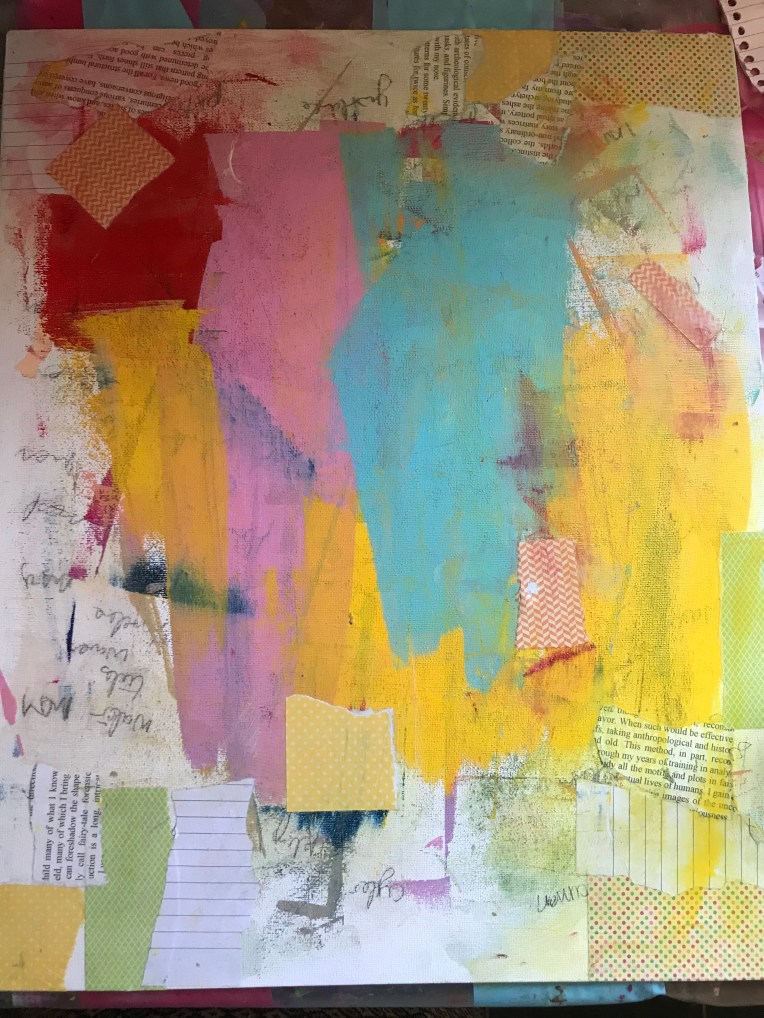
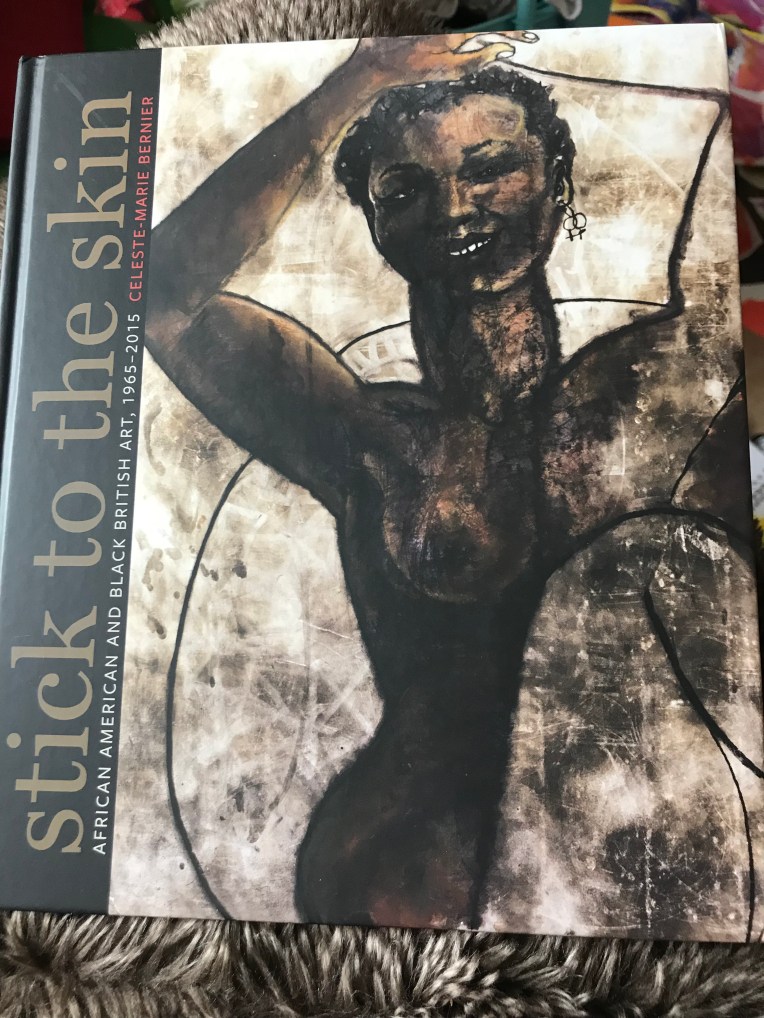
I’m a Black British artist. I’ve been involved in the union for artists in England. I’ve been involved in different exhibitions and events around the arts. What I know for sure is that the British art scene is elitist and exclusive.

I’m actively attempting through my own practice as well as research and reading to make visible the invisible; the invisible history of Black British art. For centuries, Black artists have been visible amongst themselves/ ourselves being involved in individual and collaborative projects. But within official records and archives, the Black presence remains little and absent.

Histories and lives and stories are missing within British arts from an African diaspora perspective and I hope through my creating and agitating and archiving I’m changing the narrative.

Through a series of posts I hope to explore the Black British art tradition to bring this rich and diverse and valuable history to light and more recognition. I look forward to sharing my findings with you.

Studio Notes

I’ve been thinking, how come no one is signing up for Studio Notes anymore? What have I been doing wrong?

Once I investigated, I found out that I’d switched off the join up form. I pressed pause and forgot to press play again.

So let me formally invite you to sign up to receive my bi-monthly newsletter where I share personal insights and news. Studio Notes are where I take the time to share something I’ve been pondering or working on. Sometimes I might send you back here to the website, sometimes I’ll send you to other people’s websites, to places I’ve found inspiration and sustenance.

If you don’t want to hand over your email address then consider checking me out on Instagram, the only social media platform I’m on now since I closed all other accounts ( there’s a blogpost in there to follow soon).

I have two accounts on Instagram, my personal account and my art account.

I look forward to connecting with you in other places.

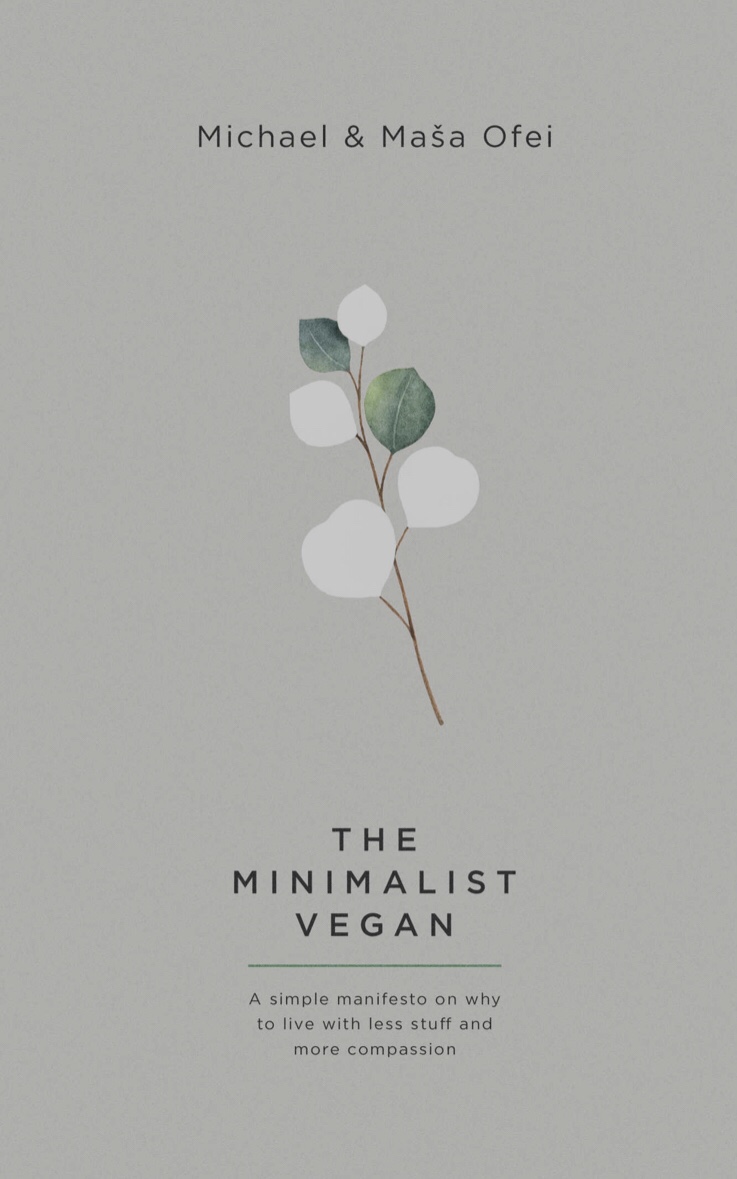
The Minimalist Vegan – A Review

The Minimalist Vegan: A simple manifesto on why to live with less stuff and more compassion by Micheal and Maša Ofei does what it says on the cover.

This is not a ‘how to’ book but a ‘why’ book. For me, is serves as a reminder and an inspiration as the world we live in continues to suffers from “The More Virus”: the mentality of always wanting more.

This book doesn’t tell me anything that I haven’t read before, but I’m just grateful that this information is all in one place and up to date.

Micheal and Maša, the creators of the website The Minimalist Vegan, mark out how minimalism and veganism intersect, how these concepts work hand in hand to help us live more mindful and grateful and compassionate lives.

Our economic system is based on constant growth by any means necessary. It thrives on us consuming more. Each day we are bombarded by thousands of messages and adverts which persuade us to buy and consume more. The adverts promise us happiness and satisfaction and connection, playing upon emotional triggers. But once we get this new product home, it fails to provide the promised benefits. The thrill soon wears off and we’re left seeking another fix promising happiness and satisfaction and connection.

This book upholds the less is more doctrine. How if we simplified our lives, became more mindful of what we consume, becoming more aware of how every decision we make impacts our lives as well as everything and everyone around us, then we will stand a better chance of saving our lives and the life of this planet.

I found this book a quick and easy read but still important in terms of the messages it advocates. It serves as a reminder that change isn’t easy especially if we’d rather do what everyone else is doing to fit in rather than stand out and make a stand against the industries and practices which cause animals harm.

Did you know that about eight million tons of plastic are dumped into our oceans every single year? The figures in this book are shocking. What is more shocking is when we know the figures and could do something to change them, to make this a better world for all species, we still
choose to do nothing and continue along this path of self and others’ destruction.

Reading this book does affect me and makes me question what more I can do. What behaviours can I start to change today in order to buy and waste less and be more compassionate? Anyone who reads this book and isn’t compelled to make change really is missing the point.