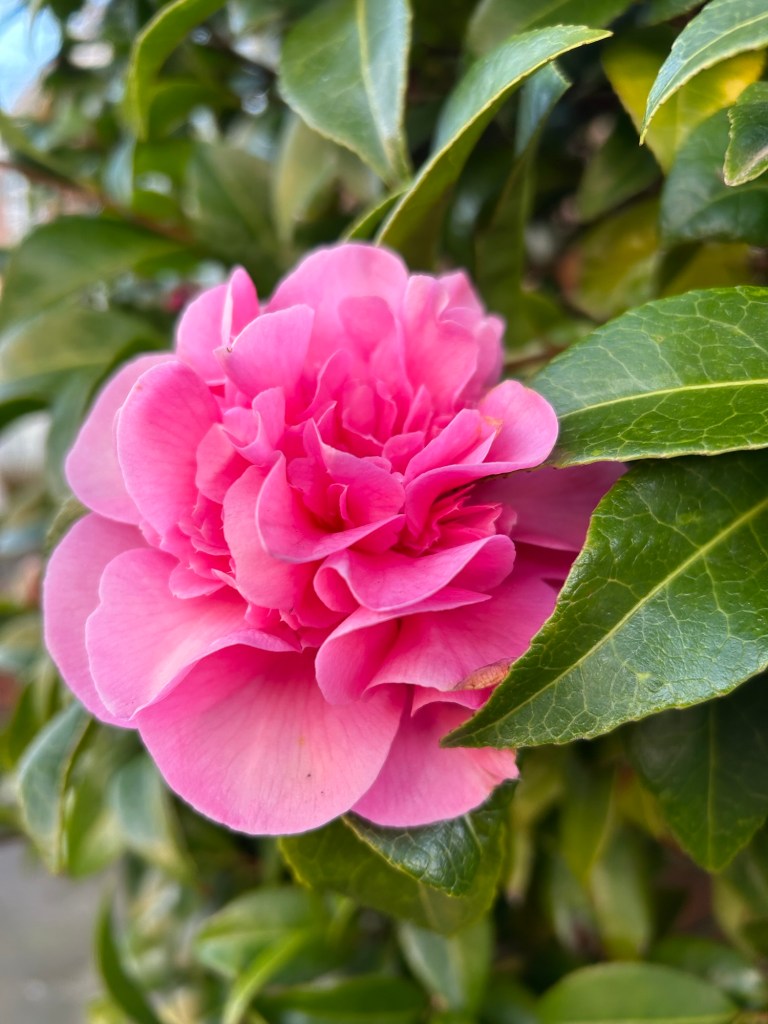
Pink is such a sick colour. Not like red or orange which own themselves. Pink comes across as whimsical, flighty and lacking. It’s uncooked meat. It’s a tinge of desire. Anger, hardly a ripple. Subdued. It’s lukewarm passion which little promise of satisfaction.
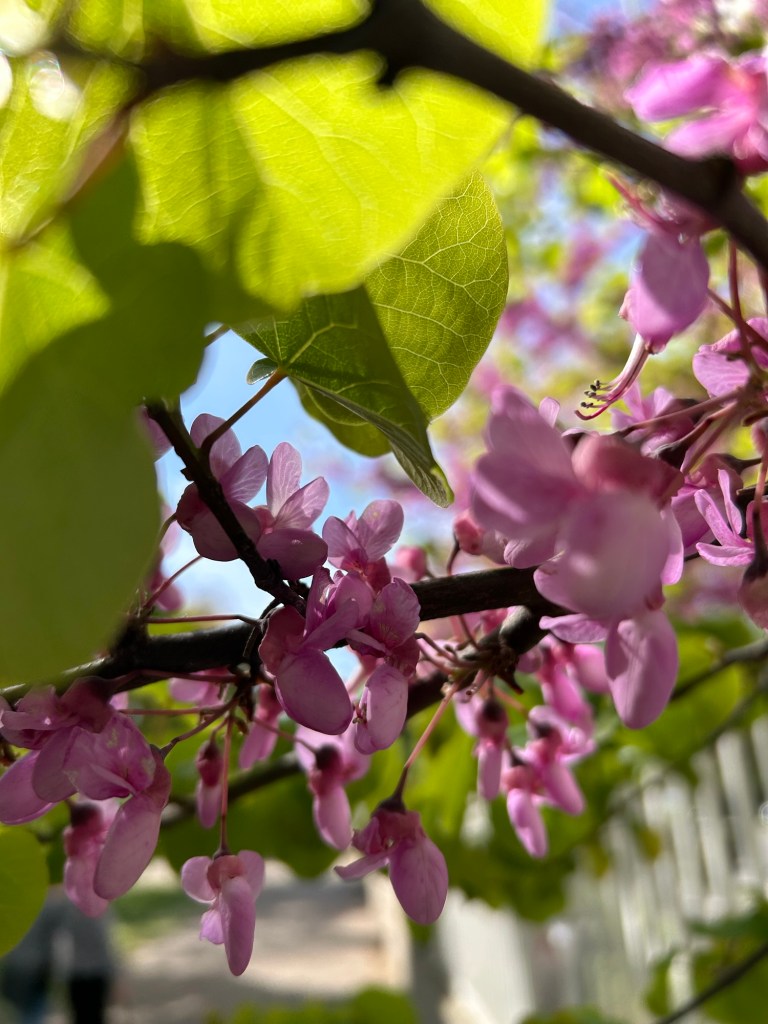
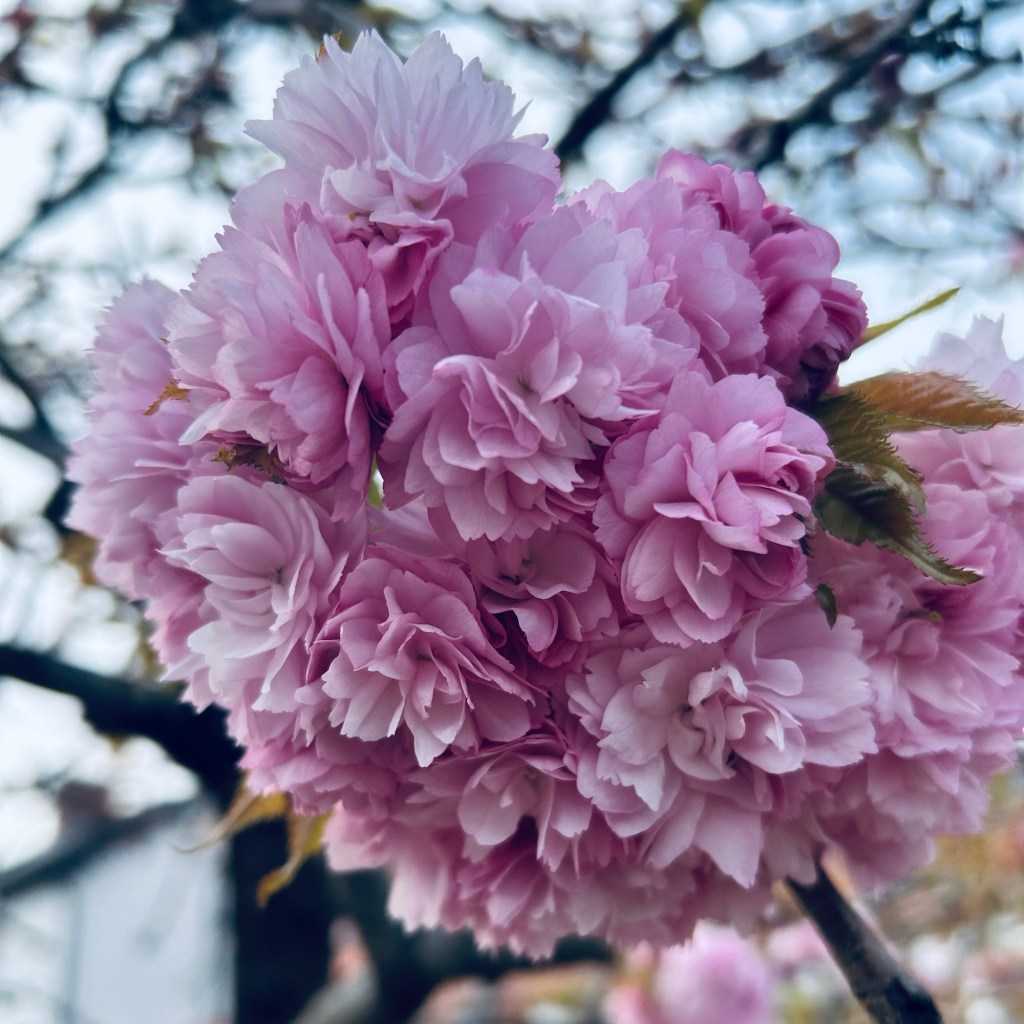
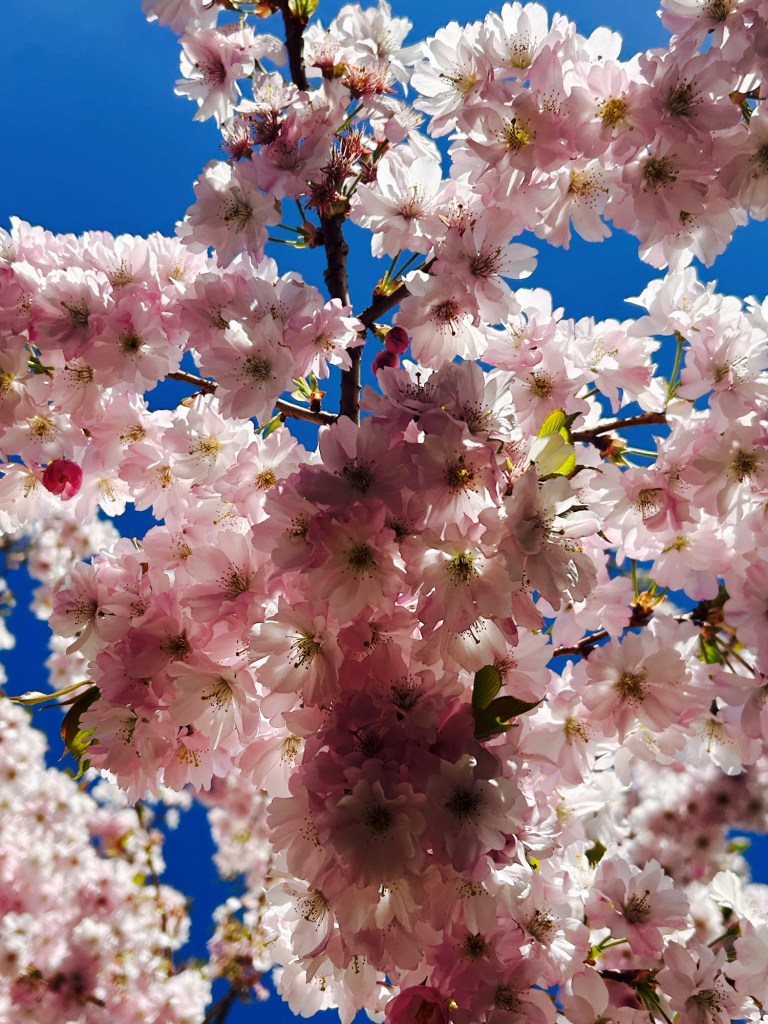
But then I see the blossom. In trees full. Bursting out in big blousy blooms. And pink has me by the throat, squeezing out every feeling of joy, pleasure and awe. Pink cherry blossom does it for me everytime that I forget my dislike for pink and I just swoon.
Let us linger here in this room with the curtains closed with our other lives forgotten for a little while longer.
Let us not use words when our hands, lips and tongues can communicate our needs, our wants.
Let our breath be silken on our skin, let our bodies entwine still able to promise bloom and ripple.
Let us slow it all the way down, slowly, slow, so we can feel each stroke, each gliding smooth folding into each other.
Let us hear each others moans of joy, of wonder as our bodies wander together away from this room, this bed into our happy place where we can ride out the rest of our time here on earth.
Let us dream this lushness as we reach for each other, conjuring connection beyond the here and now, in the here and now.
Let us linger in the lingering light and just enjoy this afterglow, this pleasured pain like passing ships never to traverse these same desire lines ever again.
As they become known and accepted to ourselves, our feelings, and the honest exploration of them, become sanctuaries and fortresses and spawning grounds for the most radical and daring of ideas, the house of difference so necessary to change and the conceptualization of any meaningful action. Right now, I could name at least ten ideas I would have once found intolerable or incomprehensible and frightening, except as they came after dreams and poems. This is not idle fantasy, but the true meaning of “it feels right to me.” We can train ourselves to respect our feelings, and to discipline (transpose) them into a language that matches those feelings so they can be shared. And where that language does not yet exist, it is our poetry which helps to fashion it. Poetry is not only dream or vision, it is the skeleton architecture of our lives. It lays the foundations for a future if change, a bridge across our fears of what has never been before.
Audre Lorde, ‘Poetry is not a Luxury’, on Sister Outsider: Essays and Speeches (Trumansburg, NY: The Crossing Press, 1984), 37.
I’ve got time on my hands to read. A reading week as we used to say at Uni. Why? Well that’s another story, I’ll tell you at another time, maybe.
For now, I’m getting my teeth into something that will make me feel better, or feel as if I’m getting somewhere with my self-study/permaculture diploma design/ ways of being.
I’m reading The Black Feminist Reader edited by Joy James and T. Denean Sharpley-Whiting. And I’m heartened to read in the first essay in the collection by Barbara Christian, ‘The Race for Theory’, that along with her Black sisters, Christian has not rushed to create abstract theories around how to read Black women writers/ Black women’s literature. The argument goes that there are countless Black women around the world, women colour around the world, and one single set of ideas cannot be applied to such diversity.
As Christian goes on to argue, “There is, therefore, a caution we feel about pronouncing black feminist theory that might be seen as a decisive statement about third world women. This is not to say we are not theorizing. Certainly our literature is an indication of the ways in which our theorizing, of necessity, is based on our multiplicity of experiences.” ( p.20)
Instead of being seduced into the academy, being at the centre, desiring/ claiming what might seem like power within the hierarchy of old traditional departments of knowledge, where the Black female experience is subordinate to others, ” We can pursue ourselves as subjects”. ( p.21)
This is music to my ears as I have always found it difficult to pin down what is Black Feminist Theory. What does it entail? What are the tools of engagement? What methods should be employed to reading Black women writers?
But that’s where I’ve been going wrong, thinking about theory. As for me theory was legitimisation. Writing dies if it’s not being talking about, theorised. But now I understand that :
Theory has been their way, their terms, their approaches ( p. 16)
Theory has been more about how clever the theorist is than about the writing or writer
Theory is prescriptive and it ought to have something to do with practice (p.13)
Theory is about those masters who have long gone and not about the here and now.
And as Christian states, and I totally agree, “But what I write and how I write is done in order to save my own life. And for me I mean that literally. For me literature is a way of knowing that I am not hallucinating, that whatever I feel/ know is.”(p. 21)
So I’m following Christian in my pursuit of what Black Feminism(s) is by having no fixed method of enquiry or even results. My method relates to what I read and the historical context of the writers I read and “to the many critical activities in which I am engaged, which may or not involve writing.” ( p.22)
So there is no set method within Black Feminist Theory and is influenced by practice, no prerequisite of a new theory as every work suggests a new approach, forcing me to think differently.
“As risky as that might seem, it is, I believe, what intelligent means – a tuned sensitivity to that which is alive and therefore cannot be known until it is known.”( p. 22)
I’m not sure how much I’ve shared here. I’m not sure if I wanted to speak it into existence out of fear of jinxing it. Maybe.
Last year, my last publisher Andy Croft got in contact with me asking for my poetry collection. Smokestack Books is planning to close its publishing doors and Andy wanted to go out having published my next collection.
We have a history as Andy published Laventille (2015) and stood by me throughout the whole ‘shit-hit-the-fan’ experience when my life and profession and writing were ruined ( or there was an attempt to ruin me as I’m still here to tell the tale).
So I said yes, maybe naively. As since then I’ve been on a rollercoaster of feelings as I attempted to bring the collection into existence.
At some point I will share some of the poems within the collection. Some of the poems started within this blog. But even though I just got asked last year to complete this collection, I feel, no I know, this collection has been nine years in the making. Ever since Sheree Mack was cancelled in May 2015, I’ve been making my way back to Sheree Mack, someone I didn’t even know existed until she was forced to start again from nothing to building a much stronger and truer foundation.