A Creative Sketchbook, Dec 2025

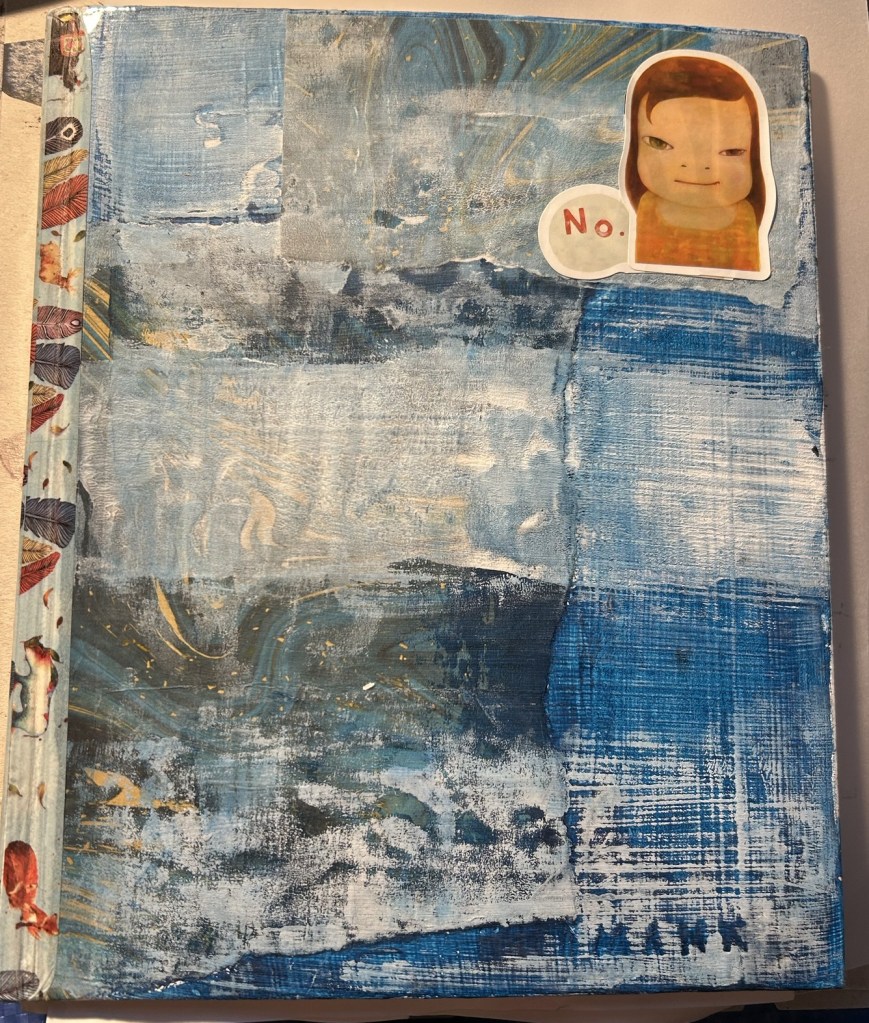
My creative sketchbook
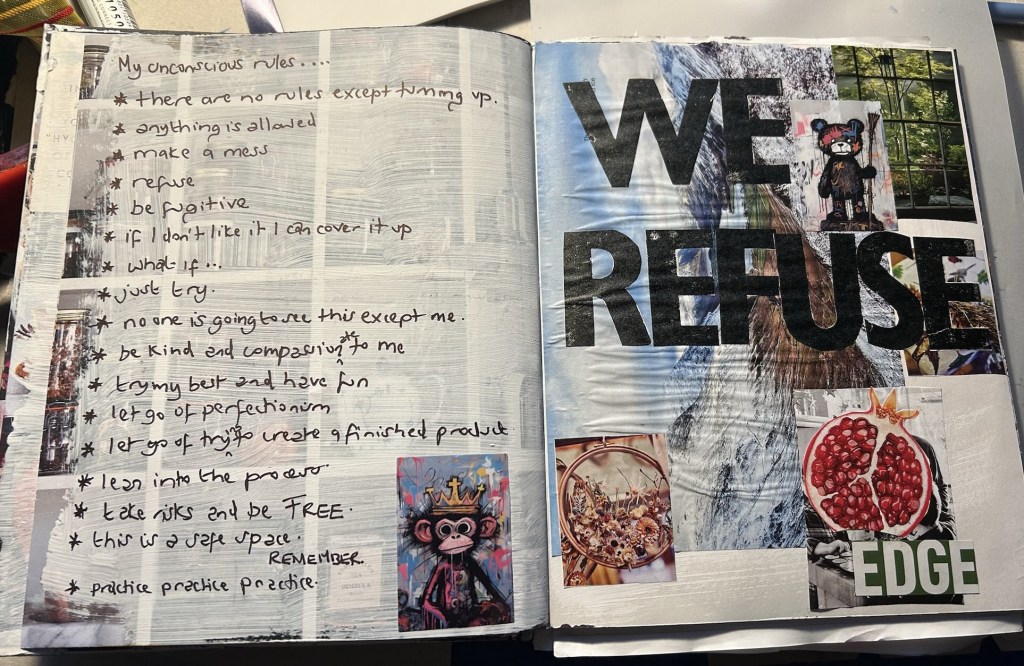
My creative sketchbook rules

I’m not sure how my creative sketchbook differs from my visual journal. Intention maybe.

Perhaps, I think , I’m attempting to develop my art practice within a designated space. A study maybe.

I haven’t really been in the thick of my art making practice since the preparation for my Baltic exhibition back in 2022-3.

This was quickly followed with the writings and (re)drafts of Darkling, my poetry/hybrid collection published in October 2024.

After this 2025 has been a period of extended rest and refusal.

But something has been niggling me. The desire to create with paint again. the desire to play without expectations and outcomes/ products.

I’ve just scratched the itch through scrolling through Pinterest. Adding another abstract or landscape painting to a board that I’ll probably not look at again.

But it satisfied this niggling feeling. Until it didn’t.

It was going back into the classroom. Completing a few days of supply that pushed me over the edge.

The time I gave away for money. The time I’d lost pursuing my own pursuits. And realising that I wasn’t pursuing all the pursuits I wanted to pursue in the time I had/have.

So out came a creative sketchbook, inspired by the 30 days sketchbook challenge created by Cheryl Taves over at Insight Creative.

This is as much as I’m willing to share for now about the challenge, my creative sketchbook, processes and insights.

One of my rules is that it’s just for my eyes only. I want to see how this rule changes my practice. I want to create without fear but with curiosity. I want to give myself all the freedom without worrying about what others will think or say or comment on.

It’s not like I’m hanging on other people’s responses and reactions but I have gotten into a habit of just sharing anything and everything on my blog and I’m curious to see what happens when I keep things to myself.

Just for my eyes, heart, and soul only.

So far I’m enjoying the process of the challenge and I’m reflecting and paying attention to what makes my heart sing, what’s my creative vocabulary, what pushes my energies.

Do doubt whatever I explore within my creative sketchbook will be showing up in everything that I create. In everything who I {BE}. For sure.

Learning to be on the Inside

This was published on Medium back in 2020, and I recently rediscovered it. I’ll be sharing this piece along with some other pieces from that time because they just tickle my fancy.

Longsands, Tynemouth

Learning something new isn’t easy and doesn’t happen overnight either.

There’s no magic cure, no short cuts to learning a new behaviour or new skill. You just have to practice. Show up each and every day. And do your best.

There are certain steps to follow if you want to adopt a new habit or develop a new skill. Being a creative being, I’m open to being inspired by others. The following steps have been adapted from an Instagram post by Lisa Congdon in relation to building a skill, particularly in wanting to become an artist.

I think these steps apply just as much to learning to stay indoors during the Coronavirus lockdown as to developing any new skills and habits. Here I explore how I’ve been learning to stay inside.

  1. Begin — One. Two. Three. Four. Five. The inflow and out flow of the breath. I’ll admit, I’ve been complacent about the Coronavirus. I thought it was far way from home. I felt sorry for the thousands of deaths I was witnessing in China but I felt secure in the U.K. I was ignorant and selfish. And I was wrong. Just as the buds begin to appear on the linden trees along my street, reports start to come in about individuals being infected in England. The virus is spreading. I begin to understand it spreads through person to person contact. Around about 12th March, I make the decision to cancel events which involve people gathering. I’ve been working on a number of projects which offer opportunities to black, Asian and ethnic minorities in my region to develop a relationship with nature. Disappointingly, I put a stop to these activities. I walk into the sea to heal.
  2. Practice — As an individual, I start to self-isolate. I stop unnecessary trips out and keep my distance from friends and family, and people, in general. It’s difficult as it’s like swimming against the tide. No one else seems to be worried about closeness. I do the responsible thing. I look after myself by taking my medicine. I go back into the sea and breathe.
  3. Keep showing up — With my world shrinking, I contact our funders, our partners and our groups in relation to our Black Nature projects and inform them we are canceling and/or postponing events and activities scheduled for Spring and Summer because of the Coronavirus. It kills me to pick apart projects which have been six to seven years in the making but I know it’s the right thing to do to keep everyone safe. I lean into my writing practice using this time at home to follow a strict regime of morning pages, journal prompts, poetry exercises, visual journalling and reading. I’m in control of the situation.
  4. Practice some more– Crowds of daffodils bob along the roadside as I make the twice daily trips to drop off and pick up from school. I‘m worried about our children. Our 9 year old daughter at school. Our 21 year old son away from home teacher training. It doesn’t sit well with me that I‘m self-isolating but sending my babies out into the world daily. I worry they’re at risk. I go food shopping. Shelves begin to empty and I feel people’s panic. This escalates my panic. I stop going into the sea.
  5. Stretching self — Tuesday 17 March, we pick our daughter up from school, and don’t send her back the next day. We feel the U.K. government doesn’t care about us. We feel they’re not doing enough to protect us and stop the spread of the virus. We make our own decision to lockdown as a family. We start out as if it’s a holiday. A chance to rest and relax and catch up on TV shows and films. We have no routine. We listen to the gulls outside our windows squawking their freedom.
  6. Practice — I shop alone for what we need. And yes this includes extra toilet rolls and pasta. I’m privileged enough to be able to buy plenty of whatever we want. People still don’t keep their distance. Their anxiety rubs off on me. I take my annoyance and frustration back into the home. No amount of showering and clothes washing can rid the stench of fear. I meet people who matter to me through a screen. I don’t go into the sea.
  7. Practice – 23rd March the British government puts the whole country on a three week lockdown. The Prime Minister announces the police will now have the power to fine people if they leave their homes for any reason other than the following: shopping for basic necessities, one form of exercise a day, medical need or to provide care for a vulnerable person and traveling to work but only for key workers.
  8. Note your improvements – I haven’t been in the sea for two weeks. I‘m not coping well under quarantine. I‘m not using the time away from the outside world in any productive way. I‘m beating myself up for not doing more. For not finishing the book, for not cleaning the house. For not moving forward but instead treading water. As cherry blossom blooms pink and white and raspberry, are tossed about in the wind, I’m wrapped in grief. Grieving for the life I’d built from rock bottom, in the last 5 years, gone in an instant. I’m grieving for the projects I’d worked hard and persevered with to create with others for others gone in a click of a button. I’m grieving for not being able to go to my favourite coffee shop and order an extra hot, vanilla oat latte and savour the taste while writing my morning pages. And yes I know how thoughtless and trivial that sounds. I‘m missing the sea.
  9. Practice — My days are different now. Time seems to move differently, faster and slower at the same time. Days morph into each other and weekends just don’t feel the same when you find yourself not going out into the world to work during the week, and coming home late craving some downtime. Now every day feels like down time. It’s easy to get lost in the nothingness if I don’t have something to do. My moods are up and down as I try to enforce some structure. And then try to just go with the flow. It’s difficult to keep things together for myself and my family. Especially when I’m denying myself my medicine, the sea. Because of fear. Fear of the patrolling police questioning me. The police not just fining me but imprisoning me. I’m a vulnerable Black body outside when I’m not supposed to be outside. Try to feel my fear. Fear of other people not keeping their distance. Fear of people in general. I can only control my actions and some people are still acting in irresponsible ways through ignorance or entitlement. I tell myself: I’m not the waves of life. I try to drop below the waves and find the calm and peace underneath.
  10. Practice — Stay home. Protect the NHS. Save lives. A constant reminder whenever I go outside. Every Thursday at 8 pm, we go outside and clap to show our appreciation for all the hard work the key workers within the NHS are doing. Are enduring. I go out once a week to do a big shop wearing a face mask and gloves. I hope my eyes tell the story that I’m smiling at the shop workers. I make a point of telling them my appreciation. I wish them safety and wellness. I make sure our daughter gets out once a day for some fresh air otherwise she’d just stay glued to her screens. One. Two. Three. Four. Five. The inflow and outflow of the breath.
  11. Repeat — One. Two. Three. Four. Five. The inflow and outflow of the breath. I practice self support. I support myself during these unprecedented times by being kind to myself. I try to have an intention regarding how I start my day. How I want to feel today. Most days, I want to be present. Most days are a present. I hold gratitude for the life I’m living, at the moment. Life is moment to moment. One moment, I’m on my mat feeling the morning chill caress my neck and shoulders. The next movement, I feel my body, it’s heaviness pulled towards the earth. I’m part of Earth. I’m trying to stay more in the now. And not worry about the future or mourn too much about the past. I’m human so it takes practice.
  12. Begin again— We’re still in lockdown. This isn’t a happy ending. This is me learning new habits, new ways of being. Tapping into moments of joy and peace being inside. And getting back into the sea

Leaving the Loch

I’ve taken quite a shine to Loch Morlich. It’s a place that keeps on giving. And a place I long to return. I leave it with a renewed commitment to my self-love journey. To devoting more time, care and attention to myself. Diverting the attentions I might have been giving out willy-nilly to other people, thoughtlessly, I redirect back to the source. Me.

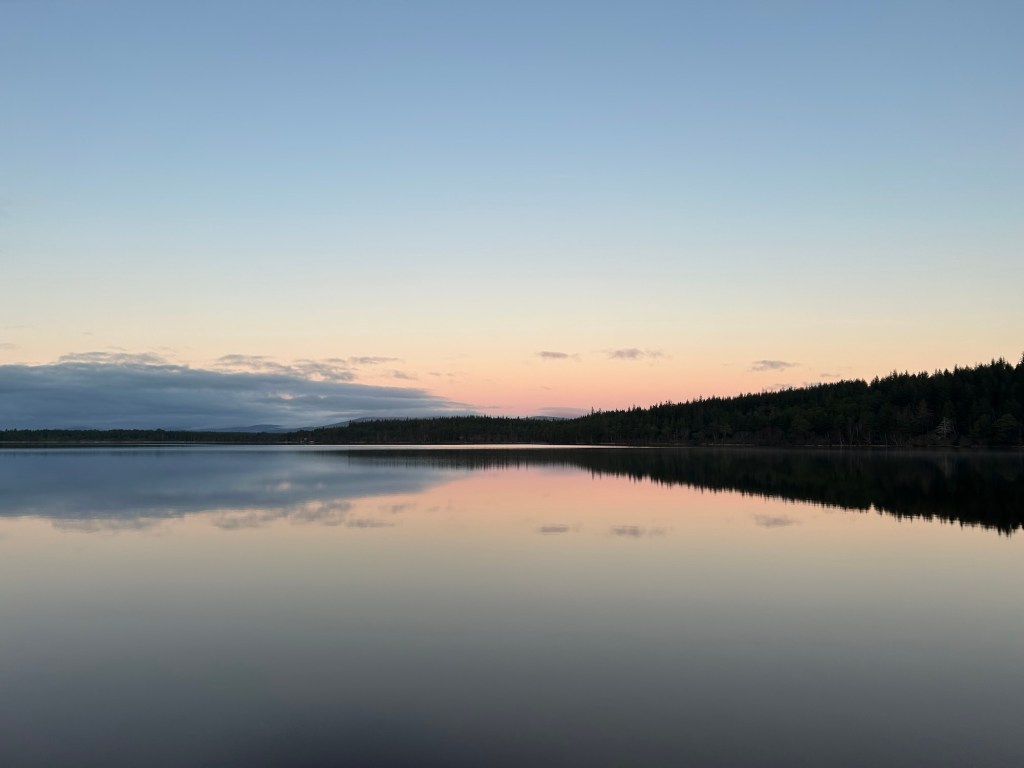
7am, Loch Morlich

I entered the loch today as the sun was rising. I broke the surface of the loch, with its shards of ice and glided out. Slow expansive circles ripped upon the lochs surface as I took slow, cold strokes. It was freezing and it was painful, but I didn’t want to stop, to get out and leave the loch. But I did.

My finger tips were white for a long time after my swim. I used hot water to bring back some feeling into them. They were so painful. But this pain, along with my body submerged without the frozen loch, are all a reminder to feel again, to live my life to the fullest and give thanks in the process.

7am, Loch Morlich

Creating Sanctuary


*not so mush a trigger warning but saying it anyways!


I am worthy of consent.
I am safe.
I can heal from sexual trauma. –  Lyvonne Briggs

I’m writing. Or is it rambling? I’m not sure. It’s just that I’m reading at the moment. I’m in my cave (bed) hibernating and I’m reading so many different books. Fiction, non-fiction, poetry and there’s a cross over with what’s happening within my life with my reading ( Does that happen to you?). There’s an echo or a reinforcement for the things that are causing me grief at the moment, worrying the wound as I read and rest. 

So writing things out, going long is a way of making sense of it all in the moment. It’s a way of gaining some kind of clarity for now. Not thinking of the future but thinking of gathering the threads at this moment to made make a something out of this mess of yarns.

My mum died when I was 27 years old. I’d just become a mother the year before. I’ve been hearing about the ‘mother wound’ lately. I’m not sure if I understand it completely. But when I hear it, I don’t jump into definitions and theories. For me it’s simply means when my mum died and left me to cope alone. Selfish I know. But I feel as is she left a gaping, bleeding wound that festers and hurts when I worry it. When I press on it, inspect it with my touch.

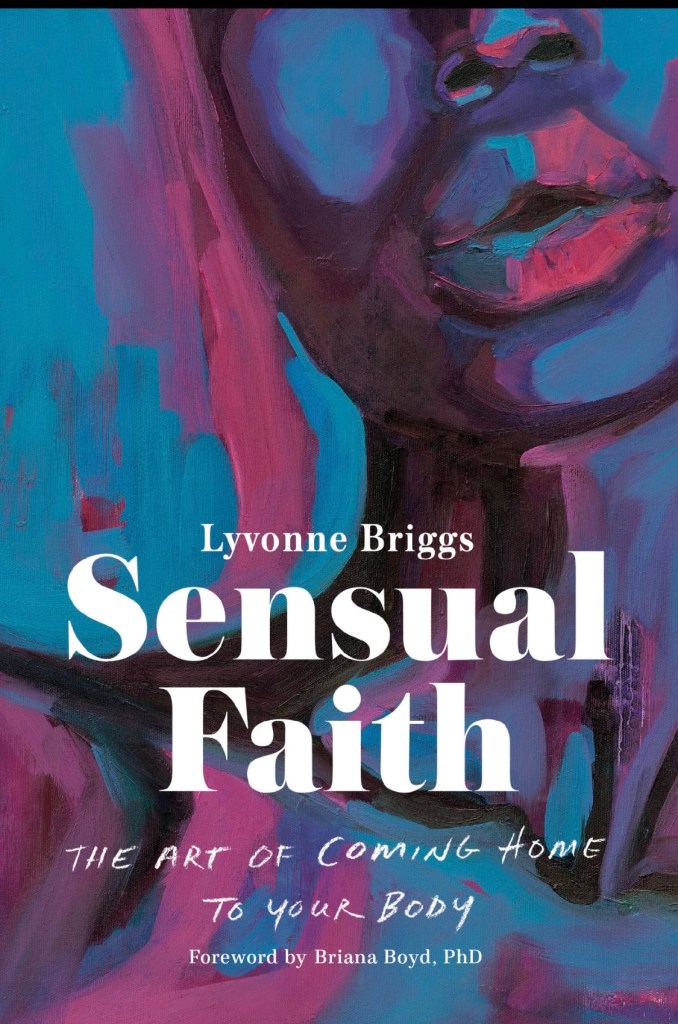
This morning, following my morning routine, in bed reading (with coffee skipped ahead this morning) I’m reading Sensual Faith: The Art of Coming Home to Your Body by Lyvonne Briggs. I’m reading a section called ‘Surthrivors’ a term Briggs created to try and capture how she was feeling, living after male sexual violence. She felt ‘survivor’ was too flat to describe/ define her experience when she was living/doing what she loved studying theology and religion, in community with loving people and was an acclaimed spoken word and slam poet. “I wasn’t just surviving, I was thriving!” Briggs wrote, hence pointing the more accurate term, ‘Surthrivor’. 
I love it when we Black women bend and twist language, divest from the standard to better express/ more fully express our feelings and experiences. That’s creative fugitivity for you (thank you Dal).

Briggs goes on to talk about how she got into the ministry so she could change how the church handles sexual abuse, not very well,  as there is a silence around it. Or they blame demons instead of the actually men. I’m not here to talk about male sexual abuse. I’m not her to talk about the church. I’m not a religious person. I was brought up saying my prayers. I remember a black bible, creased leather, brought from Trinidad and Tobago with my dad when he stowed away to England. This black bible sat toad-like in the teak sideboard of my childhood living room. West Indian style living room, I may add. 
I gave up believing in a ‘God’ when my daddy died when I was 9 years old. I’ve now come around to the idea that we are Gods/ Goddesses ourselves, inside us. I’m spiritual rather than religious. So I’m not sure why I’m reading this book. 

I lie. Yes I do know why I’m reading Sensual Faith. I followed a trail to this book left by Christina Cleveland and God is a Blackwoman. But also because of the subheading of Sacred Faith: The Art of Coming Home to Your Body, is a journey I always seem to be on. 

Anyway. Back to the reading this morning which went on to discuss the worship centre in a church is called the ‘sanctuary’. When you the word ‘sanctuary’, does anyone else think of Quasimodo? ‘Sanctuary, sanctuary!’

A ‘sanctuary’ is a safe or holy place. I wrote a poem titled ‘sanctuary’ and it was about my mum. My mum’s home, body, arms. When she was alive, it was her I went to for safe harbour.  I didn’t realise until she was gone. It has come a way for me to practice mothering my own children, through sanctuary for them. Once my mum died, I lost who and where I could return to for safety. I lost my home, my sanctuary when she died and I suppose I’ve been searching for sanctuary ever since, looking outside myself, looking for it in others ( husband for one!)

I don’t how long I’ve been in battle with my being, with my body, chastising her for not being enough. But also for being too much. Too fat. Too broad, too Black. But over the last few years, eyes open, something has been changing or shifting within me and how I view, treat and talk to my body.
.
Maybe that’s where my mum did me a disservice and where I’m making amends with my kids. I’m not sure she taught me how to find sanctuary within myself, within my own body.

Monday nights I dread. 
Not always. Just the last few months as I complete my level 3 diploma in counselling skills. I’m not jesting that I hate turning up for this course. And I never use ‘hate’ as a word usually, always thinking it’s too strong a word for a feeling. Too final without any redeeming features. But this is where we’ve got to with this course. 

And it wasn’t always the case. I could blame the dark, cold nights I have to turn up for 3 hours of lecturing and talking in an empty, sterile office block. I could blame the electric fluorescent lighting that flickers and buzzes and can give me a bad head. But I would be lying. I’m here to be wide open and honest. So here goes!

This course is taking away pieces of my soul, week after week. And I’m not ashamed to say that I have contemplated dropping out week after week, researching for alternatives. I  even enrolled on a supplementary course, decolonising counselling, that would tend to all the damage this course is doing, but I had to withdraw from that due to costs and timings. 

If you’ve ever studied counselling and therapy, you’ll know that everything; theories and tools and practices are all taken from dead white guys. Dead white guys acting like Gods (and I don’t mean the internal Gods I’m just mentioned). White male, usually heterosexual and middle class theorists who pontificate that they know everything about what’s happening in everybody’s mental health. They have the solutions to make us feel/ do /be better. As it’s always the individual’s fault and can be traced back to their childhood, their mother? Bullshit!

It hurts to be fed this shite every Monday. In the beginning I pushed back and attempted to decolonise the teaching, the theory, the responses. Bringing in other theorists and arguments. Being the only Black face in the class, girl has to represent. 

Until we got to week 9, we were exploring different types of power within the counsellor and client relationship. Power roles within the counselling arena. After a discussion, we were being presented with a list of ‘Further key aspects of power or perceived power’. And yes the list was not an exhaustive list and things could be added, the tutor said. This list did not include ‘race’, ‘ethnicity’, ‘culture’, and I voiced it as such. My comment was laughed at and dismissed as, ‘there’s always one’. 

Always one who has to comment on what’s missing from the list? Or always one who has to bring up race? Who knows! I just know how this comment made me feel.  Know your audience I say or was I being put into my place? This response indicated to me that this input, which a fundamentally the way white supremacy culture wields power through the hierarchy of the races. It’s the sea that we’re swimming in and to not mention is the usual state of affairs.  This interaction indicated to me that this was never going to be on this course’s agenda. Me continuing to challenge the whitewashing of counselling and therapy, me constantly remarking on the culture that we’re operating in wasn’t enlightening my fellow students or suggesting that they become more aware of their ( and my own) unconscious biases.  I realised I was just creating issues where they never saw issues. Problems where there are no problems.  As race and racism is only a problem when there’s a Black person in the room. It’s Black people who have an issue with race as whiteness isn’t a race, right? Whiteness is a given. 

After week 9, and tonight was week 15, I’ve silenced myself. I’ve disengaged from the course, no longer contributing. I turn up and get my attendance and keep my thoughts and comments and feelings to myself. I’m not giving anything of myself anymore to the group, to the course within the face to face sessions as I’ve received the message it’s not welcome, it’s not of value, it’s not relevant. I do not intend to waste my energy and heart and soul on this experience. 

This hurts me.
I’m making sanctuary for myself. I’m making this experience safe for myself. I’m keeping myself safe within myself, within my body as being in that classroom is no longer safe for me. And to explain that to them, I wouldn’t bother, as they wouldn’t get it. The can’t get it and it would also involve them listening to me, and me being heard, which ain’t happening.

I’m creating sanctuary for myself, within my body and its a practice. I’m using a self-soothing approach, self-talking, loving compassionate approach when I experience something that is harming, hurting, traumatic. I’m letting myself know, like that little girl inside me who needed to be loved and kept safe, I’m stroking my own chest over my heart and saying to her, saying to myself, ‘ You are love, Sheree. I’ve got you I understand why you are feeling unsafe. But I’ve got you. You’re dafe now.”
I’m mothering myself. I’m making myself safe. I’m making myself sanctuary.


Capitalism Fatigue

No amount of pampering can cure or stop that slow soul death I experienced being part of the system. Being a secondary English teachers within capitalism.

I was indoctrinated early to believe my worth was equal to how hard I worked. Even with a young son, I world get up early drop him off at nursery early to get into school extra early and be unpaid. I would work the full school day and stay late and be unpaid. And not complain. To then pick up my son late and spend very little time with him before bed and then I would work late into the night, marking and creating schemes of work and again all unpaid. And then repeat it all again for days, weeks, months and years.

“This is a Eurocentric, deeply white supremacist way of thinking and it is straight and ableist. It does not consider someone’s mental, physical, and emotional capabilities. … It does not consider offering space to dream, create, or simply partake in a longer lunch or even a nap.” Jennifer Mullan, Decolonizing Therapy.

I would do extra work, take on extra responsibilities, make sure I was seen being the ‘good’ teacher and look how good I am at handling pressure because I believed this is how I could prove that I was enough, I was good enough.

And there wasn’t just those internal pressures but there was also that external pressure that would flatter and coax and demand and make me feel that I wasn’t doing enough or that I was needed even more and only I could solve this problem or issue or be the one to stay late and sort it out.

I couldn’t rest and I shouldn’t rest and if I was feeling burnt out it was my fault. I should learn to manage my time better, eat better, do less and take care of myself. But how can you do that within a system which doesn’t allow it? That just keeps on rolling and takes you along with it through desire or force? I couldn’t afford to work less, to drop responsibilities as I needed the money to keep the roof over our heads, food on the table and clothes on our backs. Earning just enough to live from one pay check to the next. I felt trapped. I was trapped. Until I broke.

I got sick. Took time off. And stepped away. Self-care wasn’t the cure for burnout but it helped for a time as it gave me the time and space and clarity to realise that I wasn’t the problem. My burnout and breakdown wasn’t my fault. The problem was deeper than me. The root of the problem was the school, the education system, the businesses, the organisations, the media, the policies, the rules and expectations that kept me working to exhaustion, stressing about not doing enough, tired and struggling and giving more of my time and energy and heart to strangers than my own son.

“You cannot self-care or self-love your way out of systematic oppression.” Jennifer Mullan, Decolonizing Therapy.

I agree, however, I would argue that leaning more into self-care with slowing down and rest and learning to love myself through my reconnection with nature, did and continues to do so, provide the space and time and energy to question my conditioning, to agitate the ways things have always been done within capitalism, colonialism and patriarchy, to recognise the dehumanising, extractive and exploitative systems that are fixing to kill us and attempt to do something to stop it.

I continue on this path of decolonisation by starting with myself.

Reading Poetry (ish)

As I mentioned earlier in the month, reading and writing/ writing and reading go hand in hand. As I’ve tasked myself with a poem a day this month, I’ve also tasked myself with reading poetry and wider as it all feeds into the creative process.

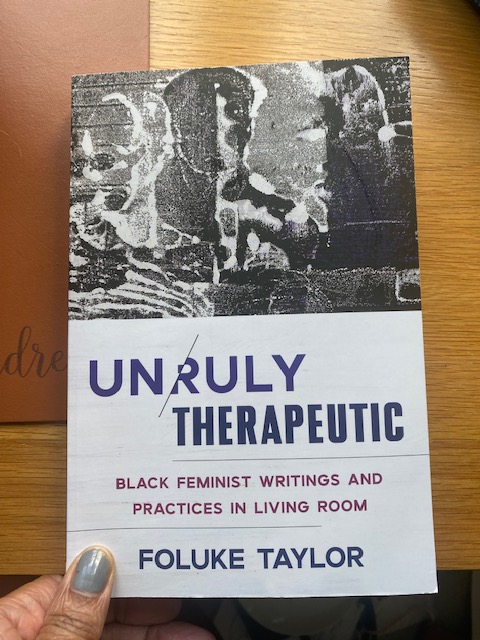
Dal Kular, a dear friend and awesome imagineer, brought Foluke Taylor and their writings to my attention. I’ve been taken by Foluke’s writing around creativity and repetition so when Dal mentioned the book, Unruly Therapeutic, I knew I had to pick this book up and read it. And I’m so glad I have done just that ( well still reading it in fact!).

This is a hybrid, break down the structures kind of book in terms of how it’s written but also how it centres the Black woman’s experience. It’s music to my ears on so many levels. More so in being real, and allowing the thoughts and concepts presented to meander. To double back and repeat. There’s even a music playlist at the end go each chapter as an indication of what Foluke was listening to while the book was under construction.

I’ll return here with a review of length, but for now I just wanted to mark the reading of this text and a recommendation to get out and buy your own copy, as I’m not lending mine out!