I recently talked about the coming of April and how more poetry would be appearing on here as I attempt to ‘play with words’.
You can not imagine the delight as well as confirmation I received this morning while reading an article for the commissioned essay I’m writing at the moment around (Black) Motherhood.
A bone of contention with me is when I see the words ‘mother’ and ‘motherhood’, even though I have birthed children, I do not see these terms applied to me. ‘Mother’ and ‘motherhood’ come with the connotations of white and whiteness for me.
Test it yourself. Be honest. When I first mentioned ‘mother’, what image came to mind for you? If not a white woman and child. I’ve seen image after image of the idea of motherhood, the natural beauty of ‘The mother’ and nine times out of ten the image is of a white woman and child. As if a Black woman is not/ cannot be seen as a mother, even though a Black woman is the source of the whole human race. Go look that one up!
Anyway, I’m going off topic here ( but not in terms of the hybrid essay I’m writing for the forthcoming special Demeter Press collection, The Mother Wave: Matricentric Feminism as Theory, Activism, and Practice (2023)).
Reading this article this morning, ‘ Conjuring the Ghost: A Call and Response to Haints’ by drea brown, there is a mention of poetry lying in the body, coming from that dark place within where our true spirits lies hidden and growing, argues Audre Lorde. But poetry is also our way, Black people’s way, or theorising and making sense of things. Through our stories, narratives, riddles, poetry; playing with words and language, we not only gain an understanding and reimagining of our lives but these are also tools of surviving.
As Black women, speaking from my lived- experience here, through our creativity, through our playing with language in such a spirited way, we enter in the process of not just theorising and strategising but also self-making and through this practice passing this on to others. Passing on this power to others. It’s what we do, have been doing through time. Starting with the mothering we do of ours and others babies
As mentioned at the beginning of this month, when I declared that June was the month of the Mixmoir, going forward I plan to use Mariëlle S. Smith, Fleshing Out The Narrative: A 31-Day Tarot and Journal Challenge for Writers in conjunction with The Earthcraft Oracle Deck by Juliet Diaz and Lorriane Anderson and illustrated by Daniell Boodoo-Fortune in order to get the creative juices flowing.
Using these tools and prompts, not only allows me to create content for the mixmoir but also allow me write around the subject, explore the process and progress. This bit excites me and keeps me engaged. Working out what I’m trying to say at the same times as holding up to the light the rituals and practices I have around writing, is enlightening as well as encouraging. One way of working might work well one day but the next not.
I’ve been using the pomodoro technique with Abao in Tokyo on YouTube. Writing/ working/ practicing for 25 minutes at a time and then taking a 5 minute break, helps with the concentration and productivity. I’m really enjoying the process sandwiches into neat sections of time for a focused amount of time each day. It’s a simple practice which I look forward to and really get engrossed with during the allotted times for writing.
I found it interesting today that I pulled the Spirit of the South card when I was exploring the fire within yesterday and how I’d rather allow it to burn outwards and accept what ever backlash it may bring rather than living in fear of the fire outside consuming/ canceling/ destroying me.
This card came along today, I feel, to reinforce what I’ve been thinking of late, that is to not hold back and to stop finding/ making up excuses for not doing the work/ practice and to crack on and just do it. To follow my dreams, tell my story and to hell with it all.
And here ends the daily cheerleading chant for Sheree and the Mixmoir.
The other week I went back to where I grew up. My time in a small village by the River Tyne were my formative years. I grew into a woman there and then left to go to London for university. I couldn’t leave quick enough. I found the place small and claustrophobic. It was a place where everyone knew your business. And to top it all we were the only black family around for years and miles. So we stood out.
Someone once told me that I should learn from the past but not hold onto the past. At the time, I didn’t quite get what she was getting at. I nodded my head and said thank you and moved along. Going back to my roots the other week this piece of advice came back to me.
Growing up in that all white village, I learned how to fit in, I learned how to make people laugh, I learned how to make other people comfortable being around me.
That is in the past. What I know now is that it’s okay to be myself; my whole self because if somebody doesn’t like me or gets uncomfortable that’s their problem not mine. I’m not in this earth to make everyone like me. I’m not on this earth to just blend in and smile.
I know I am here to shine. To offer up my gifts to the world and those who are on the same plane can appreciate them and learn from them if they do choose.
In the past, I worked hard for you to love me. In the present, I work at me loving me. And that’s enough now.
Recently I’ve been asked a few questions about my practice and process with my artwork. One question which struck a cord was, what are some of your essential tools for creating?
My practice changes but what I can say is that I’ve fallen in love with mark-making while completing #100daysofabstracts, so anything that can manipulate paint on the page is something I want to get my hands on.
My trusty old disused credit card is always by my side as I use it to create the background for my visual journaling, but lately this has been accompanied by a Catalyst pebble sculptor No.6 white, a plaster’s trowel and a spaghetti scoop.
I love creating mixed media layers of papers, pencil, pastels, gesso and acrylic paint and then scraping layers away so the past is revealed.
Take the term, palimpsest which I’ve come to understand through my writing practice as a piece of paper where the text has been scraped or washed off so that it can be reused but each use is still visible, like a ghost.
I see the abstracts I’ve been creating in the same light when I create layers and scrap areas back so previous layers or versions haunt the finished piece. I’ve always been interested in how to read history and heritage in light of the present so we can learn for the future, through these abstracts I’ve been exploring these concepts visually.
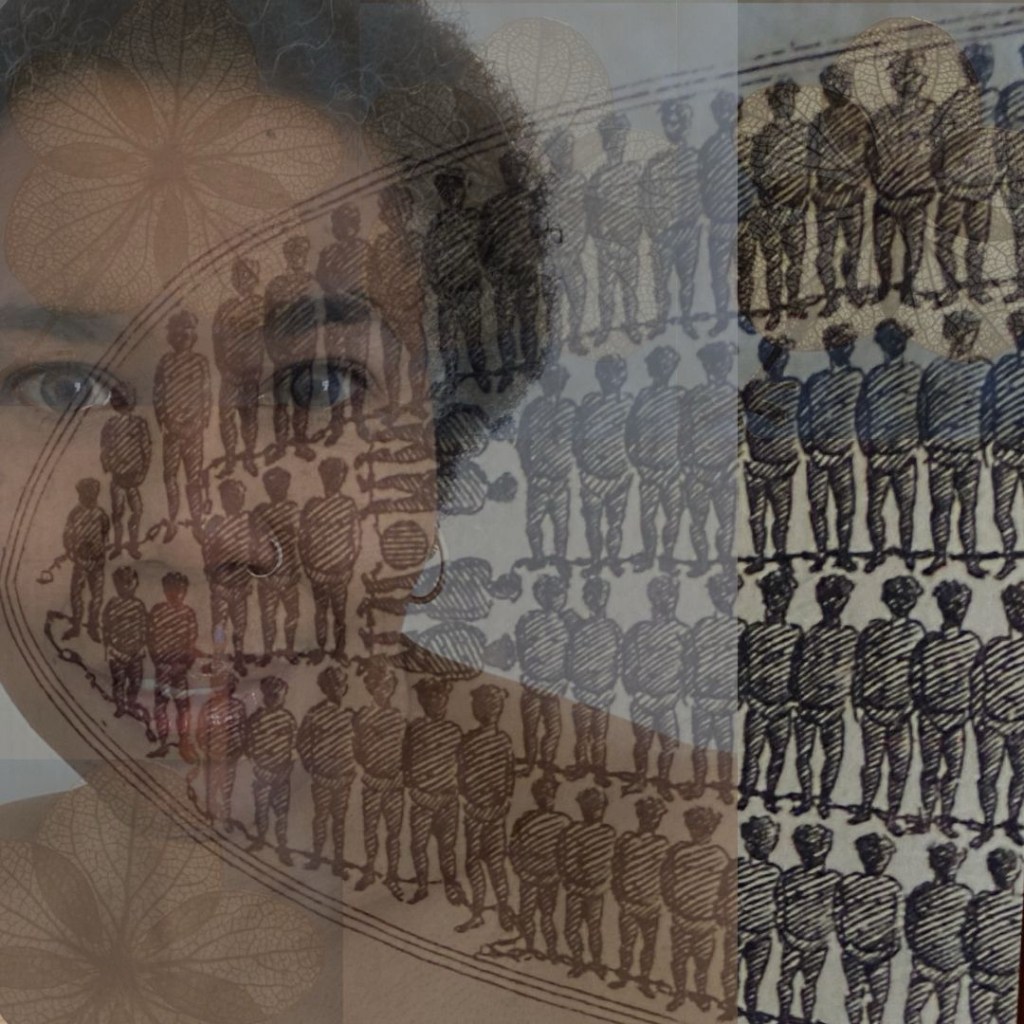


 Living Wild Studios