You’ve got to love your local library

With my knapsack on my back, I went a wandering. Wandering and wondering is part of my summer field guide plans ( more to follow here with updates). It wasn’t too hot and it wasn’t too cold. It was just right.

I had a bundle of old photographs with me, probably half of my family archive of photographs, as I was going to get them photocopied for a project I’m working on ( more to follow here too).

At my local library, there are two photocopiers. I usually use the downstairs one. But this one was broken. Has been for a few weeks. So I had to go upstairs and use that one.

This photocopier upstairs is manually operated and all monies have to be given to the librarian sitting not far from it.

I asked to use the photocopier. They said yes and I started the job. As I’ve said there were a few photographs to get through and the librarian did say they were leaving momentarily, swapping out.

They stayed for the duration of the job. I paid for the copying and then I took a minute to turn around and look at the new books . Something I do from time to time.

The librarian said at the same time, I was just going to say that there are new books in if you want to have a look at them. Don’t you just love getting your hands on new books? And I had to agree with them.

And there, right in the middle of the shelf, facing me at eye level was the new book from Christena Cleveland, The Black Madonna.

You might remember that another book from Christena Cleveland has been featured on this blog. God is a Black Woman. Ring any bells?

A book I travelled with to Paris, and the outskirts as I took a mini trip to France in search of Black Madonnas.

Well, Cleveland’s next instalment is The Black Madonna, is a further reclamation of the divine feminine, part memoir, part global stories, part historical records, part invocations and rituals. Total liberation.

Part way through this book, where at the end of each chapter there is an invitation to actively allow Black Madonna into your life more fully, I’m drawn to the task of mapping Black Madonna’s loving pursuit of us. Of me throughout my life.

Cleveland presents the story that Black Madonna, is the sacred black feminine worshipped from time, from Africa. When the people of Africa were stolen, taken across the ocean to be enslaved, the sacred black feminine in the form of Osun, orisha of the Osun river begged Yemoja, Mother of all Orishas and Oceans, to let her go with them. Osun’s love for her people was limitless and she didn’t want them to think that she had forsaken them, forgotten them or stopped loving them because of their forced departure .

Yemoja granted Osun’s wish by transforming her into rain, so she could cross the ocean and be with her people who needed her most. So within the Americas, and the Caribbean, Osun crossed an ocean, transforming herself into a more light-skinned goddess so her people would recognise her in these strange new lands, where they had been enslaved and all Africanness bred and/or whipped out of them. She crossed an ocean not just out of love for us, but to empower us. Who has not heard of the slave rebellions inspired and led by Black Madonna, by black women? Who do. you think Harriet Tubman’s North Star was?

Black Madonna. Shape-shifter. Black women. Shape-shifters.

Anyway, I thought I’d share my mapping of Black Madonna’s loving pursuit of me for the past 6 years on this blog this month as I’m in need of feeling that I am not alone.

I’m in need of feeling that I have a black divine presence in my life who’s got me. Who’s there to catch me when I fall.

I’m not religious more spiritual. And because of the white washing of religion,I would’t claim any religion as truth, as something to put my faith in. Never.

I’d much rather put my faith and trust and love into black women. God is a Blackwoman, right. And there is something about Black Madonna that keeps drawing me back to her. That gives me peace and joy when I sent eyes on her.

So who wouldn’t these feelings to continue? Who wouldn’t want to highlight and amplify these feels through difficult times?
It’s quitting time, quitting time @ Tara

Jot down the first thing that comes to your mind.

Sweeping violins. A Southern Belle, pretty and shallow, chatters on as young men flock around her feet, captive. *Fiddle de de.* Relishing in colour, technicolor; rich reds, blues and greens of the gallant Old South. Pan out see mansions surrounding by plantations. Bonnets and ribbons. Dances and horses. Cotton.

Extract from: The Melodrama of Gone With The Wind

Found poem: 

Source: http://www.art21.org/texts/kara-walker/interview-kara-walker-the-melodrama-of-gone-with-the-wind

I first read Gone with the Wind by Margaret Mitchell while completing an extra year at college. Gaining extra ‘A’ levels while I waited on my then boyfriend to make the grades.

I identified with Scarlett O’Hara, the bitch of a heroine, not Mammy. I definitely was no mammy. Not here to fetch and clean and be loyal. I definitely was not obese and coarse and ugly, or ‘have a shiny, glossy face of contentment as she be the most happy slave alive.

Of course as I’ve gotten older, I’ve learned where I’m placed in society. It’s okay to fantasise being the white heroine but I’ll never really be her. Better learn my place – to be there for the pleasure and enjoyment and whim of the white folk – and smile.

But what about my own pleasures and pains? Apparently they don’t exist. Apparently I’m incapable of such things, such finer characteristics. My reality states/shows otherwise.

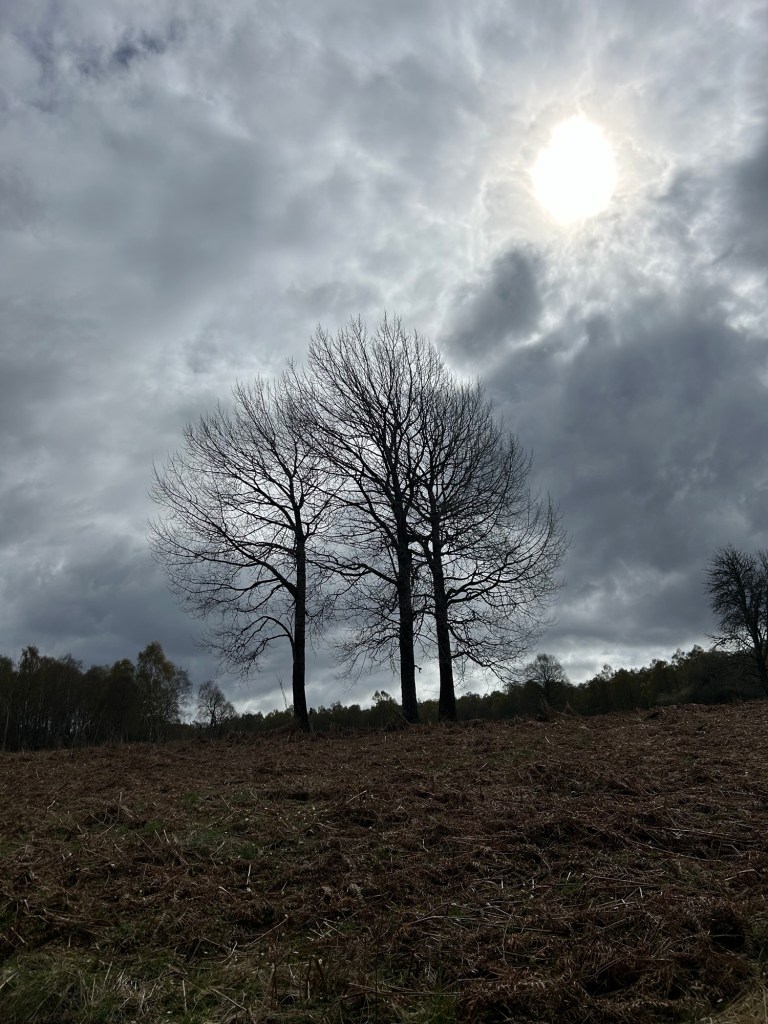
It’s quitting time. I’m retreating into the woods in Aberdeenshire for the next week. I’m taking this opportunity as a reset. A chance to focus on my pleasures and pains. Drink on Mother Nature and give thanks for this life I have which isn’t being subservient/ submissive/ subjection to anybody.

I refuse the Mammy as well as the Scarlett, as they are both constructions and constrictions to control the female body.

I’m much more interested in the overspill, the excess, the unruly body. The blackwoman body that I live with/in daily and how nature supports me on this journey.

As a wind of flames sweeps through Georgia; menacing reds and oranges against a bleak dark sky swirl and crackle in time with fast ascending music. Real danger and Butterfly McQueen (real name not character name that would be Missy) flits around like a blue arsed fly worrying with no sense or plan.

Extract from: The Melodrama of Gone With The Wind

Found poem: 

Source: http://www.art21.org/texts/kara-walker/interview-kara-walker-the-melodrama-of-gone-with-the-wind

I’m no Missy either.

Anti-racism is anti-capitalism

I really appreciate it when you’ve bought a book and are ready to dive into it, but you’re just not feeling it. You can’t get into it. So onto the book shelf it goes, collecting dust. Maybe even taunting you.

And then, over time, into a different time, you pick up said book again and you dive into this time, deeply. It’s singing it’s message through you mind, body and soul.

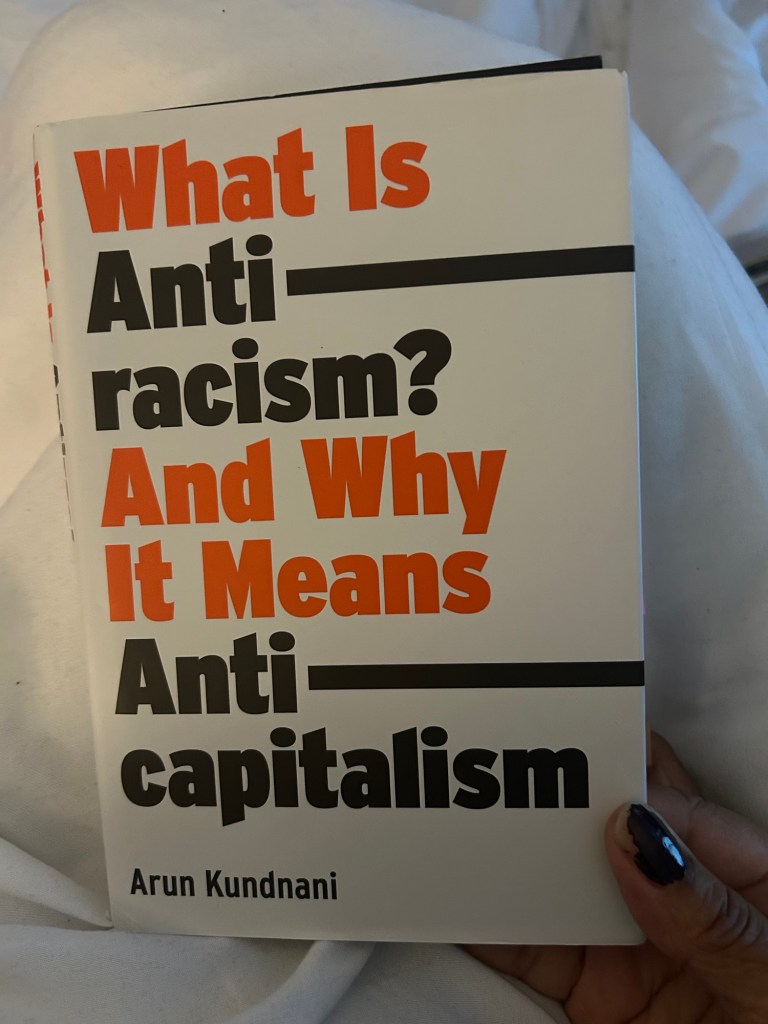
This practice happened for me with Women Who Run With Wolves by Clarissa Pinkola Estes and here it’s happened again with What is antiracism? by Arun Kundnani.

It’s that time of year again where I’m due to go back into Sunderland University and lecture within the Social Work Department around anti-racism. This started in 2020, in the pandemic and the Black Lives Matter uprisings around the world. Up until this point there had been no addressing of race and racism within social work training. And you could still say this is the case as one session, 2-3 hours long, is hardly making a dent into racism and its consequences. But I digress.

Anyway each year, my thinking and practices have changed as I’ve read more and developed more as an anti-racist, anti-capitalist agitator, organiser and activist.

I share my learnings and findings as I want to bring about change for everyone. And this transformation can’t be just limited to working on a personal level as the usual anti-racism training/ education would have us believe.

The problem is not just on an individual level, our unconscious biases etc, the problems are structural and are engrained into the bedrock of our societies, countries and communities.

Anyhow, this book What is antiracism? is not only giving me the historical evidence of racism, the term and practices, but is also sharpening my argument around how racism and classism go hand in hand and that you cannot have a revolution without black workers leading the way. As black workers have always fought for freedom and the dismantling of capitalism for everyone, not just for (white) workers as the revolutions within Europe have done.

We have the French Revolution in the 1700s, lead by the urban masses. We have the Russian Revolution lead by the vanguard party for the proletariat. But we have the Saint-Domingue Revolution in the 1700s lead by the enslaved for abolition of all enslavement in the colonies and Europe, in tandem with the French Revolution happening in Paris. The first time that black and white workers were fighting a common cause together on this scale.

Which revolution succeeded?

The revolution lead by the enslaved, black forced labour, which created the sovereign state of Haiti, a black revolution which had at its heart radical action to transform all societies.

This is what we need now.

Driving Bodies for Profit, A Narrative Poem – Day 19

Black women’s bodies could be speculated on.

Prime hands. Breeding bitches.

Their owners were interested in their reproductive capacities.

Examinations were necessary. Teeth, back, bellies and vaginas.

Wide child bearing hips were a bonus.

Clean them up good to catch a higher price.

Healthy took on a whole other meaning

during these times, these cruel times,

when monsters sold humans for profit.

The birth of children was essential to the growth

of the Southern economy once slavery became illegal.

Anything could be mortgaged on the backs of those children.

Children that were never meant for Black women to mother,

to love and see grow up.

They say that there was a second middle passage

as prime Black women were shipped around

from one plantation to another, sold, driving a profit,

driving their bodies for more and more bodies

for labour and babies.

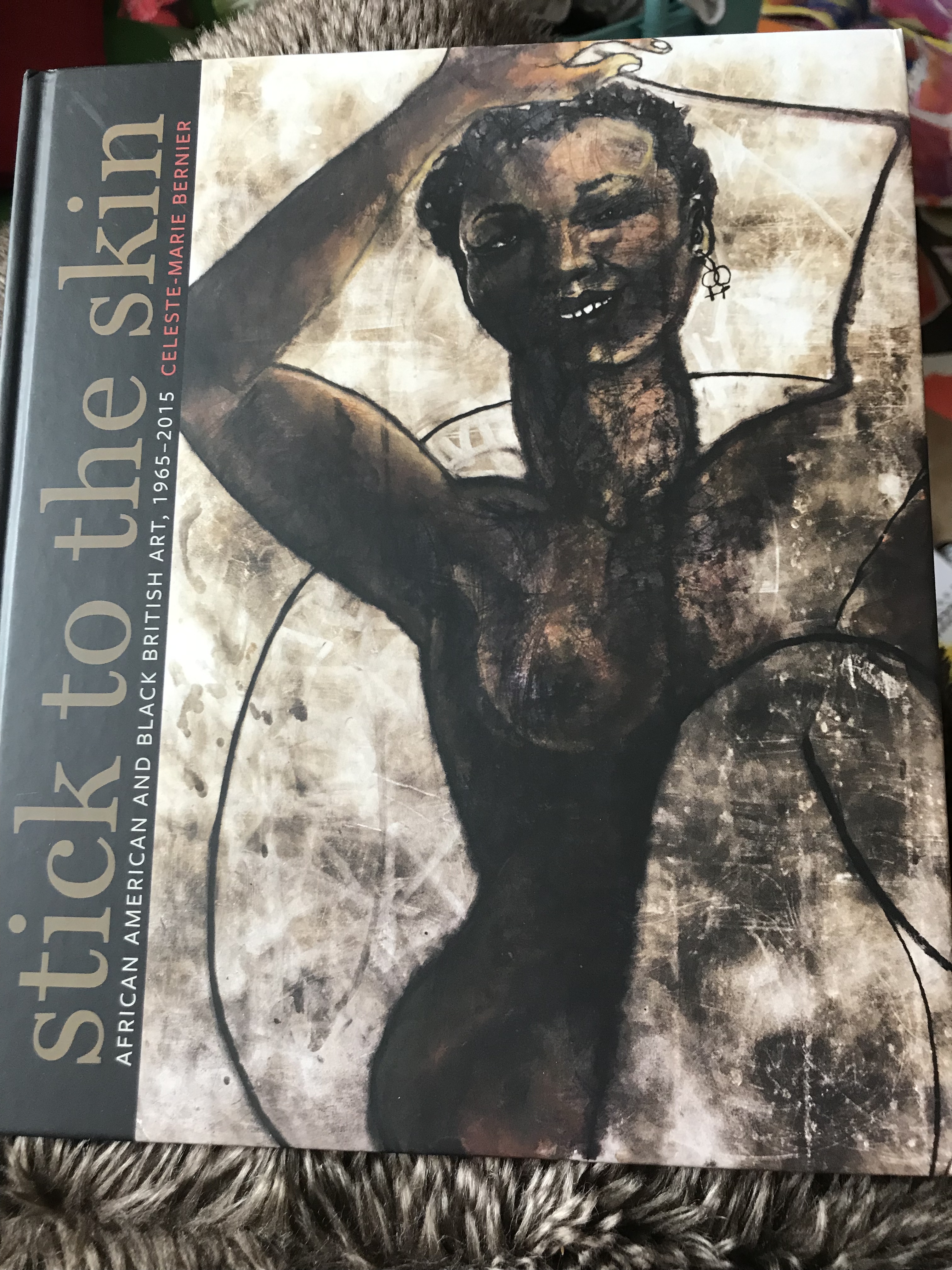
Black British Art – a series

I’m a Black British artist. I’ve been involved in the union for artists in England. I’ve been involved in different exhibitions and events around the arts. What I know for sure is that the British art scene is elitist and exclusive.

I’m actively attempting through my own practice as well as research and reading to make visible the invisible; the invisible history of Black British art. For centuries, Black artists have been visible amongst themselves/ ourselves being involved in individual and collaborative projects. But within official records and archives, the Black presence remains little and absent.

Histories and lives and stories are missing within British arts from an African diaspora perspective and I hope through my creating and agitating and archiving I’m changing the narrative.

Through a series of posts I hope to explore the Black British art tradition to bring this rich and diverse and valuable history to light and more recognition. I look forward to sharing my findings with you.

Night Marriage, Lowlands Estate, 1791.

‘Let’s feel what the Massa sees in you,’
he whispers,
like a snake’s belly on hard sand.
He takes me in.
His rough stubble tears at my thighs,
as greedy palms, with raised moons,
kneed my belly. His smell is
stale sweat mingled with
the heavy wet perfume of dirt
turned over with my hoe.
His high shiny leather riding
boots are still on.

from: The White of the Moon (2007-8)

Poetry