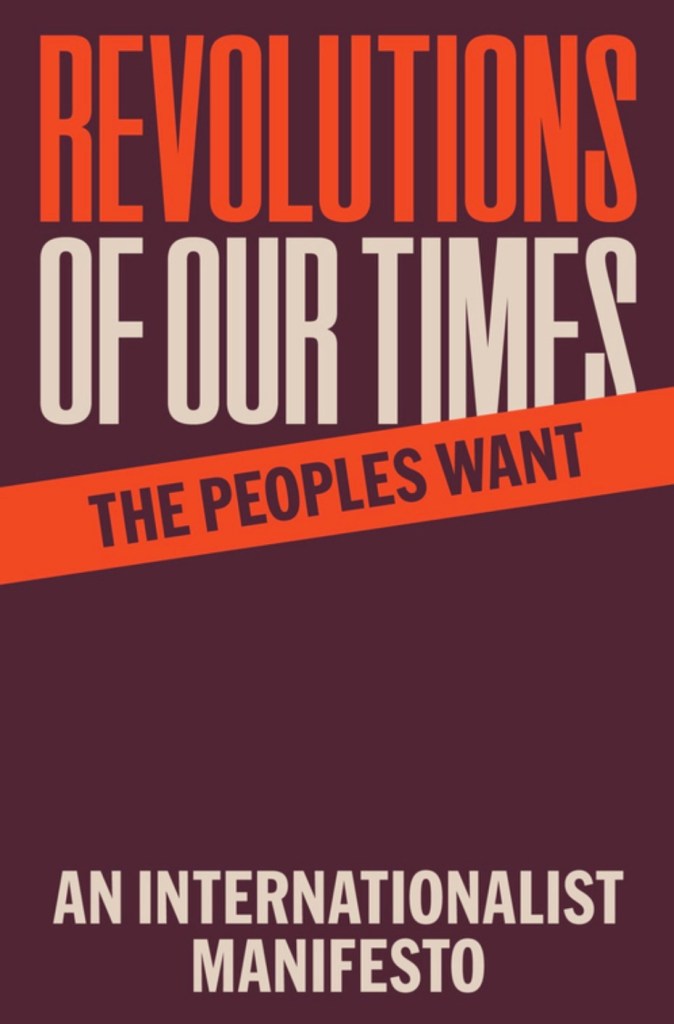
From The Peoples Wants come a book that I invite you all to read. Alone and in group, reading and discussing together as we learn about revolutionary strategies for doing the work now to bring about structural change. How we can work together to make this happen.
I’m reading it now if anyone wants to join me in discussions about it, just get in touch.
Every vision is also a map. As freedom fighter Kwame Ture taught us, “When you see people call themselves revolutionary always talking about destroying, destroying, destroying but never talking about building or creating, they’re not revolutionary. They do not understand the first thing about revolution. It’s creating.”
This is why my favourite pattern within nature, apart from the wave, is the spiral. Again and again, experience shows me how we may feel that we are going around in circles doing the same things, making the same mistakes and never learning or moving forward.
But I beg to differ. I believe life’s journey is a spiral. Each year we go around, and it may feel as if we’re not moving. We’re not making any progress or making our mark. But I see it as coming back around over similar track but we have changed. Through the movement of time and experiences and knowledges, we’ve changed since the last time we were in this spot. It’s not the same spot. Things have shifted. and so we’ve changed. We’re not right back at the same point but moved further into the spiral. Not in a hierarchal way, , ascending or even descending, but more of a going deeper, more connected and centred movement of the journey.
Each rotation in the cycle, in the spiral throws up more learning and more insight that if we’re paying attention we can use on our life’s journey with more consciousness, connection and joy.
I share this because I’ve just recognised how I’ve moved through the spiral this year to come to further understandings and wisdom.
This time last year, preparing for anti-racism facilitation, I was reading What White People Can Do Next by Emma Dabiri.
It was from reading this slim volume of wisdom that I fell into ‘solidarity’ is needed within the anti-racism movement. In fact I started using a anti-racism is anti-capitalism. Solidarity between oppressed and marginalised groups in society is the way forward.
I went on a journey from here, maybe a spiralling into despair, as I searched for a group or organisation to be a member of, in solidarity across different sections of society. I was looking into the communist party, unions, anti-racism organisations, trying to find a place where I could belong and be in solidarity with others.
In my search, I found racism and sexism, individuals and groups still perpetuating the racial capitalist system. Still working with hierarchies and the unconscious bias that they were better than me, than they knew more than me therefore should control me.
I become demoralised and retreated. I put away my radical thoughts and ideas, convincing myself that it was better to be alone and true to my ideals than compromise and waste my time explaining or highlighting blind spots to so-called comrades.
And then these part few days, solidarity has raised its head again but through a different door. Through the door of abolitionism.
Ours is a fight against powerful systems of violence and terror.
In recognising the interconnectedness of systems of state violence, abolition can be the basis of a new solidarity: one that acknowledges specific experiences of violence in particular communities, whilst building a unified, internationalist resistance.
Abolition doesn’t understand the concept of solidarity as an airy-fairy call for different oppressed groups to ‘just get along’. Solidarity is a vital strategic response to the prevalence and ubiquity of state violence.
Abolition Revolution by Aviah Sarah Day and Shanice Octavia McBean
As we have witnessed in the recent council elections, with the surge in the popularity of Reform. This isn’t because this party has set out a manifesto of policies that will solve the issues of poverty, unemployment, economic crisis, the state of the NHS, the policing in our schools and stop crime such as rapes and murders. No this party, it just playing out the age out trick of creating the ‘enemies within’. The ‘enemies within’ can carry all the responsibility for what’s wrong within British society today. The immigrants, the refugees, the gangs, the nasty women, the people with darker skin who are innately hardwired for crime. The general public, usually predominately working class white people, can blame others, other oppressed and marginalised people for all the woes of society. Smokescreens and mirrors, instead of people coming together, across class, race, gender, sexuality, religious lines, in solidarity and challenging racial capitalism and state control and violence which are geared towards keeping the majority of people in poverty at each other’s throats instead. While a few, usually white cis-gendered men, retain wealth, control and power.
I say Reform, but the present ‘Labour’ government operates the same way. They’re all apparatus of the State working to keep power and control through violence and terror in the hands of the few.
So for them the problem is not the historic experience of racism and the legacies of slavery and colonialism: it’s Black ‘gangsters’ on our streets. It’s not disinvestment from and neglect of working class communities: it’s Syrian migrants in our hospitals. It’s not military and imperial domination of vast swathes of the world: it’s Muslim extremists in our schools. Constructed ‘enemies within’ like these provide a constant justification for the use and expansion of state violence in order to maintain control; they tie people’s lived experience of the world to divisive narratives that weaken the collective consciousness of ordinary people. – Abolition Revolution by Aviah Sarah Day and Shanice Octavia McBean
I see the value of solidarity now, in building power in the direction of marginalised groups because it weakens the State’s power and control which is based on divisive narratives that weaken the collective consciousness of everyday people. The marginalised and oppressed.
Now maybe if I had this knowledge, last year, cycling and spiralling looking for my tribe, I might have stuck it out a little longer. Allowed our differences and bias to take a back seat because I believed we were working together across solidarity lines. Maybe.
This year though, with another trip around the sun under my belt, and another spiral deeper into my learning, I believe my solidarity within these groups would have still faltered as within and outside of these groups because they are not spurred on from the foundations upwards and onward with an abolitionist revolutionary thought and praxis.
I see now that these groups are looking toward reform rather than abolition. They are satisfied with tinkering with the edges. Gaining small concessions rather than a total overhaul. It’s like asking for and being satisfied with a more comfortable prison cell as a demonstration of change in how the State handles inmates instead of defunding/ abolishing the prison industrial complex all together.
I see that now as I continue to spiral towards consciousness, again and again. Onwards.
I’m been talking here about finding my tribe. About my search for comrades in solidarity. I’ve remained pine in the process, for real. From one particular source I asked for further reading, as something was niggling me. Id expressed my concerns in terms of using the oppressors language as well as, well I felt as, the lack of warmth, kindness, care and love. And then through the further reading it all became clear. This was my response.
I believe that there needs to be unity to fight all oppressions. You can’t fight racism without fighting against capitalism.
But I realise through this further reading where my concerns lie. It’s not in the socialist/Marxist movement as a whole but it’s with the people who make up the movement.
I’m not sure if the people of the movement have/ or continue to take the time to work on their own racism. There seems to be a given that because the movement is against all oppressions that it means those who are part of the movement can’t be racist or sexist because they say they are against all forms of oppression. Saying it is one thing. Practising it is another.
In practice there is still the use of the oppressors language as I’ve mentioned before. Using ‘non-white’ or ‘minorities’ is offence as they still centre whiteness which is used for division and oppression.
The articles mention the BPP alienating white people because of their support for Black Nationalism and Separatism, and their language used around Black Power. You even mentioned yourself that we can’t fight capitalism through language and its use. Modifying language is not going to bring about material change you say.
And yet it is language the party is using to rally the masses, to bring people together. Language is the tool of persuasion no? Language is the tool of education.
But if that language continues to use the language of the oppressor and is offensive to certain groups of people, they are accused of being confused, ill informed and falling into the identity politics trap again.
However, from my experience, through reading the literature of the party, I feel that the language used reflects a party line where the people behind that line are not continuing to work on their own racism/ biases while focusing their efforts on society’s ills, outside of themselves.
I do not feed into white supremacy culture with the characteristics of either/or. I believe in and/both. That means for me, there has to be the work on the individual’s internalised racism and sexism at the same time as working against oppressions within society. Working on our own blind spots and prejudices can only benefit the movement as a whole. Where this fails to take place is where the oppressors divide and rule become fixed without our recognition of it.
To say that ‘non-white’ is every day language, quote, ‘commonly understood by ordinary people as respectful ways to refer to some people who are oppressed’, as a black person being referred to as ‘non-white’ is offensive to me and I’m not really bothered if other black people are okay with it. I might be falling into an identity police trap but one my identity is not built on my relation to whiteness that is racism. Two, if someone says they find it offensive and that is not recognised or is questioned and explained away as being the norm is denying that person’s experience which is racist. Three, to bring this up then to have it dismissed as being defensive and accusing someone of being a bigot/ racist and dismissed as a distraction from the cause is another example of an individual failing to check themselves and work on themselves to combat their racism/ discrimination tendencies.
I work on myself daily to check my prejudices or biases or judgments and blind spots. I only wish more people would also as I do believe the world would be a better place because of it. Movements and societies are groupings made up of individuals. Working on the individual at the same time as the collective can only strengthen that connection and keep moving it forward in an effective way, I believe.
If we think about what is happen in the USA today, and the ICE raids within every community. The Latino community is coming out and asking where are the black people why are they not out here on the streets with them protesting? Why are they sitting this fight out etc.? Black people are tired, esp. black women. Black people told everyone to vote for Kamala Harris and they didn’t listen. They voted for Trump. And now he is doing all that he said he would do.
Now people are asking for black people once again to put their bodies on the line. And yeah this is a prime example of the ruling class dividing and ruling. Pitting one group against another. But what is true there and what is true here, black people only make up a small percentage of the population. In the states 12% here 4% with other ethnicities. And yet it is expected for us to save the world. ( Aside here we might be termed ‘minorities’ within these countries but we are the global majority. I don’t use ‘minorities’ because it is used as language of control. Black Feminism or Third World Feminism has always been global in its remit).
It is expected for black people to put aside those differences which on a daily effect our life chances. Our lives in terms of life and death. And this is not feeding into a victim hierarchy and who’s suffering is more than someone else’s. It’s a reality. Black people, black women do not just suffer violence and brutality from the state but do so from person to person in their every day and yet black feminism still criticises and attempts to bring material change for all through fighting all oppressions including capitalism and yet if they ‘fail’ to bring about material change it is because of ill-fighting or confusion in their ideology but no mention of doing this within a racist/ sexist society that does not see Black women as anything except mules of the world. Not either/or but and/both.
As black women we continue to not be seen as human. Read Fugitive Feminism by Akuwgo Emejulu to understand this, which is anti-capitalist, anti-imperialist and anti-colonialist. It’s arguing for a rejection of the whole system. A refusal of what has already been refused to us. Other ways of being are possible.
Marx himself saw the future of capitalism as self-destruction and a social mode of production being the outcome. Fugitive Feminism is being/working now with the other possibilities. It’s about creating an outside while still on the inside. Creating spaces of liberation and joy on our own terms. It’s not waiting until then for it to be now. It’s collective and speculative and might be fostered by black women but can be utilised for all, all oppressions including capitalism and the class struggle. It is probably dismissed though because it comes from the mouths, minds and hearts of black women.
Thanks for all these readings. They have helped in clarifying where I stand. In solidarity but at the same time in my own fullness and power which I lend to any movement which recognises this and works with me to bring about dismantling all oppressions for all people.
The reply I got, was thanks, I’ll reflect on it, and wish you luck on finding your people.
I’m sharing it here as I don’t want my realisation to do to waste. The words I shared to go to waste, as I’m still open for the conversation, still open to standing together.
Do lazy days make you feel rested or unproductive?
This morning’s gratitude
It’s been a bit hit and miss here over the last few weeks as I’ve been busy, walking and resting.
There are no lazy days. Saying a person is having a lazy day is such a imperialist, capitalist, white supremacy patriarchy judgement.
Our value does not come from how busy we are, how productive we are or how hard we hustle.
I’m done with that mentality and practice and conditioning.
I’m been resting up after my 96 miles hike for the lowlands to the highlands of Scotland and have felt no guilt or made any excuses for it. I’m luxuriated in the inactivity.
Rest is a weapon as I’ve said before. Rest is pushing back against a system which was set up not for my survival but destruction.
Rest is a Revolution. So while I write my morning pages from bed, cradling a hot coffee and a sugared ring donut, I creatively plot my next move in chipping away for the dismantling of the system.
This includes another coffee and another page of dreaming. I’m not lazing, I’m not having a lazy day, I’m creating friction, rebellion, freedom.
“I want to make things that are beautiful, seductive, formally challenging and culturally meaningful… I‘m also committed to radical social change… Any form of human injustice moves me deeply… the battle against all forms of oppression keeps me focused.”
Carrie Mae Weems
I’ve just sent out the December Studio Notes. I feel it was an epiphany moment for myself. It happened during the process of writing the newsletter that I realised what’s wrong with me. Why I’m experiencing a bit of a funk. And I’m not fighting it either. I’m allowing myself to feel all the feels because that’s what being human is about but also through the process I learn stuff. True.
I’m experiencing a funk at the moment because I’m exhausted. Bone-tired. I thought I’ve been looking after myself and resting when needed etc. However, what I realised today is that it’s not just the physical tiredness I’m experiencing after a busy November of lectures, presentations and workshops. Nah man! I’m also emotionally and psychologically tired because of the type of practice I’ve been doing lately. It’s been focused around agitating, pushing back against the system, white supremacy culture, through anti-racism teaching, anti-blackness rebellions, and holding space for difficult conversations where my blackness is totally exposed. My vulnerabilities have been out there. I realise I’ve experienced re-trigging of trauma and oppressions. And it’s tiring. The work has to be done but back to back gigs of this kind of work is exhausting and at times soul destroying even though I know I’m doing good work at the same time as protecting myself.
But obviously not well enough.
It was already going to happen, but this epiphany has just reinforced my decision to hibernate this winter. To go within and rest and {BE}. I want to fill my pot with readings, books I’m been wanting to read for ages. Writings, my own, for pleasure and seeking beauty within nature and artworks. I’m going back to the beginning in terms of craft and creativity and embracing everything with curiosity and wonder. I’m centring me.
Let me say the again, I’m centring me.
Taking my inspiration from AfroFuturism, I’m centring me and speculating about the future of Blackness. I’m adding my fuel and energy, though rest first and foremost, to me and my creativity. I’m allowing myself the time and space to go with my flow and letting my practice speak for itself.
The message hasn’t changed that we need to burn down white supremacy culture; that we need a revolution. But the delivery will change. I’m using my voice to seduce my audience through my practice.
This isn’t a new thing for me, but it is in the sense of no longer being prepared to do the singing and dancing routine of making white people comfortable around race. I’m realised that a lot of people think that’s it, that’s doing the work for them. Listening to me talk or present or coming along to a workshop, they think that their task is done. Done and dusted, move on.
I want the thorns, the pricks to the conscience and hearts to last long after my disappearance from their view. I want the truths I’ve whispered or shouted into their ears to riddle them with uncomfortableness. If their eyes have been opened to the state of the world, to the system created to keep whiteness superior, then I want them to stay open. That they have no choice but to keep their eyes open and so do something about it. Like I have to be with my lived experience.
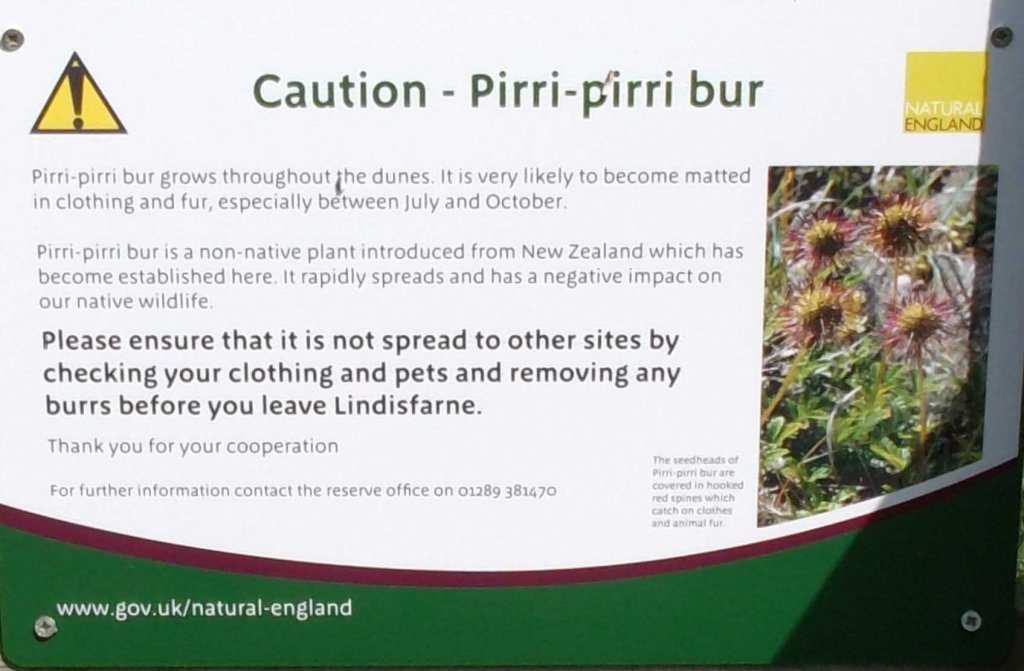
My practice can do this, if I give it the time and space to grow and blossom and stick like the barbed sticky burrs from the Pirri Pirr shrubby plant that carries warning signs on Holy Island. These burrs stick and spread, causing a problem which is expensive and time-consuming to eradicate.
As the Carrie Mae Weems’ quote echoes, I want to make things that are beautiful and centre Blackwomen in all our glory for us, not any white gazer saviour, but for us, for myself.