Where am I at with Afro-Surreal?

Afro-Surreal was the word I chose for 2026. My guiding word of the year. I might not have posted a lot about it here, and yet, it has been a constant so far, bubbling away in the background. Shimmering away just beneath the surface, ready to boil to the top, or over when something happens to question or disrupt my reality.

I chose Afr0-Surreal as my word of the year because I was doing it already. I had finally found a word for what I was experiencing and I wanted to explore it further. Unpick it, hold it up to the light and examine it closely.

In a sense, it’s an attempt to go back to the beginning, go back to the source of this term and its meaning and how it does show up in my life and practice.

D. Scot Miller in 2009 wrote “The Afro-surreal Manifesto”. He is the source who coined the term. He could only find the term being used one time before this by Amiri Baraka, who used the term to describe the work of Henry Dumas. Miller went to Baraka asking him if he had any issue with him using Afro-Surreal and running with the term and concept. Miller asked permission and was granted it. Since then Afro-Surreal / Afro-Surrealism has gone on to be a genre or school of art and literature.

I’ll start my study with looking at what Miller has to say about Afro-Surreal and continue from there as since 2009, Miller came out in October 2024 to say that Afro-Surrealism is dead. And when I read this I was like, noooooo. I’ve just come to the party and it’s over? But then on further reading I totally get why Miller is saying this.

Go back re-read the paragraphs I have already written about the inception, the birth of Afro-Surrealism. And then imagine or consider this, predominately white institutions, universities, academics trying to erase the work, trying to erase the manifesto created by Miller in 2009 as the beginning of Afro-Surrealism, trying to change the history of Afro-Surrealism, sound familiar?

We’ll be exploring this and more but let’s get things straight from the start, the names we need to know and give credit to. Amiri Baraka and D. Scot Miller. Remember those names as we insert them back into history, into their rightful places of the founding fathers of Afro-surrealism. And as Miller has said lately, in 2024:

So what to do?

When Brooklyn Rail contacted me, I understood the impact and reach of the publication, and after some serious reflection, it came to me that if I brought Afrosurrealism to life, I was the only person to be able to announce its demise in order to divorce my vision from this white-led hostile takeover. So I killed Afrosurrealism in front of the very people who need it alive in order to feed off of it.
AFROSURREALISM IS DEAD! LONG LIVE AFROSURREALISM!

It’s quitting time, quitting time @ Tara

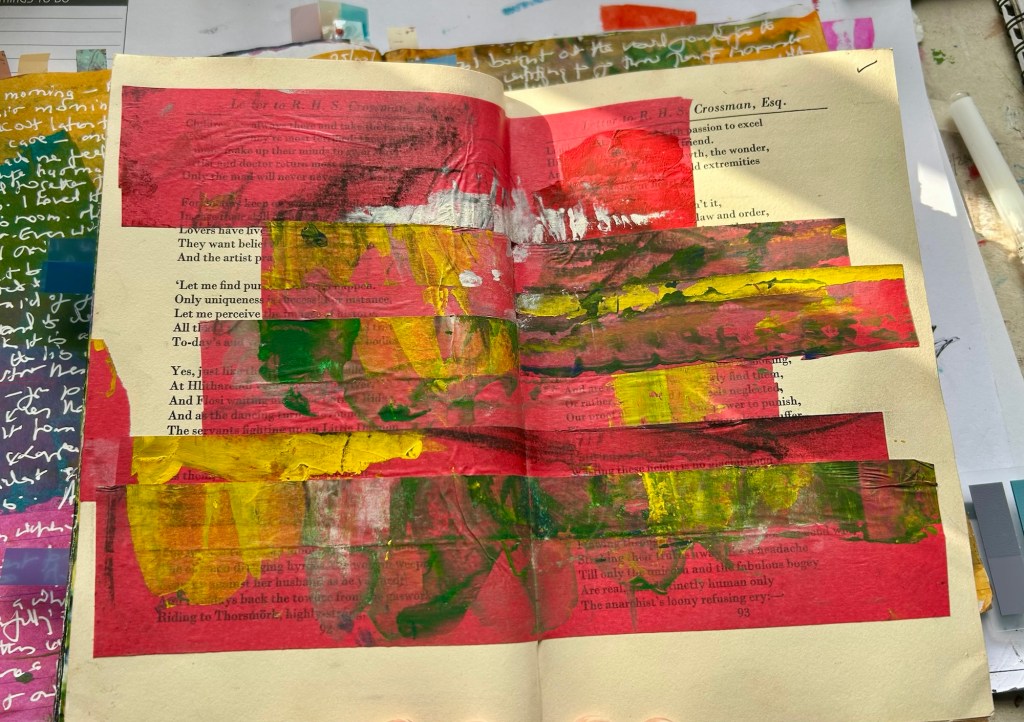
Jot down the first thing that comes to your mind.

Sweeping violins. A Southern Belle, pretty and shallow, chatters on as young men flock around her feet, captive. *Fiddle de de.* Relishing in colour, technicolor; rich reds, blues and greens of the gallant Old South. Pan out see mansions surrounding by plantations. Bonnets and ribbons. Dances and horses. Cotton.

Extract from: The Melodrama of Gone With The Wind

Found poem: 

Source: http://www.art21.org/texts/kara-walker/interview-kara-walker-the-melodrama-of-gone-with-the-wind

I first read Gone with the Wind by Margaret Mitchell while completing an extra year at college. Gaining extra ‘A’ levels while I waited on my then boyfriend to make the grades.

I identified with Scarlett O’Hara, the bitch of a heroine, not Mammy. I definitely was no mammy. Not here to fetch and clean and be loyal. I definitely was not obese and coarse and ugly, or ‘have a shiny, glossy face of contentment as she be the most happy slave alive.’

Of course as I’ve gotten older, I’ve learned where I’m placed in society. It’s okay to fantasise being the white heroine but I’ll never really be her. Better learn my place – to be there for the pleasure and enjoyment and whim of the white folk – and smile.

But what about my own pleasures and pains? Apparently they don’t exist. Apparently I’m incapable of such things, such finer characteristics. My reality states/shows otherwise.

It’s quitting time. I’m retreating into the woods in Aberdeenshire for the next week. I’m taking this opportunity as a reset. A chance to focus on my pleasures and pains. Drink on Mother Nature and give thanks for this life I have which isn’t being subservient/ submissive/ subjection to anybody.

I refuse the Mammy as well as the Scarlett, as they are both constructions and constrictions to control the female body.

I’m much more interested in the overspill, the excess, the unruly body. The blackwoman body that I live with/in daily and how nature supports me on this journey.

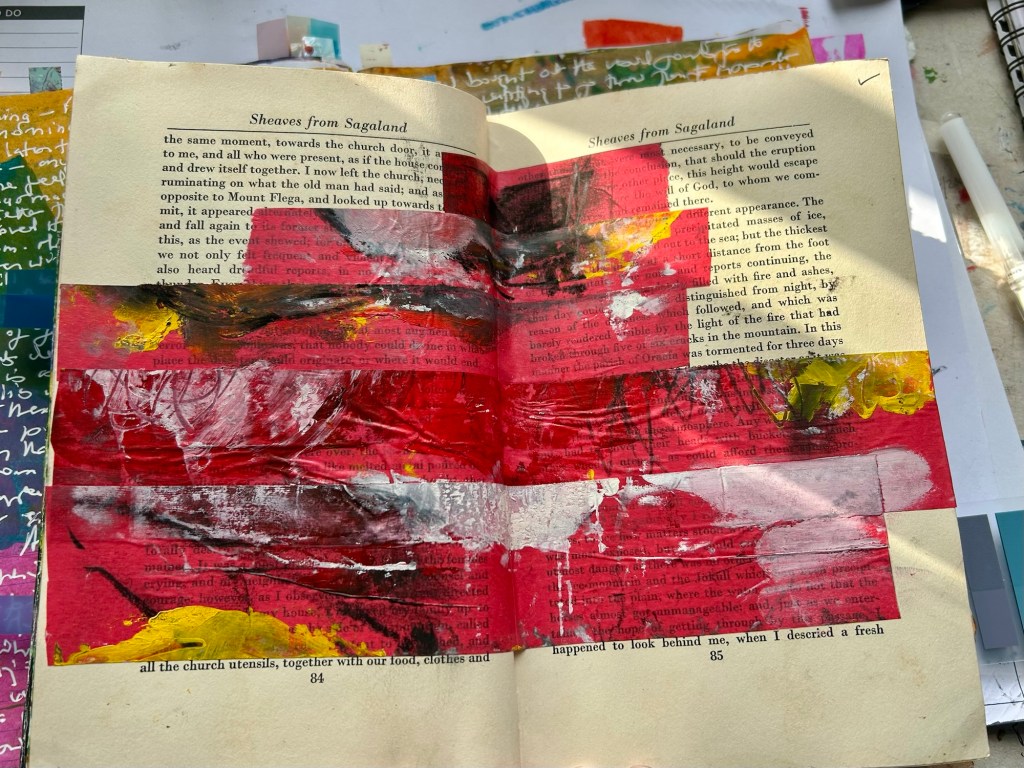
As a wind of flames sweeps through Georgia; menacing reds and oranges against a bleak dark sky swirl and crackle in time with fast ascending music. Real danger and Butterfly McQueen (real name not character name that would be Missy) flits around like a blue arsed fly worrying with no sense or plan.

Extract from: The Melodrama of Gone With The Wind

Found poem: 

Source: http://www.art21.org/texts/kara-walker/interview-kara-walker-the-melodrama-of-gone-with-the-wind

I’m no Missy either.

Coming in late

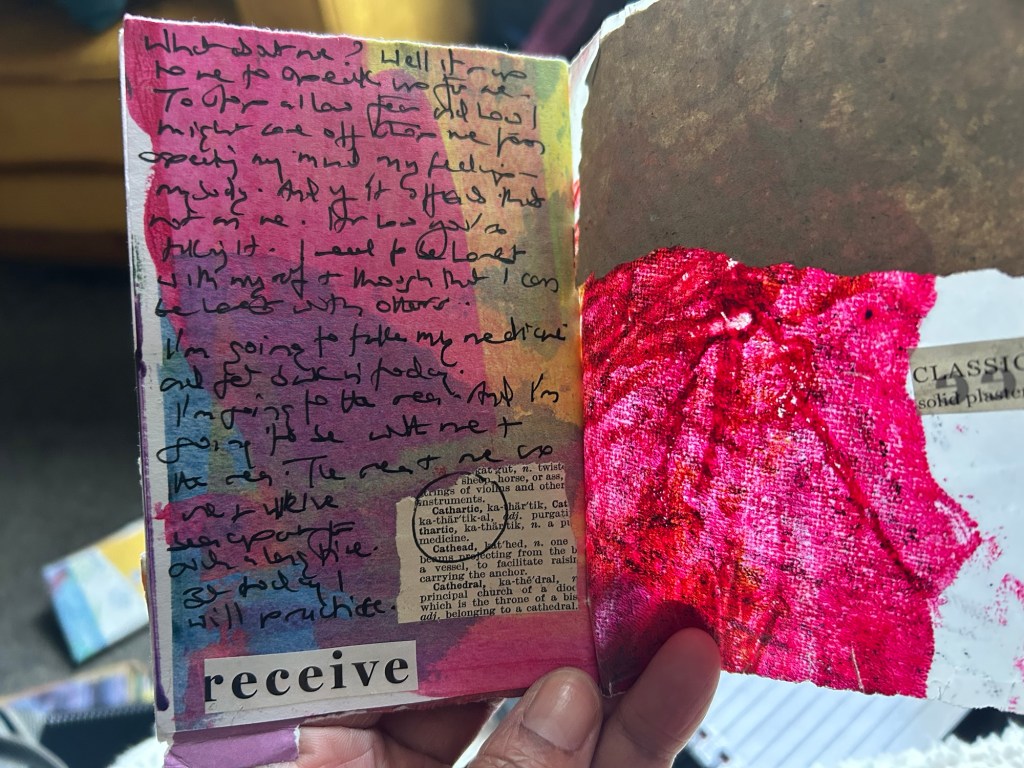
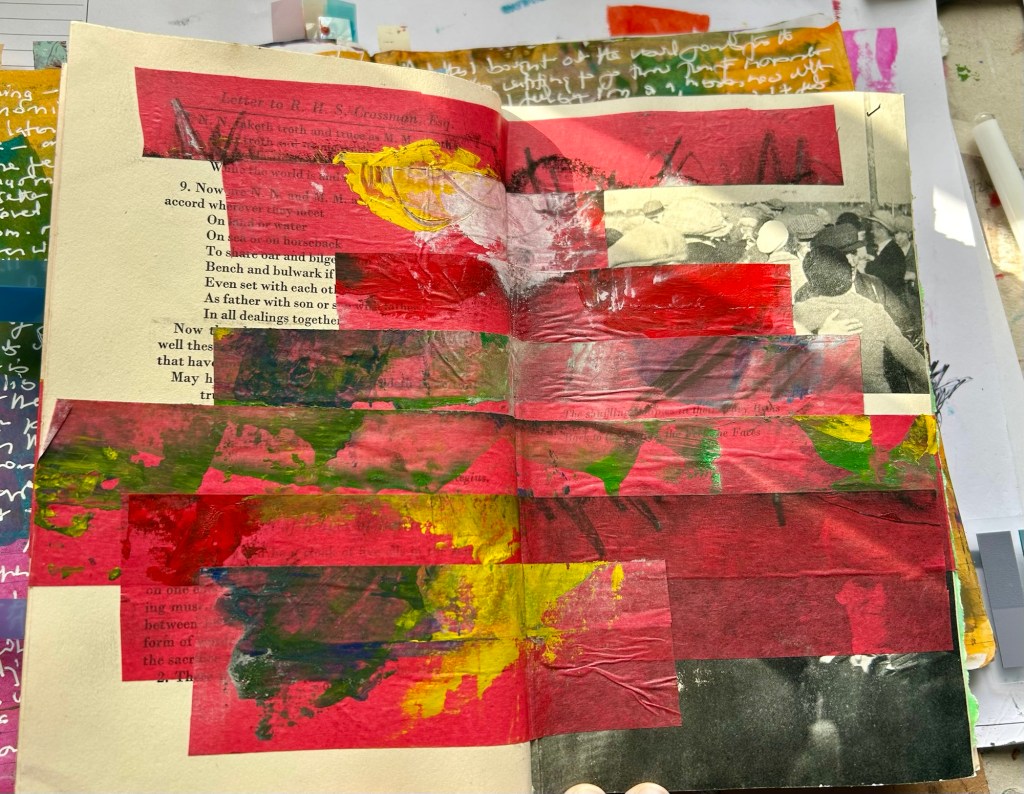
I’ve been coming later and later to my creative sketchbook practice this month.

It’s day 123. 123 days since I started this practice of play within my creative sketchbook. Daily.

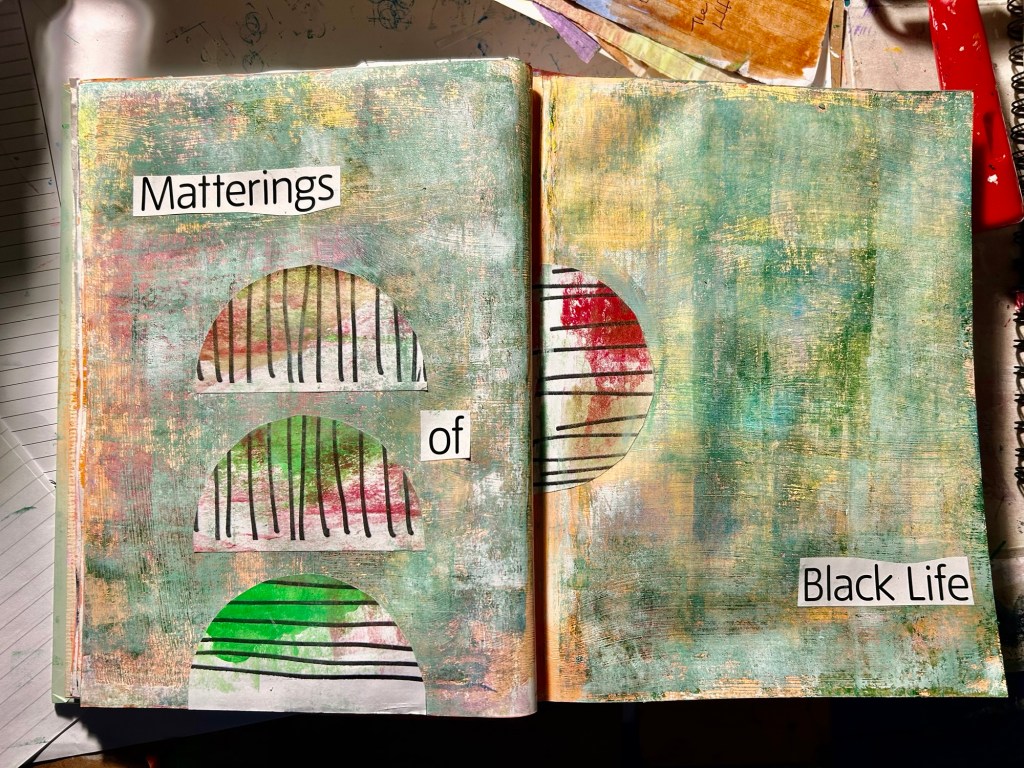
This piece tonight is significant because it chimes with my word of the year/ focus of the year being AFROSURREAL.

The right now. Capturing the now.

AFROSURREAL has been bubbling below the surface all year so far. I’m thinking it’s about time to share my musings and thinkings here in a mini series of posts.

Everything is overlapping and I’m fixing to gain some clarity knowing fine well that the practice of writing it out will only throw up more questions than answers.

The Matterings of (ordinary) Black Life is the practice. The push back against the colonial, historical categorisation of black people as subhuman. As stereotype as no life beyond the construct.

Right now. Black life. Black aliveness.

I’m living a/my reality which isn’t acknowledged or if is then it’s challenged/ denied/ erased.

It’s important to storytell, mythmake, historicise and archive within these liminal spaces. Centre the margins where these matterings happen.

Through the reconstruction and recalibration, healing and reparative processes challenge the exclusions and colonial impulses to conquer, control and exploit.

Expect to read more around AFROSURREAL and the overlaps with my other obsessions as through my research and readings and writings, I attempt to come to some understanding of myself and my creativity, moving backward and forwards between the now and beyond.

let this be the healing

after Danez Smith

let this be the healing

the out of time and space

to flow back to the source

of love & care

let this be the honey to the wounds

the joy within the unknown

the hope to survive

in the mouth of the dragon*

let this be the refusal

the movement underground

to protect our vulnerabilities

let this be the healing

*a line from Audre Lorde’s ‘ The Transformation of Silence into Language and Action’ in Your Silence Will Not Protect You.

Re-engaging with Fugitive Feminism

How would you improve your community?

I applied to Arts Council England for a Developing Your Creative Practice grant mid 2025. It was unsuccessful.

Undeterred, I resubmitted it under the project grant scheme. I was notified of being successful just before Christmas 2025.

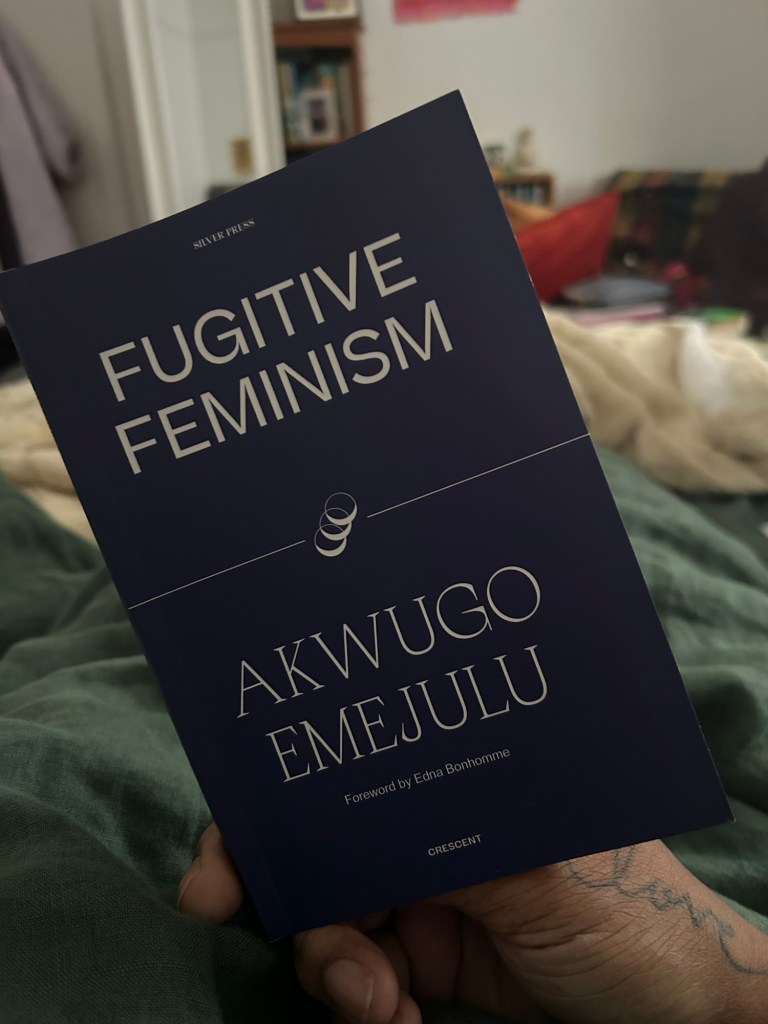
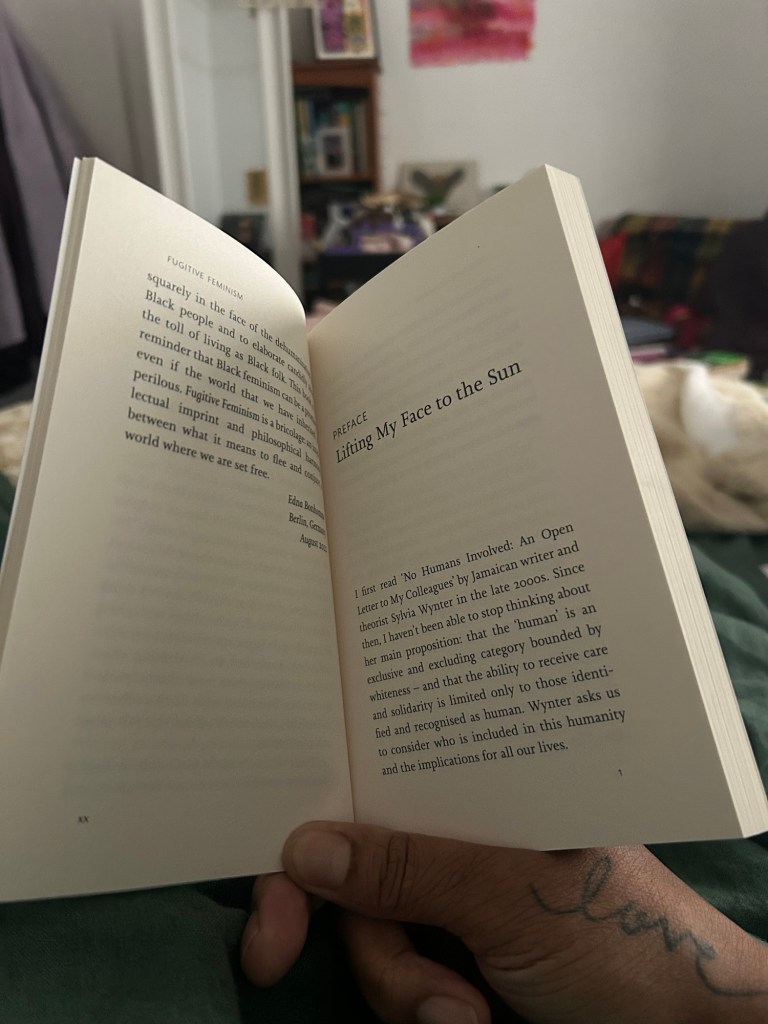
Practicing Creative Fugitivity is its name, and it involves researching fugitive practice. It also involves reading in community Fugitive Feminism by Akwugo Emejulu.

A study circle of women of the global majority.

When did you first learn that you were a non-human?

The question that opens the first chapter of the text Fugitive Feminism.

A question that hits me in my gut with its open, blatant honesty and curiosity.

A question which niggles at a truth that I’ve not wanted to face up to as it would mean that I’ve spent a lifetime trying to demonstrate, prove, live up to an unattainable category of being human.

Human as a category was never created to include someone like me within it.

Human = Whiteness

Human v Non-Human

You can’t have the light without the dark.

All constructs to create hierarchies. A hierarchy where white, EuroAmerican, able bodied, middle class, cis-gendered, college educated and suburban men reign supreme. Superior.

Conceptual Other. No Humans Involved. The Lack of the Human.

Black women. Outside. Out Outside.

Our exclusion determines the borders/ boundaries of the human.

But consider this …

If Black women were free, it would mean that everyone else would have to be free since our freedom would necessitate the destruction of all systems of oppression.

Combahee River Collective

Where the excitement lies for me and others, is once we realise that Black women cannot be human, then with the support of this book in community, let’s consider what if ‘human’ cannot and should not be reclaimed?

Speculate. Speculation. Speculative.

How might we divest from the human?

That the non-human Other actually decentres the human. Move beyond human to something otherwise.

Something else.

Becoming ( something else).

Thinking of how to be/ how to live beyond the binary of human v non-human could produce the means of improving our community/society/our planet.

Centring the human ( v non-human/ othering all else) has got us into the shit we’re facing now in terms of ecological disaster.

Finding a way to decentre the human, divest from what this concept / construction means and how it operates has to be the way forward.

Fugitive Feminism is the doorway into another way of being. A portal into an alternative world built upon the Black Feminist politics of liberation.

The path ahead is not clear or defined. It’s slippery and ambiguous. It’s experiential and experimental. Yet full of possibilities. Caring not harmful possibilities.

Speculative. Suggestive. Spacious.

And it starts and continues with the act of refusal. Refusal of the way things are right now.

Refusal of being defined by others to fit into their definition of humanity ( whiteness).

Refusal of being extracted and exploited for the benefits of a few.

Refusal of being non-human.

Refusal of being outside of humanity.

Refusal of the whole concept of human/whiteness/ fascist.

Refusal of these limitations when i, we, i and i can be something else beyond humans.

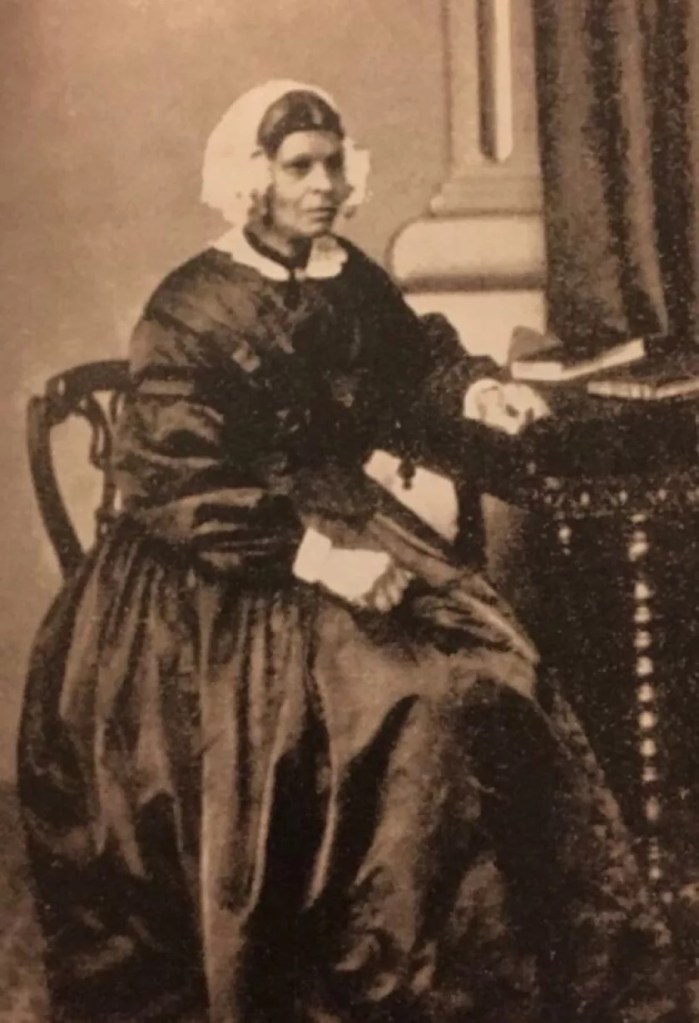
Mary Ann Macham

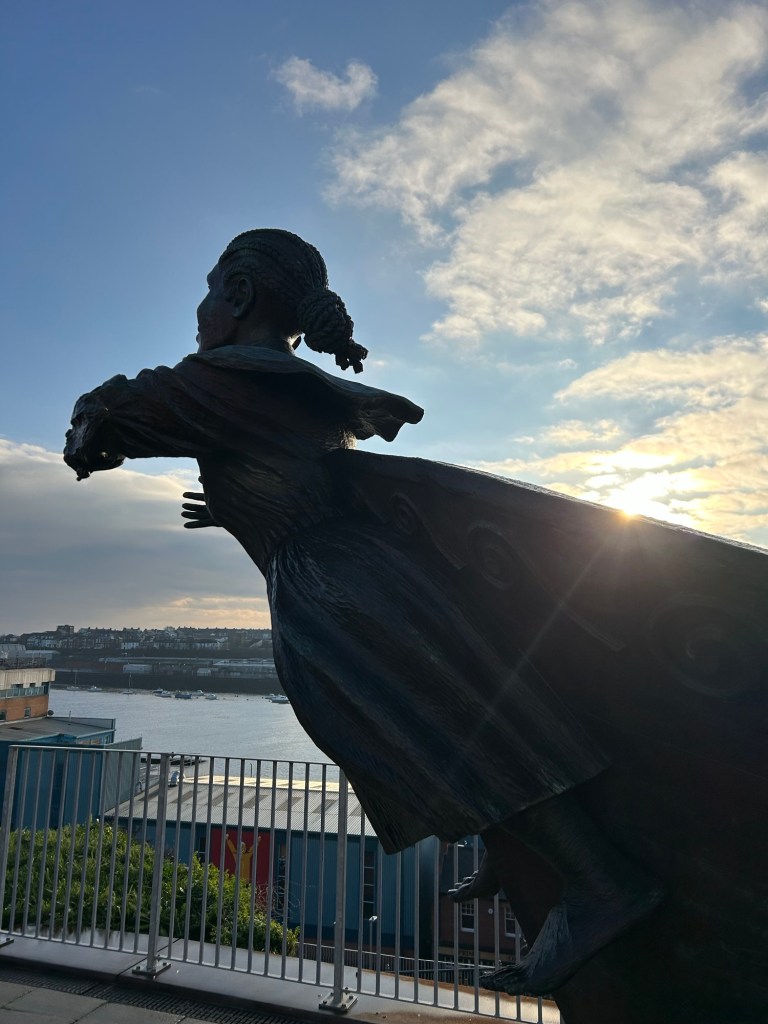
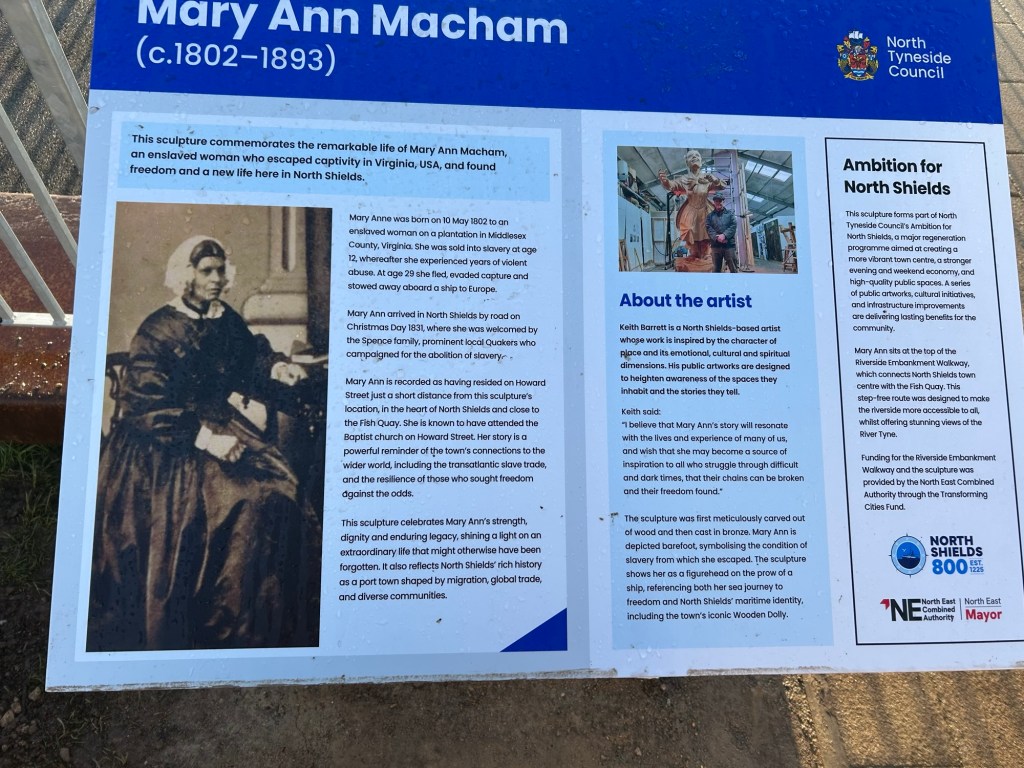
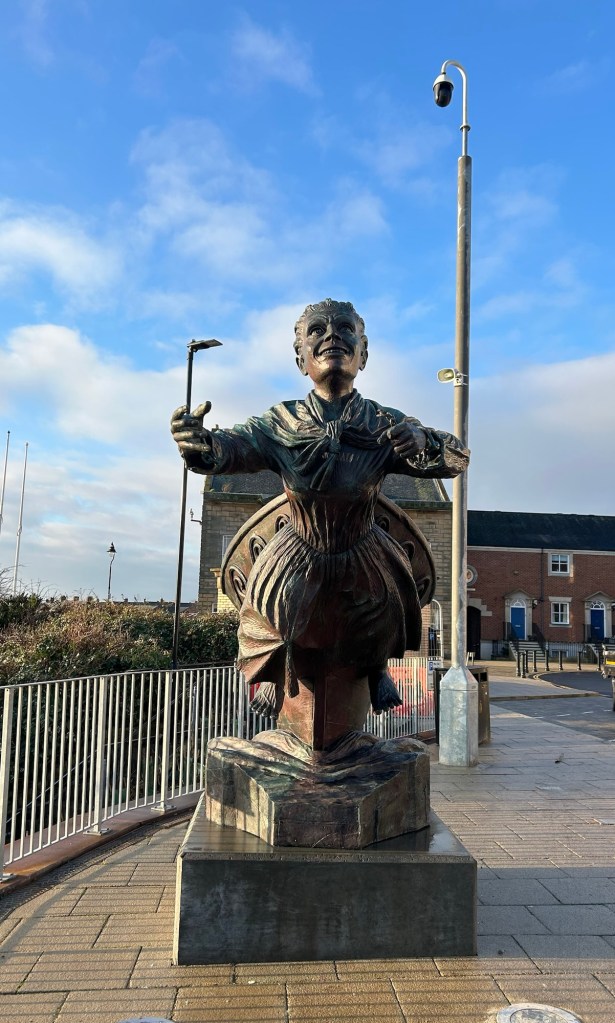
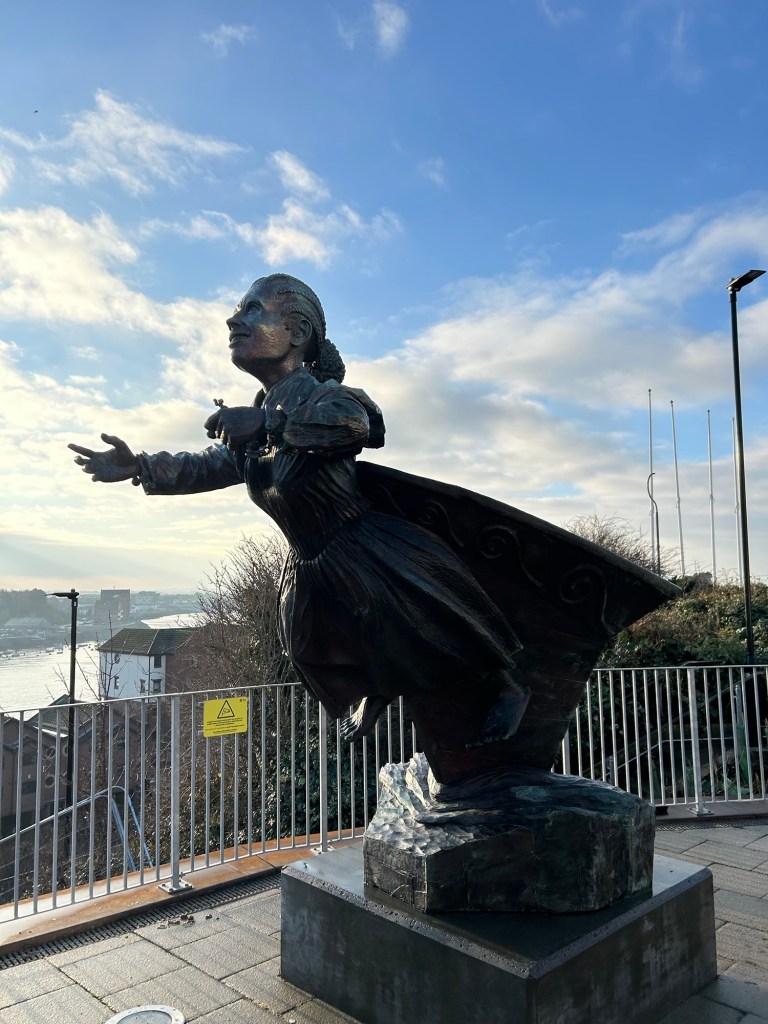
Walking into North Shields the other day, walking towards the Fish Quay where there is now accessible access connecting the centre of town down to the River Tyne, I caught sight of this sculpture of Mary Ann Macham.

I first learned about Mary Ann in 2007, when I was researching the North-East’s involvement in the transatlantic slave trade to mark the bicentenary of its abolition.

I was writer in residence within the Literary and Philosophical society, researching their tracts and unearthing the names and lives of the once enslaved people who passed through and/or settled here.

I wrote a poem about Mary Ann, her escape and travel up to the North, and with the help of the Quakers, made a life for herself through working in service and getting married and living in North Shields. This was back in 1831 when she arrived here and lived for a further 60+ years as a free woman.

An aside here is how the Quakers at the forefront of the abolition movement here in the North- East, were against the slave trade and worked for the abolition but still held the racist beliefs of the day that white people were still superior to black people.

Mary Ann Macham told her story to a member of the Spence family, who she was in service to. There’s a lot that can be argued about the practice of black people, telling their stories to white people who wrote them down and how accurate these are as a true representation of their stories. But this is all we have now as ‘evidence’.

African Lives in Northern England completed research on Mary Ann Macham before this public statue and the local groups ‘found’ her.

I should be grateful and overjoyed that finally Mary Ann Macham is being remembered. That there is a public statue dedicated to her and that she is being reclaimed as part of the local community.

But something just doesn’t sit well with me. Maybe I’m being far too critical. Or maybe I’m just coming at it from a black woman’s point of view living within white supremacy culture?

The press releases for this unveiling of the statue in November 2025, proceed to paint the impression that Mary Ann Macham has just been discovered. That this was hidden history that the locals have just uncovered and became fascinated with and had to find out more about. But unknown to whom?

If they had done their research they would have seen and also acknowledged the work completed in the past to shine a light on Mary Ann. But the story goes that they have just discovered her story. Or decided to just focused on only part of her story/life? Mary Ann Macham ( later Blyth through marriage lived until she was 92 years old).

The local Sculptor Keith Barratt who created the piece has said to the local media that he wanted this sculpture to show that “she came from a place of great pain, but it’s also a story of human liberation, of breaking the chains and I feel that this is something universal that many people will understand”.

I suppose I have issue with how Mary Ann is framed within the story of her own life, which she doesn’t have control over maybe a bit then but definitely not now with how she is remembered.

I Love North Shields has more details about her life and attempts to create a bigger picture of her life before enslavement and after as a free woman living her life here in the north east. But frequently it has to be argued, the majority of time, Mary Ann is trapped within the ‘slave’ narrative perpetuated by white people. Although seeing her as ‘brave’ for plotting her escape, they still frame Mary Ann, tell her story within the role of once enslaved, and needing the help and support of kind Quakers. Sounds a lot like white saviorism. Then and now.

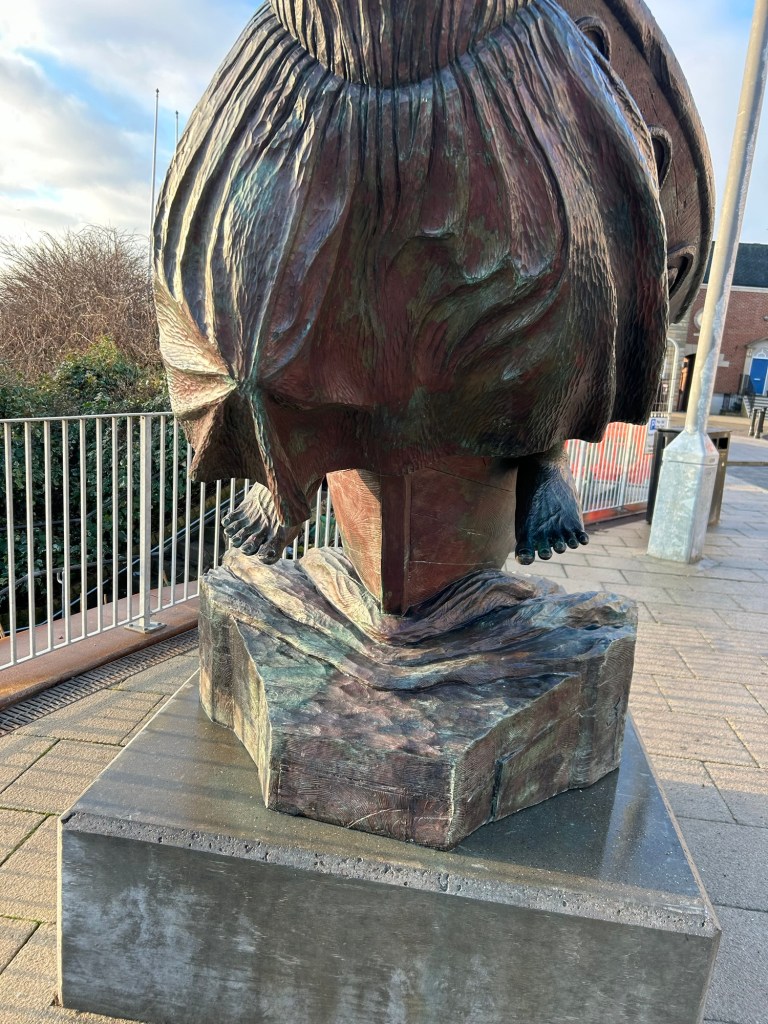
It’s almost like Mary Ann is stuck, encased in bronze, and barefoot to symbolise the condition of slavery. Enslavement she escaped from physically during her life, but trapped forever within this role in memorial because the white imagination cannot see/ grant Mary Ann her full humanity . The fullness of her life.

Time and time again, the mainstream constructs the stories they want to shed a light on and tell about people of the global majority which suits the narratives they’ve been running for centuries. The narratives where we don’t have agency or self-definition but are the objects, less than and victims. This is a means of control and domination.

This is why it’s important that we take every opportunity to tell our own stories. To control our own narratives. To leave these as archives for the people that come after we so they can be in no doubt that we lived big, beautiful, full lives on our own terms.

And is it me, or does the statue of Mary Ann Macham make her look like she’s white?