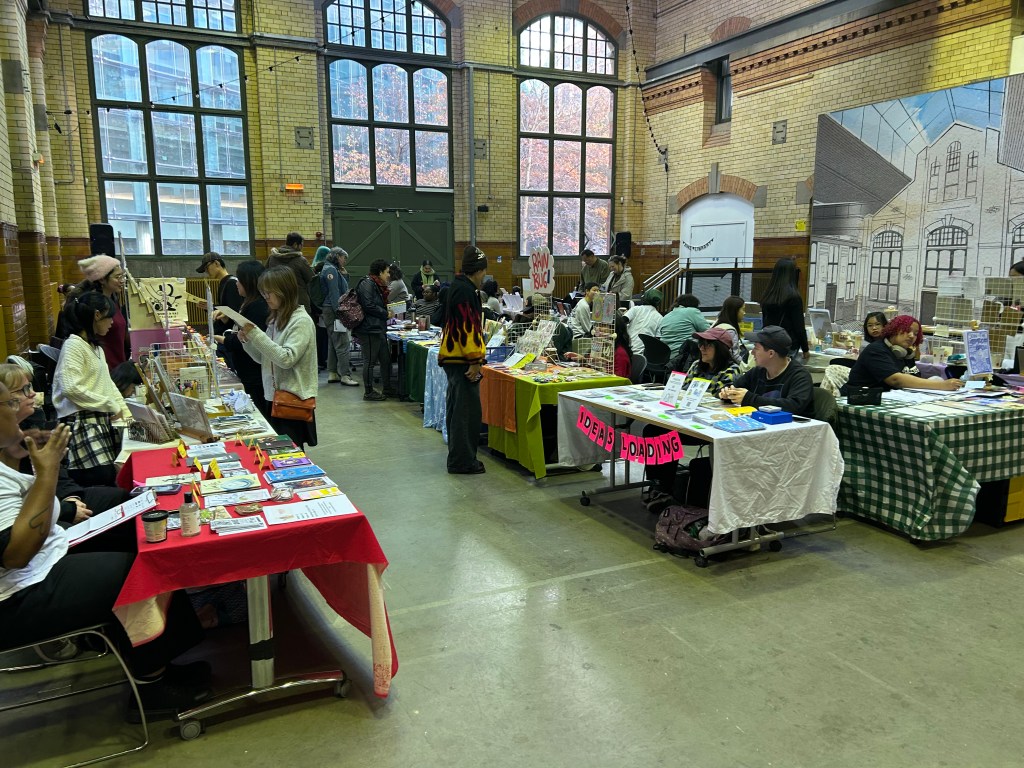
Today, Dal and I were in Manchester as the Over Here Zine Festival again. I think is out third year there together, sharing a table of our creations and laughing far too loud for such a small room in People’s Museum in Manchester.
It was good to be in a space that was created for people of the global majority to share their zines. It’s usually a safe and supportive space. And it still is in some respects. But what is worrying is that more and more white people are infiltrating our safe spaces. I know that white people come in to see and buy our creations. I can this is who we are selling to, while we swap with each other. But at the same time, I noticed white people behind the curtain, on the wrong side of the tables selling zines. But I could be wrong?
An article I read the other year, titled ‘Ontological Expansiveness’ by Chris Corces-Zimmerman, Devon Thomas, Elizabeth A. Collins and Nolan L. Cabrera, where I learnt the language I needed to call out this sense of expansionof white people into black and brown spaces where maybe the ethos and intention is exclusivity.
Ontological Expansiveness is a theoretical framework used under the umbrella of Critical Whiteness Studies (CWS) that was conceptualized by Sullivan (2006) to describe the complex and nuanced relationships that exist among race, Whiteness, and space. Sullivan (2006) argues, “As ontologically expansive, white people tend to act and think as if all spaces – whether geographical, psychical, linguistic, economic, or otherwise – are or should be available to them to move in and out as they wish” (p. 10).
I could be wrong, but how is feels to me, and how I’ve been experiencing things, is that white people think and act and move as if they have a right to be in any and all spaces. Sullivan suggests that White people tend to think of themselves as though they are the only people to exist or have worth in the world. Black and brown people just don’t come into the equation. Colonialism is the epitome of ontological expansiveness.
In this example as the zine festival, I’m talking about taking up physical space, but ontological expansiveness also applies to language and who white people claim ownership, through creating definition of what is proper English for example. What’s acceptable is the language and tone and style of whiteness, any other forms of communications are wrong. Yet that doesn’t stop white people wanting to use Ebonics or use the ‘N’ word. And then there’s the appropriate of our cultural practices .
As Sullivan (2006) states, White people frequently act as if, “The appropriate relationship is one of appropriation: taking land, people, and the fruit of others’ labor and creativity as one’s own” (p. 122). Frequently, instances of White people engaging in acts of cultural appropriation represent a fetishizing and exploitation of the language, customs, or practices of Communities of Color.
Of course white privilege is wrapped up in this but it’s not enough to say this privilege needs to be given up or shared. Before anything changes white people need to acknowledge what they are actually doing, but how are they going to do this if they are oblivious to what they are doing?
I invite white people to recognise that they will feel uncomfortable when they do enter spaces that are predominantly non-white and get used to it. As in that discomfort is the seed of change.
“On the afternoon of May 16, 2020, about a week before George Floyd was killed by the police, twenty-one-year-old Tye Anders was accused by the Midland, Texas, police of running a stop sign. He pulled over in front of his ninety-year-old grandmother’s house.”
Excerpt From We Refuse Kellie Carter Jackson
There’s Anders pleading for his life. There’s many policemen with guns drawn pointed at him and there’s bystanders filming it all. One woman who’s filming this is also pleading for the police to not shot Anders saying he’s scared. Hasn’t there been enough killing of unarmed black people, killed just because of the colour of their skin?
Still no guns are lowered and Anders is on the ground clearly empty handed but the situation is just escalating as the police continue to train their guns on his body.
Anders’ ninety-years-old grandmother steps out of her house praying. With cane in hand she walks towards her grandson even though guns are trained in her direction.
There was still panic still bystanders screaming for the police to put their guns up. Some do but still one cop is walking towards Anders with his gun raised. Trying to move and push her out of the way, his grandmother doesn’t believe that her grandson won’t still be shot so she falls onto her grandson, protecting his body with her own body. Not longer after this with the police and crowd pushing and pulsating around her , she loses consciousness.
Anders is arrested for fleeing the police. His grandmother is taken to hospital.
Reading this story this morning made me cry. Not because of the police brutality or the disregard for human life, black life. But because of what the grandmother in the story did. She’s ninety-years-old, frail and only has her prays and body, but used both in protection, in an act of love.
“Her collapse was not a coincidence. Protection is powerful, beautiful, and sacrificial because protection is love. But she should not have needed to put her body between the police and her grandson to protect him.”
Excerpt From We Refuse Kellie Carter Jackson.
Protection. She should not have needed to, but she did put her body between the police and grandson to protect him. This act of courage broke my heart this morning. Had me weeping. Maybe it was the last straw that pushed me over the edge into the breakdown. Maybe it was my imagination seeing this playing out.
Maybe I’m just sick and tired of living in a world where white violence is justified and black violence is really self-defence but is never judged that way.
I’ve always been a supporter of care work but even more so now. As care work, along with rest are forms of protection. Through the way I {BE} with myself and others, and the work that I do for self and others, I’m tending daily to the mental, emotional, and physical needs and health of black people, so we are better equipped to survive and thrive within a hostile, brutal, grinning world.
Resistance, Steve McQueen, National Galleries of Scotland, 2025
the undercurrent has always been present, simmering like lava just below the surface ready to rise up at weak points, at moment of disarray and hopelessness. hate shimmers like jewels to those who have little but promised more. clinging to the sharp edges of hate because it’s something to feel, to use as a weapon against others instead of the self. hate with fear, a lethal concoction corroding within as well as without.
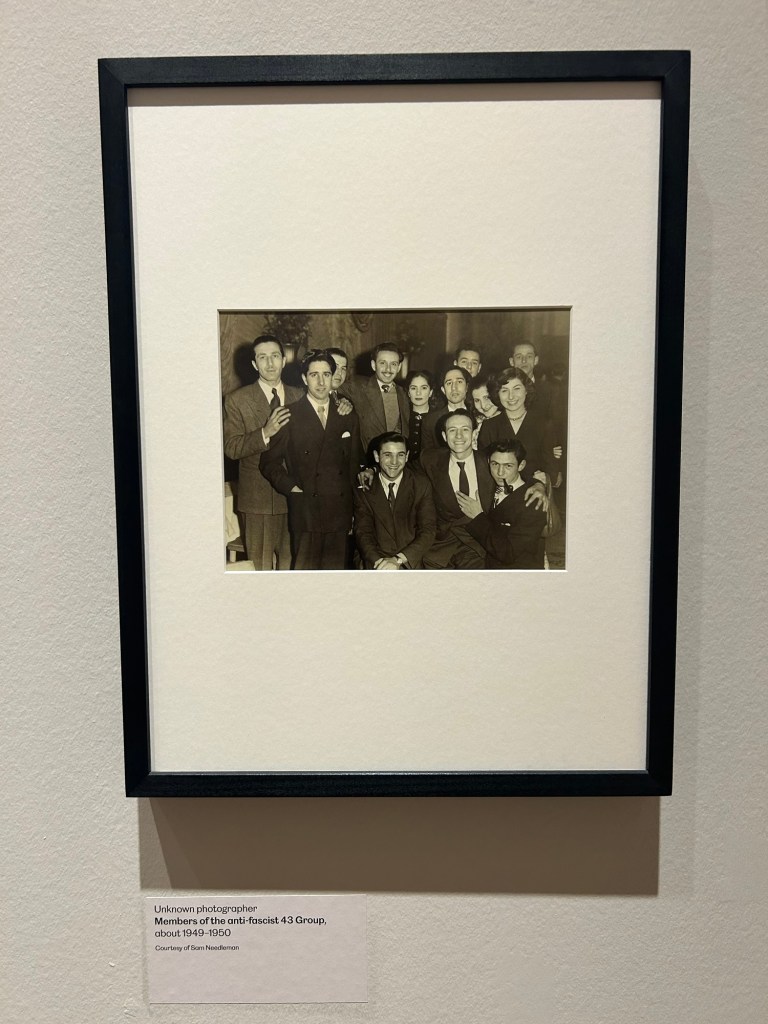
1936. October. With a chill in the air, the blackshirts ruffled through the East End of London, snaking their territory, their Ayran rights. With Police fronting, they still couldn’t take the streets. Jews, Irish, Communists, Blacks, Labour activists, workers unite. Stand firm. Shoulder to shoulder, they shall not pass. Blackshirts, angry scrunched up faces, hearts riddled with hate and fear, shall not pass.
I’ve been seeking people, groups and organisations that I can become part of.
After a life changing anti-racism training session, which I no longer call it as such, where I realised that what I’ve been doing is really just continuing to centre whiteness and uphold white supremacy culture through this training, I feel the need to not be alone any longer in my views and activism.
I need comrades and solidarity in action.
This search for my tribe has seen me reaching out to the Revolutionary Communist Party( RCP) and the Revolutionary Communist Group – Fight Racism, Fight Imperialism, The Ella Baker School of Organising and their recent conference in London titled Defeating Narratives of Division and just yesterday, attending a meeting of the North East Anti-Racism Coalition. Let’s explore each of these experiences in turn as there has been much learning as well as clarification of where I stand in the mix.
First, my main concern around the anti-racism training I’d been doing for the last five years was that it wasn’t looking at the class system, oppression through class which is a result of capitalism. It really isn’t critical enough, or even analysing capitalism and how this is our common enemy. Through focusing on whiteness, white privilege and white supremacy culture is fails to acknowledge and really get to the roots of what and where racism came about. Race was the creation of the rich landowners afraid of the workers, both black and white, rising up and revolting. So they created the elevated status of whiteness, and the white class to bestow certain right and privileges on to the poor white workers who shipped over to the Americas for a better life form England as a means of separating them from this black workers they were so recently working side by side with. To continue to maximise profit through brutal working conditions the white working class was created, whiteness was now at the top of the hierarchy and could weld power over black workers who were once their comrades and fellow sufferers.
I realised that the common enemy is capitalism. We may have differences but we can find that common ground and come together to fight for better lives and conditions, or even destroy the whole capitalist system as then everyone, every worker would be better off. The means of production and money and gains within society would the shared out equally to all members of community. No one would be ruling over another, no bourgeois as Marxists would say.
I was looking for comrades and solidarity not allyship so I started to explore the Revolutionary Communist Party UK which split off from the Revolutionary Communist Group ( Fight Racism, Fight Imperialism) in 1978. I’ve been exploring them both really once I established the distinction between them. I’ve reached out to both, subscribed to the newspaper, Fight Racism, Fight Imperialism and bought some books. I must say it’s kind of like a labyrinth to try and get involved. The need for some connection or someone to just respond in an email what they are doing and how someone like me could get involved was needed. They want to talk to you on the phone and share what they are doing and almost interview me in terms of what I’m looking for or do or think. I’ve felt at times as if I was being tested for something.
Then I received a long essay to read. Marxism ‘v’ Identity Politics, which is what the RCP stands behind and I assume RCG ( FRFI) do also. It’s a long read but I persevered. From the beginning by back was up because they were talking about women, and women being slaves to men and being oppressed before capitalism was created. I got the feeling that when they were mentioning women they were referring to white women. But I read on. And in all honesty I cannot stand behind this document if this is what Marxist and Communists stand for.
I know within this document , it is repeated that Marxists stand against all oppressions and yet it still uses the language of the oppressor in terms of using ‘immigrants and non-whites’ and ‘oppressed minorities’ . I find its tone offensive, condescending and dismissive.
Failing to acknowledge that Third World/ Black Feminism has always been about fighting all oppressions for the betterment of all, being anti-capitalist, anti-imperialist etc. I feel where feminism is mentioned within the article it is just referring to white feminism.
I do take on board and agree to a certain degree that intersectionality and identity politics are divisive. I have tended to adopt an intersectional approach to issues now. But I have to take issue with the lack of respect and care demonstrated towards people’s difference within the piece. It almost feels as if the document is calling people who fight along identity lines against oppression as stupid or near sighted and just thinking of the individual.
There is a case for being forceful and adamant about what Marxism stands for, but I just didn’t feel the care and kindness and joy within the piece which I seek within any movement I am part of.
So I’ve left my Marxist/ Communist involvements there as they focus on the workers, as capitalism, imperialism, colonialism are the problems, we can come together and fight together on but not at the expense of love as the foundation. I felt the love and joy at the recent Defeating Narratives of Division conference in London with the Ella Baker School of Organising but I think this was coming directly from the creatives present as well as the gay and trans-people present. That’s how we want our movement to feel, joyful , respectful and loving and caring for each other. I am still waiting to hear back from the organisers of this conference in how I can get more involved.
Finally, yesterday I took a trip to Hartlepool to attend the North East Anti-Racism Coalition gathering so find out what they are all about and up to. Formed in 2024, they aim to make the North East a region that actively opposes racism and hatred based on religious identity. I was interested in finding out about their journey this far, what they stand for and what are their next steps. It was well attended, with the majority of people being white. After details about how the coalition has developed and where they see things going focusing on campaigns, membership, raising awareness and learning, we were tasked, our tables, to introduce ourselves and why we were there. I was the only black person on the table and while I said I was there to agitate, others were there to gain information to take back to their organisations, maybe not realising that they were also there to give not just take. But let’s go on.
Next was the keynote speaker, Matt Storey from Cleveland Office of the Police and Crimes Commission. He gave a powerful speech about how diversity within the region is a positive, a strength and how they are standing up against the racist riots of last summer, but he frequently referred to people of the global majority within the region as immigrants, or refugees and asylum seekers, people who had come here on boats so to speak, not once referring to the black and brown people who were born here in the UK, or the region who have been here for hundreds of years. For me this is just playing into the narrative that we do not belong here. There was talk of fighting and defending these diverse groups of people, again falling into the white savourism narrative. I am not your victim, I do not need saving, I need comrades and solidarity. We don’t need any more heroes thank you.
From here it was to get into working groups to focus on such things as membership, campaigns, learning hubs, and research. Let’s just say something about their research. It was billed as if the coalition was going to share some research. The person presenting their findings another white person came to the conclusion that more research was needed and was beyond the scope of the working group and should be taken on board by the wider/ whole coalition. The research proposed, you guess it, a survey of black and brown people in the region to share their experiences of racism. It can be done anonymously but if you give your contact details you will be put into a prize draw to win £100 in shopping vouchers. So please share with your networks as the deadline is 18 July.
Of course everything I’ve just said there about the survey is done in a sarcastic tone as I am not promoting people of the global majority in the region to complete this survey as from my point of view there is plenty of research completed which demonstrate racism exists. Maybe they want some up to date data after the riots of 2024, but still I’m sure there is research out there where they wouldn’t have to exploit or expect us to share our experiences once more or fall into this habit of having to prove it exists once again. There was no mention or indication as to what this research would be used for afterwards either.
I joined the campaign working group to see what was happening there. One question we talked about in smaller groups was how can we build better connections across difference. Things that came up was attempting to find that common ground, where there is mutuality over issues that we can come together on and work together on to bring about change for everyone. Yes I can get behind this.
But then, from the few other black and brown people who were part of this small group, I got the impression that is was a competition to share as many stories and instances of when and where they experienced racism. Of course the white people in the group were lapping this up but I felt it was again a way to prove that racism exists and is happening or has been happening within the region for generations. And this is true, but for me I am past trying to convince anyone that racism exists. For me it is a given, let’s move on. For me it’s just treading water.
And the last point, from another group’s feedback, a white woman speaking said that it would be really important for building connections to hear first hand from black and brown people about their lived experiences around racism. It helps others to understand it, she said. And I disagreed saying it just re-traumatises someone to retell their experiences of racism again and again to strangers, no doubt. A black man disagreed stating that we should be sharing, telling our stories. And I just said well from personal experience, I’d rather not be triggered and again it’s as if we are spending our energy on trying to prove it exists. That racism exists. I’d rather focus on our joy, black joy which white people do fin threatening but at least ti would demonstrate we’re not just cardboard cut outs created to experience race and racism.
After this I left. I left early because I’d had enough. I felt as if I was on different page to people who where at the event. I know it’s not an either/ or, it’s a both/and. But for me what was lacking was listening to each other. People were talking over each other, people were there to take at the same time as be heard, but there wasn’t much giving and listening.
I know I’m a lone wolf in terms of being fugitive. In terms of the way I think and operate. I listen and consolidate and try to meet a consensus but there was just not enough respect and comradeship within the room for me. It was very transactional and very little care and love and kindness.
So I’m still on the hunt for my tribe. I wanted to contribute to whatever was happening already. Contribute to the flow already happening. But as of yet I have not found this space. Maybe need to create my own that can hold all the contradictions and differences but is build on solidarity, respect, kindness, care and love.
I went out walking this evening. After I stuffed my face and got settled down to watch some ultramarathon training videos on YouTube, I thought it would be more benefit to my body to get out and move her.
I tried an ultramarathon last year along the Pembrokeshire Coastal Path. I didn’t complete it because I ran out of time. I was just too slow to complete the 50k / 31 miles within the official timeframe. But I had a grand day out. It was glorious; the weather, the path, the sights and movement. I really enjoyed my day and I wasn’t too fussed about not completing it. I
knew I would try again.
And so it happened. I’d reached out to Into Ultra a couple of years ago for support for getting into ultra. I thought if not just advise then maybe some help financially with the kit and stuff. It hasn’t really happened till now.
They sent around an email offering free places in races coming up this year. And one took my fancy. SheRaces Trail Series Peak District 50K. There’s a 25K also which I know I can complete but it wouldn’t be as much as a challenge as the 50K.
A couple of days ago running coach Hannah Walsh shared a great Instagram post highlighting that just 0.007% of people have run an ultramarathon, and of these 0.0001% are women. That’s a really small number.
I like the idea of being able to complete an ultramarathon. I’ve completed 4 marathons, the last one being 2022 in Loch Ness.
To be amongst that small percentage of people, never mind women, never mind black women, who have ‘run’ an ultramarathon, is something to aim for.
And of course I’m not going to run it. I will run walk crawl as per usual. But this time, I know what to expect in terms of the pain, the terrain, the challenge, and toll it takes on the body.
I’m in training now. And there’s never enough time to get to my peak. But what is my peak? I’m an aging overweight black woman, but I’ve never felt more like myself and operating on my own terms. So that’s peak for me!
So this is as good a time as ever to give this ultra malarkey another try.
Consistency breeds confidence. This is my mantra. Consistency breeds confidence.
So as long as I get out walking each day build up the time I spend on my feet, I’ll be grand. And whatever else happens, it will be a grand day out!
Saturday 2nd August is the date of the gathering in the Peak District. You’re more than welcome to join me. Cheer me on. Supply the water and midget gems if you want!
My time of hibernation is coming to an end and there is a whole heap of resistance. It’s not as if I’ve got loads of work lined up. It’s the thought that my time will not be mine alone, to do with what I want come April and beyond.
I took a major risk taking/ making the time away to rest and dream. But for me there was no other choice. I think I was a bit burnt out around the edges and I needed to pull back and heal. And I have done that but there is no end point for healing. No rubber stamping a certificate.
I continue with my morning routine and hope to continue beyond the hibernation period. And this will be where the true test lies. To continue to love on myself daily before I have to meet the world will make the difference between continuing on the healing journey or coming to a full stop. As there can be no healing and growth and self-love if I don’t protect the time to {BE}.
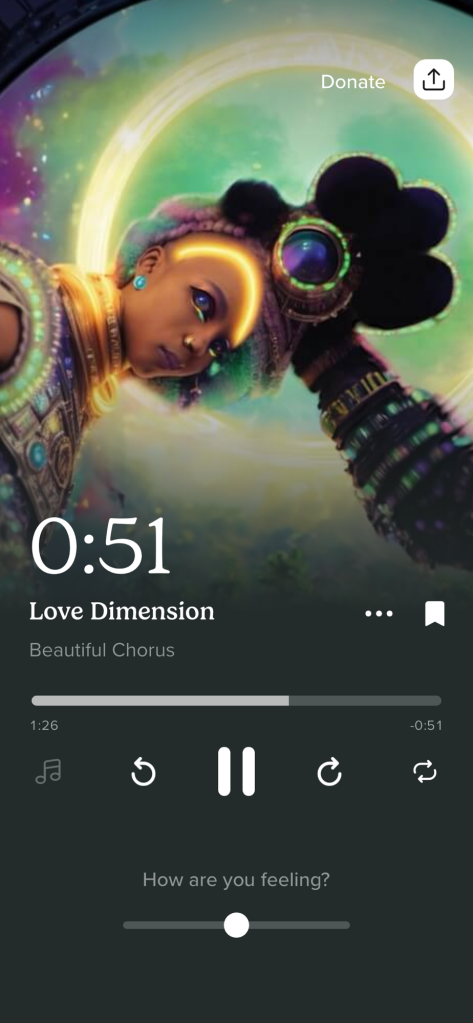
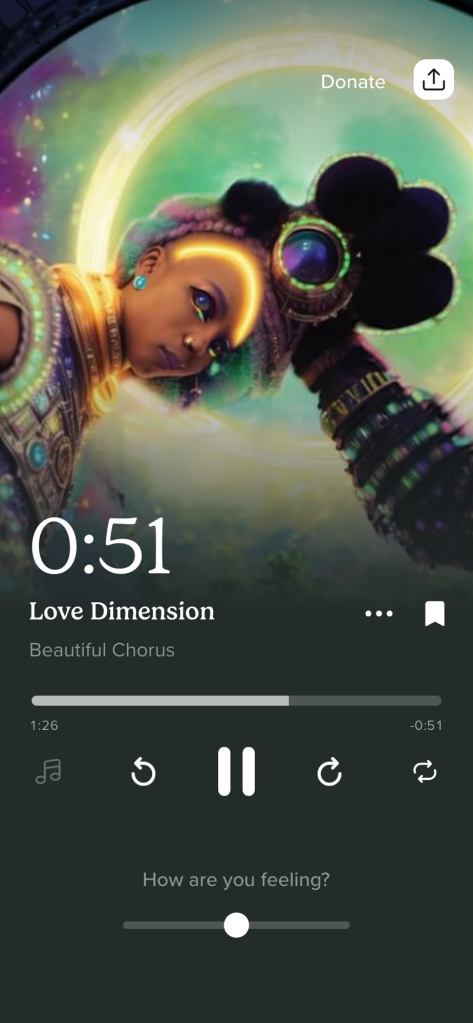
I’ve been up today since about 8am. It’s just after 10am now and I’ve had this track, Love Dimension by Beautiful Chorus on Insight Timer on repeat. It’s only 2 minutes long so I’m not going to work out the math for how many times it’s been on repeat. But let’s just say a lot.
I’ve got it running on and on in the background as I go about my morning routine. I’m feeling the need to have this reminder coming at me on repeat entering my bones, my blood, my heart and soul subliminally.
Oooooooooooooooooooo
Welcome, welcome, to the love dimension. To the love dimension. Ooooooooo
Welcome, welcome, to the love dimension. To the love dimension.
It’s Monday y’all and that can only mean Level 3 Counselling Skills today. Yeah Love Dimension is on repeat. Like a mantra. Like an incantation. Like a protective shield of steel.
Okay where to begin.. That has been the issue – worried about where to begin has stopped me beginning. But now I’ve got to begin as I need to get it out of me onto the page, in order to create some kind of sense of it all. So maybe I’ll begin with the Combahee River Collective (CRC).
I’m diving into the realms of Black Feminism- thought and theory and practices.
I’ve already been in the thick of it for years, with me first coming to Black Feminism through my degree and then masters and then this forming the foundation really of my PhD when I traced the tradition of Black British Women’s Poetry. But retaining knowledge and theory is difficult when I keep putting new things in my brain.
I don’t want to be an expert on Black Feminism but I do want to revisit it and consider it’s premise again in light of recent readings and experiences.
So I begin with the Combahee River Collective Statement, 1977. And I’m not saying that this is the beginning of Black Feminism. But I’m using it as a marker along the way. I figure if I keep this statement in clear view, using it like a signpost then I can’t stray too far off the path.
This exploration of Black Feminist thought is going to be a new folder within this website’s portfolio as this is area of research is something I plan to keep returning back to and adding to as I continue to re-familiarise as well as extend my thinking and practices around Black Feminism.
So what is the Combahee River Collective Statement all about. Well first you can was the full statement here.
It has been argued that this statement issue by a collective of Black women in Boston in 1977 who came together after witnessing an recognising the racism within the women’s movement and the sexism within the race/ civil rights movement, was based on the reality that Black women’s experiences cannot be reduced to either race or gender but have to be understood on their own terms.
Combahee River Collective Statement introduced to the world terms such as “interlocking oppression” and “identity politics.” Formed in 1974, The Combahee River Collective (CRC) was a radical Black feminist organisation which took it’s name from Harriet Tubman’s 1853 raid on the Combahee River in South Carolina that freed 750 enslaved people.
It might have been The Kimberlé Crenshaw in 1989 who coined the phrase “intersectionality” but it was CRC who articulated the analysis that underpins the meaning of intersectionality. The idea that multiple oppressions reinforce each other to create new categories of suffering, these interlocking oppressions, happening simultaneously, renders the Black woman’s position in society unique and most direr.
As the statement begins:
“The most general statement of our politics at the present time would be that we are actively committed to struggling against racial, sexual, heterosexual, and class oppression, and see as our particular task the development of integrated analysis and practice based upon the fact that the major systems of oppression are interlocking. The synthesis of these oppressions creates the conditions of our lives. As Black women we see Black feminism as the logical political movement to combat the manifold and simultaneous oppressions that all women of color face.”
It goes on to state:
“Merely naming the pejorative stereotypes attributed to Black women (e.g., mammy, matriarch, Sapphire, whore, bulldagger), let alone cataloguing the cruel, often murderous, treatment we receive, indicates how little value has been placed upon our lives during four centuries of bondage in the Western Hemisphere. We realize that the only people who care enough about us to work consistently for our liberation are us. Our politics evolve from a healthy love for ourselves, our sisters and our community which allows us to continue our struggle and work”.
CRC comes to the conclusion that:
“We might use our position at the bottom, however, to make a clear leap into revolutionary action. If Black women were free, it would mean that everyone else would have to be free since our freedom would necessitate the destruction of all the systems of oppression”.
And this would come to pass through the practice of the revolutionary politics of Black Feminism.


 Living Wild Studios