You’ve got to love Saturday mornings. The promise of the weekend ahead. The mix between wanting to lie in and getting out there and {BEING}.
I’m loudly advocating for what I want this morning and that is time to write and muse and drink coffee after coffee.
So I’ve been over on the Earth Sea Love Substack page sharing about a recent literary project I’ve been involved with. I wrote about creativity, motherhood, blackness and publishing on the Substack.
And being a Black mother in the publication.
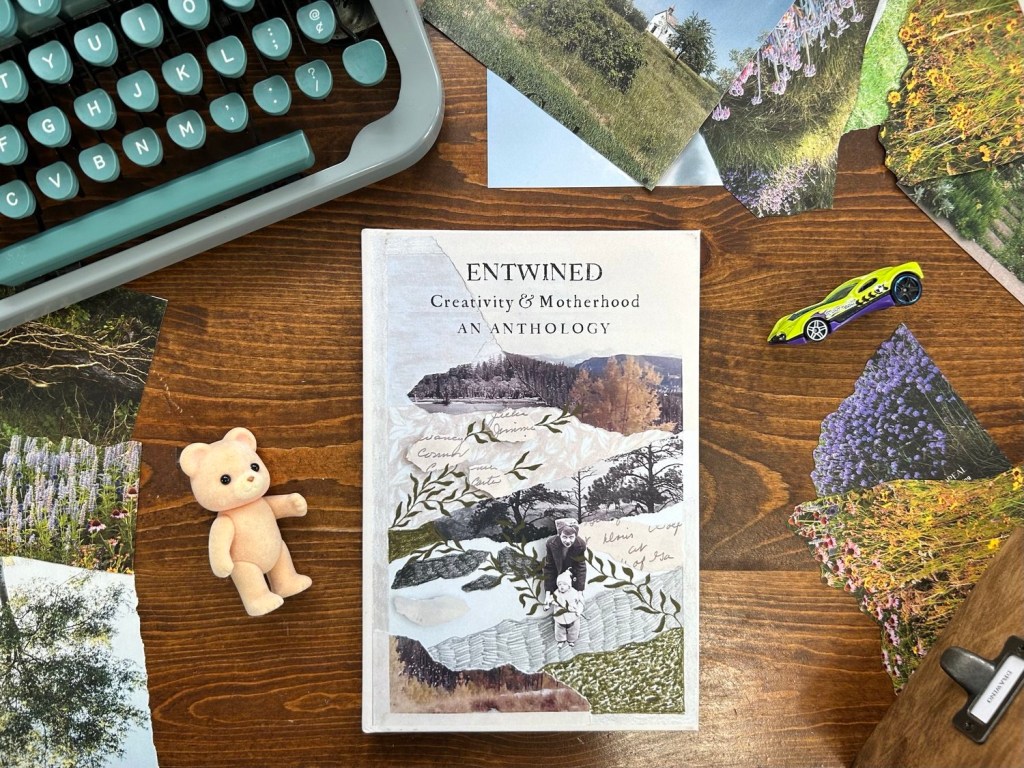
Entwined: an Anthology of Creativity & Motherhood
A collaborative anthology and art journal to kindle creativity in motherhood. Edited by Sarah Shott.
My writing is included in this anthology of creativity and motherhood and I thought you might want to check it out!
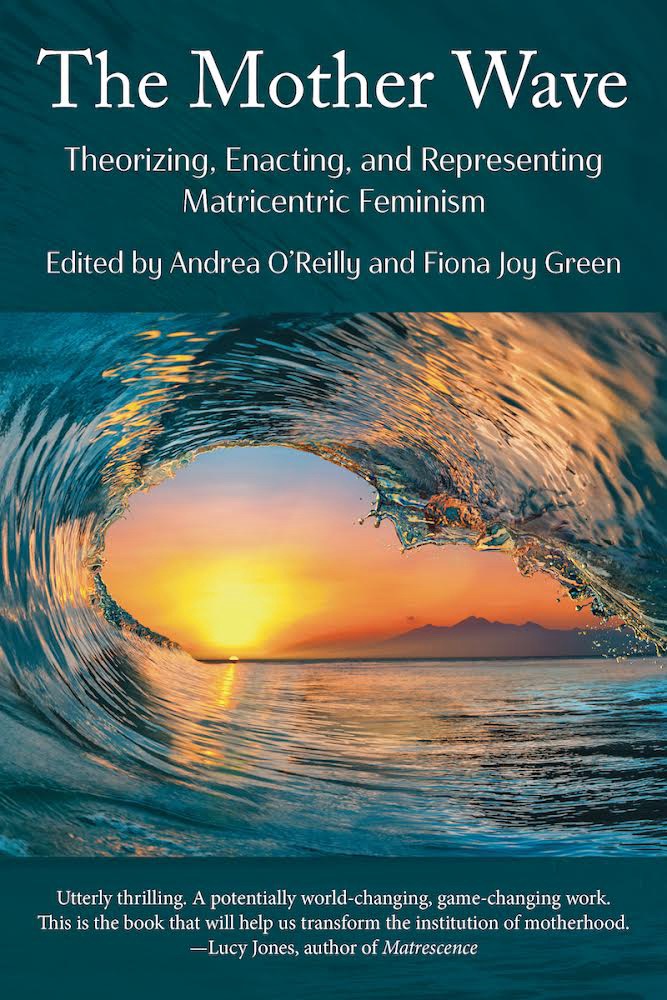
Utterly thrilling. A potentially world-changing, game-changing work. This is the book that will help us transform the institution of motherhood.
– Lucy Jones, author of Matrescence
The Mother Wave offers a welcome critical perspective on the liberal feminist orientation toward gender equality by showing how the focus on equality does not remedy patriarchal systems of oppression that continue to challenge women’s lives, nor does it account for the emancipatory potential in mothering experiences and the affirmation that diversely situated women continue to find in motherhood.
Foregrounding the lived experience of women and others who do the work of maternal care, the contributors make a strong case for matricentric feminism as a new framework: one that treats the maternal as an issue of both biological difference and a set of complex social identities. Informed by the African American feminist commitment to the epistemological importance of lived experience, on the one hand, and third-wave feminist commitment to intersectionality on the other, the collection claims and demonstrates through multidisciplinary analyses that maternity matters more than gender.
– Tatjana Takseva, Department of English Language and Literature / Women and Gender Studies Program, Saint Mary’s University
Toppling and recasting the idea of “waves” that, until now, correspond to stale time periods and stages of the feminist movement, The Mother Wave allows us to begin seeing matricentric feminism as a core feminist theory and burgeoning politic. Positioning mothers and motherwork at the center of feminism, and motherhood as perhaps the uniting experience among most women, O’Reilly and Green allow for a new “wave” of feminist scholarship and mother experience to take hold and crest – a matricentric wave. The editors introduce a vast array of scholarship and creative work within this volume that collectively helps us understand both consistent themes and new surges within this subfield of feminist thought and experience.
– Heather Dillaway, Illinois State University.
Matricentric feminism seeks to make motherhood the business of feminism by positioning mothers’ needs and concerns as the starting point for a theory and politic on and for the empowerment of women as mothers. Based on the conviction that mothering is a verb, it understands that becoming and being a mother is not limited to biological mothers or cisgender women but rather to anyone who does the work of mothering as a central part of their life. The Mother Wave, the first-ever book on the topic, compellingly explores how mothers need a matricentric mode of feminism organized from and for their particular identity and work as mothers, and because mothers remain disempowered despite sixty years of feminism. The anthology makes visible the power of matricentric feminism as it is theorized, enacted, and represented to realize and achieve the subversive potential of mothers and their contributions to feminist theory and activism. Contributors share the impact and influence of matricentric feminism on families and children, culture, art/literature, education, public policy, social media, and workplace practices through personal reflections, scholarly essays, memoir, creative non-fiction, poetry, and photography. The mother wave of matricentric feminism invites conversations with others and offers a praxis of feminism that aims to coexist, overlap, and intersect with others.
This is where you’ll find my own chapter called
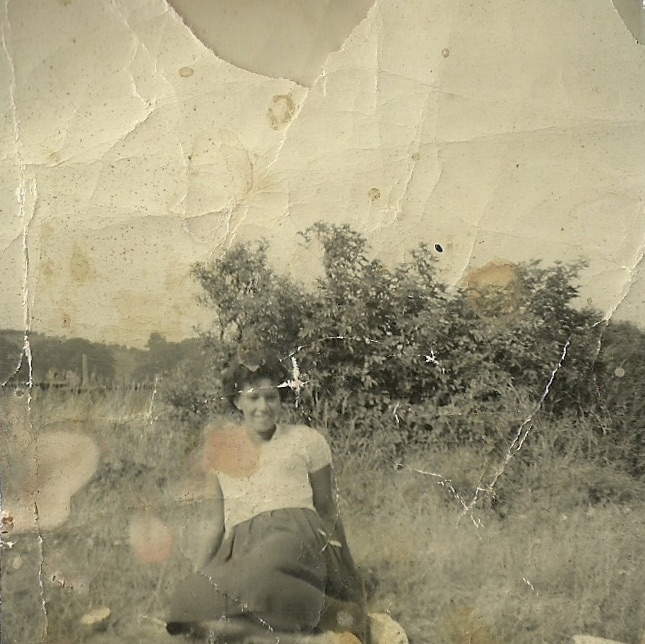
‘I Am Becoming My Mother: Conjuring Black Motherhood on Our Own Terms’ which is a hybrid piece exploring my matrilineage which I mentioned throughout 2023 here.
Get your copy while you can and support Demeter Press.
I recently talked about the coming of April and how more poetry would be appearing on here as I attempt to ‘play with words’.
You can not imagine the delight as well as confirmation I received this morning while reading an article for the commissioned essay I’m writing at the moment around (Black) Motherhood.
A bone of contention with me is when I see the words ‘mother’ and ‘motherhood’, even though I have birthed children, I do not see these terms applied to me. ‘Mother’ and ‘motherhood’ come with the connotations of white and whiteness for me.
Test it yourself. Be honest. When I first mentioned ‘mother’, what image came to mind for you? If not a white woman and child. I’ve seen image after image of the idea of motherhood, the natural beauty of ‘The mother’ and nine times out of ten the image is of a white woman and child. As if a Black woman is not/ cannot be seen as a mother, even though a Black woman is the source of the whole human race. Go look that one up!
Anyway, I’m going off topic here ( but not in terms of the hybrid essay I’m writing for the forthcoming special Demeter Press collection, The Mother Wave: Matricentric Feminism as Theory, Activism, and Practice (2023)).
Reading this article this morning, ‘ Conjuring the Ghost: A Call and Response to Haints’ by drea brown, there is a mention of poetry lying in the body, coming from that dark place within where our true spirits lies hidden and growing, argues Audre Lorde. But poetry is also our way, Black people’s way, or theorising and making sense of things. Through our stories, narratives, riddles, poetry; playing with words and language, we not only gain an understanding and reimagining of our lives but these are also tools of surviving.
As Black women, speaking from my lived- experience here, through our creativity, through our playing with language in such a spirited way, we enter in the process of not just theorising and strategising but also self-making and through this practice passing this on to others. Passing on this power to others. It’s what we do, have been doing through time. Starting with the mothering we do of ours and others babies



 Living Wild Studios