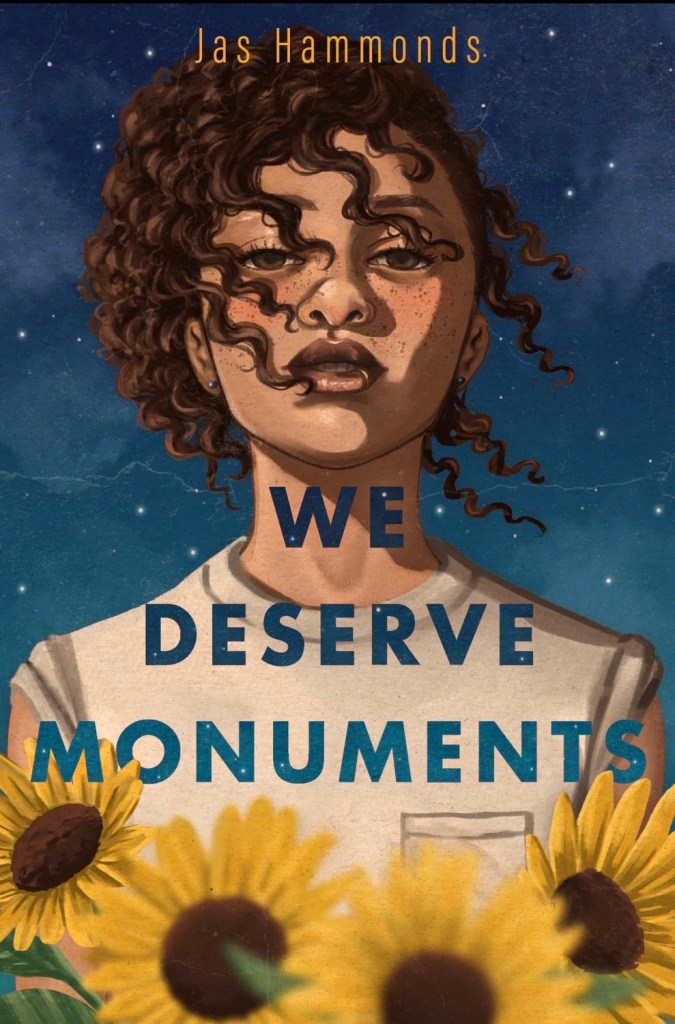
Current Reading

along with other themes and issues like abolition, emergence, black study, black anarchy, fugitivity, living archives , ancestral wisdom, African cosmologies

Already, just a few pages in, and I feel that this is going to shift my practice along even further down this path of refusal, stealing my body away through liberatory practices and beings.

A plot upon a plot

After my day retreat with WOC Azadi I came home with a date in the diary to play.

I’d set it up with Theresa Easton to go play with her letterpress printing gear again. I didn’t have so much as a plan as I did have a word: PLOT.

I rocked up with a number of different subtracts to play with and just wanted to explore what I mean when I use the word, PLOT.

We set up the printing plate with the word PLOT repeated in different type fonts. We arranged them into a neat A5 sized piece and then let the inking commence.

I played with different coloured inks, directions of papers, different papers and got myself into a meditative rhythm.

It was so much fun and I’m so grateful to Theresa to allowing me to play in her studio for free.

It was good to catch up too and chew the fat.

More. I want more play like this.

The Plot of Our Repair

I had the pleasure of gathering with the WOC Azadi again in Sheffield today.

We gathered to share ideas around how to plot/plotting our healings, our liberation together.

Visual journaling was on hand to capture our thoughts, feelings, plans and plots.

It was such a nurturing and nourishing space in nature. It was a gathering of hope and aspirations.

It was an honour to be part of the day retreat. Ideas for The Plot of Our Repair came about from a reading is Saidiya Hartman’s essay , The Plot of her Undoing (2020).

The plot of her undoing begins with his dominion. It begins in the fifteenth century with a papal bull, with a philosopher at his desk, pen in hand, as he sorts the world into categories of genus and species. It begins with a bill of sale, with a story in the newspaper that enumerates her crimes, with a note appended to the file: she answers questions easily, but appears stupid; it begins with a wanted poster that reduces the history of her life to a single word-condemned.

And then towards the end of this essay there is a switch. A turn to explore how we can undoing the plot of her undoing. How we can move against the forces aiming to ruin/ control/ oppress the black/brown woman.

The undoing of the plot proceeds by stealth. It is almost never recognized as anything at all and certainly never as significant.

It begins with the earth under her feet. It begins with all of them gathered at the river and ready to strike, with all of them assembled in the squatter city, with all of them getting ready to be free in the clearing.

The undoing of the plot begins with her runaway tongue, with her outstretched hands, with songs shared across the unfree territory and the occupied lands, with the pledges of love that propel struggle, with the vision that this bitter earth may not be what it seems.

The undoing of the plot, the plot developing towards our repair was started before us. We stand on the shoulders of our ancestors. We continue this journey, this plotting together. Today makes me feel that we have already won.

Restoring the “Day of Palestinian Struggle

Restoring the “Day of Palestinian Struggle”: From the Discourse of the Nakba to the Project of Liberation
By Khaled Barakat
Monday, May 11, 2026

Please consider reading the above article printed on masarbadil.org by Khaled Barakat, member of the Executive Committee of the Masar Badil, the Palestinian Alternative Revolutionary Path Movement, was originally published inArabic at Al-Akhbar:

Every year, as the fifteenth of May approaches, Palestine returns to the forefront of global memory as an open wound since 1948. Images of displacement, massacres, the destruction of Palestinian villages, and the uprooting of the people from their land are revived under a name and a slogan that has become firmly entrenched in political and media discourse: the “Nakba.” 

Read on here

The difference between the two expressions is not superficial. “Nakba” refers to catastrophe and defeat, while “Day of Palestinian Struggle” refers to resistance, continuity, and popular will. The first focuses on what colonialism did to the Palestinian people, while the second focuses on what Palestinians do to confront and uproot colonialism. Between the two discourses lies a profound difference in the construction of political consciousness, especially among the new generations in Palestine and the diaspora. – Khaled Barakat

Remembering Nakba

Today marks the 78th anniversary of Nakba.

What is Nakba?

Nakba refers to the ethnic cleansing, genocide and apartheid of Palestine by Zionist militias to make the land clear for the creation of Israel in 1948.

This premeditated military campaign resulted in the murder of thousands of Palestinians, the destruction of hundreds of villages and the displacement of nearly 80 per cent of Palestinians from their homeland.

The violence went on for more than a year, and the result was the creations of the State of Israel taking over 78 percent of historic Palestine.

West Bank and Gaza made up the remaining 22 percent. This too fell into Israeli hands later and remains under Israeli military rule today.

What is also disgusting is that Britain had a hand, still has a hand, in all of this, due to the “Balfour Declaration”.

For 100s of years Palestine was part of the Ottoman Empire. During the First World War, Palestine was captured but the British. The League of Nations then gave Palestine to the British to mandate. Not taking into account the wishes of the Palestine people, the British were given control of the land, making decisions for the native population until it was decided they were deemed capable of being an independent state. How colonialist is that?

Great Britain, didn’t care about what was right. Didn’t care about the Palestinians who have lived within their homeland for centuries. Nope.

The British Mandate incorporated the “Balfour Declaration” that pledged to establish “in Palestine a national home for the Jewish people”, who made up less than 10 percent of the population at the time. 

So all the time Palestine as under the mandate, 1923- 1947, the British were working with Zionists to suppress and eradicate Palestinians, through whatever means necessary, to create a homeland for Jews. Facilitating the immigration of European Jews to Palestine, providing weapons for Zionist’s and training them to kill, all increased the occupation of Palestine by Jews and suppressed the native people, Palestinians.

Once Britain announced its plan to end the mandate in 1947, they left it up to the UN to decide the fate of Palestine. The United Nations decided to partition Palestine into two : 55 percent to a Jewish state, and 45 to an Arab state, while keeping Jerusalem under international control.

It sickens and angers me that other states play god over other states. What right do they have to take away the land and home of the Palestinians?

Palestinians were not consulted over the proposal which never materialised. Because once Britain announced its withdrawal, Zionist groups began their attacks on Palestinians to have complete control over all of Palestine for the return of the Jews.

Nakba was the result.

I do not declare to know the full history. I’ve probably butchered the history as I’ve tried to share it here. Please go and read up on it yourself as it wouldn’t be the first time that histories are shared as ‘facts’ and are really just ‘lies’, manufactured to make the oppressors the victims and heroes.

One thing I am sure about as fact is that the Palestinian people have been brutalised and persecuted from time, kicked and killed out of their own country to make way for ‘the promised land’ of a another people, and that somehow makes it all okay?

Zionists called it a ‘transfer’ of people to other places. I call it genocide. Innocent people killed indiscriminately to create the State of Israel, was wrong then and continues to be wrong today.

Further reading here and here.

Purple’s not usually my colour

I love colour. Colour brings me a lot of joy. Red is usually my go to. Brown used to be my nemesis. But through use and practice I have learned to work well with brown now.

But purple is still a stumbling block. I’m not sure what it is with purple. It’s a regal colour, a symbol of power. But it just doesn’t do it for me.

It might be its sense of power that might be just too much for me. Too powerful.

Anyway, I was determined to worked into the colour purple today. Different shades of purple, to build up some layers, working it toward a pink palette. This sat better with me, for me. Made it easier on the eye and heart to be with purple.

Laying down the colour field, the piece felt flat and incomplete. Adding black and white lines worked for me. Gave me something to hang a feeling on.

That feeling was, the purple can stay 💜