Remembering Nakba

Today marks the 78th anniversary of Nakba.

What is Nakba?

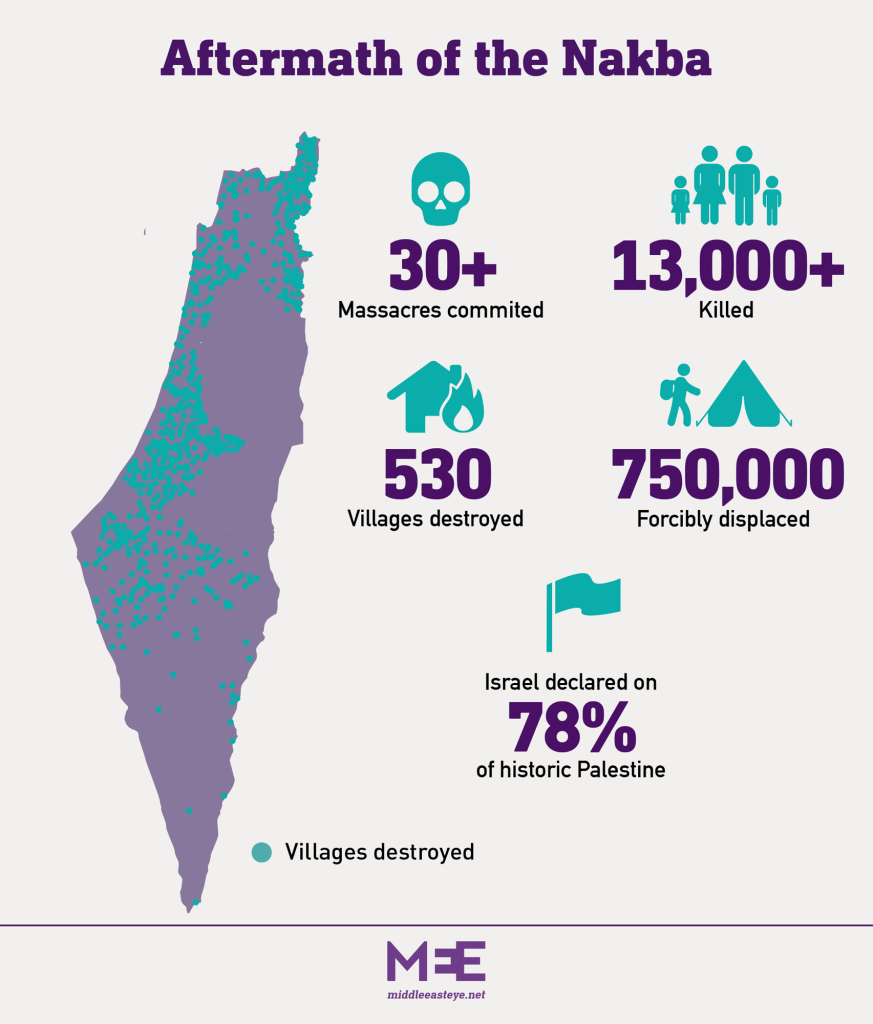
Nakba refers to the ethnic cleansing, genocide and apartheid of Palestine by Zionist militias to make the land clear for the creation of Israel in 1948.

This premeditated military campaign resulted in the murder of thousands of Palestinians, the destruction of hundreds of villages and the displacement of nearly 80 per cent of Palestinians from their homeland.

The violence went on for more than a year, and the result was the creations of the State of Israel taking over 78 percent of historic Palestine.

West Bank and Gaza made up the remaining 22 percent. This too fell into Israeli hands later and remains under Israeli military rule today.

What is also disgusting is that Britain had a hand, still has a hand, in all of this, due to the “Balfour Declaration”.

For 100s of years Palestine was part of the Ottoman Empire. During the First World War, Palestine was captured but the British. The League of Nations then gave Palestine to the British to mandate. Not taking into account the wishes of the Palestine people, the British were given control of the land, making decisions for the native population until it was decided they were deemed capable of being an independent state. How colonialist is that?

Great Britain, didn’t care about what was right. Didn’t care about the Palestinians who have lived within their homeland for centuries. Nope.

The British Mandate incorporated the “Balfour Declaration” that pledged to establish “in Palestine a national home for the Jewish people”, who made up less than 10 percent of the population at the time. 

So all the time Palestine as under the mandate, 1923- 1947, the British were working with Zionists to suppress and eradicate Palestinians, through whatever means necessary, to create a homeland for Jews. Facilitating the immigration of European Jews to Palestine, providing weapons for Zionist’s and training them to kill, all increased the occupation of Palestine by Jews and suppressed the native people, Palestinians.

Once Britain announced its plan to end the mandate in 1947, they left it up to the UN to decide the fate of Palestine. The United Nations decided to partition Palestine into two : 55 percent to a Jewish state, and 45 to an Arab state, while keeping Jerusalem under international control.

It sickens and angers me that other states play god over other states. What right do they have to take away the land and home of the Palestinians?

Palestinians were not consulted over the proposal which never materialised. Because once Britain announced its withdrawal, Zionist groups began their attacks on Palestinians to have complete control over all of Palestine for the return of the Jews.

Nakba was the result.

I do not declare to know the full history. I’ve probably butchered the history as I’ve tried to share it here. Please go and read up on it yourself as it wouldn’t be the first time that histories are shared as ‘facts’ and are really just ‘lies’, manufactured to make the oppressors the victims and heroes.

One thing I am sure about as fact is that the Palestinian people have been brutalised and persecuted from time, kicked and killed out of their own country to make way for ‘the promised land’ of a another people, and that somehow makes it all okay?

Zionists called it a ‘transfer’ of people to other places. I call it genocide. Innocent people killed indiscriminately to create the State of Israel, was wrong then and continues to be wrong today.
Further reading here and here.

Creative Fugitivity Practice In Community

What do you do to be involved in the community?

I’m been expanding my reading of late. I’ve just become a member of the Abolitionist Futures Reading Group which is focusing on abolition, obviously.

Reading in community, sharing ideas and thoughts which are probably considered radical, revolutionary to the majority is so refreshing and affirming.

It makes me feel less alone in my way of thinking and {BEING}. It gives me hope that there are alternatives to the current system and that together we can get there.

Abolition, might be associated recently with prisons, or defunding the police, and closing detention centres.

But abolition is much more than this. Started with the aim of abolishing Transatlantic Slavery, abolition of prisons has been there since the inception of prisons themselves. Abolition is revolutionary because in order to decarcerate the Prison Industrial Complex not only does the whole of society have to change, be overhauled not reformed as that just wouldn’t work, but we also, the people have to change.

The world has to change at the same time as the people within this world change. We have to move away from the indoctrinated belief that prisons and the police, state terror more like, are the only means of deterring crime and criminals. Which jus isn’t the case.

We have to stop focusing on the individual ‘evildoers’ who deserve the harshest punishments for whatever crimes they committed, to taking an honest look at our societies and cultures that have forced people to commit such crimes ( or in a lot of cases no crimes being committed but still punished with prison sentences.)

I’m talking about poverty, economics, drug abuse, race, class, sexuality, isolation, migration etc.

To reiterate, rather than try to imagine one single alternative to the existing system of incarceration, we might envision an array of alternatives that will require radical transformations of many aspects of our society.

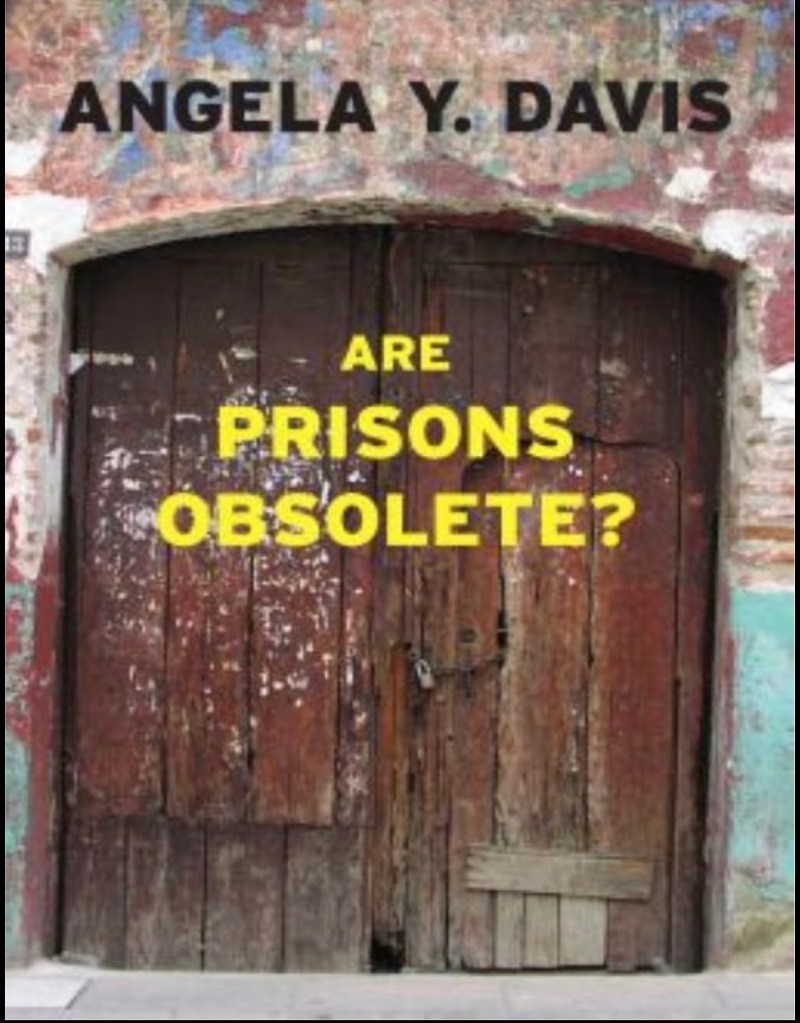
Alternatives that fail to address racism, male dominance, homophobia, class bias, and other structures of domination will not, in the final analysis, lead to decarceration and will not advance the goal of abolition. – Angela Y. Davis

Me reading, thinking and becoming anti-prisons, anti-establishment, becoming an abolitionist is just the next step on this journey of fugitivity, via black anarchism. And I’m so pleased and relieved that I don’t have to walk this path alone. I have a community around me as support.

red

For me, at the moment, red signifies anger. There’s a fire burning in my belly, it’s been stoked by my time away at Shifting Loyalties this last week.

My forthcoming e-book with Culture Matters is an exploration of this anger. My anger at how black Woman are treated in society. How we end up at the bottom of the pile in terms of being treated with decency, respect and love.

This piece is part of this collection.

‘Death by persons unknown’

Pain provides the common language of humanity; it extends humanity to the dispossessed and, in turn, remedies the indifference of the callous.
– Saidiya V. Hartman

(Picture the scene).
It’s a Sunday afternoon
& the bees are busy hovering
around blousy peonies,
at a church picnic.
The crowd moves in closer as the fire’s lit.
(Look at them gathering, working up a sweat, working up a frenzy as the barbecue takes hold).
They linger in the smell of flesh,
in the smell of blood.
The only shade is thrown by the kill;
the swinging charred remains of a black body.
(Try to shift your gaze).
From the hanging meat to the sea of red-faced, smiling white people hungry for violence fed on a diet of hate for generations.
There’ll be a photograph produced of this social ritual. You might receive a postcard making
the past very present.
& if you’re feeling it,
it could burn a hole in your heart.