As they become known and accepted to ourselves, our feelings, and the honest exploration of them, become sanctuaries and fortresses and spawning grounds for the most radical and daring of ideas, the house of difference so necessary to change and the conceptualization of any meaningful action. Right now, I could name at least ten ideas I would have once found intolerable or incomprehensible and frightening, except as they came after dreams and poems. This is not idle fantasy, but the true meaning of “it feels right to me.” We can train ourselves to respect our feelings, and to discipline (transpose) them into a language that matches those feelings so they can be shared. And where that language does not yet exist, it is our poetry which helps to fashion it. Poetry is not only dream or vision, it is the skeleton architecture of our lives. It lays the foundations for a future if change, a bridge across our fears of what has never been before.
Audre Lorde, ‘Poetry is not a Luxury’, on Sister Outsider: Essays and Speeches (Trumansburg, NY: The Crossing Press, 1984), 37.
I’ve got time on my hands to read. A reading week as we used to say at Uni. Why? Well that’s another story, I’ll tell you at another time, maybe.
For now, I’m getting my teeth into something that will make me feel better, or feel as if I’m getting somewhere with my self-study/permaculture diploma design/ ways of being.
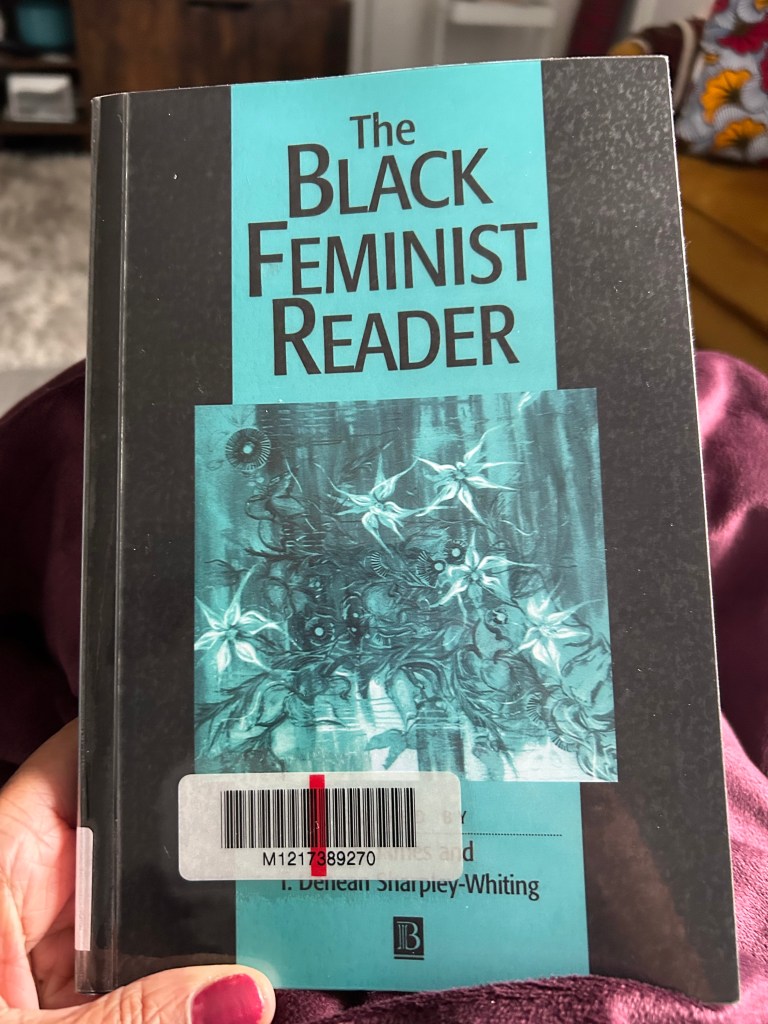
I’m reading The Black Feminist Reader edited by Joy James and T. Denean Sharpley-Whiting. And I’m heartened to read in the first essay in the collection by Barbara Christian, ‘The Race for Theory’, that along with her Black sisters, Christian has not rushed to create abstract theories around how to read Black women writers/ Black women’s literature. The argument goes that there are countless Black women around the world, women colour around the world, and one single set of ideas cannot be applied to such diversity.
As Christian goes on to argue, “There is, therefore, a caution we feel about pronouncing black feminist theory that might be seen as a decisive statement about third world women. This is not to say we are not theorizing. Certainly our literature is an indication of the ways in which our theorizing, of necessity, is based on our multiplicity of experiences.” ( p.20)
Instead of being seduced into the academy, being at the centre, desiring/ claiming what might seem like power within the hierarchy of old traditional departments of knowledge, where the Black female experience is subordinate to others, ” We can pursue ourselves as subjects”. ( p.21)
This is music to my ears as I have always found it difficult to pin down what is Black Feminist Theory. What does it entail? What are the tools of engagement? What methods should be employed to reading Black women writers?
But that’s where I’ve been going wrong, thinking about theory. As for me theory was legitimisation. Writing dies if it’s not being talking about, theorised. But now I understand that :
Theory has been their way, their terms, their approaches ( p. 16)
Theory has been more about how clever the theorist is than about the writing or writer
Theory is prescriptive and it ought to have something to do with practice (p.13)
Theory is about those masters who have long gone and not about the here and now.
And as Christian states, and I totally agree, “But what I write and how I write is done in order to save my own life. And for me I mean that literally. For me literature is a way of knowing that I am not hallucinating, that whatever I feel/ know is.”(p. 21)
So I’m following Christian in my pursuit of what Black Feminism(s) is by having no fixed method of enquiry or even results. My method relates to what I read and the historical context of the writers I read and “to the many critical activities in which I am engaged, which may or not involve writing.” ( p.22)
So there is no set method within Black Feminist Theory and is influenced by practice, no prerequisite of a new theory as every work suggests a new approach, forcing me to think differently.
“As risky as that might seem, it is, I believe, what intelligent means – a tuned sensitivity to that which is alive and therefore cannot be known until it is known.”( p. 22)
This piece originally was published over on Medium with Binderful. I’m drawing this piece into the Living Wild Studios archives. Because I can!
Image credit — Donovan Valdivia
“How difficult is it for one body to feel the injustice wheeled at another? Are the tensions, the recognition, the disappointments, and the failures that exploded in the riots too foreign?”
Claudia Rankin
In August 2014, there’s a summer of “hands up, don’t shoot” protests, in Ferguson, Missouri, in response to the unlawful shooting of Michael Brown Jr.. In November, Darren Wilson, the white Ferguson police officer responsible for Brown’s murder isn’t indicted. In December, filled with rage and helplessness, I organise the first ‘Black Lives Matter’ protest in the North of England; a political poetry reading at our city centre library. Together artists and writers, cram into a hot room on the top floor of a building made of glass, and pour out our rage and pain through our writings. Black people’s words. Our ancestors’ words.
I’m criticised by one Black woman, in particular, because I invite white poets to read. They could only read the words of Black people as this event is centring our lives. Black lives. A white people’s presence is not what this Black woman wants. She wants a safe Black only space. I respect and understand her views. We all want a safe space for Black people. But I feel we can achieve so much more when we work together, Black and white, to solve our society’s problems. I know where she’s coming from though; a place of pain and suffering and hatred. As Black people, for so long, we have endured so much hate and violence from the hands of white people. For far too long, we have been excluded from a share in the economic wealth our ancestors paid for with their lives to create. We’re sick and tired of being excluded from the abundantly spread societal table which our ancestors give the skins off their backs to forge. And this hurts.
In March 2017, there’s a ‘Stand Up to Racism’ demonstration in London, Miss Ella, my seven year old daughter, and I dance behind the sound system truck, towards Trafalgar Square. Crowds behind metal barricades line our route, with the Metropolitan Police shepherding us along. We shout, ‘Refugees are welcome here.’ Miss Ella, dressed as her superhero, Black Widow, looks as if she’s just stepped out of a Black Panther’s meeting. With her long brown hair blowing in the wind and her peachy fist punching the air, she’s learning long before I did how to use her voice to bring about change. She carries her homemade banner stating, ‘Black Lives Matter,’ high with pride and courage. Along the way, a white woman with screwed up face screams at us to shut up and go back home to where we come from. Disallowing our protests, devaluing our presence here.
I recognise where she’s coming from; a place of her ignorance and pain and hatred. As white working class, for so long, she’s been fed the lies that Black people and immigrants come over here and take their homes and jobs. For so long, the poverty they’re experiencing is down to these Black illegal criminal and not a capitalist system rigged in favour of a few priviledged people. We’re just as sick and tired of this too. And we know it hurts.
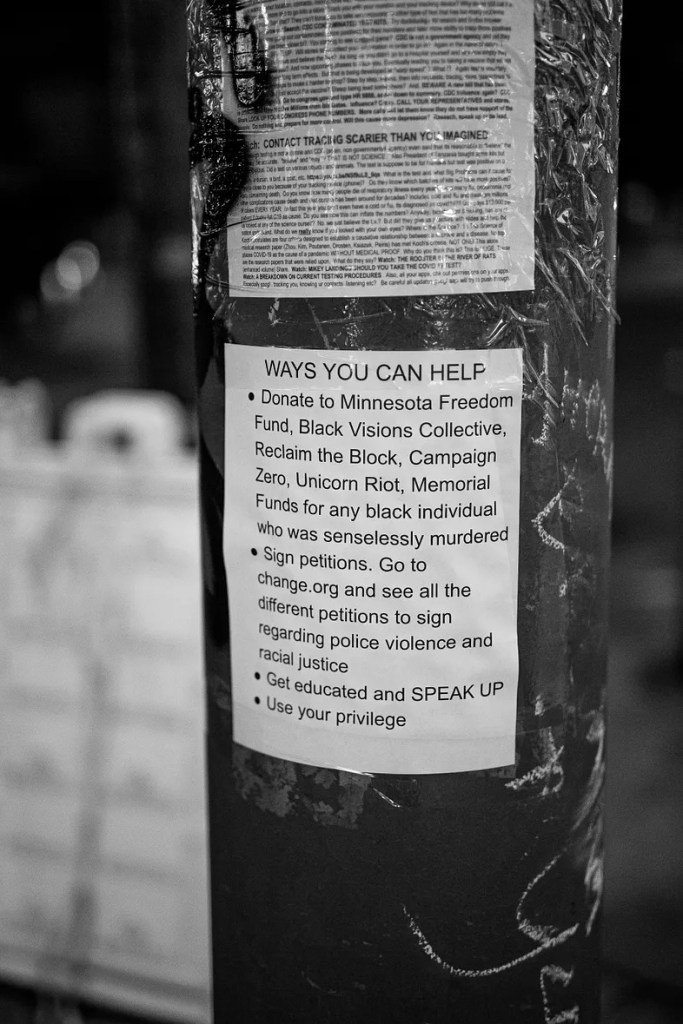
In May 2020, there’s ‘Black Lives Matter’, protests around the world. In response to the recent killings of George Floyd, Tony McDade, Ahmaud Arbery, and Breonna Taylor, to name just a few, the streets are talking through fire and smoke. Thousands take to the streets, Black and white, to demand justice for all our Black brothers and sisters who have been and continue to be murdered by state sanctioned violence.
I’ve grateful for their voices and bodies. This time, I protest through my words and art. As the Covid-19 pandemic still poses a real threat here in my part of the world. I’m a Black, fat woman carrying yet another target on my back. While protesting, the odds of getting molested and arrested, and not surviving the experience is higher for me than any white person. Just as the odds are greater for me of dying from the Coronavirus than a white person.
Black, Asian, and ethnic minorities in the Western world are dying at a disproportionately higher rate and number than white people during this pandemic. Many explanations for this reality have been voiced with the blame thrown at the feet of Black people. That it is our unhealthy bodies and behaviours which are spreading this disease, conveniently not addressing the inherent racism and systematic inequalities that have operated for over 400 years that has brought about this dis-ease, making our weathered bodies more susceptible to this virus.
‘We rather die on our feet than keep livin’ on our knees,’ taken from the James Brown song, ‘I’m black and I’m proud’, I feel this as we see thousands of Black people (and white people) take to the streets, even though there’s a greater risk to their lives than ever before. But I recognise where’s they’re coming from. We’ve had enough. We’ve endured enough. We’re not prepared to accept Black lives being devalued anymore.
I’m using my morning routine as an anchor. Each day comes and goes, but I can show up and repeat a selection of rituals which keep me present and bring me joy.
When there are days when I hit a funk, when the energy is low and I forget about the abundance in this world, I lean in a bit more fully or a bit longer into a certain practice until I come back to myself.
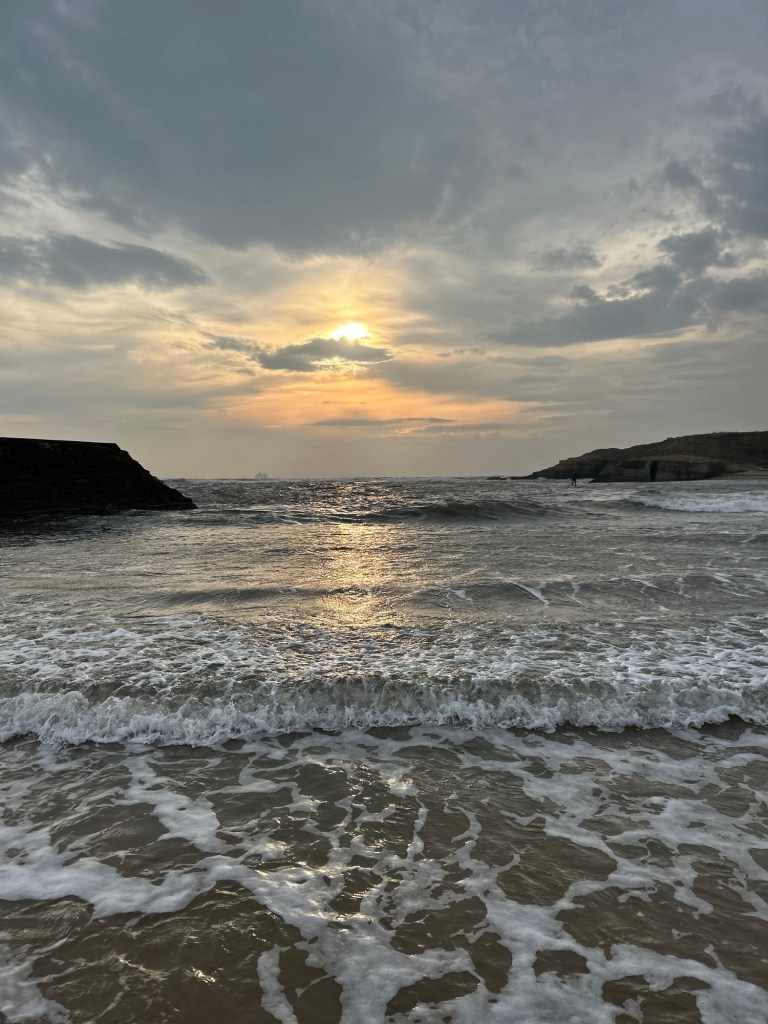
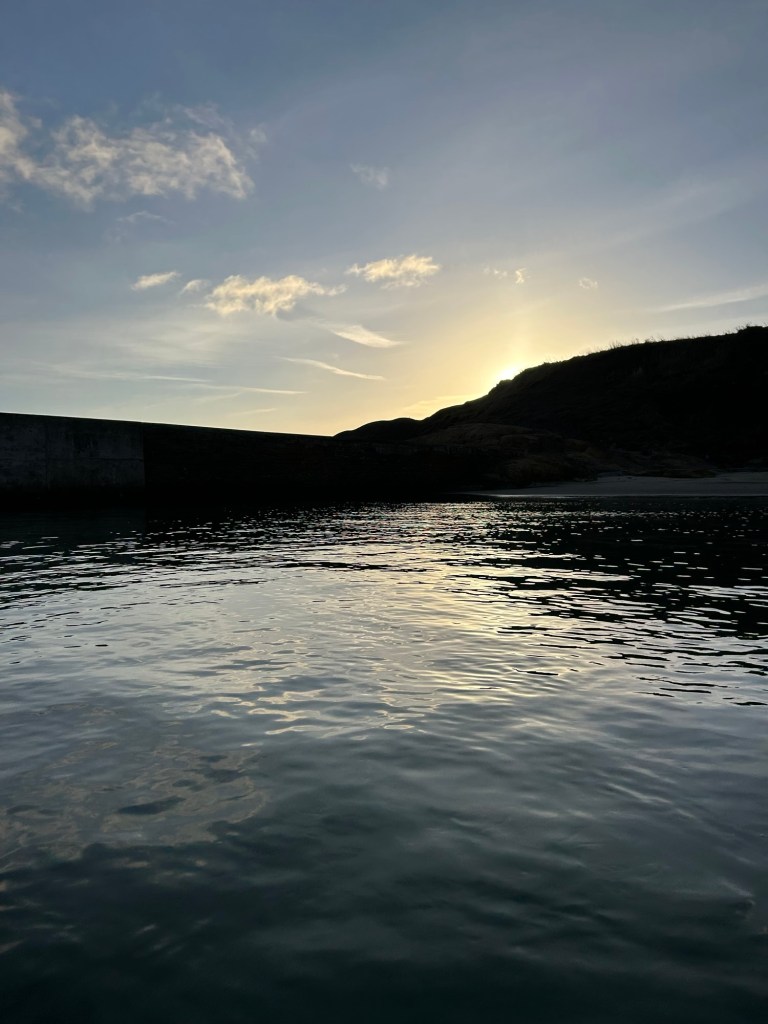
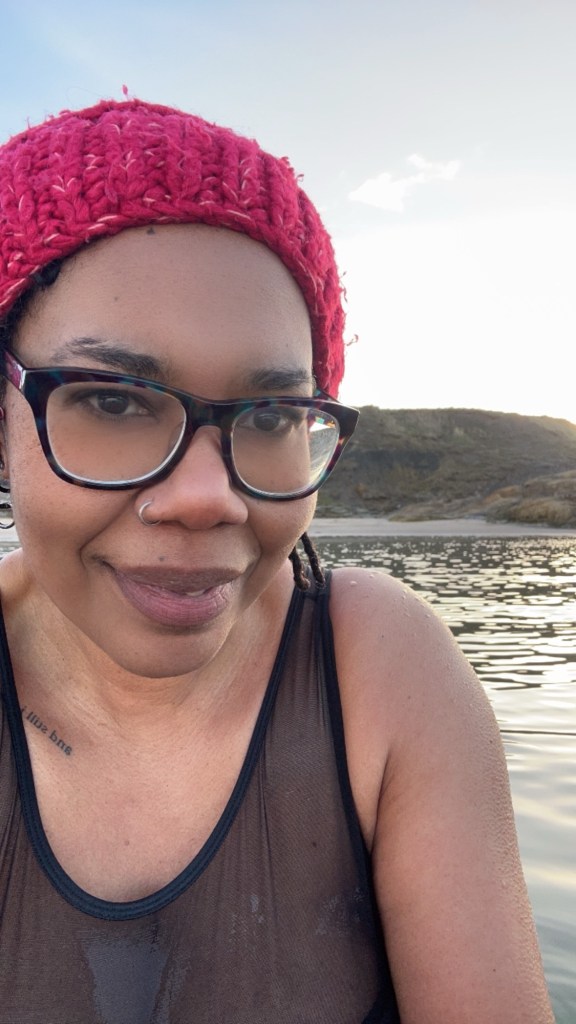
Today, I needed to move with the sea. It’s been two weeks since I’ve been into the sea what with being away and experiencing the come down. So I promised myself last night, today is the day to return. I kept this promise to myself, strengthening that muscle of trust in the self.
It was freezing and beyond. The wind chill was sharp and painful. The waves were high out there. But I walked in and out, did my acclimatising dance and gave thanks.
I thanked the sea for being here, always to greet me. No matter how long I’ve been away, or how broken I turn up. She is always there to greet me in all my fucked up glory and I thank her for holding me, for rocking me back home to myself. To her. To the universe.
Quantity over quality is a characteristic of whet supremacy culture. Say like with social media, we are wired to focus on the numbers. The number and amount of followers, likes, comments gives us the buzz. Keeps us returning usually. Rather than the quality of interactions. The quality of connections.
But in this instant when I say I’m on a reading tip and boast that I’ve read 12 books already this year, fiction, poetry and non-fiction, I’m taking the buzz of the numbers because I know they were quality reads.
Last year saw me fall off my reading horse. Reading was only happening when I had an extended amounts of time off the clock. Summer reading mostly. I didn’t have the bandwidth or desire to read at any other times. I was too antsy and not able to settle, as too many demands were pulling on my attention.
So I’m really happy that this hibernation season has seen me dive back into books. Physical and digital books. I do not care which as long as I’m reading, expanding my thinking and formulating new pathways of understanding and connection.
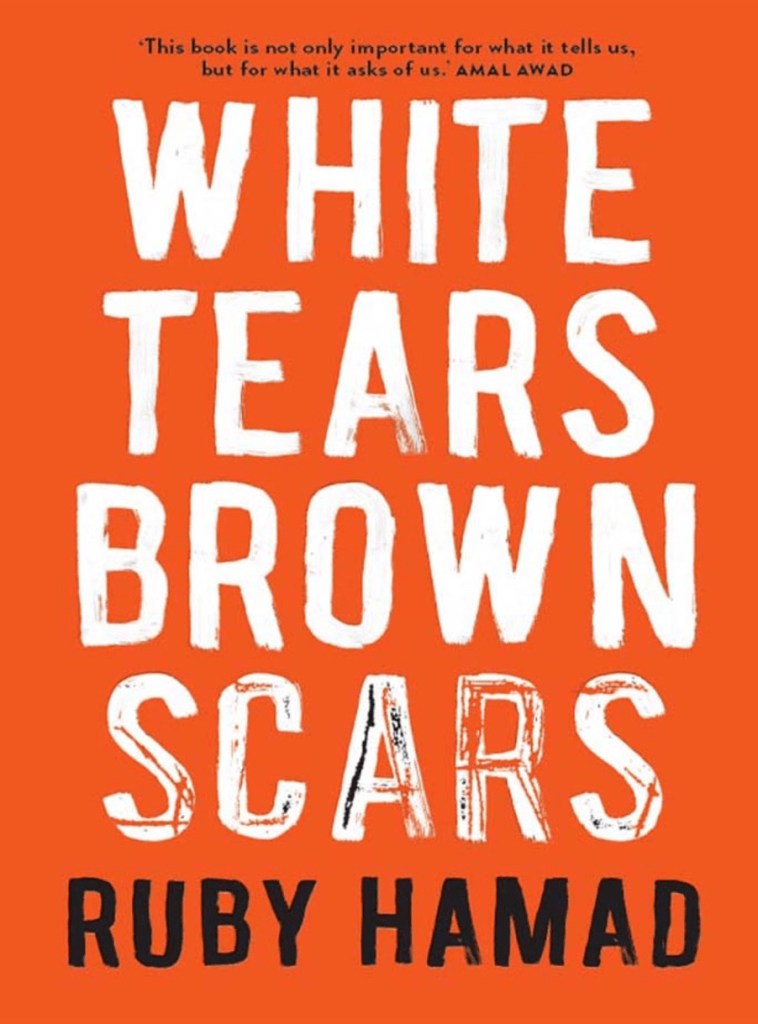
So White Tears Brown Scars by Ruby Hamad was completed yesterday. And it so feeds into my experiences with white women. Even though they’ve caused offence, been racist that is, it’s me who’s consoling them and making sure their feelings are not too hurt. Or it’s me having to apologise because my reaction to their racism or them touching my hair without my consent has been deemed far too aggressive and not very collaborative by the organisation or group I was working with.
They are used as a weapon, white tears, to shut down the conversation. To get the white person out of an uncomfortable situation and out of having to look at themselves and their behaviours.
It was so validating to read this book and recognise that it doesn’t just happen to me and that this is a centuries old tactic of the damsel in distress. And that damsel is white as Black and Brown women have never been deemed woman enough to protect. And all this shit is wearing thin with Black and Brown women. Believe.
This book was an extension of an article Ruby Hamad wrote back in 2018 for The Guardian. You can read it there and just know that one Black woman, Lisa Benson, who was working as a journalist at the time got fired for simply sharing this article because it was deemed ‘an attack on white women’. White tears in action right there!
1. While visiting Paris in April, I’d made arrangements before I left to visit Vichy and visit the Black Madonna there in the Old Church, chapel Saint-Blaise.
I’m returning to my relationship with the Black Madonna here but still exploring this connection. This pull I sense towards these Black Virgins.
2. This chapel has always been a magnet in Vichy due to this Black Virgin of the 14th century. She is known for her miracles.
3. I’ve not brought with me the Christena Cleveland book, God is a Black Woman but I know I’ve written about this particular Black Madonna here before.
4. It was during the French Revolution, that she was burnt and only her head remained, thanks to a ten-year-old child who saved her from destruction.
5. There have been times that I have lost my head. Or been disconnected from my body. There have been times that it’s felt that I’ve been burnt at the stake. That my life has gone up in flames.
6. In 1802, her head was placed on a wooden base covered with the old cloth until 1931 when she was given a body again. Became a full bodied statue thanks to the sculptor Emma Thiollier.
7. No- one stitched me back together. Forged that (re)connection with head and body. I had to do that myself. Over years and over turbulent waters.
8. Vichy is known as the “queen of spa towns” with five healing thermal mineral springs.From the Roman times, people used to bathe in the waters, later to just taking to drink from the spring. It was only later after legends linking the healing qualities of the water to a white fairy that Christians connected the blessed waters with their miracle working Black Madonna of the Sick.
9. I’ve always thought of the sea as my medicine. She has healed me more than once. Healing is not a one time deal. It’s a practice and a process. But I’ve not been taking to the waters of late. I’ve not been taking my medicine.
10. I turn up here, create stories as a part of my healing journeys which are never linear. Spirals and circles instead.
My mind and body are hurting with the constant stream of information and images of this and that atrocity, and there is very little space to breathe, rest and take stock. I’ll be honest, I’ve been checking out. Checking out into Netflix boxsets, mindlessly watching episode after episode, numbing the pain and feelings of being inadequate , or not doing enough, being enough. Enough.
I don’t know about you, but it’s an overload at times of these times, which feel cruel and oppressive, evil and violent and unbelievable and yet we accept. There are no quick fix solutions but my heart and soul wants to feel that all will be well.
Society and culture ( the whole world) at the moment feels toxic and dangerous and I’m all for just slowing down and connecting in more deeper, honest and nourishing ways. I’m still leaning into my joys. Still bending towards the light as I don’t want to lose myself in this crippling spiral.
I’m slowing down alone and I’m slowing down in groups that I’m supporting and who are supporting me. I’m not by-passing the pain, the harsh realities, the genocides ( as there are multiple happening at the same time just now or have always been going on), but I’m also acknowledging how much I can endure and not beating myself up if I choose silence instead of performance. I know this is a privilege which I recognise, voice and keep checking.
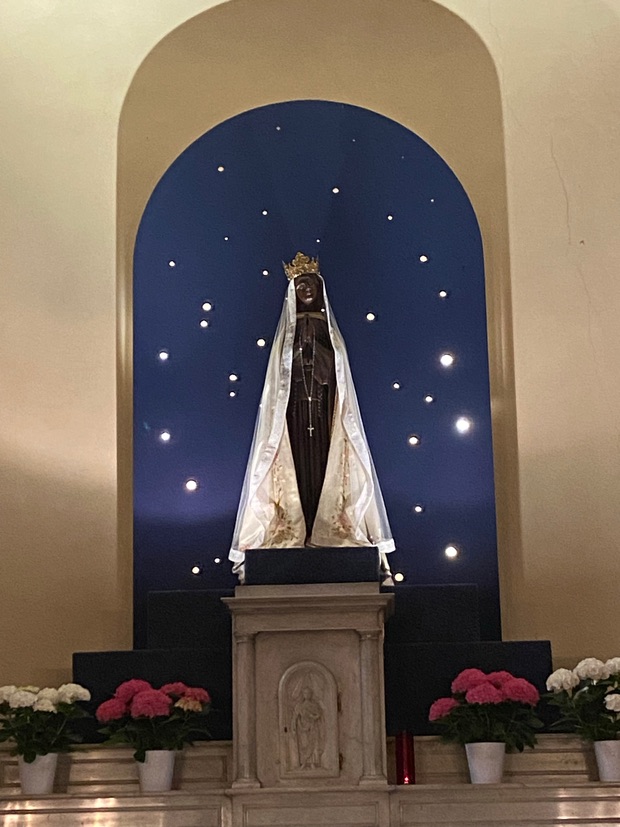
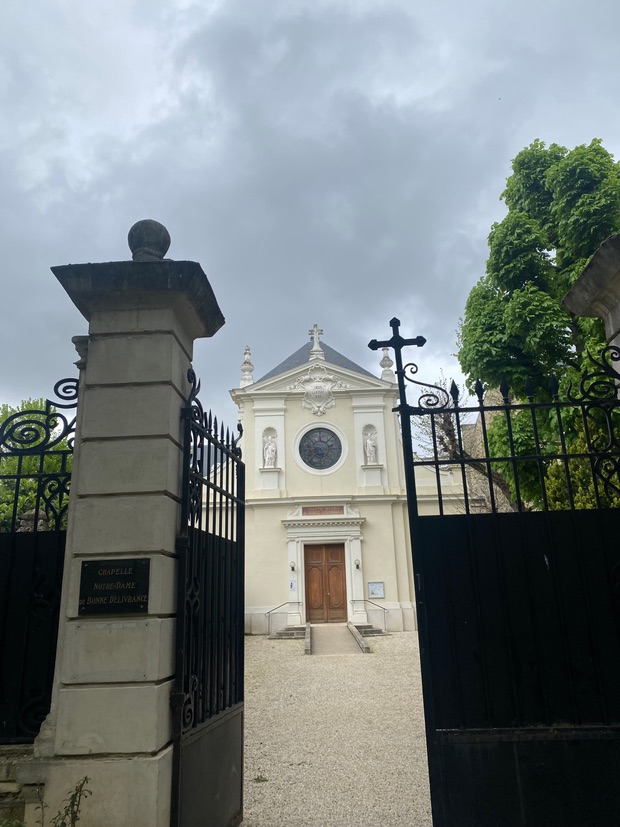
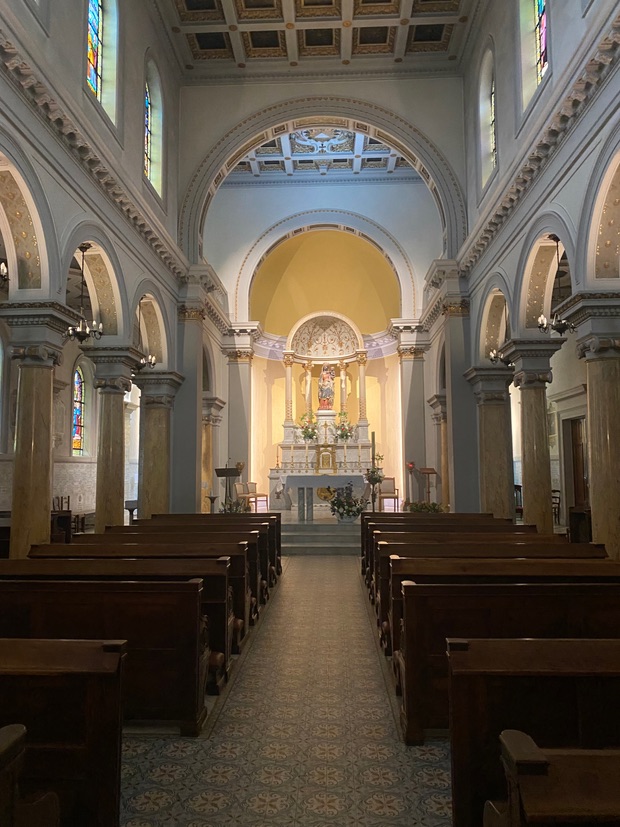
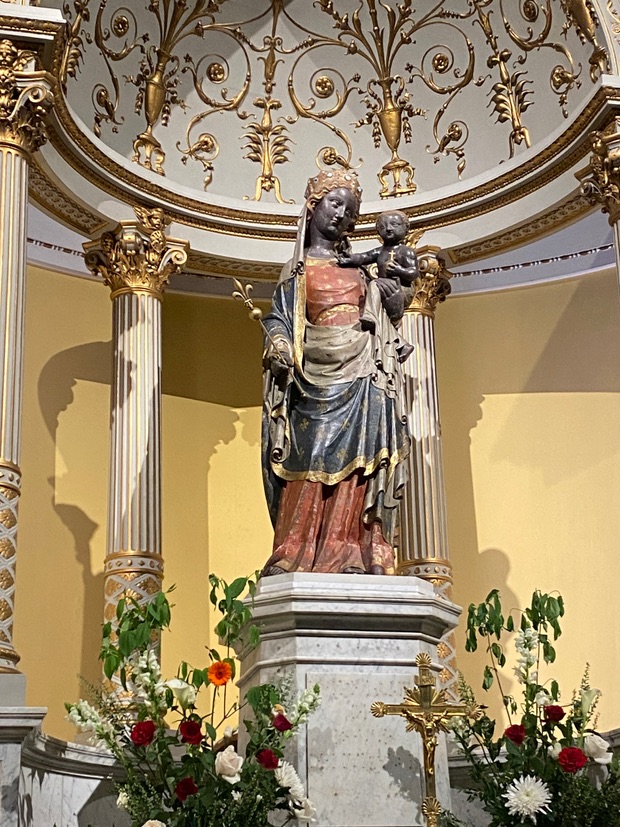
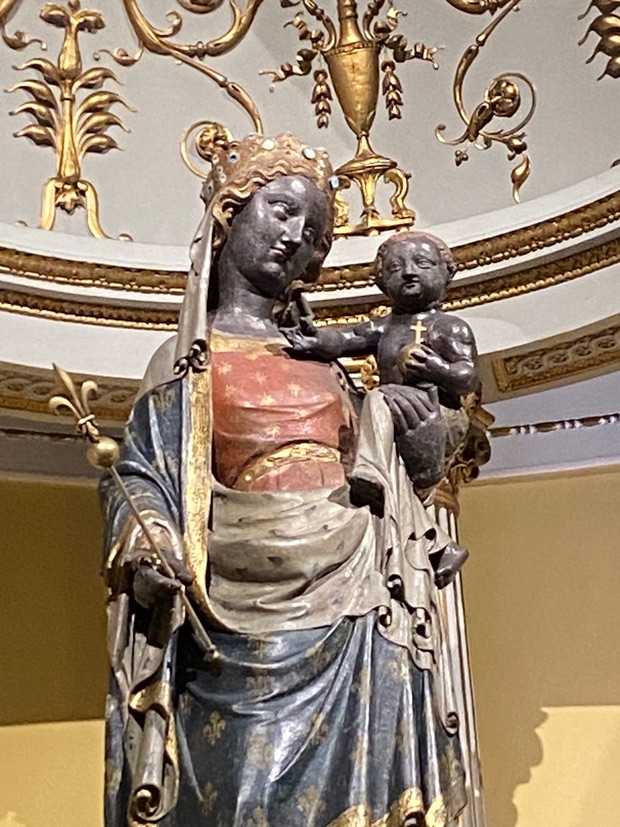
Below I share the images from my Paris trip of Our Lady of Good Deliverance, often referred to as the Black Madonna of Paris. Over a 6 miles walk to see her, I covered more miles within my mind with my thoughts and feelings wondering and wandering, which were silenced or put to one side when I met this Black Madonna. I had the small chapel , in the suburb Neuilly-sur-Seine, all to myself when I visited. I walked around, I sat and looked and I lit a candle and remembered my ancestors and give thanks for this deliverance.
Deliverance: being rescued or being set free. How apt she comes back to me today. How I must have unconsciously known I needed her guidance today, needed her love and reassurances that liberty, salvation, change is possible. I’m not religious or spouting anything remotely religious or pious. I’m not preaching or looking to convert.
I’m spiritual and believe in love. I believe in the good in people and try to connect there on that common ground rather than separation and hatred.
What I do know is this isn’t a neat, tie-it-all-up-ending, with ‘this is what I want to say and you to take away’ as that would be another construct and false prophet.
I just know starting to look/ believe that ‘God is a Black Woman’, that the Black Madonnas are here to support and love us through difficult times ( as well as good times, our pleasures and joys) feels like a blessing to me that I will continue to lean into during these slowing down, turning away from exploitative and extractive society and culture times and continue to nurture others ways of {BEING} in this world.

 Living Wild Studios