Our Lady of Montserrat La Moreneta (Catalan: the Dear Dark One)
I remember a time, after I’d said I was leaving, I’d taken my daughter on a break. We hired a campervan and travelled around the north -east coast. Still covid, still a pandemic. Summer relaxing of restrictions. Eat Out For Summer, something like that. The van kept breaking down for one reason or another.
We booked into a hotel for one night, and I got a phone call from a potential funder. Offering support to apply for emergency funding to help the organisation I was working for as project coordinator to be able to pivot. Still over the nature connection we’d been offering but through nature immersion online.
This person, who called out of the blue, helped me secure the bag. Helped me secure the funding, so I could continue to run nature connection events for others, during these difficult times, but also continue to be paid.
One of the reasons I thought I couldn’t leave my marriage before was because of finances. We lived pay cheque to pay cheque. I didn’t have the resources to move out and find a place of my own.
To me this was a miracle. This was a lifeline. This made this dream of leaving come through.
Notre-Dame-de-la-Roche (Our Lady of the Rock), Our Lady of the Side-Eye, Black Madonna of Mayres
I think the big one here is Black Madonna showing me it was time to leave my marriage of over 20 years.
This is wisdom and insight .
I turned to my ex-husband and asked him for help. It was during the pandemic. I was struggling with how our world had been turned upside down with Covid, home schooling, pivoting with work and the brutal murder of George Floyd. I was struggling and was vulnerable and scared and in need of support.
I laid it all on the line. I was going down and needed a life-raft. My pleas fell on deaf ears. He could not help me.
So I called upon my own strength. I took the sacred act of saving myself and started to make the plans to leave. Black Madonna showed me the way, by showing me that I had to love myself. Love myself enough to save myself.
I ask the question, how do I know that this was the presence of Black Madonna in my life, showing me the way? Faith and trust. I trusted in myself enough to take the leap. I had my fears but I jumped anyway, I trusted in myself to find a way. I trusted in the universe or my ancestors or someone or something having my back.
I’m choosing to feel that this is Black Madonna. I know it’s me, I made the decision and acted upon it. but I’m not taking all the credit. There is someone or something out there who has my back.
What is spirituality if not believing in the divine, in our spirits and souls. I’m choosing to believe that God is a Black Woman. Because when God is a Black Woman, there is no conditional love. It is unconditional and unlimited. Black Madonna loves me in all my fucked up glory.
With my knapsack on my back, I went a wandering. Wandering and wondering is part of my summer field guide plans ( more to follow here with updates). It wasn’t too hot and it wasn’t too cold. It was just right.
I had a bundle of old photographs with me, probably half of my family archive of photographs, as I was going to get them photocopied for a project I’m working on ( more to follow here too).
At my local library, there are two photocopiers. I usually use the downstairs one. But this one was broken. Has been for a few weeks. So I had to go upstairs and use that one.
This photocopier upstairs is manually operated and all monies have to be given to the librarian sitting not far from it.
I asked to use the photocopier. They said yes and I started the job. As I’ve said there were a few photographs to get through and the librarian did say they were leaving momentarily, swapping out.
They stayed for the duration of the job. I paid for the copying and then I took a minute to turn around and look at the new books . Something I do from time to time.
The librarian said at the same time, I was just going to say that there are new books in if you want to have a look at them. Don’t you just love getting your hands on new books? And I had to agree with them.
And there, right in the middle of the shelf, facing me at eye level was the new book from Christena Cleveland, The Black Madonna.
You might remember that another book from Christena Cleveland has been featured on this blog. God is a Black Woman. Ring any bells?
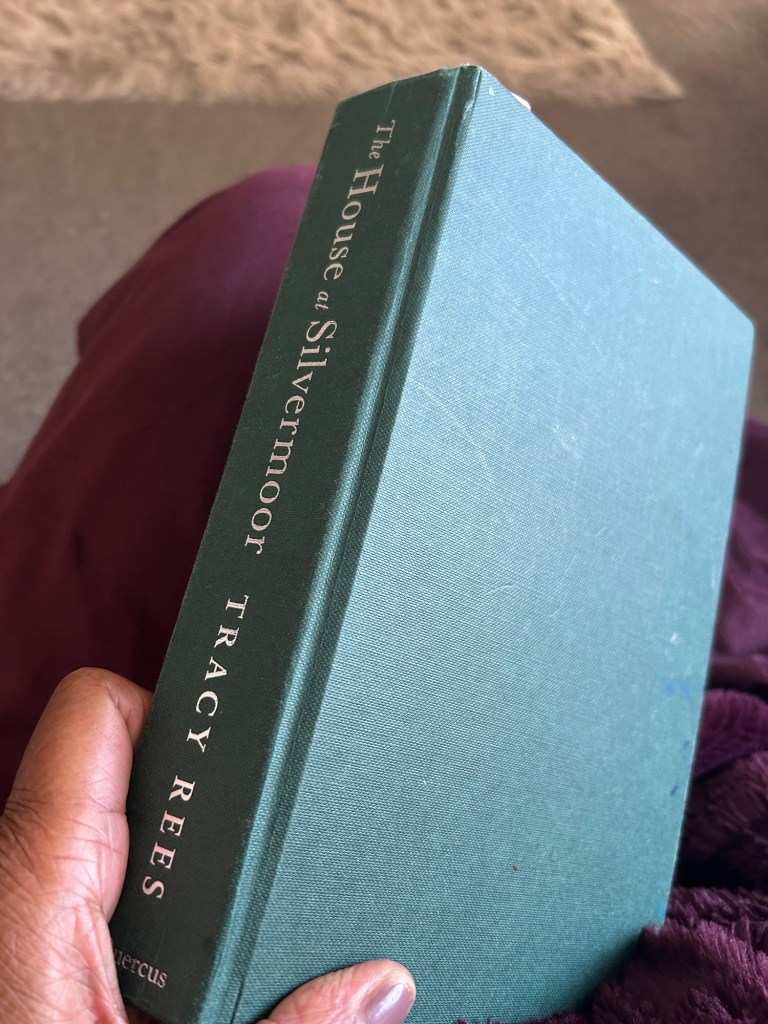
A book I travelled with to Paris, and the outskirts as I took a mini trip to France in search of Black Madonnas.
Well, Cleveland’s next instalment is The Black Madonna, is a further reclamation of the divine feminine, part memoir, part global stories, part historical records, part invocations and rituals. Total liberation.
Part way through this book, where at the end of each chapter there is an invitation to actively allow Black Madonna into your life more fully, I’m drawn to the task of mapping Black Madonna’s loving pursuit of us. Of me throughout my life.
Cleveland presents the story that Black Madonna, is the sacred black feminine worshipped from time, from Africa. When the people of Africa were stolen, taken across the ocean to be enslaved, the sacred black feminine in the form of Osun, orisha of the Osun river begged Yemoja, Mother of all Orishas and Oceans, to let her go with them. Osun’s love for her people was limitless and she didn’t want them to think that she had forsaken them, forgotten them or stopped loving them because of their forced departure .
Yemoja granted Osun’s wish by transforming her into rain, so she could cross the ocean and be with her people who needed her most. So within the Americas, and the Caribbean, Osun crossed an ocean, transforming herself into a more light-skinned goddess so her people would recognise her in these strange new lands, where they had been enslaved and all Africanness bred and/or whipped out of them. She crossed an ocean not just out of love for us, but to empower us. Who has not heard of the slave rebellions inspired and led by Black Madonna, by black women? Who do. you think Harriet Tubman’s North Star was?
Black Madonna. Shape-shifter. Black women. Shape-shifters.
Anyway, I thought I’d share my mapping of Black Madonna’s loving pursuit of me for the past 6 years on this blog this month as I’m in need of feeling that I am not alone.
I’m in need of feeling that I have a black divine presence in my life who’s got me. Who’s there to catch me when I fall.
I’m not religious more spiritual. And because of the white washing of religion,I would’t claim any religion as truth, as something to put my faith in. Never.
I’d much rather put my faith and trust and love into black women. God is a Blackwoman, right. And there is something about Black Madonna that keeps drawing me back to her. That gives me peace and joy when I sent eyes on her.
So who wouldn’t these feelings to continue? Who wouldn’t want to highlight and amplify these feels through difficult times?
Today has been all about being in my happy place(s).
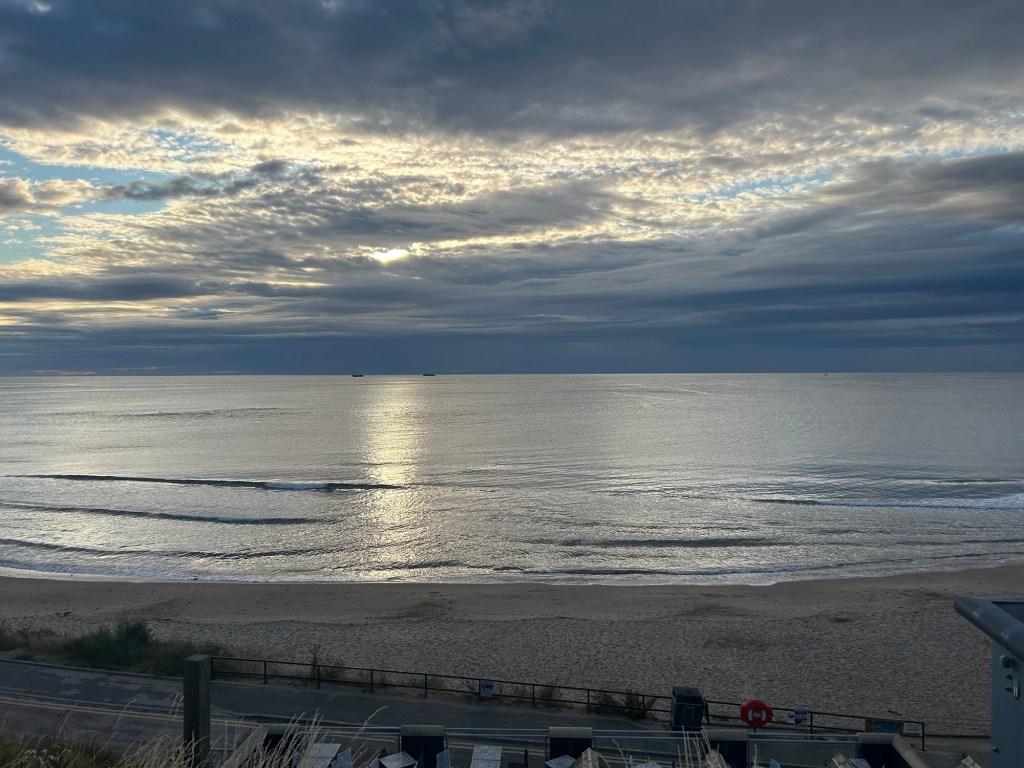
You’ve guessed it. My happy place(s) is by the sea. Within the sea. Close to the sea. Close enough so she can hold me, when I need that non-judgmental, nourishing embrace.
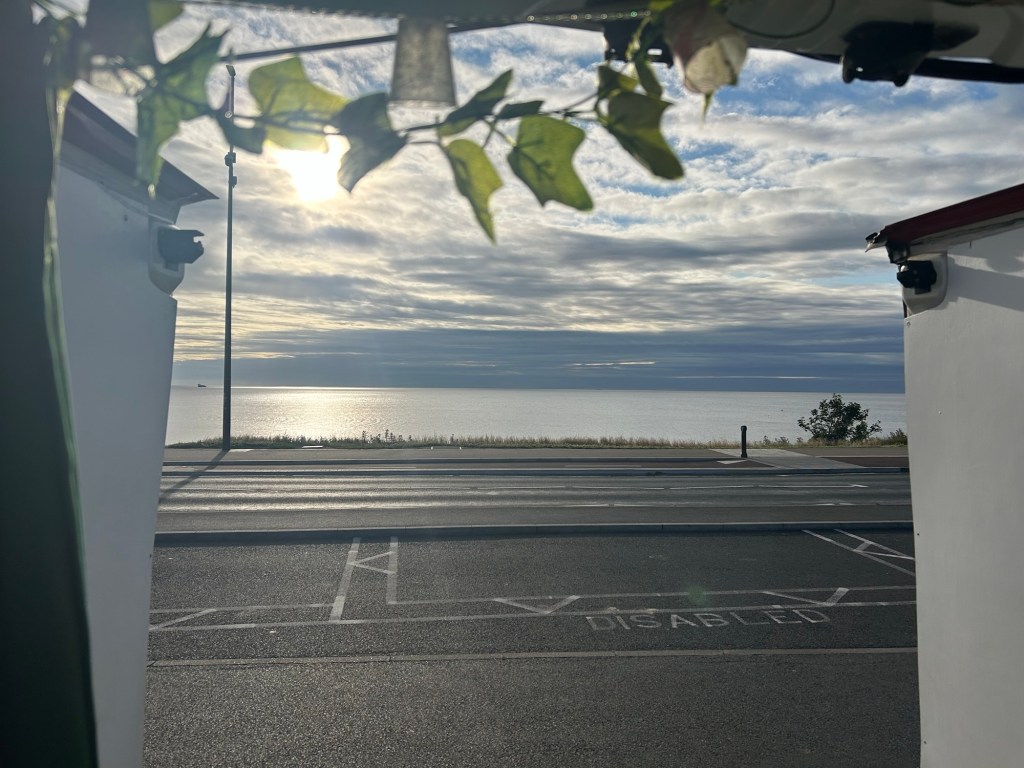
My happy place(s) also involves being in Kiwi, my campervan, by the sea.
To be able to stretch out on the bed, with first morning coffee, visual journal and this view, I’m happy.
Yes I’m in Kiwi again, close to the sea, looking at the evening sun on the sand dunes, above the sea. And I’ve just sitting here watching the breeze caress the grass, parked up in my happy place(s) up the coast in Northumberland.
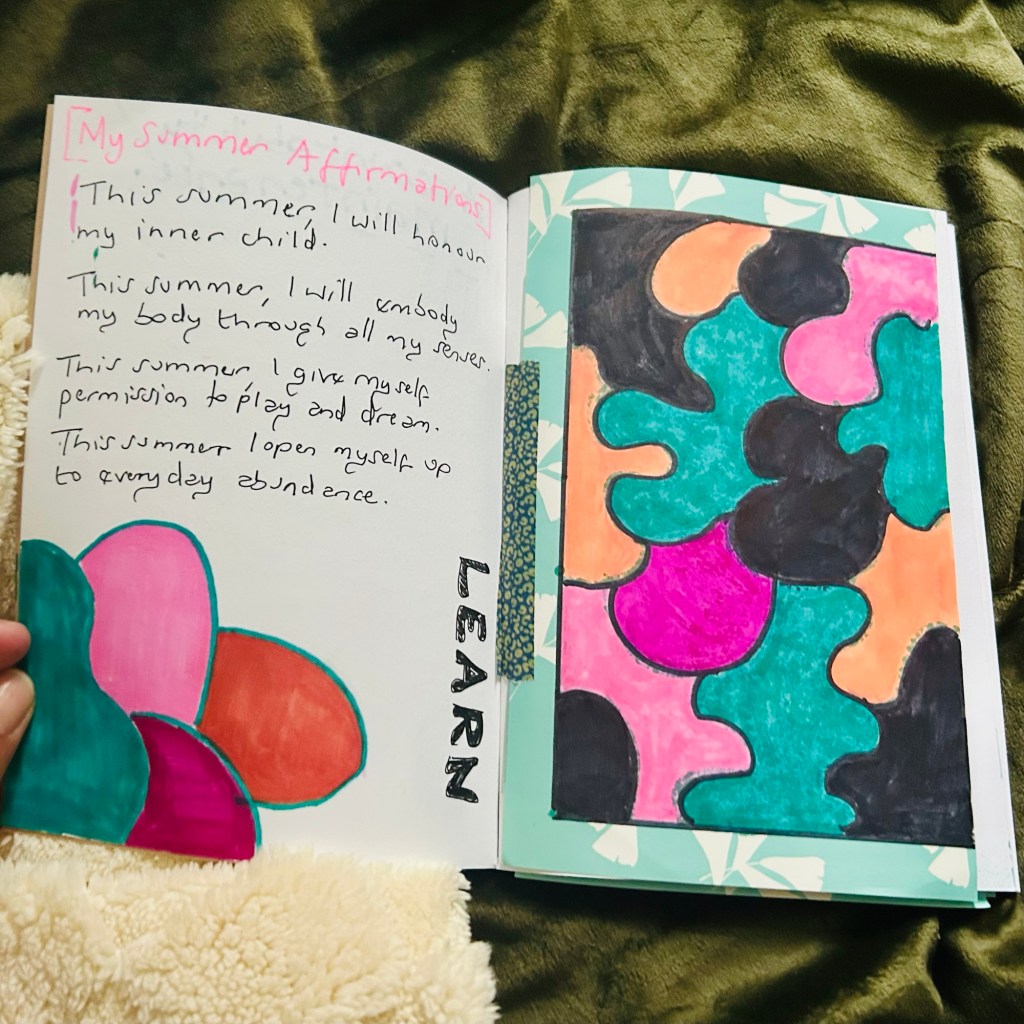
The aim is to create a field guide for summer which prioritises play, curiosity and wonder. Dreaming and imagination.
I want to be intentional around who I want to {BE}/ want to do over the next few summery months.
Become consistent in relation to turning up for myself in play and wonder.
Now is the time to prioritise my joy. No responsibilities but feed my inner child.
Traditionally, a field guide is something created to provide information for a reader to identify birds, flowers or trees. Or other aspects of the natural environment.
With this energy in mind, I want to create a summer field guide that identifies areas of play and curiosity that I can explore.
This field guide is an invitation to lean into what lights me up, steeping myself in the mystery and magic of it all.
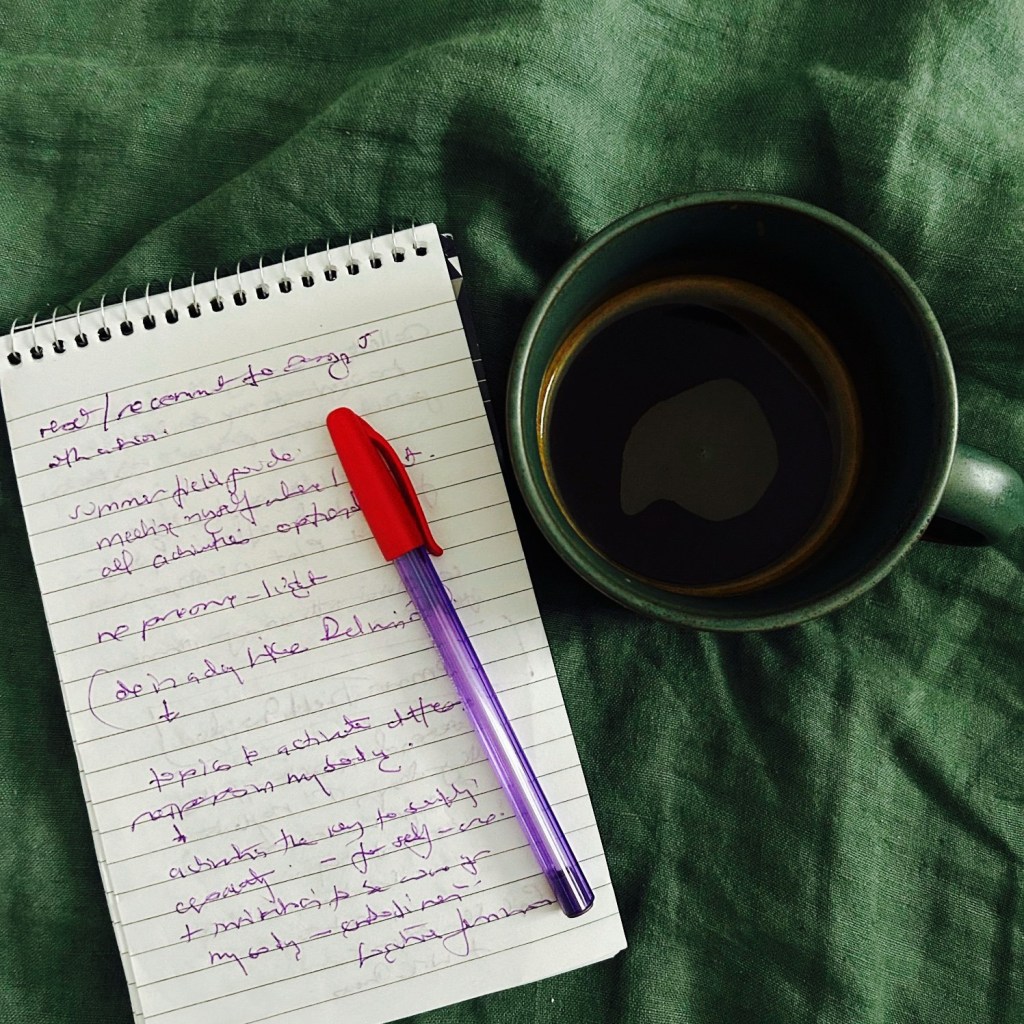
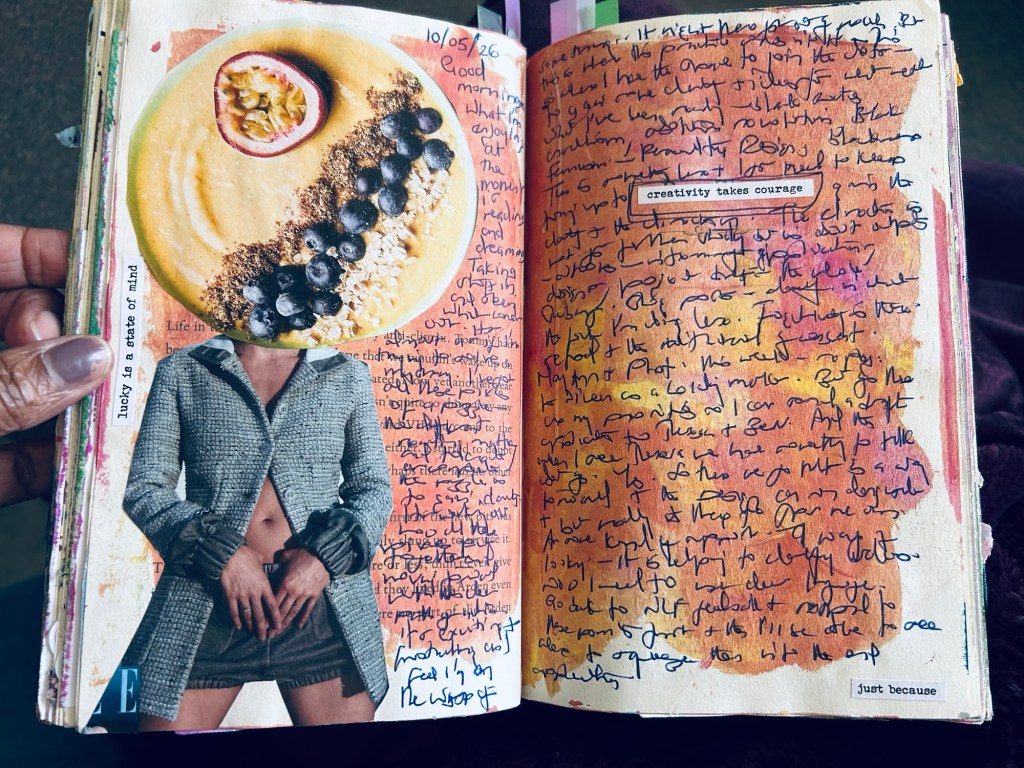
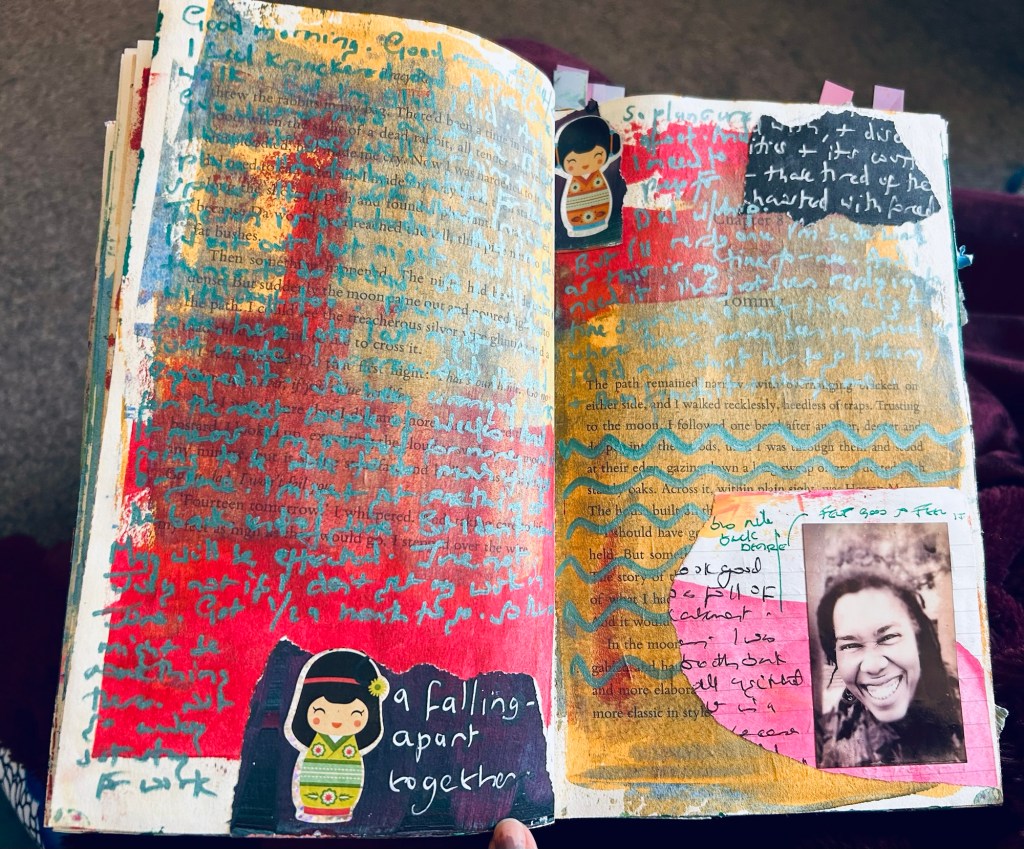
Sometimes when I get a download, I just have to grab the first bit of paper and pen I can see and write.
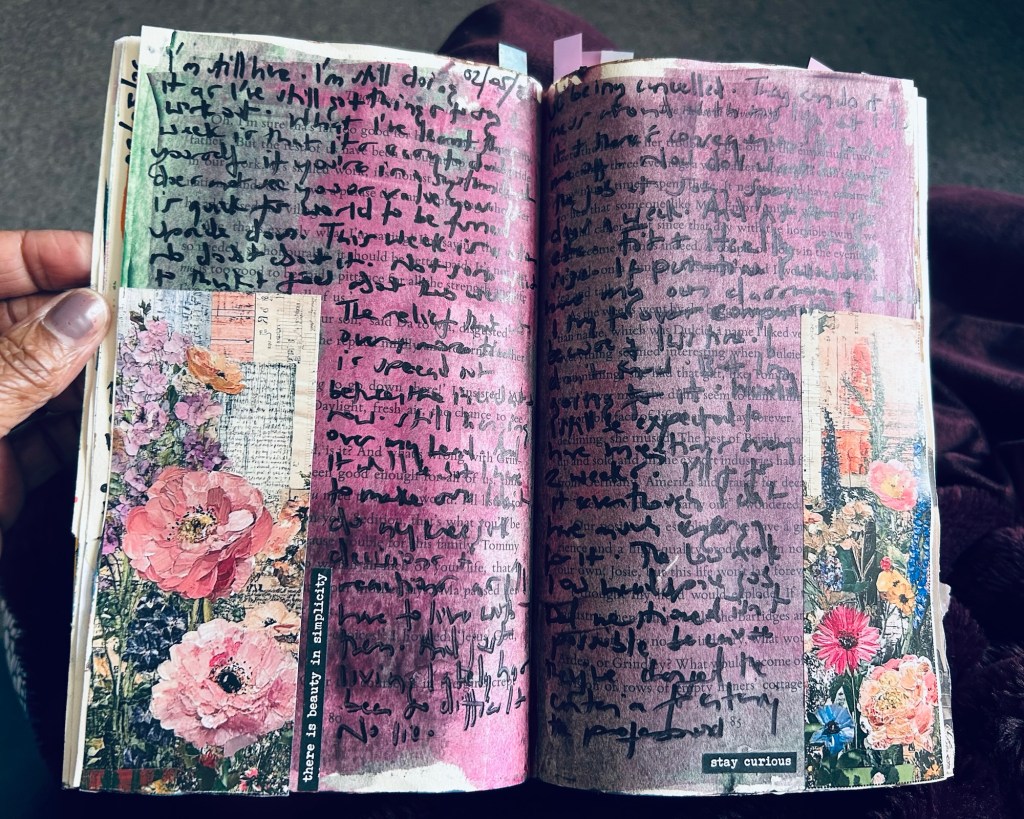
It feels as if I haven’t got the time and patience for my visual journaling practice and I’ve just got to get the words on the page.
Like short, sharp, frenzied sex after a drought, a stream of consciousness shit comes rolling out of me. From my body. Onto the page. Words here. Paint there.
And within this pile of words/ marks are glimmers, signs, clues for next steps, moves forward. Invitations.
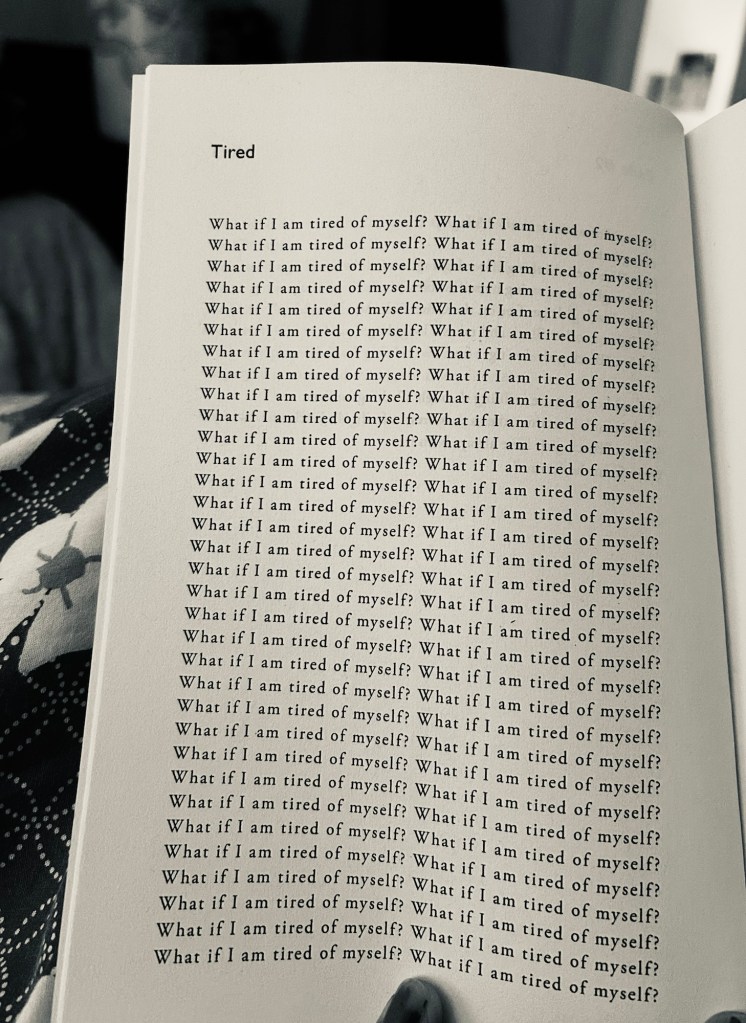
I’m been resting, after a full on time of exams and work and in that resting time, I did nothing creative except breathe. Breathe a little deeper and longer. Fuller.
There are still times when I have that moment of dread, that I’ve forgotten something. That I should be doing something else instead of doing nothing.
I know time will heal the wound. Time will suture the skin over the rupture and this period will become a memory. A trace left in an ache running down my neck and shoulder. A dull tugging at my soul.
Anyway, I’m back here. And I’m not going to try and fill in the gaps. The gaps are important, these liminal spaces where possibility and potential are ripe.
I come back with plans to share a new series of posts which I’m loosely calling my ‘Summer Field Guide’. My plan to get intentional about the summer ahead ( or here already!) and offer myself space to play, get curious, dream and imagine. No pressure just {BEING} my inner child out loud.