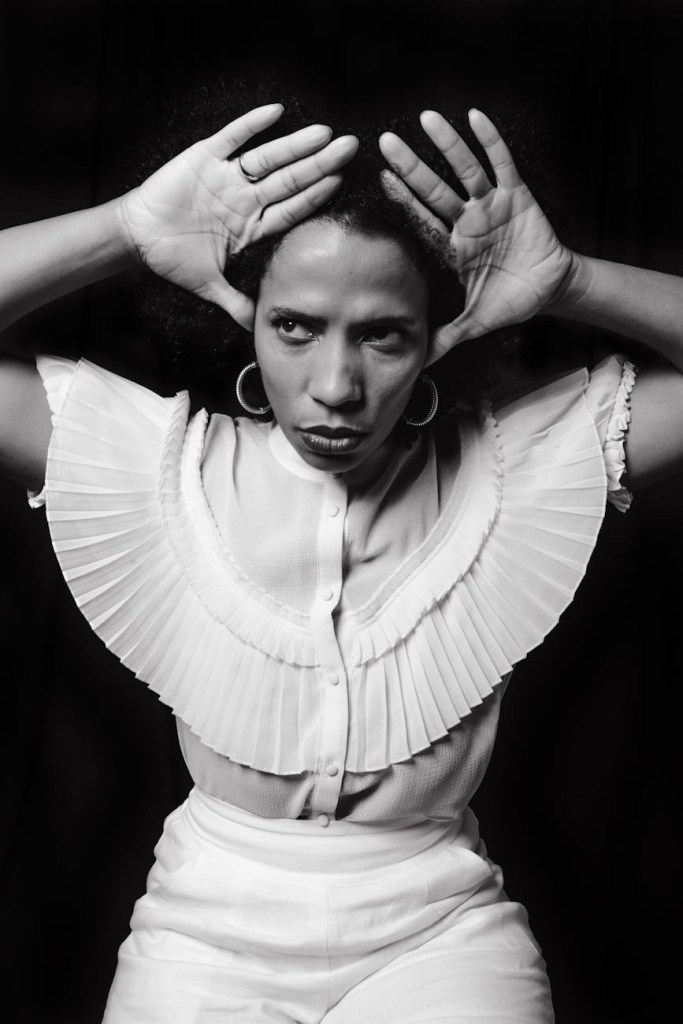
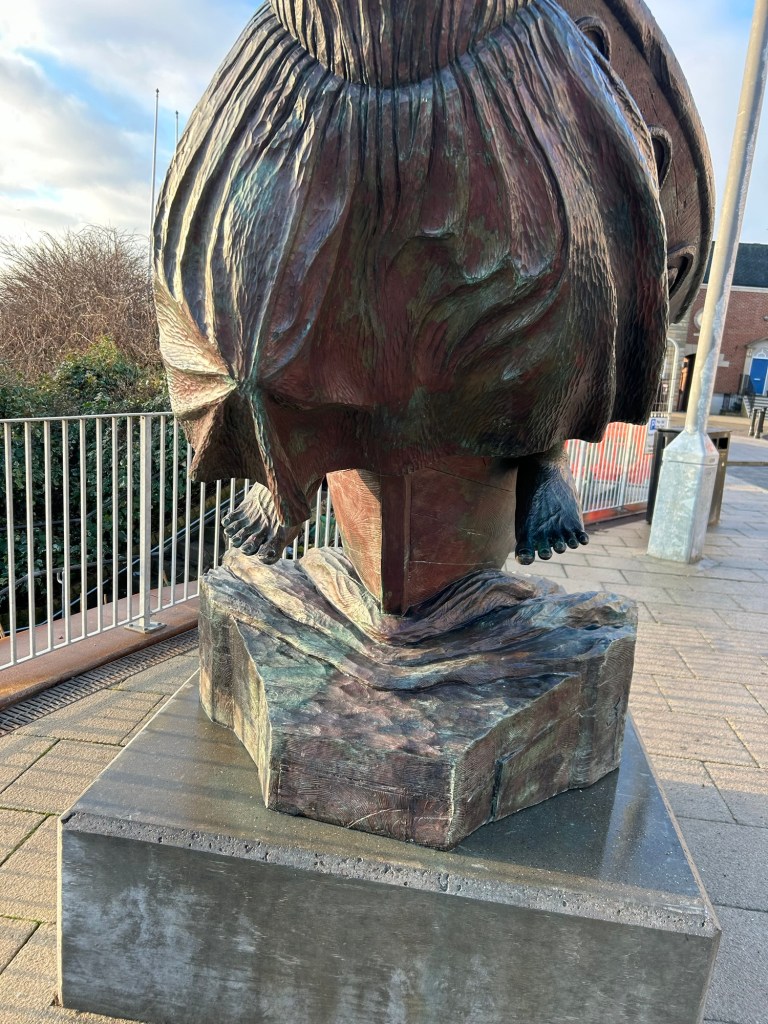
Our Lady of Montserrat La Moreneta (Catalan: the Dear Dark One)
I remember a time, after I’d said I was leaving, I’d taken my daughter on a break. We hired a campervan and travelled around the north -east coast. Still covid, still a pandemic. Summer relaxing of restrictions. Eat Out For Summer, something like that. The van kept breaking down for one reason or another.
We booked into a hotel for one night, and I got a phone call from a potential funder. Offering support to apply for emergency funding to help the organisation I was working for as project coordinator to be able to pivot. Still over the nature connection we’d been offering but through nature immersion online.
This person, who called out of the blue, helped me secure the bag. Helped me secure the funding, so I could continue to run nature connection events for others, during these difficult times, but also continue to be paid.
One of the reasons I thought I couldn’t leave my marriage before was because of finances. We lived pay cheque to pay cheque. I didn’t have the resources to move out and find a place of my own.
To me this was a miracle. This was a lifeline. This made this dream of leaving come through.
With my knapsack on my back, I went a wandering. Wandering and wondering is part of my summer field guide plans ( more to follow here with updates). It wasn’t too hot and it wasn’t too cold. It was just right.
I had a bundle of old photographs with me, probably half of my family archive of photographs, as I was going to get them photocopied for a project I’m working on ( more to follow here too).
At my local library, there are two photocopiers. I usually use the downstairs one. But this one was broken. Has been for a few weeks. So I had to go upstairs and use that one.
This photocopier upstairs is manually operated and all monies have to be given to the librarian sitting not far from it.
I asked to use the photocopier. They said yes and I started the job. As I’ve said there were a few photographs to get through and the librarian did say they were leaving momentarily, swapping out.
They stayed for the duration of the job. I paid for the copying and then I took a minute to turn around and look at the new books . Something I do from time to time.
The librarian said at the same time, I was just going to say that there are new books in if you want to have a look at them. Don’t you just love getting your hands on new books? And I had to agree with them.
And there, right in the middle of the shelf, facing me at eye level was the new book from Christena Cleveland, The Black Madonna.
You might remember that another book from Christena Cleveland has been featured on this blog. God is a Black Woman. Ring any bells?
A book I travelled with to Paris, and the outskirts as I took a mini trip to France in search of Black Madonnas.
Well, Cleveland’s next instalment is The Black Madonna, is a further reclamation of the divine feminine, part memoir, part global stories, part historical records, part invocations and rituals. Total liberation.
Part way through this book, where at the end of each chapter there is an invitation to actively allow Black Madonna into your life more fully, I’m drawn to the task of mapping Black Madonna’s loving pursuit of us. Of me throughout my life.
Cleveland presents the story that Black Madonna, is the sacred black feminine worshipped from time, from Africa. When the people of Africa were stolen, taken across the ocean to be enslaved, the sacred black feminine in the form of Osun, orisha of the Osun river begged Yemoja, Mother of all Orishas and Oceans, to let her go with them. Osun’s love for her people was limitless and she didn’t want them to think that she had forsaken them, forgotten them or stopped loving them because of their forced departure .
Yemoja granted Osun’s wish by transforming her into rain, so she could cross the ocean and be with her people who needed her most. So within the Americas, and the Caribbean, Osun crossed an ocean, transforming herself into a more light-skinned goddess so her people would recognise her in these strange new lands, where they had been enslaved and all Africanness bred and/or whipped out of them. She crossed an ocean not just out of love for us, but to empower us. Who has not heard of the slave rebellions inspired and led by Black Madonna, by black women? Who do. you think Harriet Tubman’s North Star was?
Black Madonna. Shape-shifter. Black women. Shape-shifters.
Anyway, I thought I’d share my mapping of Black Madonna’s loving pursuit of me for the past 6 years on this blog this month as I’m in need of feeling that I am not alone.
I’m in need of feeling that I have a black divine presence in my life who’s got me. Who’s there to catch me when I fall.
I’m not religious more spiritual. And because of the white washing of religion,I would’t claim any religion as truth, as something to put my faith in. Never.
I’d much rather put my faith and trust and love into black women. God is a Blackwoman, right. And there is something about Black Madonna that keeps drawing me back to her. That gives me peace and joy when I sent eyes on her.
So who wouldn’t these feelings to continue? Who wouldn’t want to highlight and amplify these feels through difficult times?
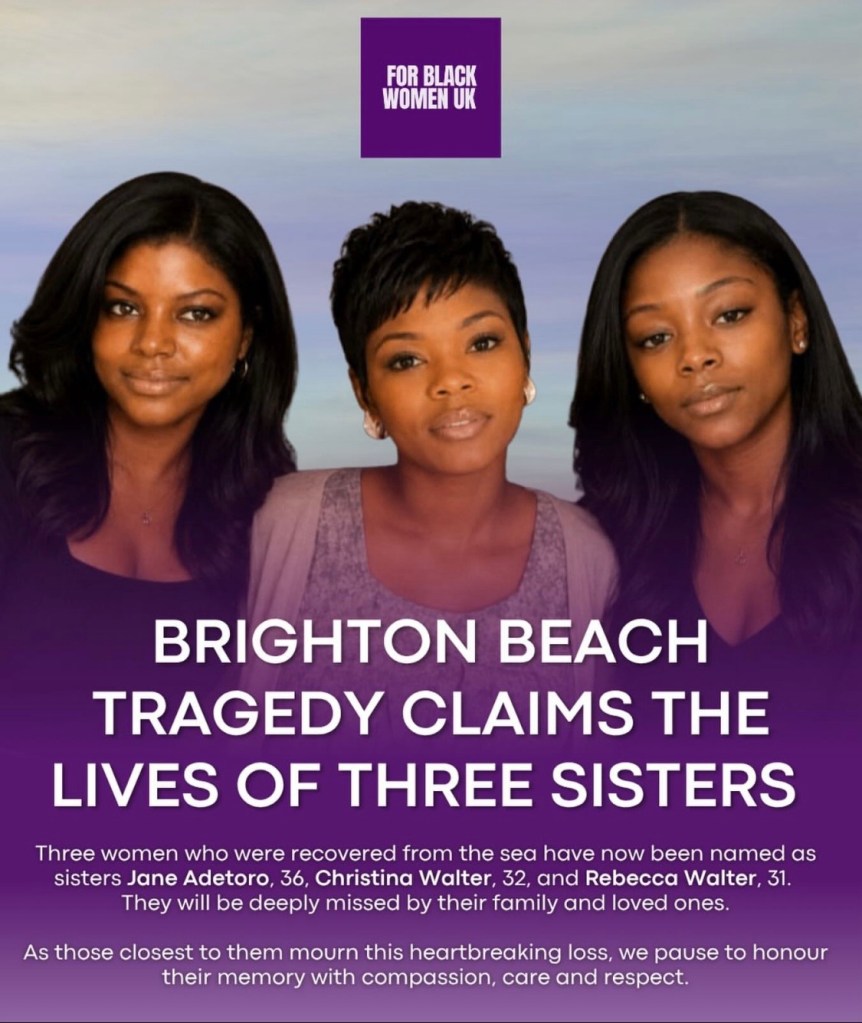
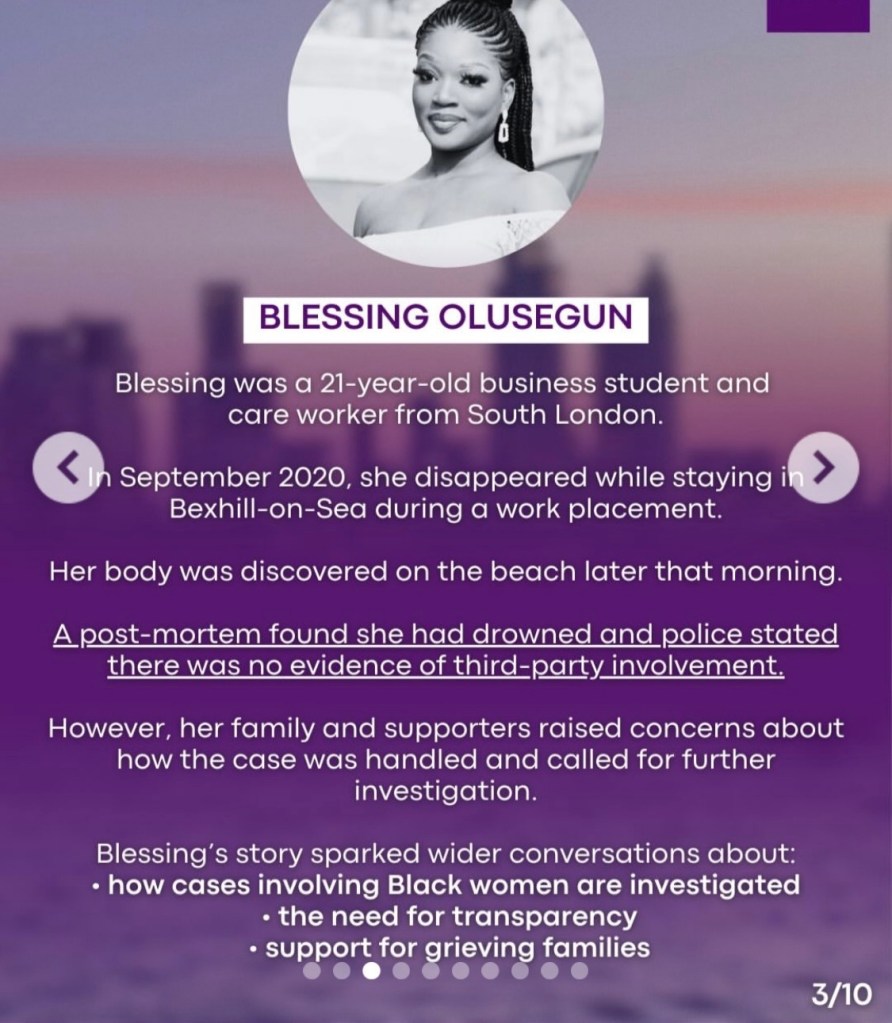
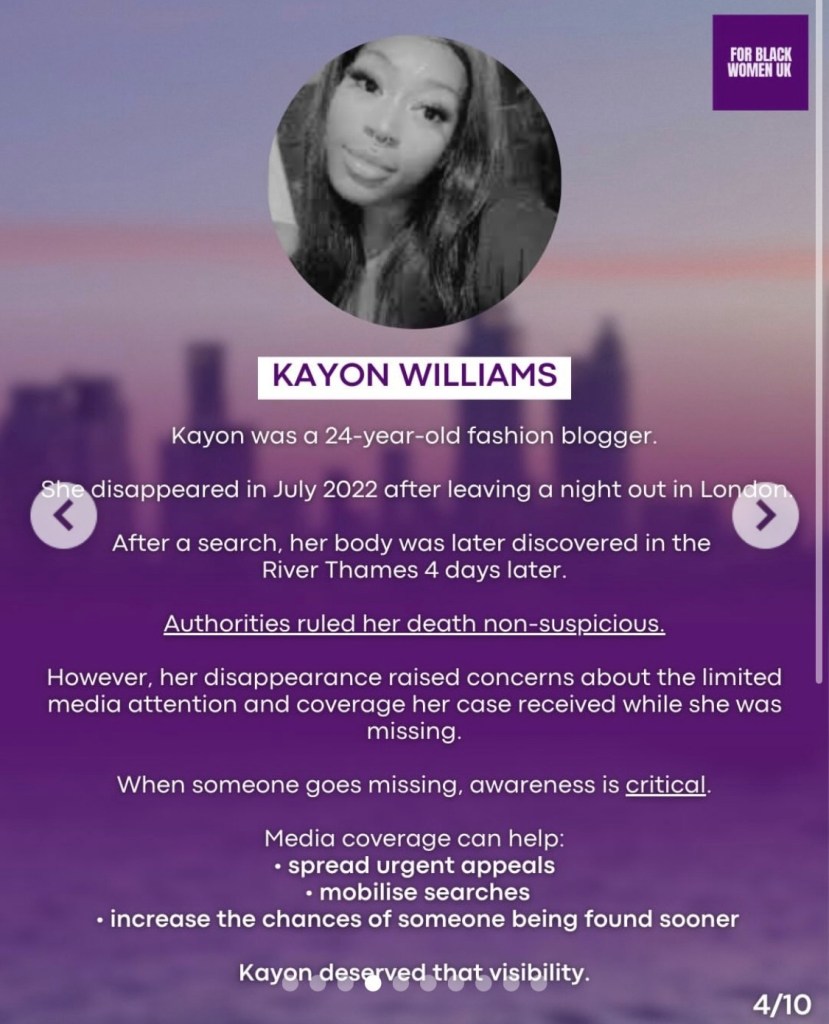
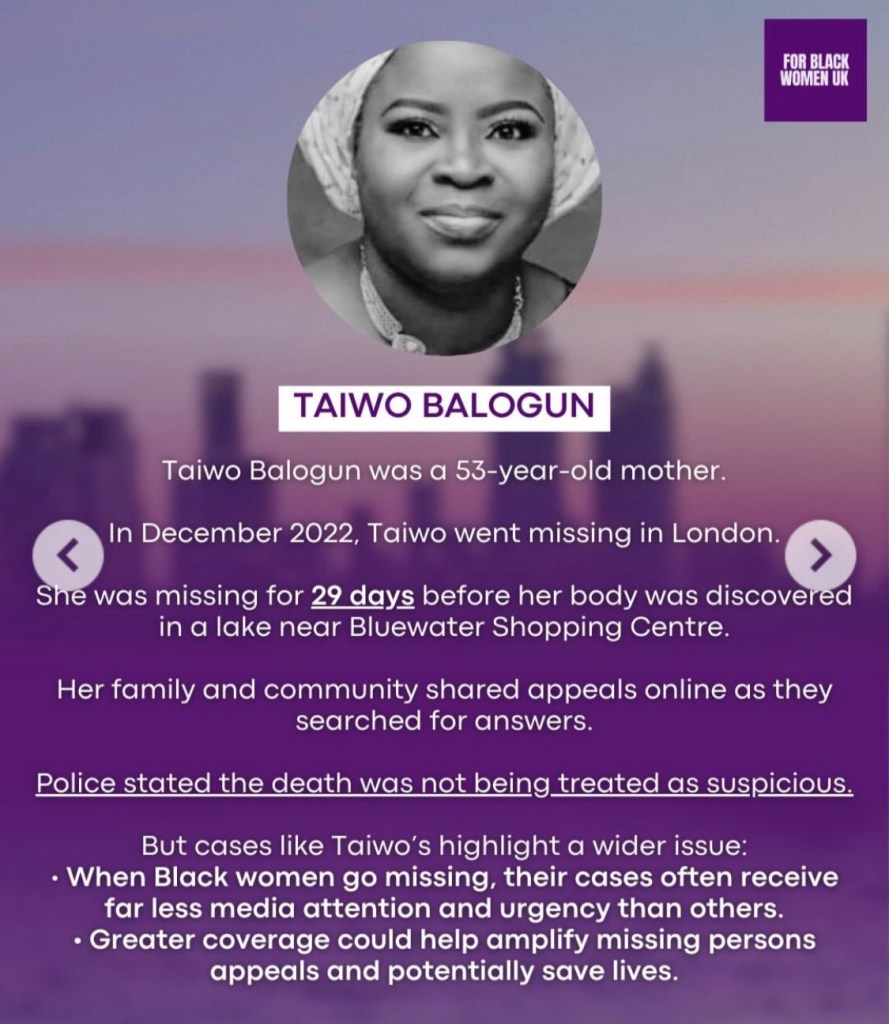
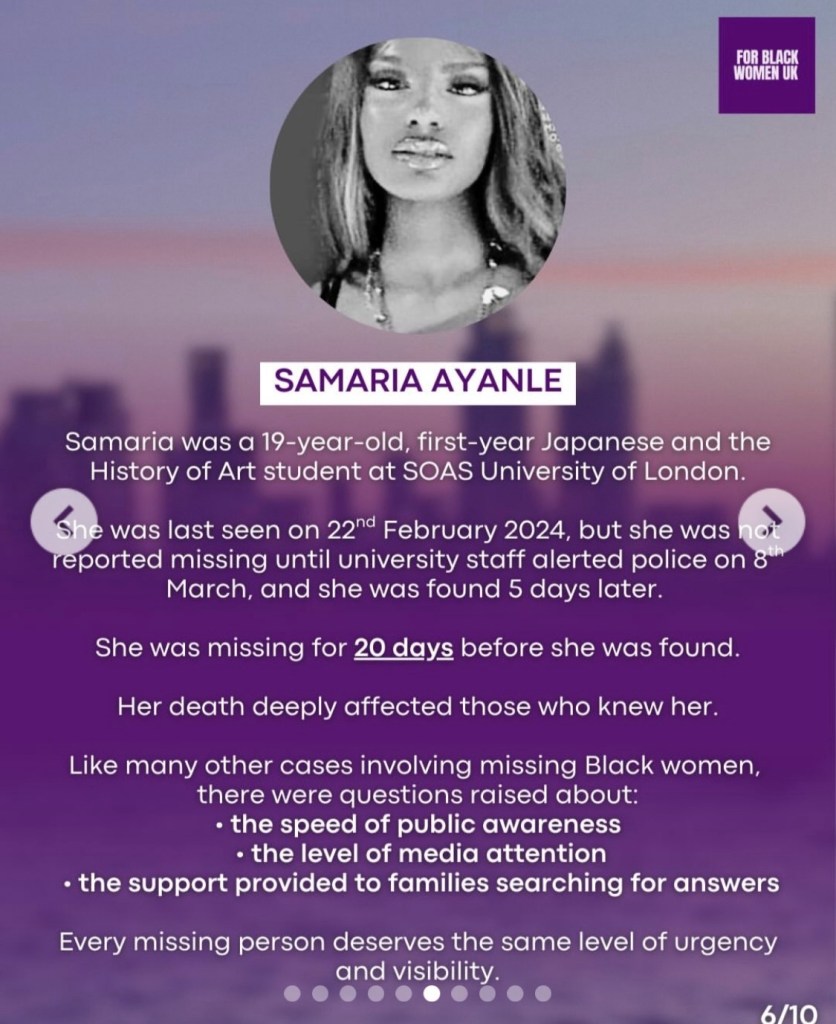
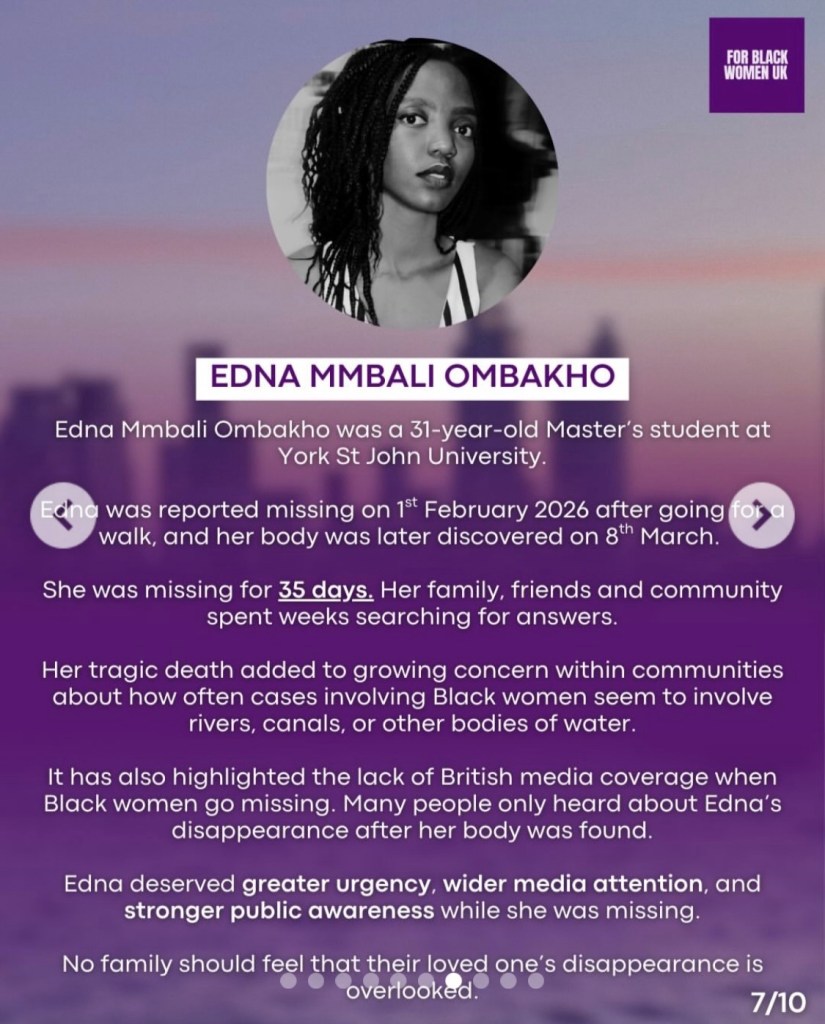
On the early morning of 13 May, a call went out that someone was in difficulty in the sea off Brighton Beach. When the rescue team got to the beach, the bodies of three women were found.
I’ll be honest. At first, I thought this was a tragedy involving (white) women with the use of the word ‘women’ and with the media coverage this disaster was receiving reinforced this assumption.
Later these women were identified as three sisters. Three black women, Jane Adetoro, and Christina Walter and Rebecca Walter.
What a heartbreaking tragedy to happen within one family. My heart and deepest sympathy goes out to their family and friends.
In a heartbreaking tribute, their father Joseph said: “No words can truly describe the pain of losing three daughters in the prime of their lives. Jane, Christina, and Becky were more than daughters to me; they were my joy, my strength, and the beautiful light that filled our family with happiness and love.”
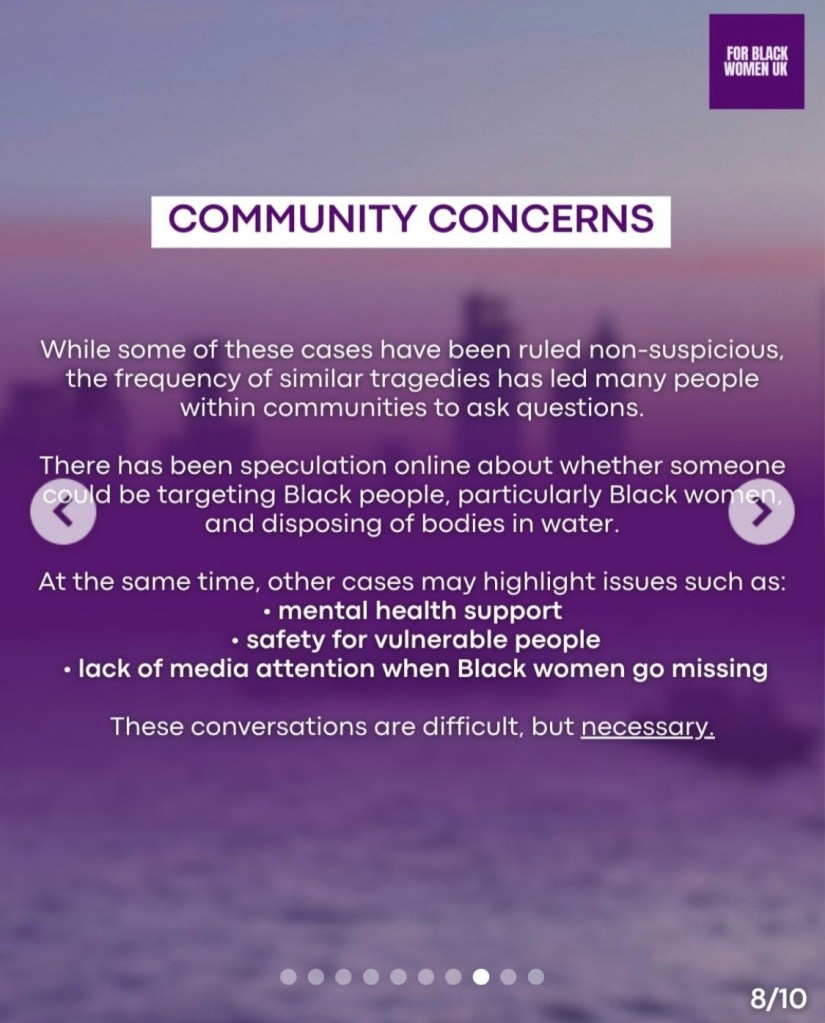
Sussex Police are investigating this tragedy and believe at this stage that there are no suspicious circumstances or criminal intent in connection to these deaths.
I don’t know how they can come to such findings so early in their investigations. And should keep an open mind. The only consolation is that the police and media are actively investigating and reporting the death of these three black women as far too often, as I’ve shared recently, the disappearance, murder and deaths of black women in suspicious circumstances is ignored, neglected and dismissed.
I hope the mysterious and tragic deaths of these women is soon to be investigated and explained for the sake of their families as this is such a sad sad case of affairs.
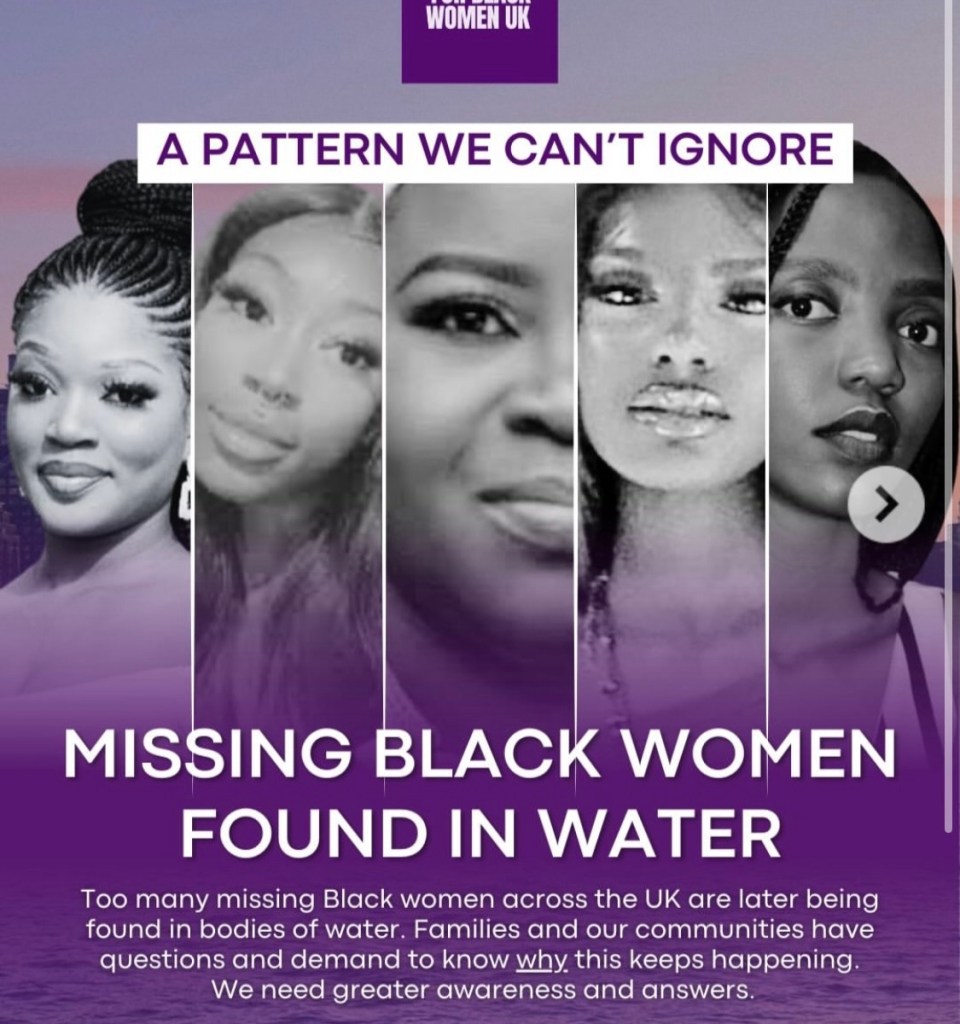
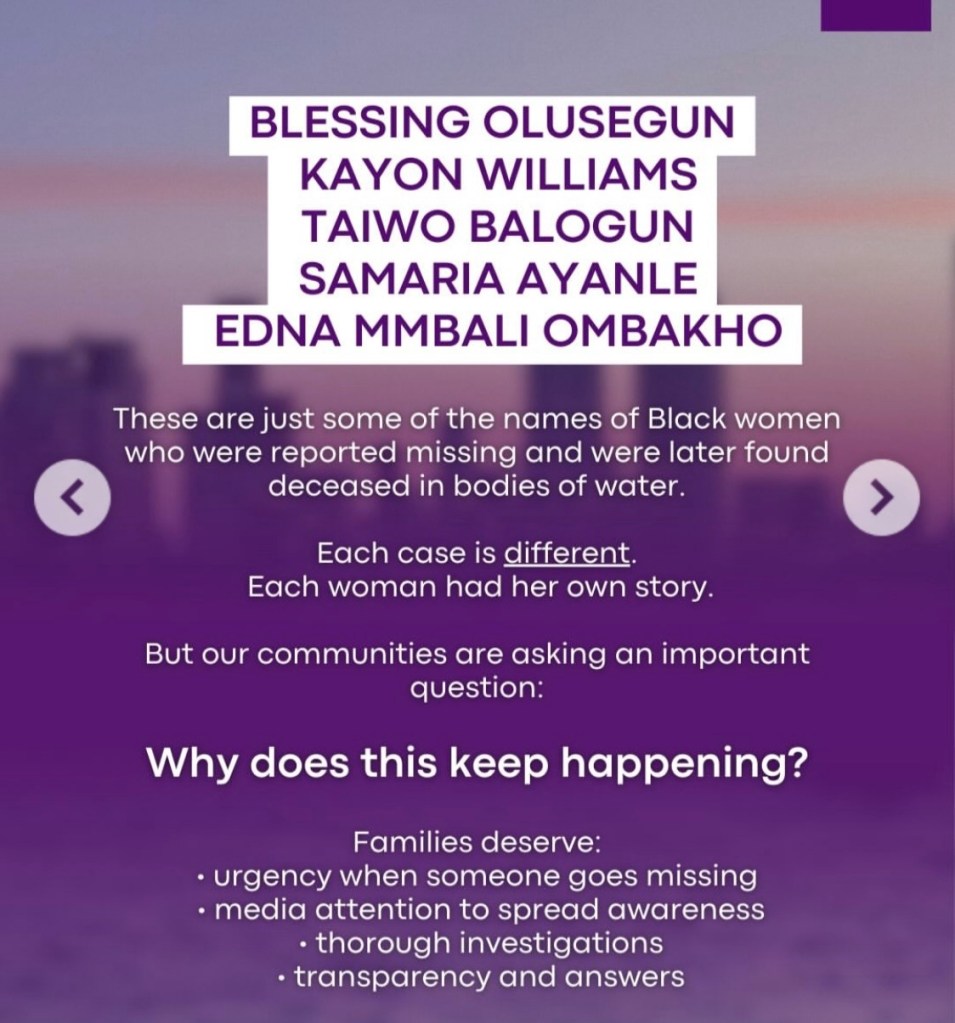
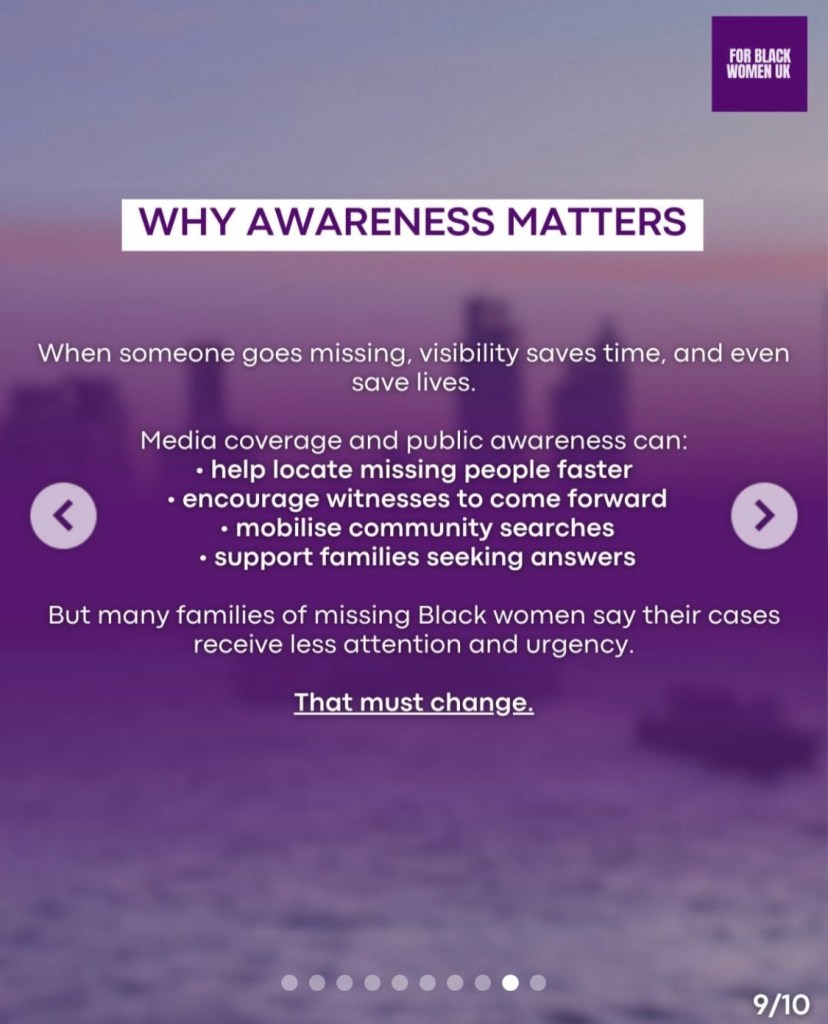
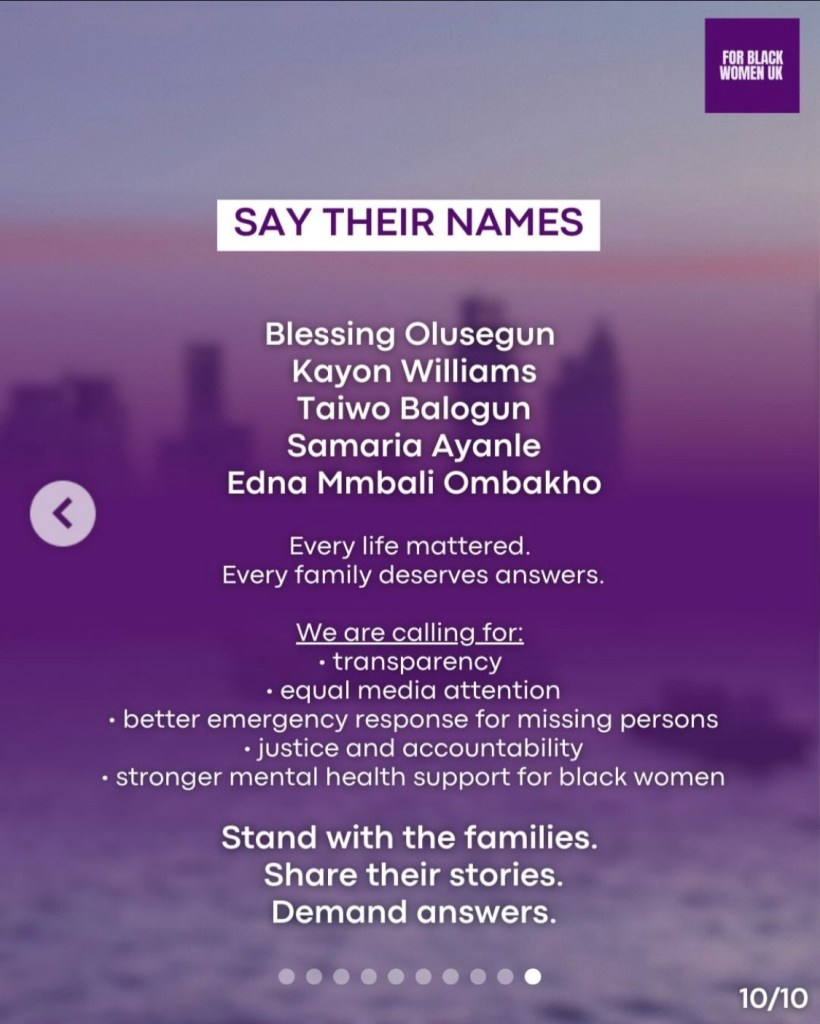
It is reproduced here to raise awareness of a troubling increase in the number of black women going missing and later found dead by/ within bodies of water.
The most disrespected person in America is the Black woman. The most unprotected person in America is the Black woman. The most neglected person in America is the Black woman.
Malcolm X made this statement as part of a eulogy he delivered at the funeral of Ronald Stokes, an NOI officer who was killed by Los Angeles police in April 1962. A recording of the speech can be found here.
I applied to Arts Council England for a Developing Your Creative Practice grant mid 2025. It was unsuccessful.
Undeterred, I resubmitted it under the project grant scheme. I was notified of being successful just before Christmas 2025.
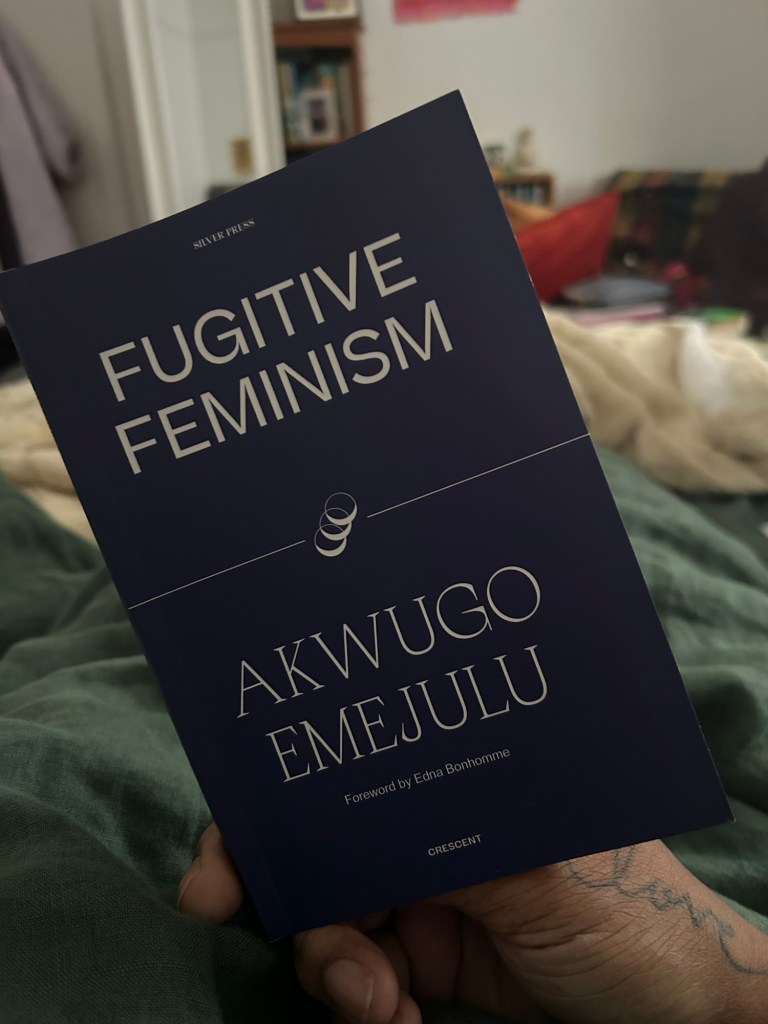
Practicing Creative Fugitivity is its name, and it involves researching fugitive practice. It also involves reading in community Fugitive Feminism by Akwugo Emejulu.
A study circle of women of the global majority.
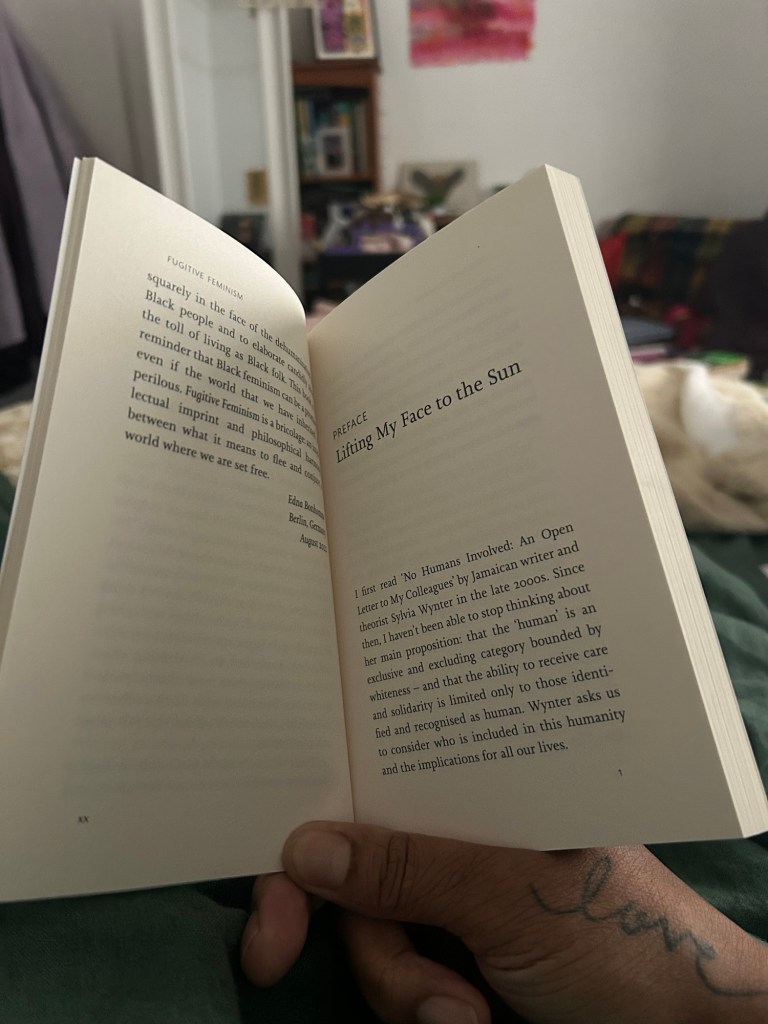
When did you first learn that you were a non-human?
The question that opens the first chapter of the text Fugitive Feminism.
A question that hits me in my gut with its open, blatant honesty and curiosity.
A question which niggles at a truth that I’ve not wanted to face up to as it would mean that I’ve spent a lifetime trying to demonstrate, prove, live up to an unattainable category of being human.
Human as a category was never created to include someone like me within it.
Human = Whiteness
Human v Non-Human
You can’t have the light without the dark.
All constructs to create hierarchies. A hierarchy where white, EuroAmerican, able bodied, middle class, cis-gendered, college educated and suburban men reign supreme. Superior.
Conceptual Other. No Humans Involved. The Lack of the Human.
Black women. Outside. Out Outside.
Our exclusion determines the borders/ boundaries of the human.
But consider this …
If Black women were free, it would mean that everyone else would have to be free since our freedom would necessitate the destruction of all systems of oppression.
Combahee River Collective
Where the excitement lies for me and others, is once we realise that Black women cannot be human, then with the support of this book in community, let’s consider what if ‘human’ cannot and should not be reclaimed?
Speculate. Speculation. Speculative.
How might we divest from the human?
That the non-human Other actually decentres the human. Move beyond human to something otherwise.
Something else.
Becoming ( something else).
Thinking of how to be/ how to live beyond the binary of human v non-human could produce the means of improving our community/society/our planet.
Centring the human ( v non-human/ othering all else) has got us into the shit we’re facing now in terms of ecological disaster.
Finding a way to decentre the human, divest from what this concept / construction means and how it operates has to be the way forward.
Fugitive Feminism is the doorway into another way of being. A portal into an alternative world built upon the Black Feminist politics of liberation.
The path ahead is not clear or defined. It’s slippery and ambiguous. It’s experiential and experimental. Yet full of possibilities. Caring not harmful possibilities.
Speculative. Suggestive. Spacious.
And it starts and continues with the act of refusal. Refusal of the way things are right now.
Refusal of being defined by others to fit into their definition of humanity ( whiteness).
Refusal of being extracted and exploited for the benefits of a few.
Refusal of being non-human.
Refusal of being outside of humanity.
Refusal of the whole concept of human/whiteness/ fascist.
Refusal of these limitations when i, we, i and i can be something else beyond humans.
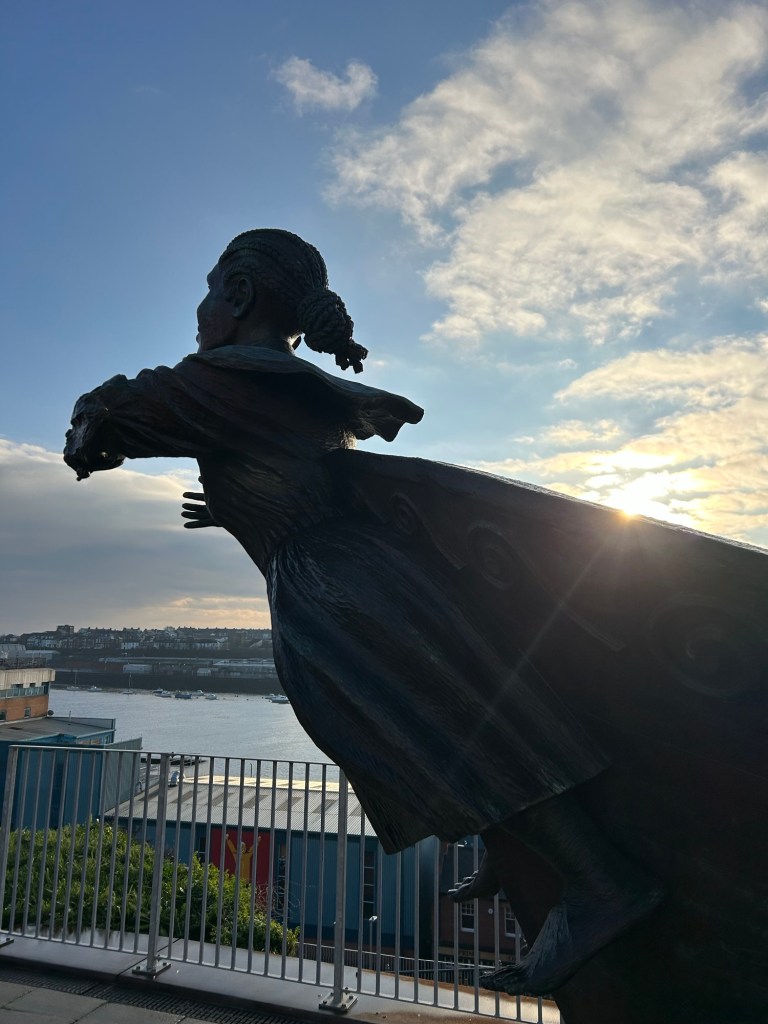
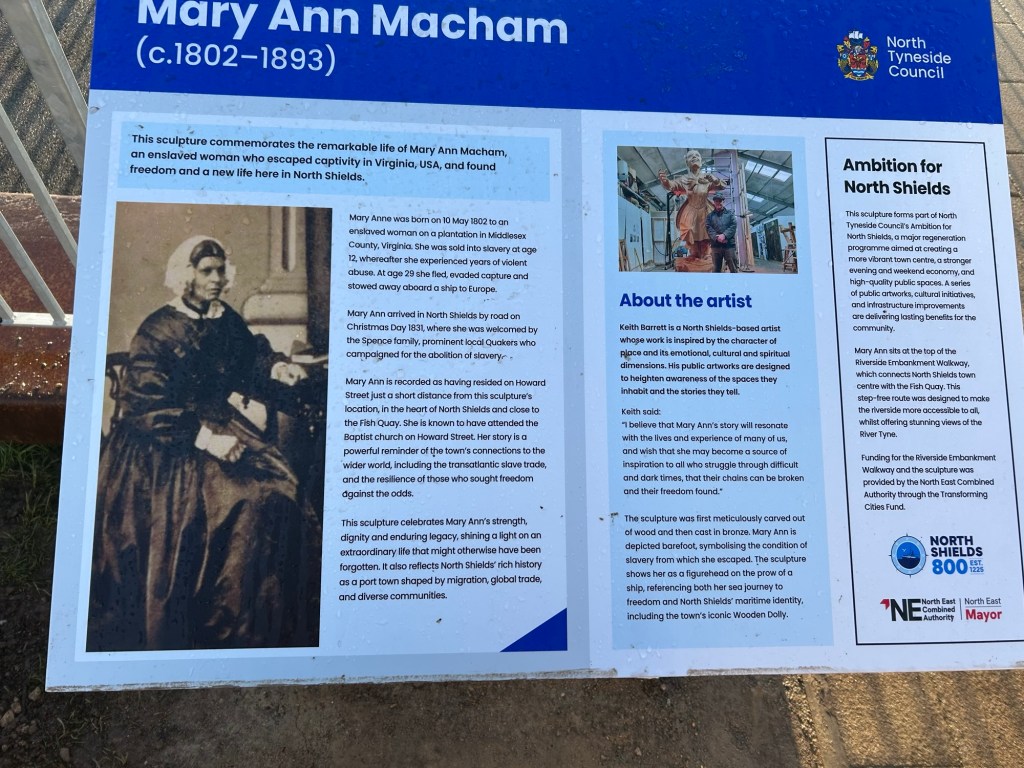
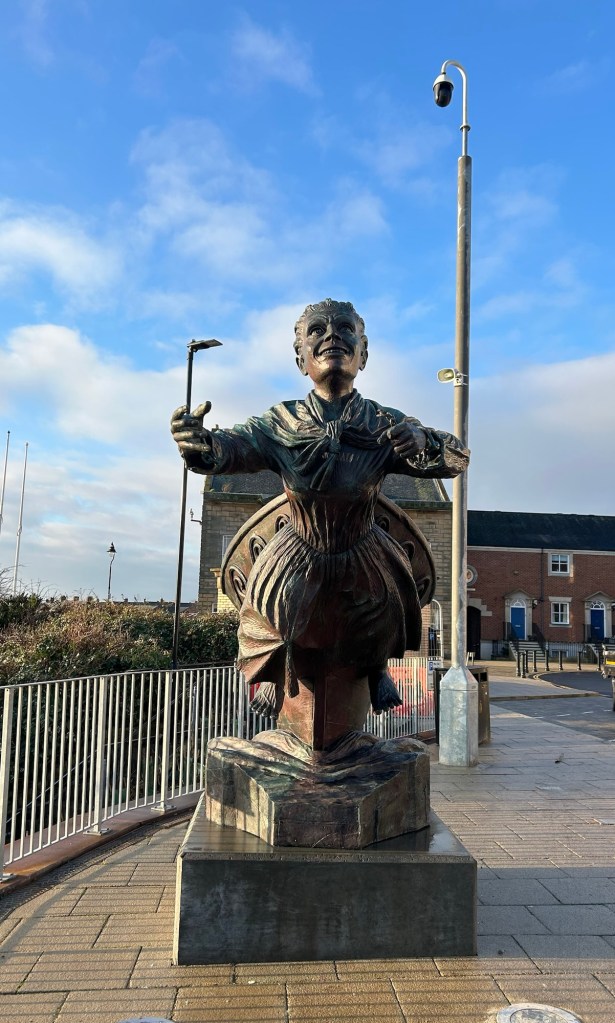
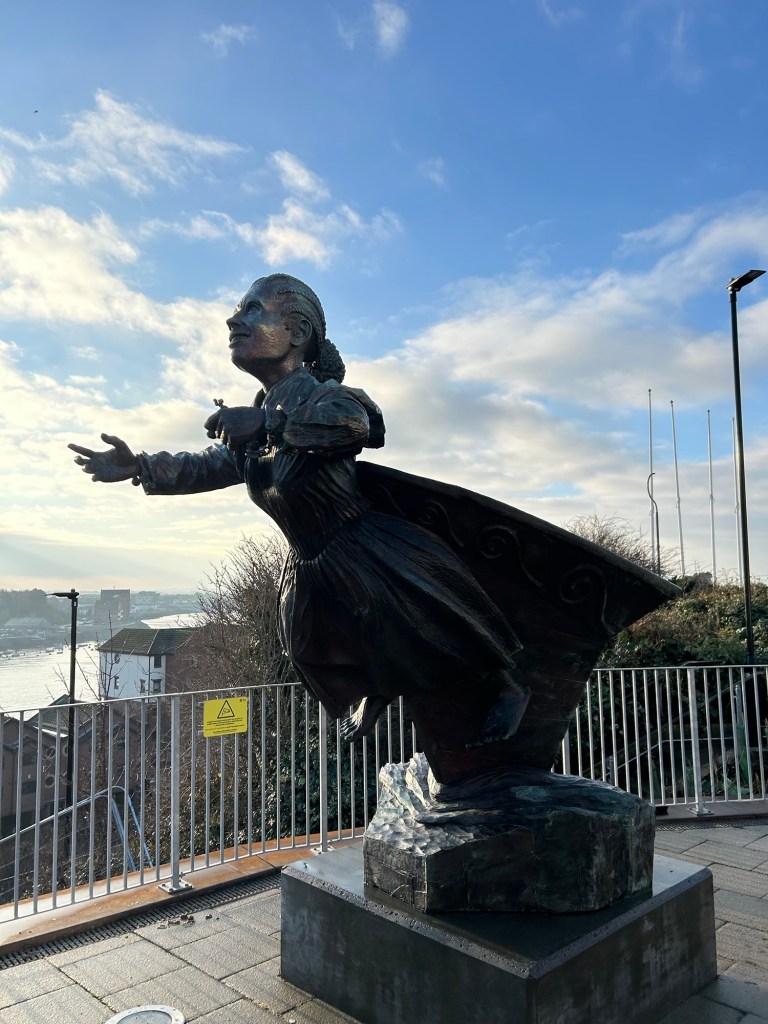
Walking into North Shields the other day, walking towards the Fish Quay where there is now accessible access connecting the centre of town down to the River Tyne, I caught sight of this sculpture of Mary Ann Macham.
I first learned about Mary Ann in 2007, when I was researching the North-East’s involvement in the transatlantic slave trade to mark the bicentenary of its abolition.
I was writer in residence within the Literary and Philosophical society, researching their tracts and unearthing the names and lives of the once enslaved people who passed through and/or settled here.
I wrote a poem about Mary Ann, her escape and travel up to the North, and with the help of the Quakers, made a life for herself through working in service and getting married and living in North Shields. This was back in 1831 when she arrived here and lived for a further 60+ years as a free woman.
An aside here is how the Quakers at the forefront of the abolition movement here in the North- East, were against the slave trade and worked for the abolition but still held the racist beliefs of the day that white people were still superior to black people.
Mary Ann Macham told her story to a member of the Spence family, who she was in service to. There’s a lot that can be argued about the practice of black people, telling their stories to white people who wrote them down and how accurate these are as a true representation of their stories. But this is all we have now as ‘evidence’.
African Lives in Northern England completed research on Mary Ann Macham before this public statue and the local groups ‘found’ her.
I should be grateful and overjoyed that finally Mary Ann Macham is being remembered. That there is a public statue dedicated to her and that she is being reclaimed as part of the local community.
But something just doesn’t sit well with me. Maybe I’m being far too critical. Or maybe I’m just coming at it from a black woman’s point of view living within white supremacy culture?
The press releases for this unveiling of the statue in November 2025, proceed to paint the impression that Mary Ann Macham has just been discovered. That this was hidden history that the locals have just uncovered and became fascinated with and had to find out more about. But unknown to whom?
If they had done their research they would have seen and also acknowledged the work completed in the past to shine a light on Mary Ann. But the story goes that they have just discovered her story. Or decided to just focused on only part of her story/life? Mary Ann Macham ( later Blyth through marriage lived until she was 92 years old).
The local Sculptor Keith Barratt who created the piece has said to the local media that he wanted this sculpture to show that “she came from a place of great pain, but it’s also a story of human liberation, of breaking the chains and I feel that this is something universal that many people will understand”.
I suppose I have issue with how Mary Ann is framed within the story of her own life, which she doesn’t have control over maybe a bit then but definitely not now with how she is remembered.
I Love North Shields has more details about her life and attempts to create a bigger picture of her life before enslavement and after as a free woman living her life here in the north east. But frequently it has to be argued, the majority of time, Mary Ann is trapped within the ‘slave’ narrative perpetuated by white people. Although seeing her as ‘brave’ for plotting her escape, they still frame Mary Ann, tell her story within the role of once enslaved, and needing the help and support of kind Quakers. Sounds a lot like white saviorism. Then and now.
It’s almost like Mary Ann is stuck, encased in bronze, and barefoot to symbolise the condition of slavery. Enslavement she escaped from physically during her life, but trapped forever within this role in memorial because the white imagination cannot see/ grant Mary Ann her full humanity . The fullness of her life.
Time and time again, the mainstream constructs the stories they want to shed a light on and tell about people of the global majority which suits the narratives they’ve been running for centuries. The narratives where we don’t have agency or self-definition but are the objects, less than and victims. This is a means of control and domination.
This is why it’s important that we take every opportunity to tell our own stories. To control our own narratives. To leave these as archives for the people that come after we so they can be in no doubt that we lived big, beautiful, full lives on our own terms.
And is it me, or does the statue of Mary Ann Macham make her look like she’s white?