This is one of my favourite images from my extensive collection.
I know exactly when and where it was taken. Westfjords Residency, Iceland, Feb/March 2017.
This was my go to breakfast. Coffee, cornflakes and Skyr, Icelandic protein enriched yogurt. I love the colours, the composition. The items included. But most of all, I love the memories and feelings just looking at this image evokes.
It takes me back to that time of wonder and discovery during my second time to Iceland. A residency I gifted to myself, writing the application while teaching temporally; frustrated, longing to get out and create.
I stayed for two weeks in the shadows of the mountains, knee deep in snow most days until the thaw came with some greening of the landscape.
I didn’t know what the fuck I was doing there back then. I just knew in my body that I needed to get away, gain inspiration from the landscape and {BE}.
I might not have completed much when I was out there, but I know when I returned the experience shifted my creativity and how I saw myself as a creative.
I saw glimmers of the Northern Lights during this retreat. Pale creamy wisps and trails in a dark navy sky. It was magical and a mystery.
This makes me think about my art-making practice and how most of the time I’m working in the dark, moving out of my comfort zone into the unknown, looking and listening hoping to catch a glimpses of magic and mystery in the process.
What’s created on the page, like this photography, is an archive, a record which when looked upon brings to the surface all the memories and feelings of the process, the experience once again experienced to the full with wonder and a smile.
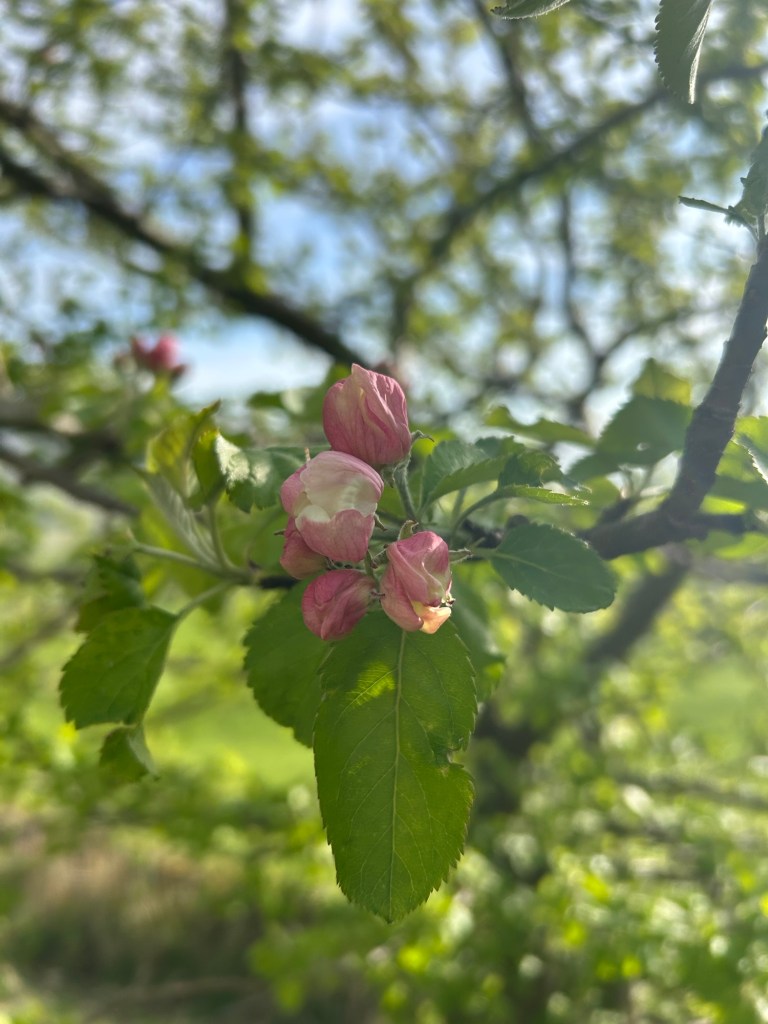
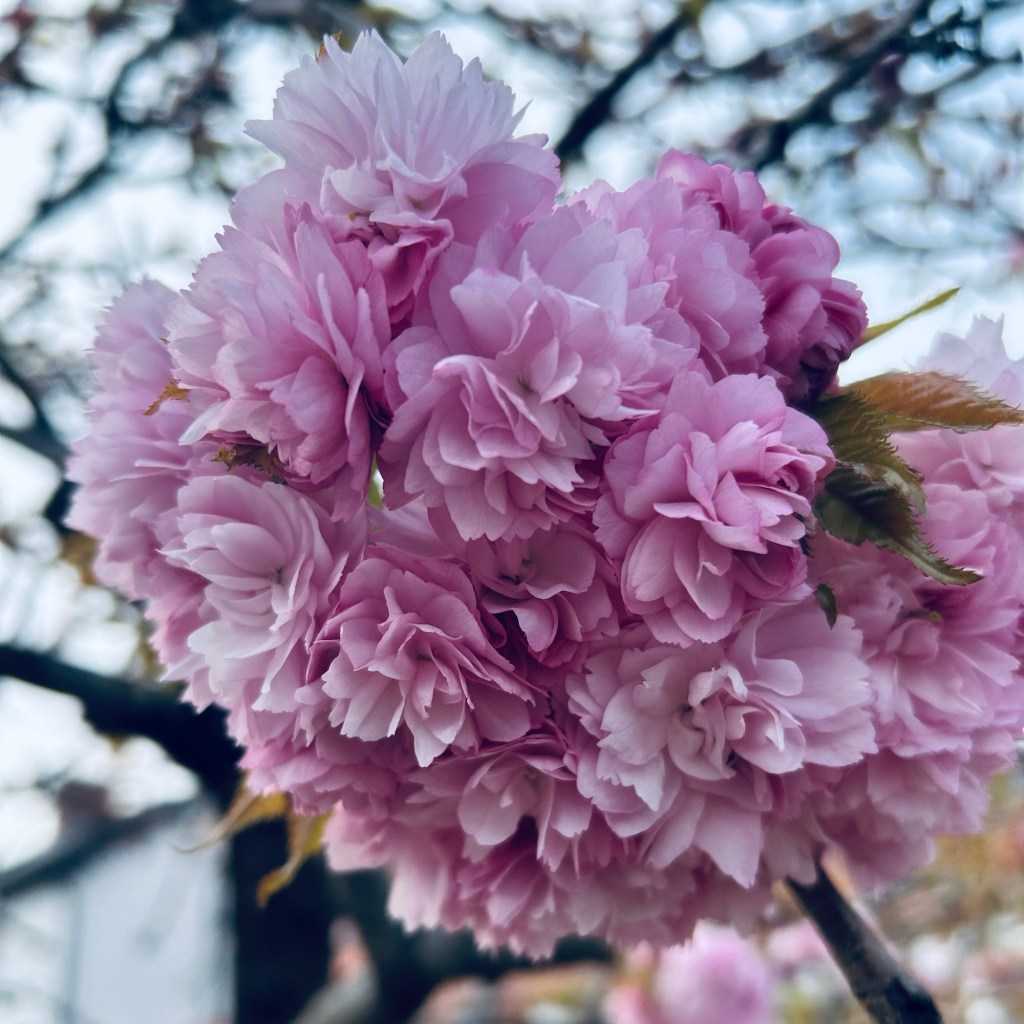
Blink twice and I miss you. Not wanting to make this mistake again, I watch for your arrival. Then once here, bask in your delicate beauty. Each bursting cluster unique. Soft and curled petals, blush and flush, fuchsia, rose, and pink.
I pray for the wind to stay away, to go away as with each gust you are forced to separate from your centre pistil and disperse like confetti. Floating upon the air to land anywhere. And then it’s over for another year. Short-lived gone in the wind.
2.
Each year you return with an open palm, gentle and vulnerable. I see you watching me. I wait for my time. I put on a display of tight fisted pink buds as a promise. A promise that soon comes. To blaze in my glory is a gift I cherish. As soon gone. Drifting off in the wind to become more in time.
Describe your most ideal day from beginning to end.
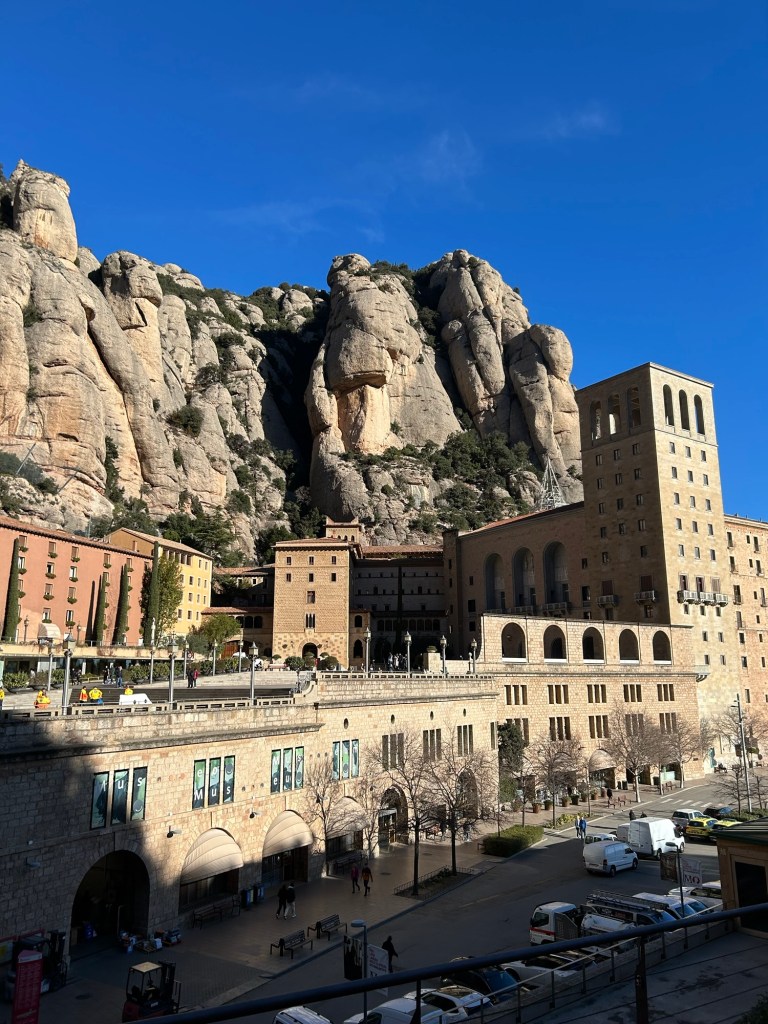
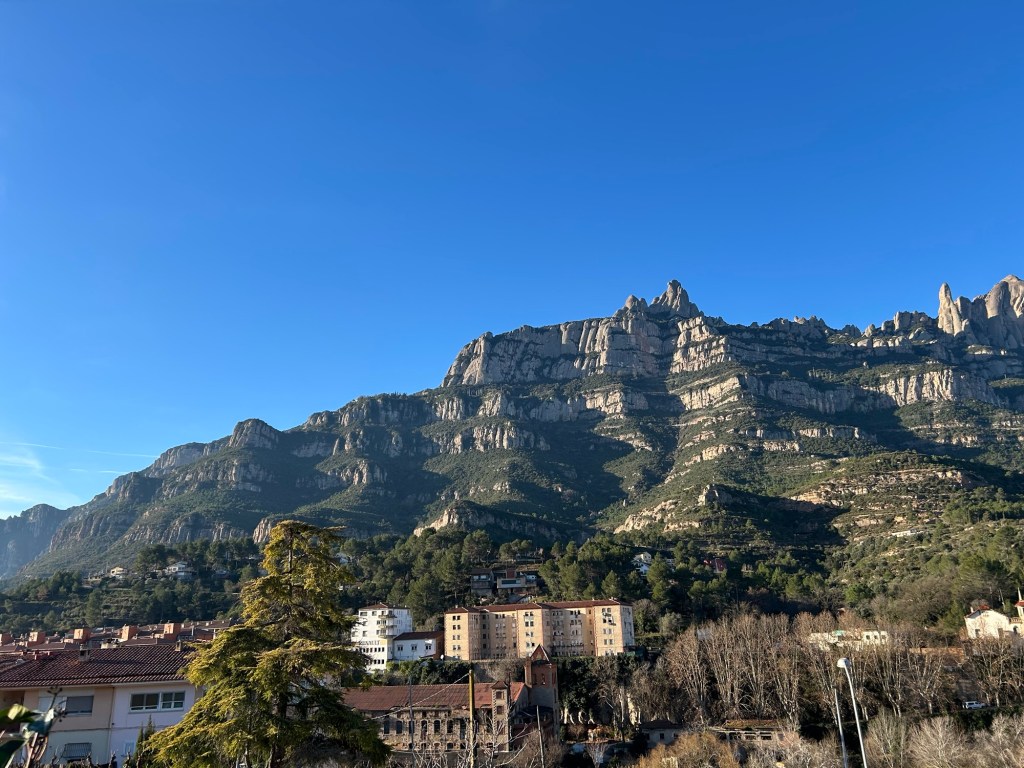
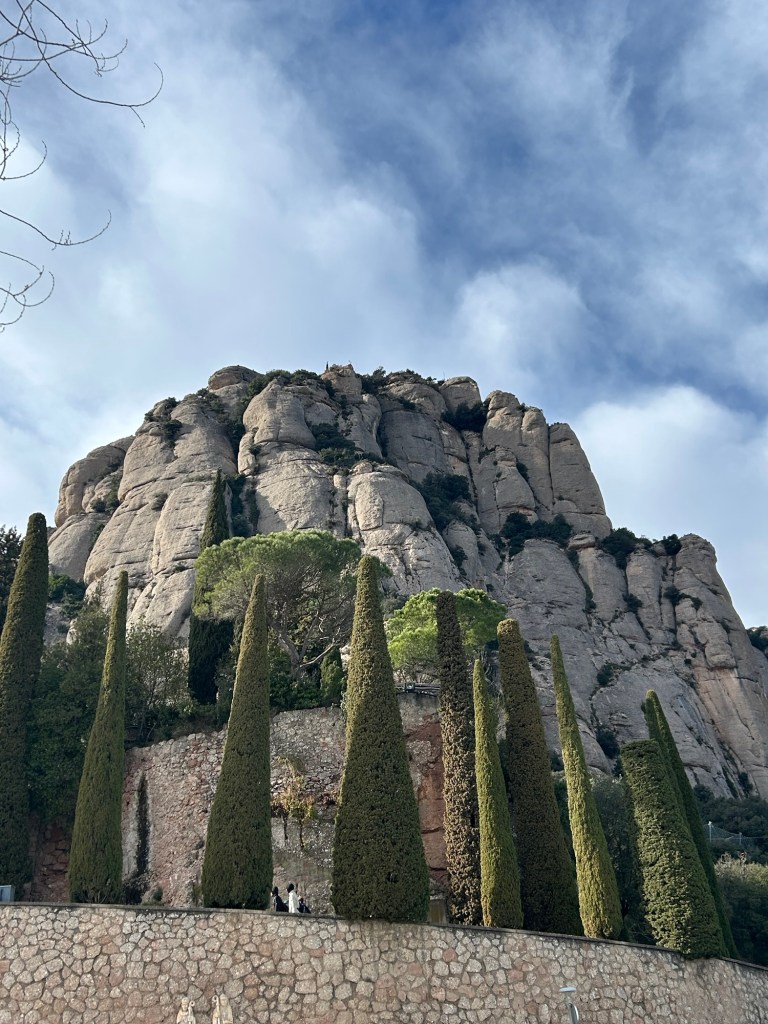
A week ago today, I took the journey back to Montserrat. I first visited this multi-peaked mountain range, home of a Benedictine monk monastery, back in 2007 maybe. Then, I was staying in El Bruc, a small village at the base of the mountains, at the artists retreat, Can Serrat, for a month. A bunch of us from the retreat decided one day to climb the mountain range to reach the top, the monastery. To see the Black Madonna we had heard of.
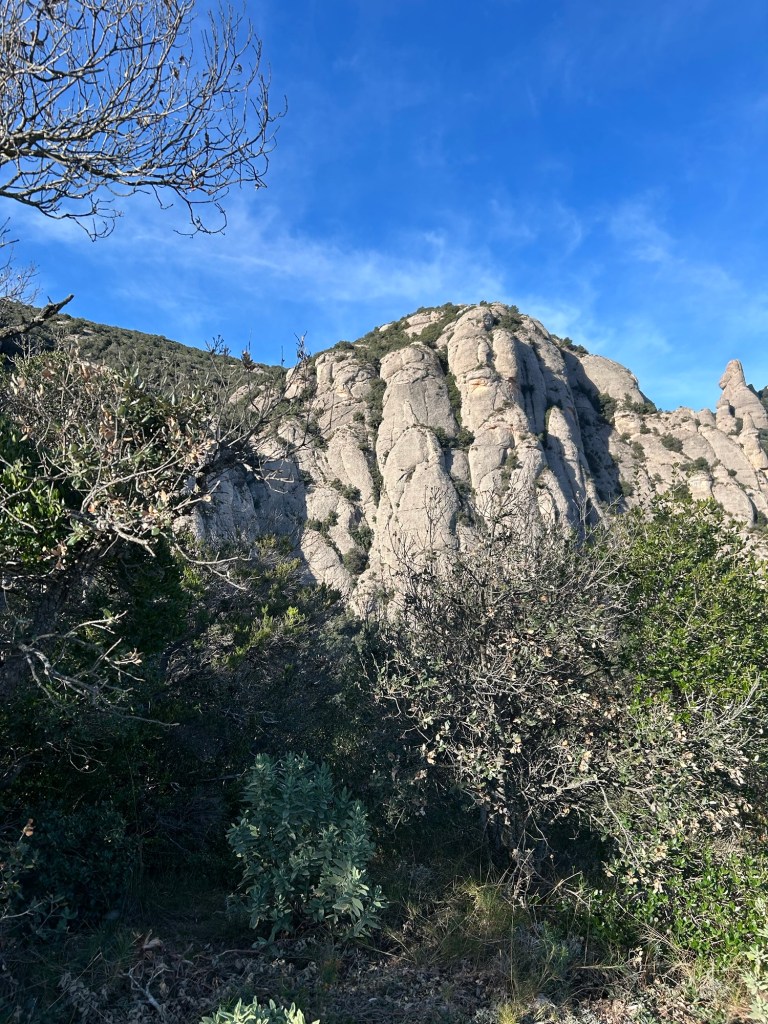
It was hard going. Taking hours, at times using my hands, feet, knees, elbows to reach the top, climbing sheer rock face and rambling through the forests of the National Park.
I was always behind, at the back of the group. Moving slowly, holding everyone up. They kept stopping to wait for me. I told them not to but they said they had to. That they couldn’t leave me alone on the woods. Not knowing where to go, which path to take.
I didn’t ask for their help. They it took upon themselves to be responsible for me. And they resented me for it. Once we reached the top, and entered the Basilica, they all climbed up further steps to go see and touch the Black Madonna. I didn’t go up. I saw her from afar. I denied myself the opportunity to be with her because I was tired. I was also ashamed for moving so slow. For not being as fit as the others in the group. I was upset because my body let me down but also that these strangers had made me feel like shit for being me. For being a fat Black body who wasn’t good enough. I allowed them to take away my joy and self-worth all because I was unfit and slowed them down. But I didn’t ask them to wait on me or look out for me. I wasn’t a child but they seemed to think it was okay to treat me as such. And I allowed them to.
Fast forward to last week, the end of January 2025 and I return to Montserrat. This time I get up early, to catch the special train to Montserrat from the centre of Barcelona. It’s an hour ride on a commuter train heading north out of Barcelona. The train is packed and I’ve overheating with my two coats on, thinking it would be cold in Barcelona in January. I was wrong. The temperatures were glorious. Winter sun has a way of easing the bones, warming the flesh and making everything fluid and relaxed.
The further we moved out of the city centre, the more the train emptied. Until we were moving within the shadow of mountains and trees. The train can let you off at two stops for Montserrat. The first stop is for the airlift up the mountain which takes 4 minutes. The second stop is to catch the slower train up the mountain. 15 minutes of a steep, slow winding climb. I took the second stop as I was in no rush.
Even on the return to Montserrat, I chose once again to make slow progress. Taking my time to reach the final destination. Yes my body is older this time. I’m probably even fatter but I knew I wasn’t going to allow anyone else to dictate my process or to take away my joy.
Once I reached the top of Montserrat, well not really the top, the main station/ base where the shops and cafes are, I popped into the information centre there in the hope of getting a funicular further up the mountain. It wasn’t working this day but I could walk up an easy path to the top if I wanted.
I enquired about purchasing a ticket to get into the Basilica and to visit the Black Madonna this time also. If I could wait till 1.15pm I could see her as well as listen to the choir sing at 1pm for a little extra cost. Of course I wanted to experience it all. So with ticket bought and time to kill, I took my body further up the mountain.
A steep mountain track hugging the rock face took me further and further into the more or less cloudless sky. And I was just breathing in the tranquility and gratitude to be able to make this journey and relive a piece of my past but on my own terms.
There were other people here but it didn’t bother me as I was in my own little bubble of joy, soaking up the sun, the smells of cypress trees and elders and then there were the bells.
Once back down, I grabbed a coffee and just sat outside and watched people go by. My excitement was building, as after years of waiting, I was finally going to see the Black Madonna of Montserrat up close.
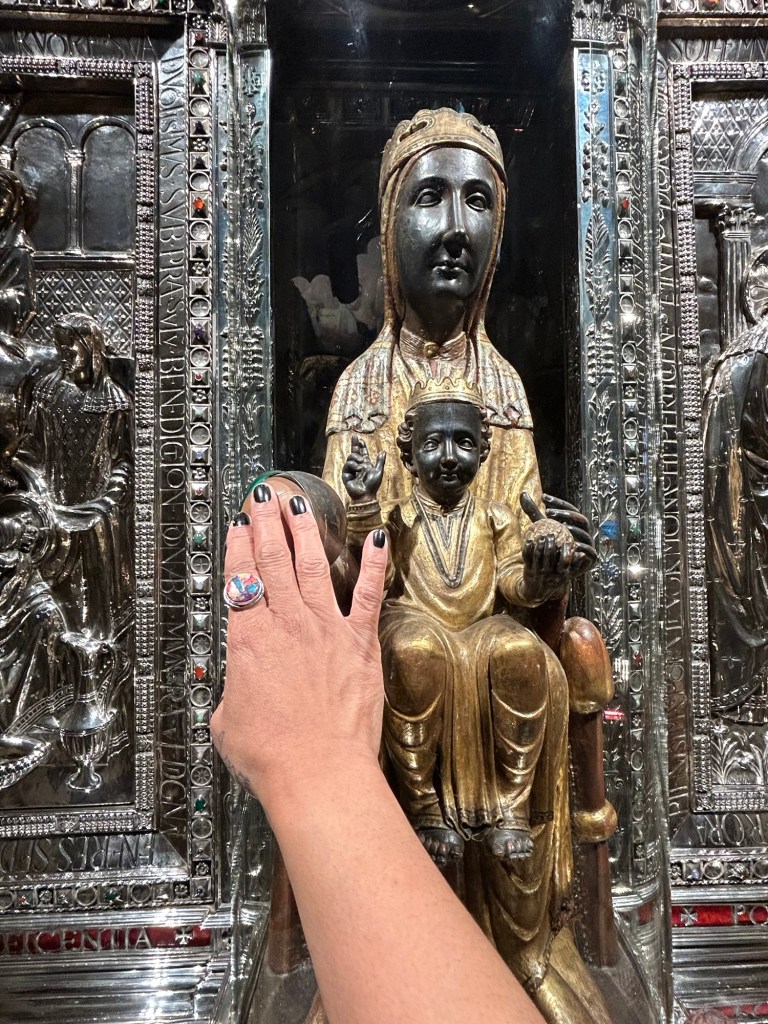
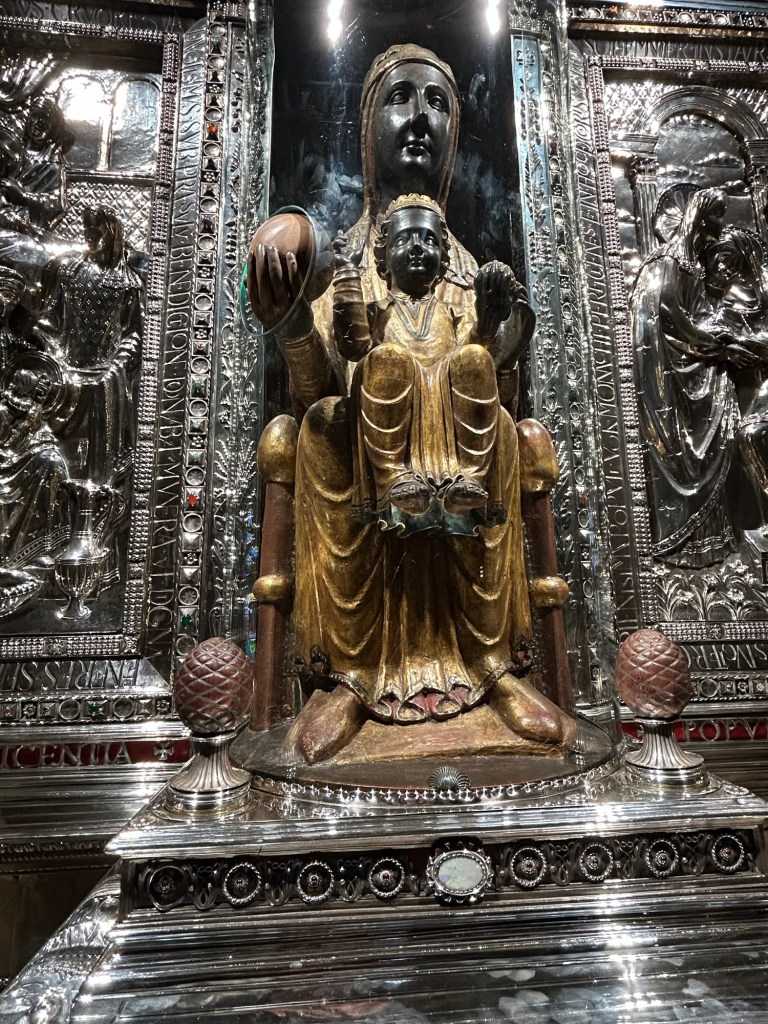
The Black Madonna is sometimes referred to by other names, including ‘The Virgin of Montserrat’ and ‘La Moreneta’, sits behind a sheet of glass high above overlooking the alter. One hand holding a sphere is not behind the glass. Her hand sticks though the glass and is available to touch or kiss if you so wish.
Along a corridor and up some steps and then some more to finally come to the chamber where the Black Madonna sits. You proceed in a line past her. Each of us has an opportunity to stop in front of her. To touch her. To pray. I gave thanks to her. And immediately teared up to be with her. To be this close to her. To be able to touch her. I didn’t ask for anything as she is known for granted miracles. I was just happy and grateful to be in her presence.
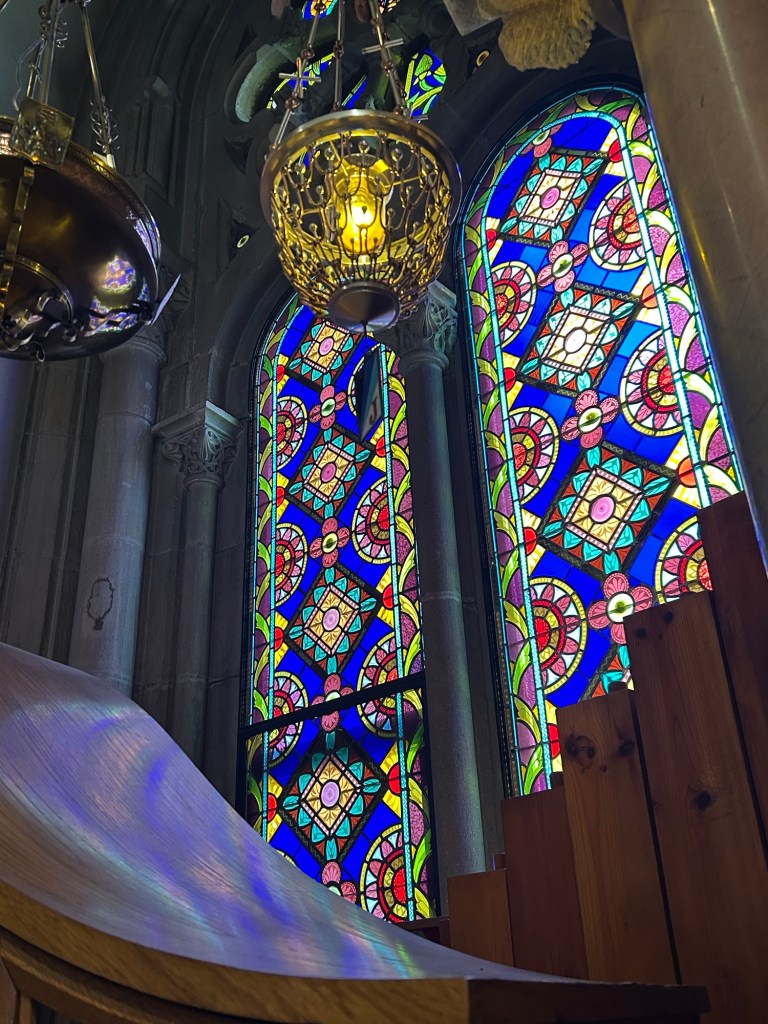
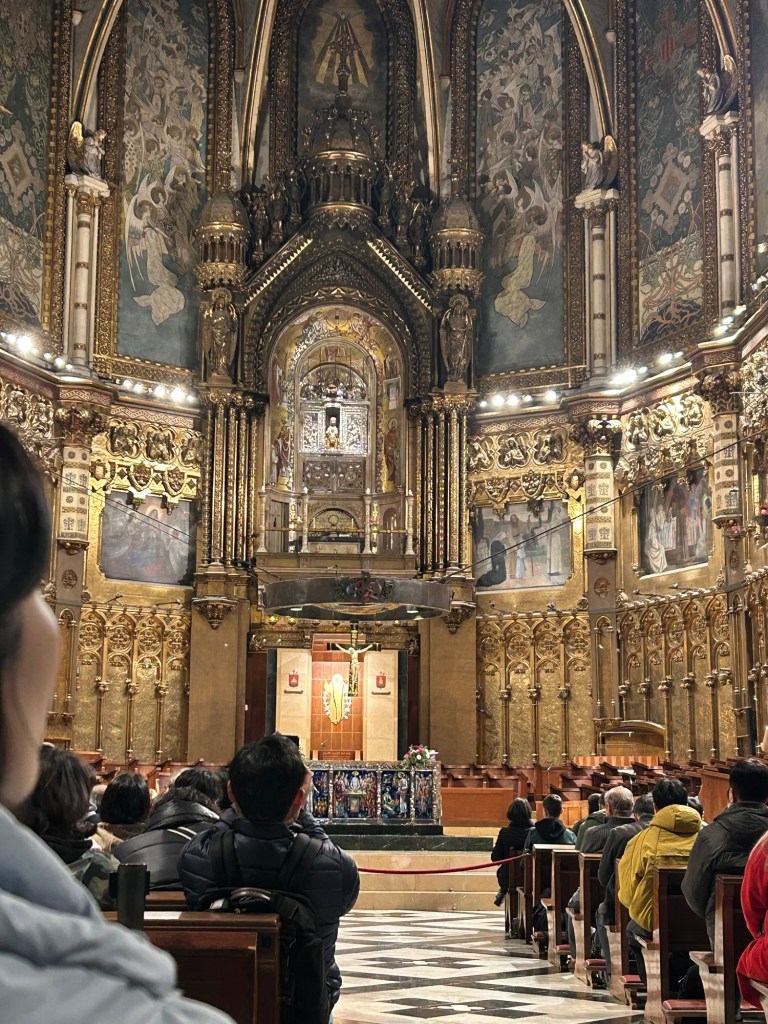
I journeyed back down to take my seat within the Basilica to then heat the choir song. All the time I can see the Virgin high above the altar looking down on us.
The Choir @ Montserrat
The choir sang for about 15 minutes and gave the congregation a blessing. I’m not religious. I’m spiritual. But I could appreciate the feelings that arose to be within such a remarkable place and to hear such angelic voices rising within the space and vibrating back into my body. Again another emotional moment.
Once the choir retreated. I got myself back into the queue to visit the Black Madonna once again. I was all about getting my money’s worth! No not really, I wanted to say goodbye and just see her up close once again. And as I say, I’m not religious. And I’m not praying or idolising over false idols.
What I see in the Black Madonna is a Black woman. I see myself. I connect with her as she can relate to my suffering. To my body and soul. And I just want to give thanks to her for being there for me at all times. She takes my woes and my joys. She just reflects back to me that we, as Black women, are enough just as we are. No one else needs to bestow any value on us. We see ourselves and we love ourselves. Just the way we are.
After touching her one more time. I walked back into the sun and climbed a steep path up the other side of the mountain, not ready to leave this peaceful sanctuary. A tremendous amount of peace had descended on me during my time within Montserrat and I wanted to carry it with me as I left. Moving became effortless. My heart was light and full of gratitude.
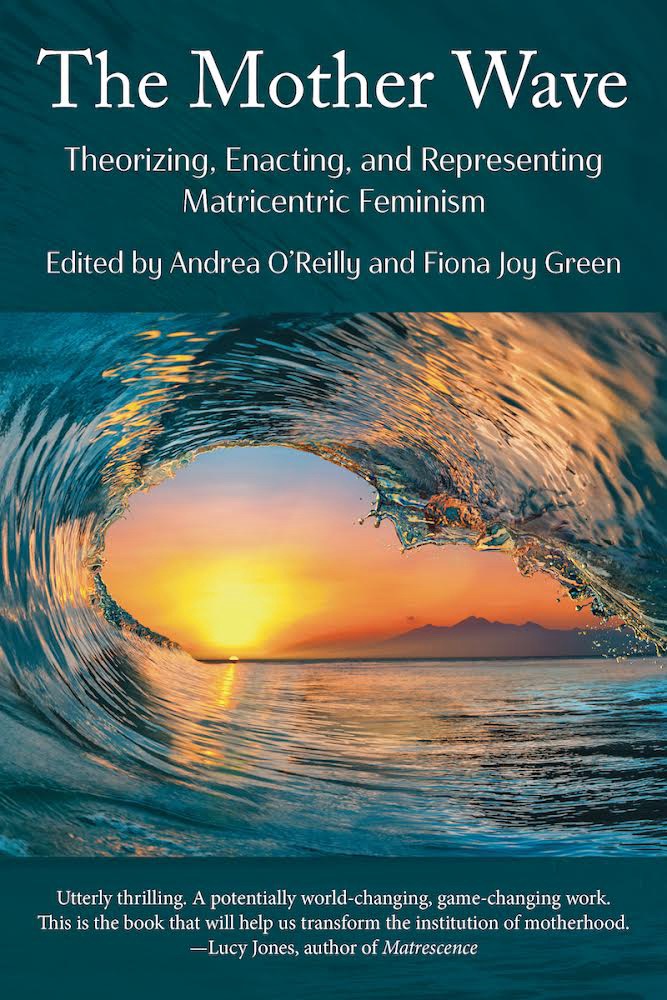
Utterly thrilling. A potentially world-changing, game-changing work. This is the book that will help us transform the institution of motherhood.
– Lucy Jones, author of Matrescence
The Mother Wave offers a welcome critical perspective on the liberal feminist orientation toward gender equality by showing how the focus on equality does not remedy patriarchal systems of oppression that continue to challenge women’s lives, nor does it account for the emancipatory potential in mothering experiences and the affirmation that diversely situated women continue to find in motherhood.
Foregrounding the lived experience of women and others who do the work of maternal care, the contributors make a strong case for matricentric feminism as a new framework: one that treats the maternal as an issue of both biological difference and a set of complex social identities. Informed by the African American feminist commitment to the epistemological importance of lived experience, on the one hand, and third-wave feminist commitment to intersectionality on the other, the collection claims and demonstrates through multidisciplinary analyses that maternity matters more than gender.
– Tatjana Takseva, Department of English Language and Literature / Women and Gender Studies Program, Saint Mary’s University
Toppling and recasting the idea of “waves” that, until now, correspond to stale time periods and stages of the feminist movement, The Mother Wave allows us to begin seeing matricentric feminism as a core feminist theory and burgeoning politic. Positioning mothers and motherwork at the center of feminism, and motherhood as perhaps the uniting experience among most women, O’Reilly and Green allow for a new “wave” of feminist scholarship and mother experience to take hold and crest – a matricentric wave. The editors introduce a vast array of scholarship and creative work within this volume that collectively helps us understand both consistent themes and new surges within this subfield of feminist thought and experience.
– Heather Dillaway, Illinois State University.
Matricentric feminism seeks to make motherhood the business of feminism by positioning mothers’ needs and concerns as the starting point for a theory and politic on and for the empowerment of women as mothers. Based on the conviction that mothering is a verb, it understands that becoming and being a mother is not limited to biological mothers or cisgender women but rather to anyone who does the work of mothering as a central part of their life. The Mother Wave, the first-ever book on the topic, compellingly explores how mothers need a matricentric mode of feminism organized from and for their particular identity and work as mothers, and because mothers remain disempowered despite sixty years of feminism. The anthology makes visible the power of matricentric feminism as it is theorized, enacted, and represented to realize and achieve the subversive potential of mothers and their contributions to feminist theory and activism. Contributors share the impact and influence of matricentric feminism on families and children, culture, art/literature, education, public policy, social media, and workplace practices through personal reflections, scholarly essays, memoir, creative non-fiction, poetry, and photography. The mother wave of matricentric feminism invites conversations with others and offers a praxis of feminism that aims to coexist, overlap, and intersect with others.
This is where you’ll find my own chapter called
‘I Am Becoming My Mother: Conjuring Black Motherhood on Our Own Terms’ which is a hybrid piece exploring my matrilineage which I mentioned throughout 2023 here.
Get your copy while you can and support Demeter Press.






 Living Wild Studios