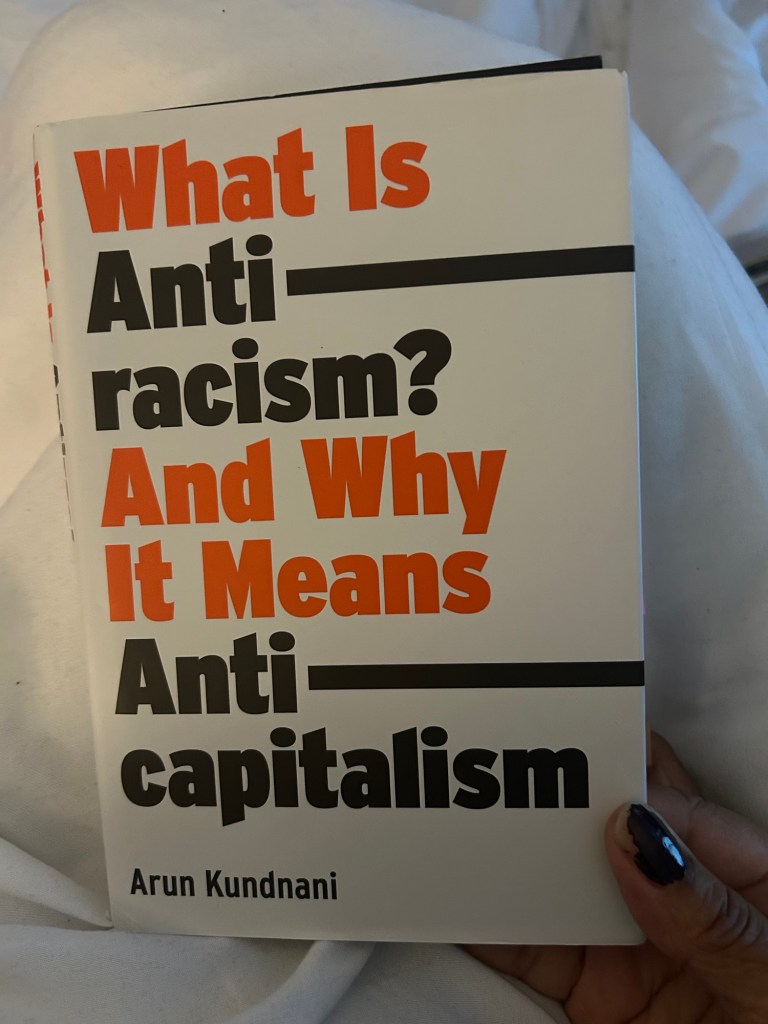
Anti-racism is anti-capitalism

I really appreciate it when you’ve bought a book and are ready to dive into it, but you’re just not feeling it. You can’t get into it. So onto the book shelf it goes, collecting dust. Maybe even taunting you.

And then, over time, into a different time, you pick up said book again and you dive into this time, deeply. It’s singing it’s message through you mind, body and soul.

This practice happened for me with Women Who Run With Wolves by Clarissa Pinkola Estes and here it’s happened again with What is antiracism? by Arun Kundnani.

It’s that time of year again where I’m due to go back into Sunderland University and lecture within the Social Work Department around anti-racism. This started in 2020, in the pandemic and the Black Lives Matter uprisings around the world. Up until this point there had been no addressing of race and racism within social work training. And you could still say this is the case as one session, 2-3 hours long, is hardly making a dent into racism and its consequences. But I digress.

Anyway each year, my thinking and practices have changed as I’ve read more and developed more as an anti-racist, anti-capitalist agitator, organiser and activist.

I share my learnings and findings as I want to bring about change for everyone. And this transformation can’t be just limited to working on a personal level as the usual anti-racism training/ education would have us believe.

The problem is not just on an individual level, our unconscious biases etc, the problems are structural and are engrained into the bedrock of our societies, countries and communities.

Anyhow, this book What is antiracism? is not only giving me the historical evidence of racism, the term and practices, but is also sharpening my argument around how racism and classism go hand in hand and that you cannot have a revolution without black workers leading the way. As black workers have always fought for freedom and the dismantling of capitalism for everyone, not just for (white) workers as the revolutions within Europe have done.

We have the French Revolution in the 1700s, lead by the urban masses. We have the Russian Revolution lead by the vanguard party for the proletariat. But we have the Saint-Domingue Revolution in the 1700s lead by the enslaved for abolition of all enslavement in the colonies and Europe, in tandem with the French Revolution happening in Paris. The first time that black and white workers were fighting a common cause together on this scale.

Which revolution succeeded?

The revolution lead by the enslaved, black forced labour, which created the sovereign state of Haiti, a black revolution which had at its heart radical action to transform all societies.

This is what we need now.
Poem A Day – Reflections

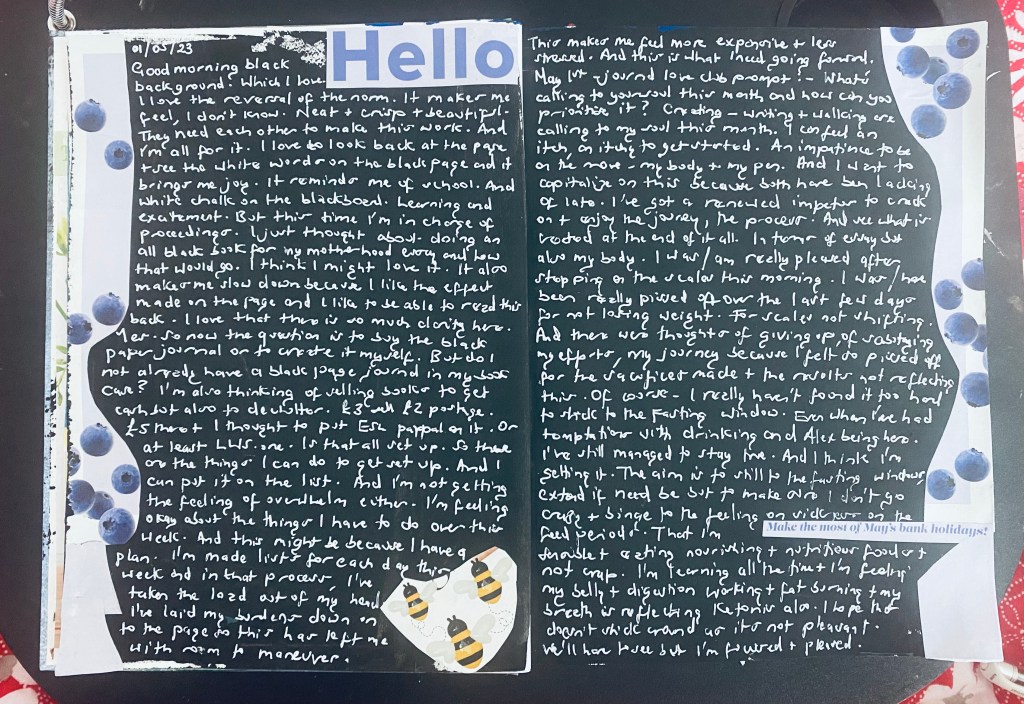
New Visual Journal for May

April was National Poetry Month in the States. I attempted to complete and share a poem a day for the month.

On the whole, I just missed a few days towards the end of the month. Things went a bit off the boil, when things got a bit busy. What with birthday celebrations and friends visiting, my attentions were distracted and my energy levels were depleted.

But hey 20+ new poems which didn’t exist before this month is always a win in my book. I feel when I do these challenges, what I produce is hit and miss. Because of the necessity of creating something everyday, the time needed to go deep into a subject or issue is lacking. Surface shenanigans are usually the case.

Speed is needed rather than depth. But now, as May rolls along there is time to revisit and redraft and build upon what is already there.

It’s time to slow down the poetry creation process and spend some quality time going deep. Do some more research, collect some more stories and facts as inspiration and see what happens from there. Let the poems sit and fester and start to speak for themselves.

My poetry writing muscles have been flexed and they’re primed to continue lifting heavier weights of meaning and impact now.

I’m looking forward to see which pieces develop, which ones will fall by the way side and which ones will become pure steel.

PAD/019 – i am becoming my mother

Commentary: years ago I wrote a poem titled ‘ i am becoming my mother’. I think it’s in my first full collection Family Album, Flambard Press 2011.

A few weeks ago while attending one of my late night across the Atlantic poetry group workshops, I had an inkling to revisit this poem with the intention of bringing it up to date. To try and incorporate all the ‘Sherees’ that have developed, spored since the first poem, since my mum’s death and teachings have passed into decades gone by.

So I created this piece. Same title but definitely more expansive.

i am becoming my mother

Dehumanising the Black woman. Mammy, Jezebel, Sapphire, Bitch.

The black woman is seen as one dimensional; the mule of the world, carrying the heavy burden of mothering all others except her own.

Her own children are lost; lost to the auction block, the ocean, the noose.

A Black woman is a source of strength and love. Passing on power as well as pain.

Her body carries stories, carries histories, carries an archive.

as a black woman,

resting deep within the meadow,

held in softness,

grass tickling shins,

dress billowing about

like blossom,

is a political act.

PAD/011 – Carnival, 1976

Each August Bank Holiday weekend,

Notting Hill’s West Indian community 

celebrates Caribbean culture. Calypso.

Crates of records. Stacks of speakers. 

Reggae, ska, groove, and samba 

vibrations of Carnival.

Mid parade, sweaty bodies wining

bodies growing, red stripe flowing. 

Pure joy seen as suspicious. 

The boys in blue are sent in, in force.

Black batons meet black arms, legs and heads.

Slicing through bodies like cutlass through cane. 

Cutdown revellers hauled into hospital 

or prison cells. Carnival; a unique

expression of love of self, freedom 

and resistance. Therefore it’s spirit

has to be demonised and destroyed.

PAD/007 – History Repeating Itself

“There can be no repetition because the essence of that expression is insistence, and if you insist you must each time use emphasis and if you use emphasis it is not possible while anybody is alive that they should use exactly the same emphasis.”

“That is what makes life that the insistence is different, no matter how often you tell the same story if there is anything alive in the telling the emphasis is different.”

Gertrude Stein—from “Portraits and Repetition”

the sky feeds us continuous greys and harsh words from ugly white mouths, and yet we enter the frame

clasped hands in lap or right hand on chest, like in allegiance, mouth forced upwards as best clothes stiffen backs and resolve;

a practised pose, easy to send back home as proof of promises made good, mother country come good, it’s expected

the camera will point and lie for generations; the flash will blind us, to our naivety, to their hate and ungratefulness

PAD/ 004 – We are here, because you were there

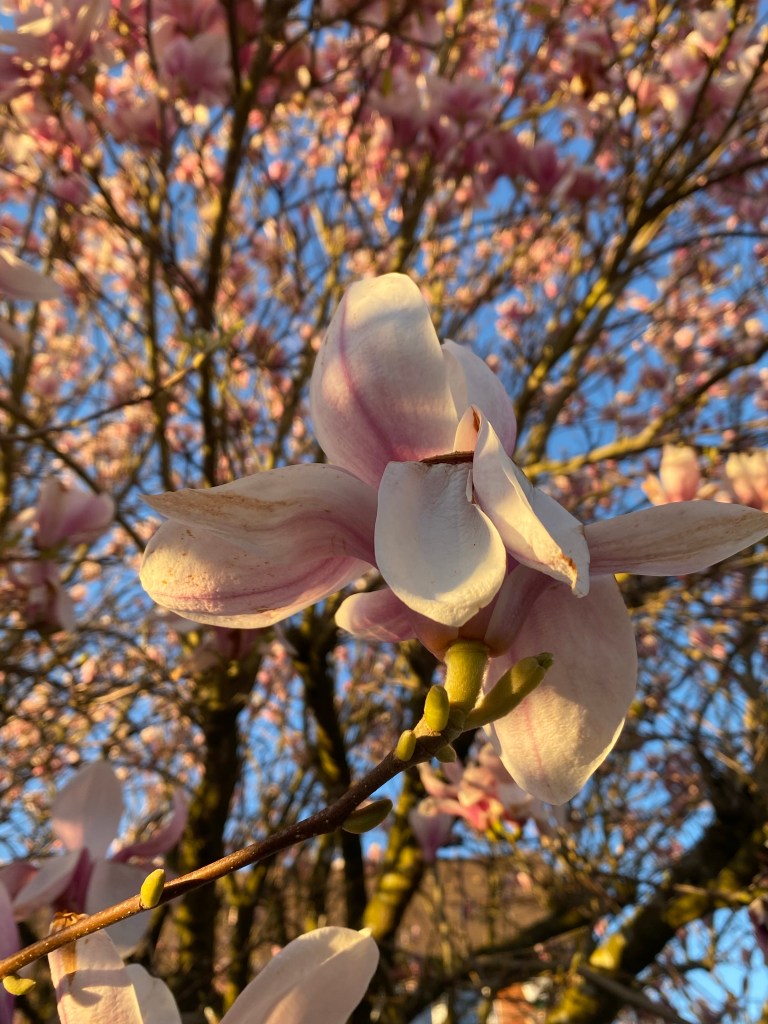
Magnolia Tree

In pursuance of the powers vested in me by section 32 of the Police Act 1964, I, Right Honourable William Whitelaw, one of Her Majesty’s Principal Secretaries of State, hereby appoint the Right Honourable Lord Scarman to inquire urgently into the serious disorder in Brixton on 10 to 12 April 1981 and to report, with the power to make recommendations. *

Stories keeps being told, this is a tolerant country. It’s official.

Britain is tolerant, fair and just. There isn’t a race problem. Never was.

People who are different are treated the same. Tolerated. As long as they don’t make a difference.

Small minorities are accepted as long as they stay small.

Get to ‘swamping’, and then these minorities become a threat.

They start to threaten the whole fabric of the superior British characteristics.

Tolerance, liberty and civic duty. Values out the window, when the nation’s anxieties are raised.

Fear. And the country’s doors are closed.

The drawbridge raised.

Their shields are driving them back.

* The Brixton Disorders, 10-12 April 1981, Report of an Inquiry, By the Rt. Hon. The Lord Scarman, O.B.E, November 1981

PAD/001 – A Month of Poetry

Happy April. Time for showers, blossom and light. Oh and poetry.

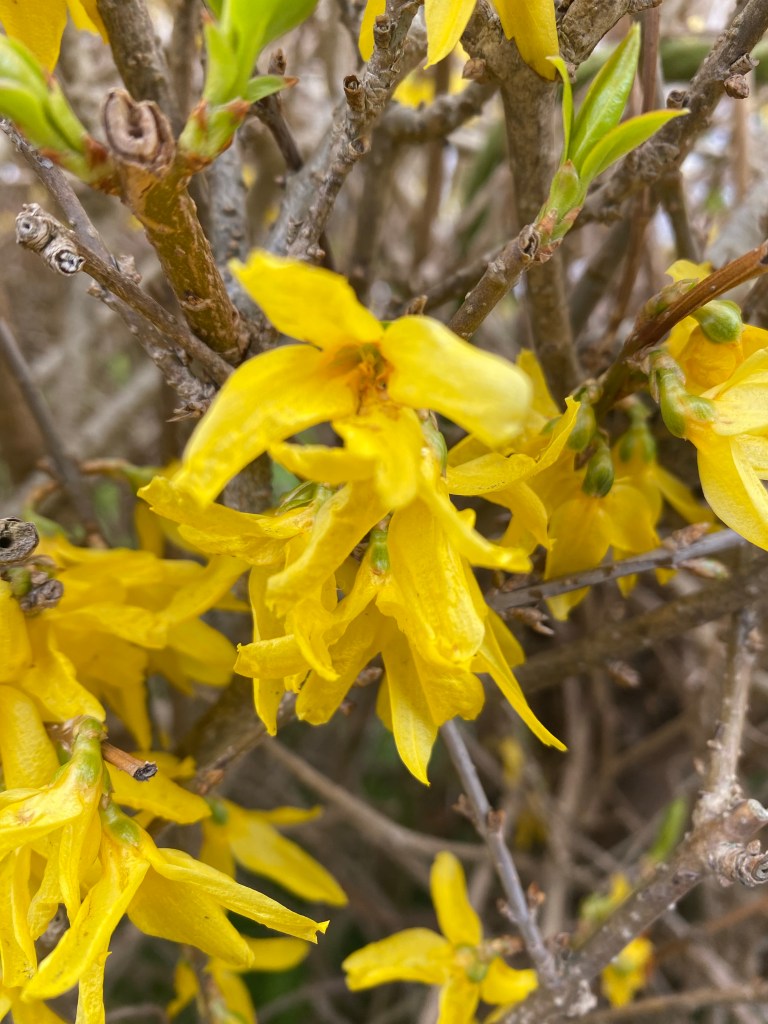
Forsythia

As I mentioned last week, I’m honouring National Poetry Month with the challenge of writing a poem a day.

I’ve set myself this task many times over the years, and I’ve always been amazed at the creations along the way. Poems have emerged onto the page that I didn’t even know were in me and needed expressing.

So today I come to the page with an open heart and a rough idea of the themes or issues I want to explore. But who knows with the creative process. Anything could happen.

Anyway day 1 – PAD/ 001

Trying to understand “the difference between poetry and rhetoric”

After Audre Lorde

The contested site of black settlement in England

is shrouded a heavy fog of amnesia. The wrong colour,

the wrong body, the wrong sound.

Read the history books, you’d think we just landed

the day before last. 400 years of being here, lost

in the mire, weighted down with size 10, Dr. Martens.

Like transplanted birds of paradise, West Indians

struggled to put down roots. Alien soil. On corners,

skylarking and limin’, jobs, homes and a little bit of peace

denied; harsh whispers on the bitterly cold wind.

The contested site of black settlement in England

is captured in stills. Images speak for themselves.

Black faces filling the frame; black blooms pressed

against hothouse glass. But still an absent presence in failed memories.

The Terzanelle – The Gaze

Too often we refuse to gaze
on something unpleasant to see.
Rubs against us all the wrong ways.

I don’t like to see an oak tree,
feel my neck snap. And my heart breaks
when there ‘s something unpleasant to see.

My words, a soundtrack for those taken;
blackmen whipped, flesh-eating scars, pain,
felt my neck snap and my heart broken.

Dead eyes and flashbulb smiles at the slain.
Who wants to look at these photographs?
Black guys, whipped, flesh-eating scars, pain.

Who has to deal with the aftermath
of bodies reshaped by tragedy?
Who wants to look at these photographs?

Callous grins surround,
too often we refuse to look.
Their bodies reshaped by tragedy
rubs us up the wrong way.