Over Here Zine Festival 2025

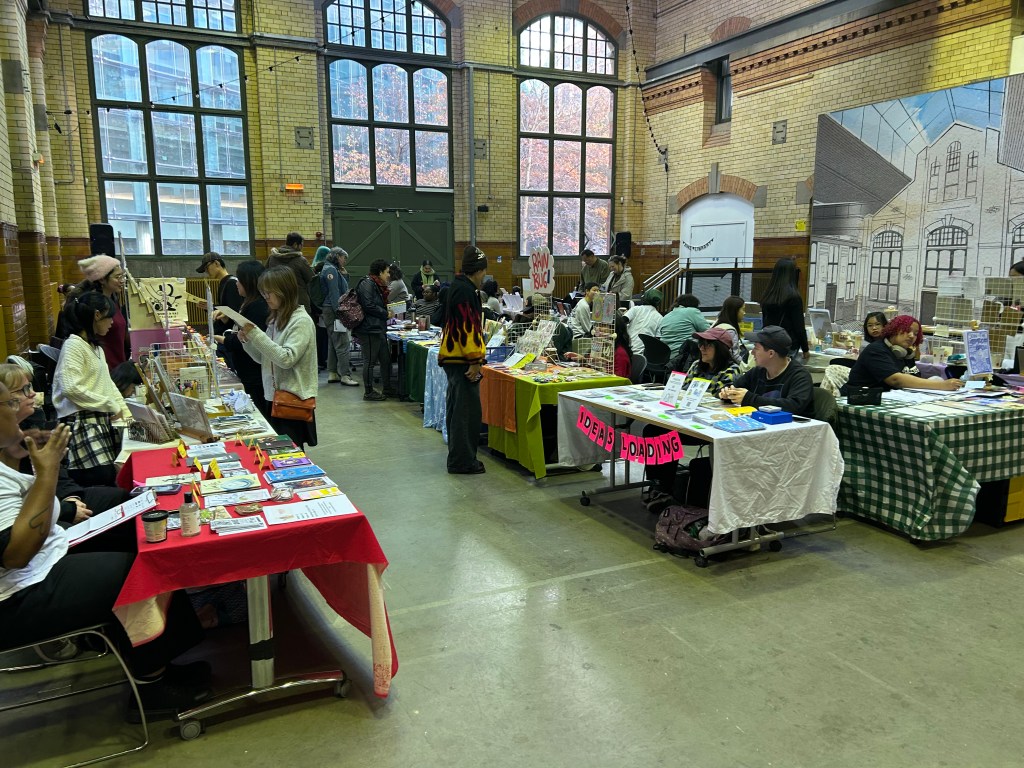
Today, Dal and I were in Manchester as the Over Here Zine Festival again. I think is out third year there together, sharing a table of our creations and laughing far too loud for such a small room in People’s Museum in Manchester.

It was good to be in a space that was created for people of the global majority to share their zines. It’s usually a safe and supportive space. And it still is in some respects. But what is worrying is that more and more white people are infiltrating our safe spaces. I know that white people come in to see and buy our creations. I can this is who we are selling to, while we swap with each other. But at the same time, I noticed white people behind the curtain, on the wrong side of the tables selling zines. But I could be wrong?

An article I read the other year, titled ‘Ontological Expansiveness’ by Chris Corces-Zimmerman, Devon Thomas, Elizabeth A. Collins and Nolan L. Cabrera, where I learnt the language I needed to call out this sense of expansionof white people into black and brown spaces where maybe the ethos and intention is exclusivity.

Ontological Expansiveness is a theoretical framework used under the umbrella of Critical Whiteness Studies (CWS) that was conceptualized by Sullivan (2006) to describe the complex and nuanced relationships that exist among race, Whiteness, and space. Sullivan (2006) argues, “As ontologically expansive, white people tend to act and think as if all spaces – whether geographical, psychical, linguistic, economic, or otherwise – are or should be available to them to move in and out as they wish” (p. 10).

Corces-Zimmerman, Chris & Thomas, Devon & Collins, Elizabeth. (2021). Ontological Expansiveness. 10.1163/9789004444836_058.

I could be wrong, but how is feels to me, and how I’ve been experiencing things, is that white people think and act and move as if they have a right to be in any and all spaces. Sullivan suggests that White people tend to think of themselves as though they are the only people to exist or have worth in the world. Black and brown people just don’t come into the equation. Colonialism is the epitome of ontological expansiveness.

In this example as the zine festival, I’m talking about taking up physical space, but ontological expansiveness also applies to language and who white people claim ownership, through creating definition of what is proper English for example. What’s acceptable is the language and tone and style of whiteness, any other forms of communications are wrong. Yet that doesn’t stop white people wanting to use Ebonics or use the ‘N’ word. And then there’s the appropriate of our cultural practices .

As Sullivan (2006) states, White people frequently act as if, “The appropriate relationship is one of appropriation: taking land, people, and the fruit of others’ labor and creativity as one’s own” (p. 122). Frequently, instances of White people engaging in acts of cultural appropriation represent a fetishizing and exploitation of the language, customs, or practices
of Communities of Color.

Corces-Zimmerman, Chris & Thomas, Devon & Collins, Elizabeth. (2021). Ontological Expansiveness. 10.1163/9789004444836_058.

Of course white privilege is wrapped up in this but it’s not enough to say this privilege needs to be given up or shared. Before anything changes white people need to acknowledge what they are actually doing, but how are they going to do this if they are oblivious to what they are doing?

I invite white people to recognise that they will feel uncomfortable when they do enter spaces that are predominantly non-white and get used to it. As in that discomfort is the seed of change.
Outdoor First Aid Training

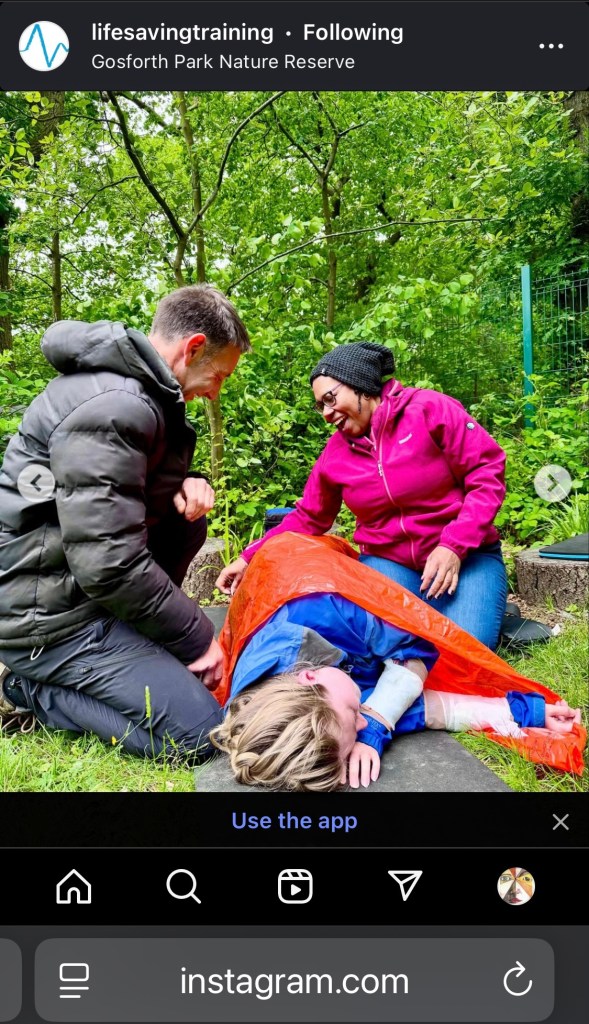
For the last two days I’ve been completing my refresher course in Outdoor First Aid Training.

First completed during the pandemic, my certificate had run out and I needed to retake the course.

It’s simple, First Aid saves lives.

Basic first aid can mean the difference between life and death. A Red Cross survey showed a staggering 59% of deaths from injuries would have beenpreventable had first aid been given before the emergency services arrived.

Sources

Only about 4-5% of the population in the UK are First Aid trained. This for me is not enough people taking responsibility. This for me is not enough people l caring about other people’s well-being. This for me is not enough people demonstrating care in community.

What maddens me further is that women are more likely to not receive life saving first aid because people, usually men, are uncomfortable about exposing women’s breasts in conducting life saving CPR. So more women are dying without receiving first aid because of other people’s embarrassment. Fucking hell. I’m telling you now, if it’s the difference between showing my boobs and being able to live for another day, fucking get my top and bra off as soon as possible and start saving my life. You have my consent now.

I’m now trained up for another 3 years. But I won’t be leaving it there. I’ll make sure I’m refreshing my skills more frequently as well as moving onto an advanced first aid skills training course. I don’t think you can ever be prepared enough for saving a life , as who knows what scenarios will present themselves in real life, but at least I will have the confidence and the know how to try and save a life.

My bedtime lover(s)

A book is much more faithful than a lover I think.

A book can open you up to so many different experiences at the same time as reaffirming everything you’ve been feeling and thinking and struggling with.

I’m not sure a lover can do all that for me. But many more than one lover could?

Hence spending copious amounts of time in bed with books.

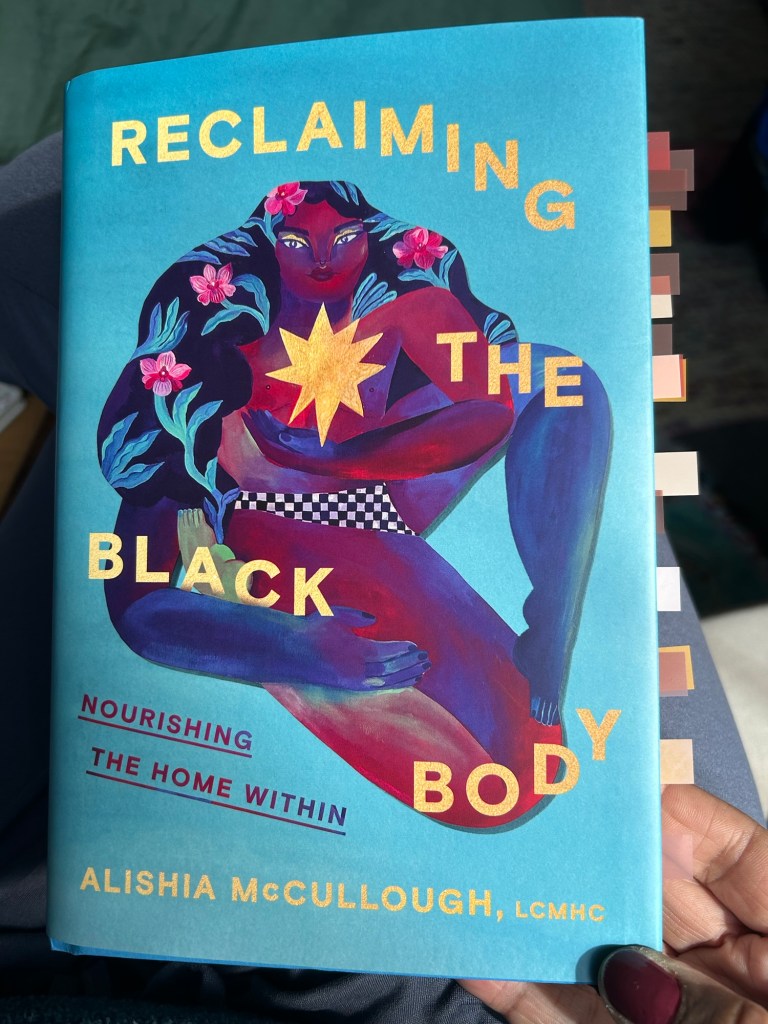
Reclaiming the Black Body: Nourishing the Home Within by Alisha McCullough is one of my current reads.

I used to be of the persuasion to read one book at a time. Devote all my time, focus and attention to one book in order to reap the glory/ knowledge/ whatever!

But these past few years, as I’ve become thirsty for stimulation and attempting to find like-minded people/ theories/ lovers, I’m moved into reading multiple books simultaneously, also known as “syntopical reading”.

And these books are not on the same topic either. They range from poetry around grief, non-fiction on gardening, personal essays around deep time, romantic and crime novels and short stories about myths and history. The list goes on!

I’m so enjoying this eclectic and multiple reading practice as it’s keeping me engaged, creating unique and original connections and it’s keeping me feeling loved.

By me.

So one of my current squeezes is Reclaiming the Black Body and I’m devouring it in small digestible bites because it is speaking to my soul.

This book is calling to attention the deep-seated, long-time, disproportionate amount of trauma, violence, marginalisation, discrimination, and adverse childhood experiences of Black women and femmes, and confounded by misognoir and racism, how we have learned to cope with it all through increased imbalanced eating behaviours.

Usually called “eating disorders” but even using that language implies that the individual is to blame and implying that some of us are just not equipped to nourish our bodies and do not know how to look after ourselves.

‘Disorder’ implies stigma and comes from the Western health ‘care’ system which from time has excluded and harmed Black people.

So this book is a balm for the wounds of silent struggles Black women and femmes have been going through around eating imbalances including myself. And is a vindication that we’re not fucked up and broken and just beasts, being less than human but that we are doing our best with the tools that we have to strive and thrive within a system that is hell-bent, historically and now, to demonise the Black body.

I will continue to cosy up with this book and others in bed, night and day, as reading is hitting the spot!

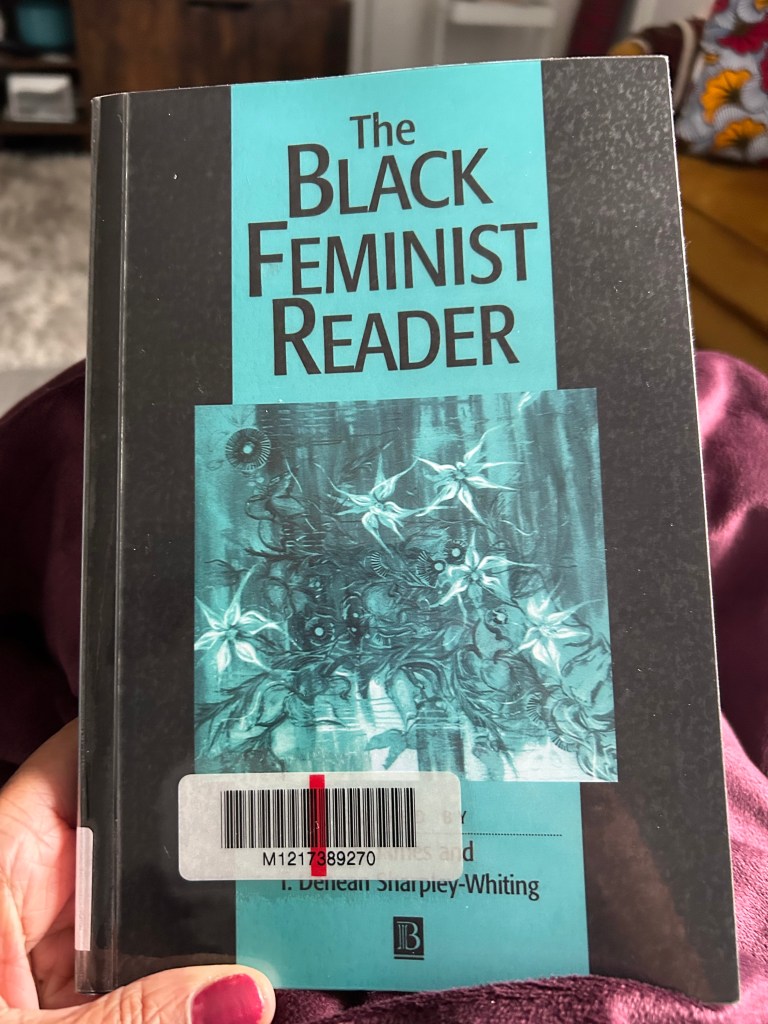
The Black Feminist Reader

I’ve got time on my hands to read. A reading week as we used to say at Uni. Why? Well that’s another story, I’ll tell you at another time, maybe.

For now, I’m getting my teeth into something that will make me feel better, or feel as if I’m getting somewhere with my self-study/permaculture diploma design/ ways of being.

I’m reading The Black Feminist Reader edited by Joy James and T. Denean Sharpley-Whiting. And I’m heartened to read in the first essay in the collection by Barbara Christian, ‘The Race for Theory’, that along with her Black sisters, Christian has not rushed to create abstract theories around how to read Black women writers/ Black women’s literature. The argument goes that there are countless Black women around the world, women colour around the world, and one single set of ideas cannot be applied to such diversity.

As Christian goes on to argue, “There is, therefore, a caution we feel about pronouncing black feminist theory that might be seen as a decisive statement about third world women. This is not to say we are not theorizing. Certainly our literature is an indication of the ways in which our theorizing, of necessity, is based on our multiplicity of experiences.” ( p.20)

Instead of being seduced into the academy, being at the centre, desiring/ claiming what might seem like power within the hierarchy of old traditional departments of knowledge, where the Black female experience is subordinate to others, ” We can pursue ourselves as subjects”. ( p.21)

This is music to my ears as I have always found it difficult to pin down what is Black Feminist Theory. What does it entail? What are the tools of engagement? What methods should be employed to reading Black women writers?

But that’s where I’ve been going wrong, thinking about theory. As for me theory was legitimisation. Writing dies if it’s not being talking about, theorised. But now I understand that :

  1. Theory has been their way, their terms, their approaches ( p. 16)
  2. Theory has been more about how clever the theorist is than about the writing or writer
  3. Theory is prescriptive and it ought to have something to do with practice (p.13)
  4. Theory is about those masters who have long gone and not about the here and now.

And as Christian states, and I totally agree, “But what I write and how I write is done in order to save my own life. And for me I mean that literally. For me literature is a way of knowing that I am not hallucinating, that whatever I feel/ know is.”(p. 21)

So I’m following Christian in my pursuit of what Black Feminism(s) is by having no fixed method of enquiry or even results. My method relates to what I read and the historical context of the writers I read and “to the many critical activities in which I am engaged, which may or not involve writing.” ( p.22)

So there is no set method within Black Feminist Theory and is influenced by practice, no prerequisite of a new theory as every work suggests a new approach, forcing me to think differently.

“As risky as that might seem, it is, I believe, what intelligent means – a tuned sensitivity to that which is alive and therefore cannot be known until it is known.”( p. 22)

Waiting to be allowed in

This piece was written back in 2020 and published on Medium. I’ve brought it over here to be part of my writing archive. I also feel that the case needed restating frequently. Did I say daily?

We queue with our shopping basket. This is the norm now. But we don’t complain. It keeps everyone safe. We’re at the front of the queue, for a change. My daughter and I. We’ve only come to the one shop. I let her ride her bike into town. She needs the exercise as she’d be happy in front of her screen all day. I probably would too, as at least she’s inside safe, connecting with her friends, and I get a moment to myself.

Front of the queue, but we hold back as the woman in front of us has just gone into the shop. There’s someone coming out at the same time. The store security guard is standing in the mix too. We allow a gap to form between us; the woman and the entrance and our bodies. Coming across from an adjacent shop, a man and woman stride. Stride into the front of the queue, ready to walk into the shop. I raise my voice just above my normal speaking voice to say to them, There’s a queue. We’re waiting to go into the shop too.

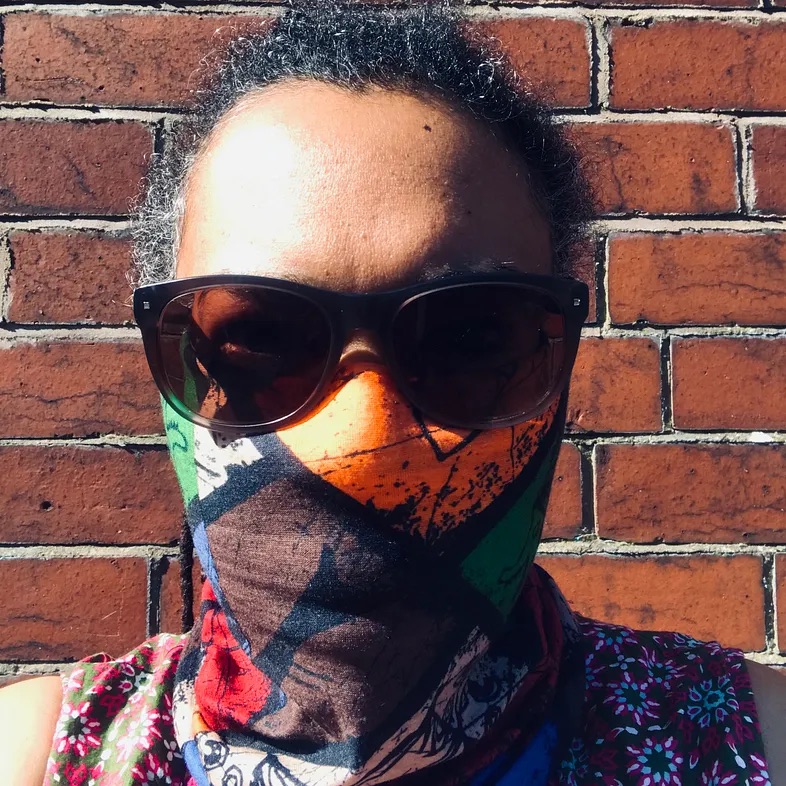
I think I’m smiling but how can they know? How can anyone tell if you’re smiling when you’re wearing face protection? By your eyes. I think by the eyes, you can tell if someone is smiling. It’s a warm, sunny day. I’m wearing sunglasses. Maybe they can’t see my eyes. They can only use my voice as means of communication.

Sorry, they say. We thought the queue was going the other way. They walk to join the queue behind us. I say, in a tone of voice which I think says I understand, No, the lady in front of us has just gone in and we’re waiting back here to giving everyone some space.

In the time it takes for the couple to walk and wait behind us, at the recommended 2 metres, the woman of the couple has already started saying in a loud enough voice for us to hear, Some people are just getting angry about the situation now, and there’s s no need for it. We walk into the shop.

Note: The angry Black woman stereotype portrays a black woman as sassy, ill-mannered, and ill-tempered by nature.

Walking back home, Ella walking with her bike, I approach what happened outside the shop, asking Ella if she heard what the woman said about people getting angry.

She was referring to me. I explained. She saw me as an angry Black woman. Do you think I was angry because you’ve seen me angry?

My daughter knows me. She knows I wasn’t angry and says so.

When you live in a society where you’re powerless, perceived as worthless and inferior, those who have power, believing themselves to be superior, spend their time telling others how they handle the situation isn’t right. They tell you that how you speak or act or response isn’t appropriate. You are wrong. They gaslight you, forcing you to doubt yourself; your actions and capabilities. You are at fault, always. You are wrong. You are silenced.

Back home, I talk to my husband, who’s a white man. I think if he’d been with us, the woman behind us, wouldn’t have uttered the angry line. He disagrees. She sounds like a woman who would have gotten annoyed if anyone had checked her behaviour, he said.

He has the right to think and say that. And maybe he’s right. Who knows? But to accept this explanation, I’d have to disallow what I feel about the situation. I’d have to make allowances once again for someone else’s behaviour, reaction and treatment of me. I’ve spent a lifetime of making allowances for other people’s treatment of me. How can I be sure that when they treat me unfairly, or discriminate against me that this isn’t how they treat everyone else? I don’t know. All I have is the way they make me feel. My lived experience as a Black woman.

All I know is that when I’m walking down the street and someone is coming towards me, it’s me who walks into the road to maintain social distancing. It’s me who walks into the gutter to keep us both safe. Would they do the same? I don’t know. I can’t take the risk to wait and find out either.

I’ve been socialised, fed the stereotype of the angry Black woman for so long, I police myself. I play my part. I don’t raise my voice. I don’t protest or question. It’s part of my make-up to check myself so I appear in society as passive and non-confrontational and unseen.

I remember my place.

Entitlements

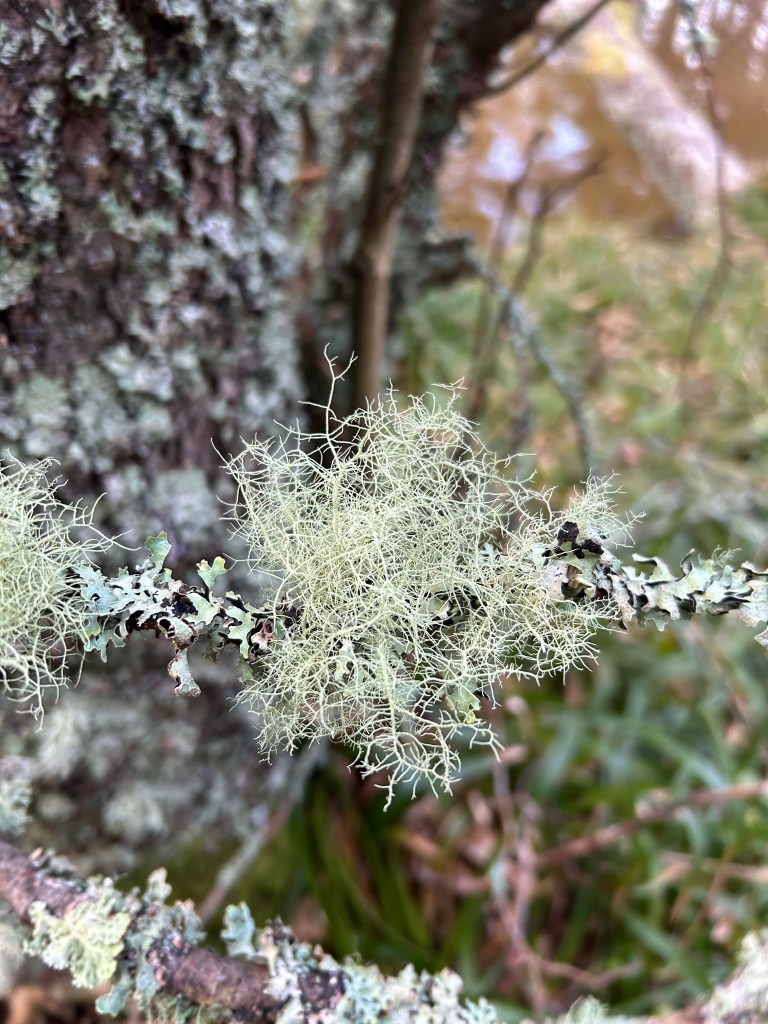
Oak Moss Lichen, presence signifies the air quality of a place/ space/ session!

I’ve written before about this fucking counselling skills course I’m completing. So because it follows the school terms time dates, we have just returned on Monday after a week off. And my god was it difficult for me to return.
We only have five sessions left and I was thinking of all kind of excuses to get out of these next five weeks, so I can just stay at home on a Monday evening and complete the mountains of task, assignments and reflective journals that need to be completed by the end of March to be in with a chance of passing this shit.
So I didn’t want to return but return I did because I don’t want to fail. I’ve already put a lot of time and effort and pain into the course and I want to be able to walk away with my head held high.
But it’s making it very difficult to stay the course. It really is as the space is not equipped for diversity, equity and inclusion and this is a fact.
First off, a lot of time is taken up the week with the discussion of next steps. And some students are going to carry on with Level 4 and 5 with the current tutor’s private practice. Some are waiting a bit to get the finances together or looking into adult funding loans etc. But most of them are taking the next steps as they are needed to be able to practice counselling skills in society.

Lots of talk about finances, and time and access and how things are unfair and more money should be made available to do the next levels for free etc. One student, all up to date with assignments and very pleased with herself because of this, has her pathway all planned out and took great pleasure in letting everyone else know that she as the perfect student who had the time and space to just read about psychology and just add it into the pot for later etc. I recognised myself in her not so many years ago when I was always working to fulfil the perfect student role and make sure everyone else knew it too. How things have changed.

Me I know I’m not going any further than Level 3 for a number of reasons.
The finances is one. This is barrier for anyone wanting to become a counsellor, the different courses and levels to complete and professional fees to be members of in order to practice, is all money money money. While training not only paying for the course, you also have to be under supervision of a therapist yourself, and be part of groups theory sessions, and then also be on placement, which is usually voluntary. The whole system is set up for those who have money already to be able to keep throwing it at the barriers and stipulations that are in place before you even qualified to counsel.
So the finances are an issue, as well as not believing in the system I would be funnelling my money into in order to qualify. Not only is the education system steeped in colonialism, patriarchy and white supremacy culture but what kind of stupid duped yes massa oppressed fool would I be to actually pay to be further oppressed and brainwashed. Dead white men is the syllabus for counselling skills so why would I buy into more of that shit?

I just don’t believe in the whole system set up around becoming qualified and how it’s the privileged who continue to be in these caring helping positions when really they haven’t done the work on themselves to check their own unconscious bias, racism etc.
So I’m not going any further after Level 3 so the majority of the conversation in class was very off putting and I switched off, thinking what is the point.

Once we got to the skills part, I had hardly got into my usual triad before one ‘friend’ said she didn’t want to work with me. No offence they said but you always make me laugh and I need to get my observation logs complete so I can’t work with you.
How am I supposed to respond to this remark? Do what the fuck you want, but in the process make sure you reject me, by refusing to work with me and make it all my fault?

She said I make her laugh too much and she needs to focus. So okay work with the other individual in our triad and I’ll observe you as you practice being the listener and I’ll give you your feedback.
And I’ll just add here, she still laughed during the skills practice, being put off by the tutor listening in on the session. I did nothing to make her laugh. So I just want to put it out there that maybe I’m not the problem or issue and that maybe they are. Just putting it out there as I’m not the problem but why not make the only Black woman in the group the problem, as then that’s easier than taking responsibility yourself for your own short comings.

It’s time to switch roles and I create a scenario to tell the other person in the triad so they can fulfil the listening counsellor role. I talk about a real current issue and I’m just being my expressive self etc. Fleshing things out to they can demonstrate all their counselling skills etc. At the end of the exercise, they takes a deep breath and turn to the other person in the triad who didn’t want to work with me and says, you’re right she is difficult to work with. That was hard, she made it hard.

Fuck why not gang up on me and make it all my fault instead of looking at yourself, or checking yourself to find out what might be lacking in your skills set and learning that you would think having a conversation with me about a real issue for me, what hard for you?

Why blame the only Black woman in the room once again for your own shortcomings?
Again I return to what I’ve said before white privileged people who will be in caring positions of authority who haven’t done the work on themselves, in order to know their own inner workings, before they start working with other peoples’.

But yes it’s my fault.

When it’s my turn to be the listener and practice my counselling skills, well didn’t the person come up with a scenario that was a dead end and she just sat there and didn’t really play ball. They didn’t elaborate, just dropped their problem and expected me to do all the work. I just had to laugh, and just think, but I’m the difficult one I’m the one who doesn’t take it seriously?

I’d just sat there and completed detailed feedback on each of their counselling skills, not making it personal. I didn’t critique them as individuals but in their role as the listener. But it was okay they thought for them to mess with my skills practice and after they had attacked me personally

Where is the fairness in that or the justice?
Fuck and I wonder why I continue to put up with this shit week in and week fucking out?

The Return to Montserrat

Describe your most ideal day from beginning to end.

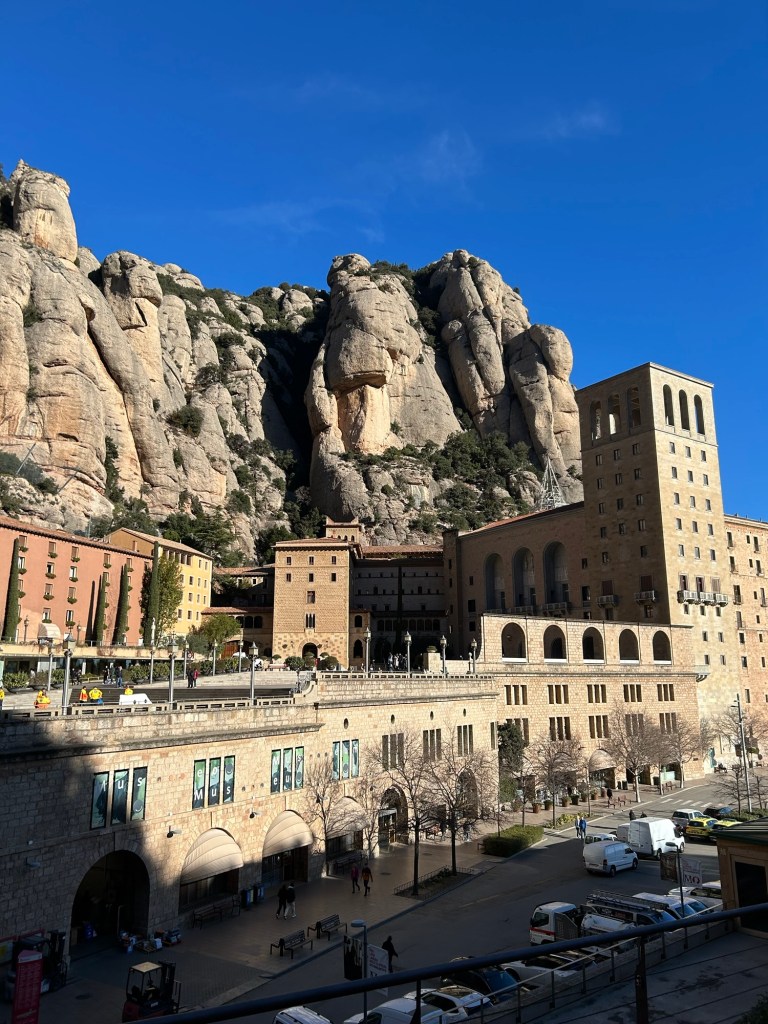
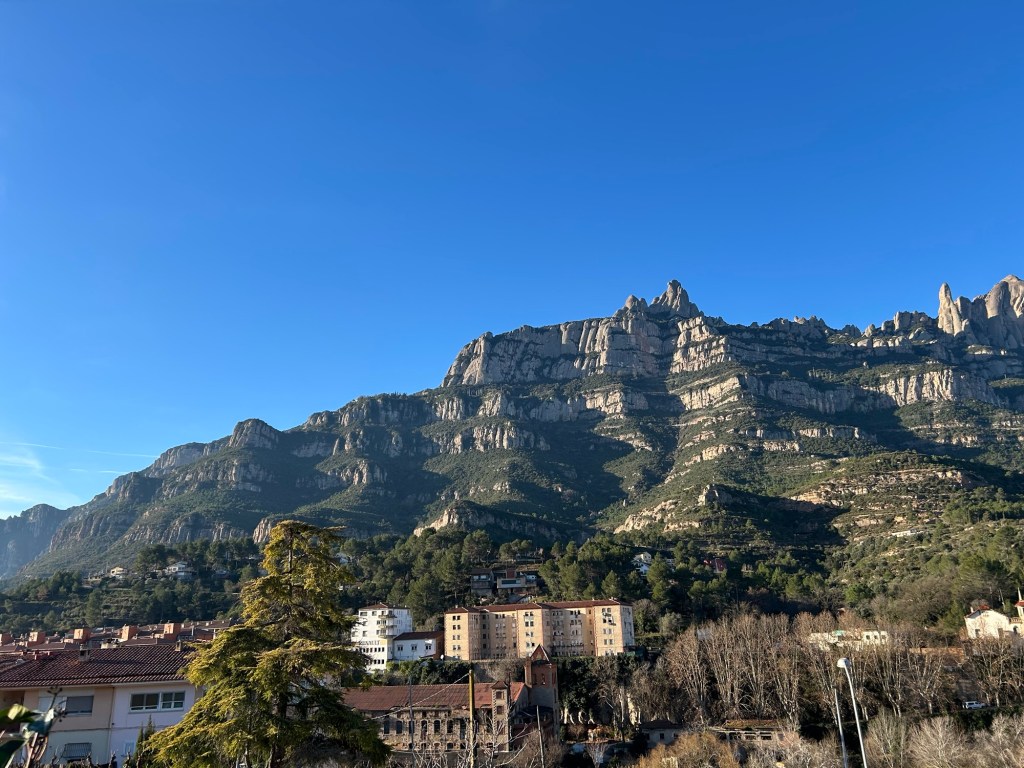
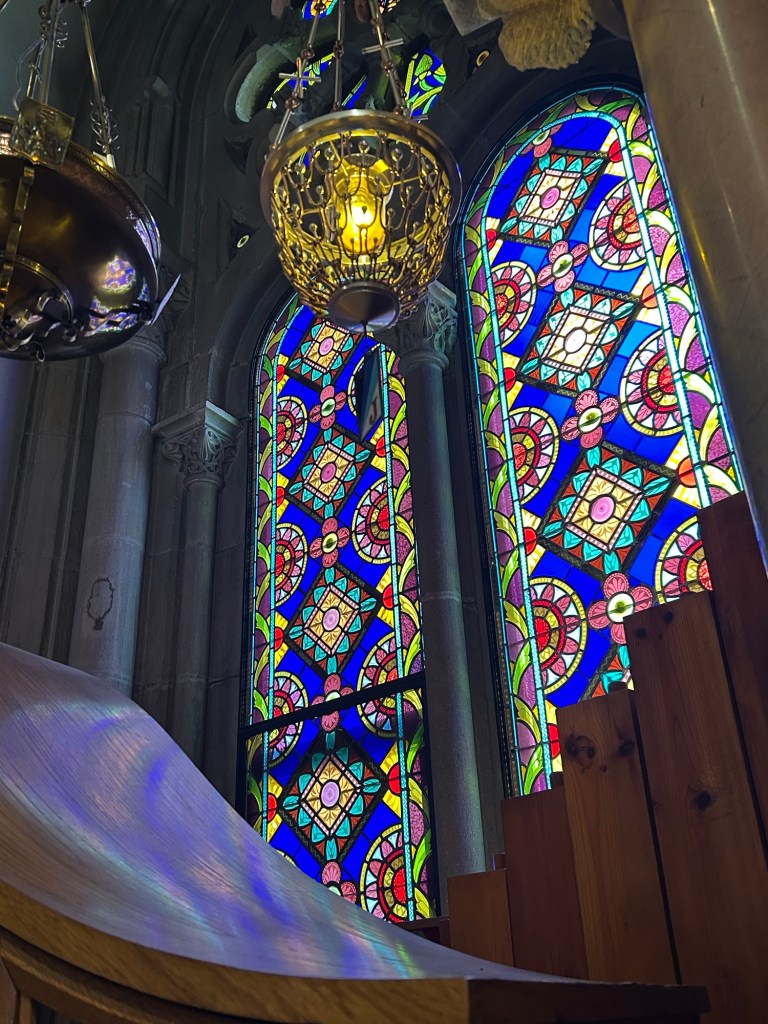
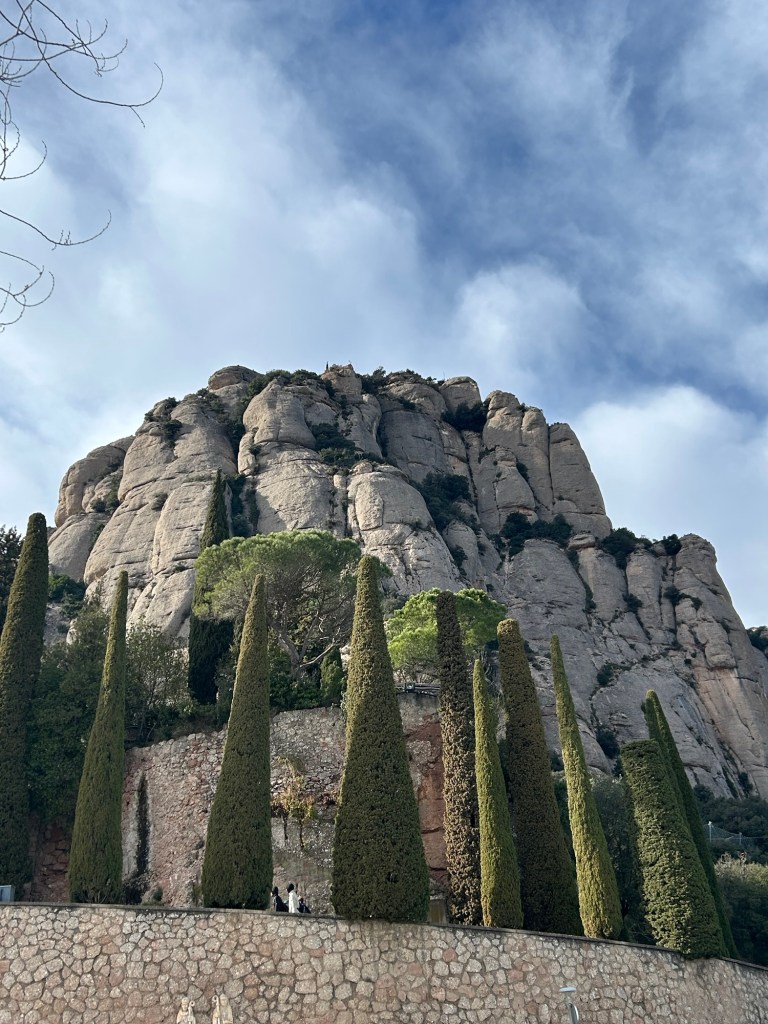
A week ago today, I took the journey back to Montserrat. I first visited this multi-peaked mountain range, home of a Benedictine monk monastery, back in 2007 maybe. Then, I was staying in El Bruc, a small village at the base of the mountains, at the artists retreat, Can Serrat, for a month. A bunch of us from the retreat decided one day to climb the mountain range to reach the top, the monastery. To see the Black Madonna we had heard of.

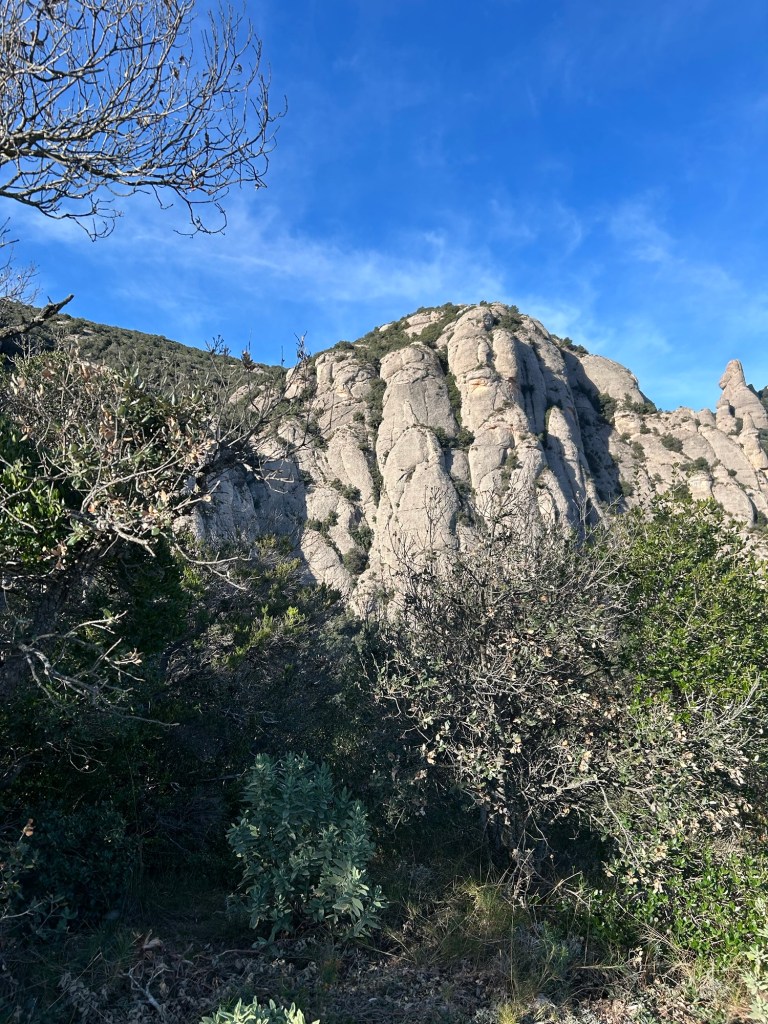
It was hard going. Taking hours, at times using my hands, feet, knees, elbows to reach the top, climbing sheer rock face and rambling through the forests of the National Park.

I was always behind, at the back of the group. Moving slowly, holding everyone up. They kept stopping to wait for me. I told them not to but they said they had to. That they couldn’t leave me alone on the woods. Not knowing where to go, which path to take.

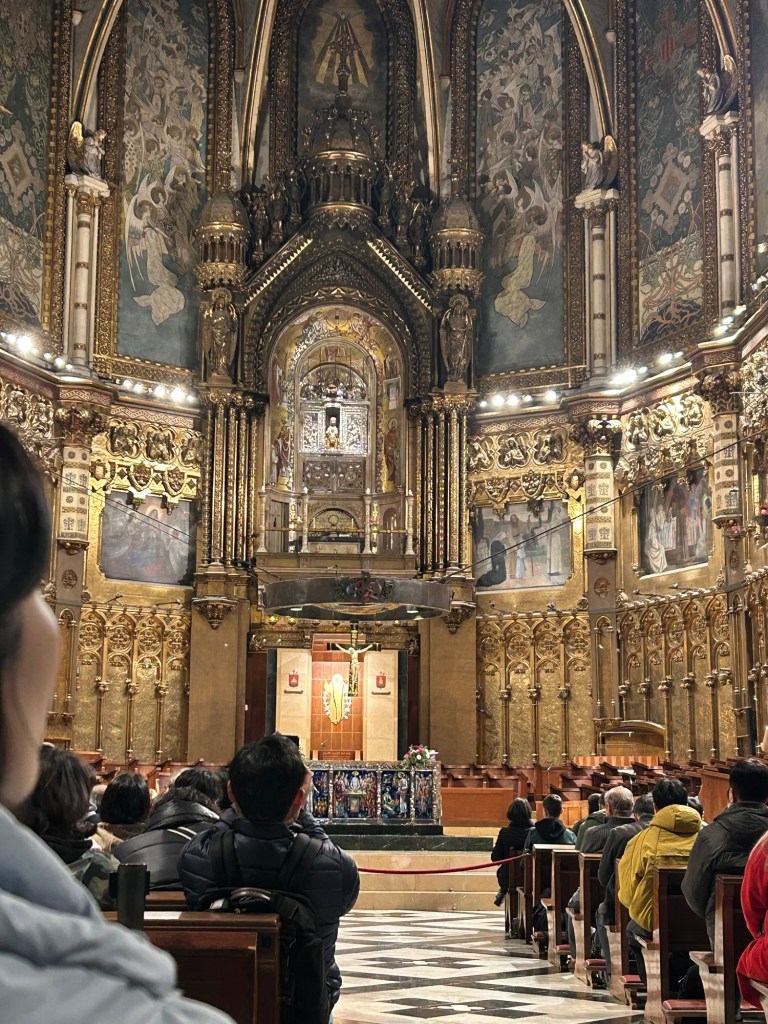
I didn’t ask for their help. They it took upon themselves to be responsible for me. And they resented me for it. Once we reached the top, and entered the Basilica, they all climbed up further steps to go see and touch the Black Madonna. I didn’t go up. I saw her from afar. I denied myself the opportunity to be with her because I was tired. I was also ashamed for moving so slow. For not being as fit as the others in the group. I was upset because my body let me down but also that these strangers had made me feel like shit for being me. For being a fat Black body who wasn’t good enough. I allowed them to take away my joy and self-worth all because I was unfit and slowed them down. But I didn’t ask them to wait on me or look out for me. I wasn’t a child but they seemed to think it was okay to treat me as such. And I allowed them to.

Fast forward to last week, the end of January 2025 and I return to Montserrat. This time I get up early, to catch the special train to Montserrat from the centre of Barcelona. It’s an hour ride on a commuter train heading north out of Barcelona. The train is packed and I’ve overheating with my two coats on, thinking it would be cold in Barcelona in January. I was wrong. The temperatures were glorious. Winter sun has a way of easing the bones, warming the flesh and making everything fluid and relaxed.

The further we moved out of the city centre, the more the train emptied. Until we were moving within the shadow of mountains and trees. The train can let you off at two stops for Montserrat. The first stop is for the airlift up the mountain which takes 4 minutes. The second stop is to catch the slower train up the mountain. 15 minutes of a steep, slow winding climb. I took the second stop as I was in no rush.

Even on the return to Montserrat, I chose once again to make slow progress. Taking my time to reach the final destination. Yes my body is older this time. I’m probably even fatter but I knew I wasn’t going to allow anyone else to dictate my process or to take away my joy.

Once I reached the top of Montserrat, well not really the top, the main station/ base where the shops and cafes are, I popped into the information centre there in the hope of getting a funicular further up the mountain. It wasn’t working this day but I could walk up an easy path to the top if I wanted.

I enquired about purchasing a ticket to get into the Basilica and to visit the Black Madonna this time also. If I could wait till 1.15pm I could see her as well as listen to the choir sing at 1pm for a little extra cost. Of course I wanted to experience it all. So with ticket bought and time to kill, I took my body further up the mountain.

A steep mountain track hugging the rock face took me further and further into the more or less cloudless sky. And I was just breathing in the tranquility and gratitude to be able to make this journey and relive a piece of my past but on my own terms.

There were other people here but it didn’t bother me as I was in my own little bubble of joy, soaking up the sun, the smells of cypress trees and elders and then there were the bells.

Once back down, I grabbed a coffee and just sat outside and watched people go by. My excitement was building, as after years of waiting, I was finally going to see the Black Madonna of Montserrat up close.

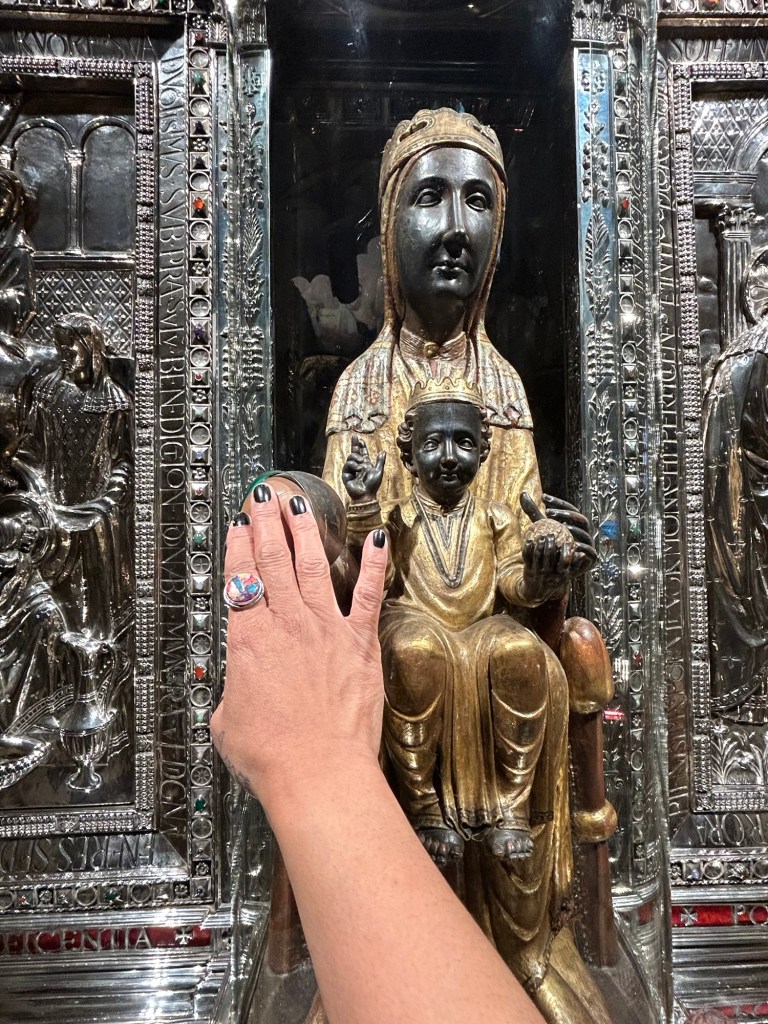
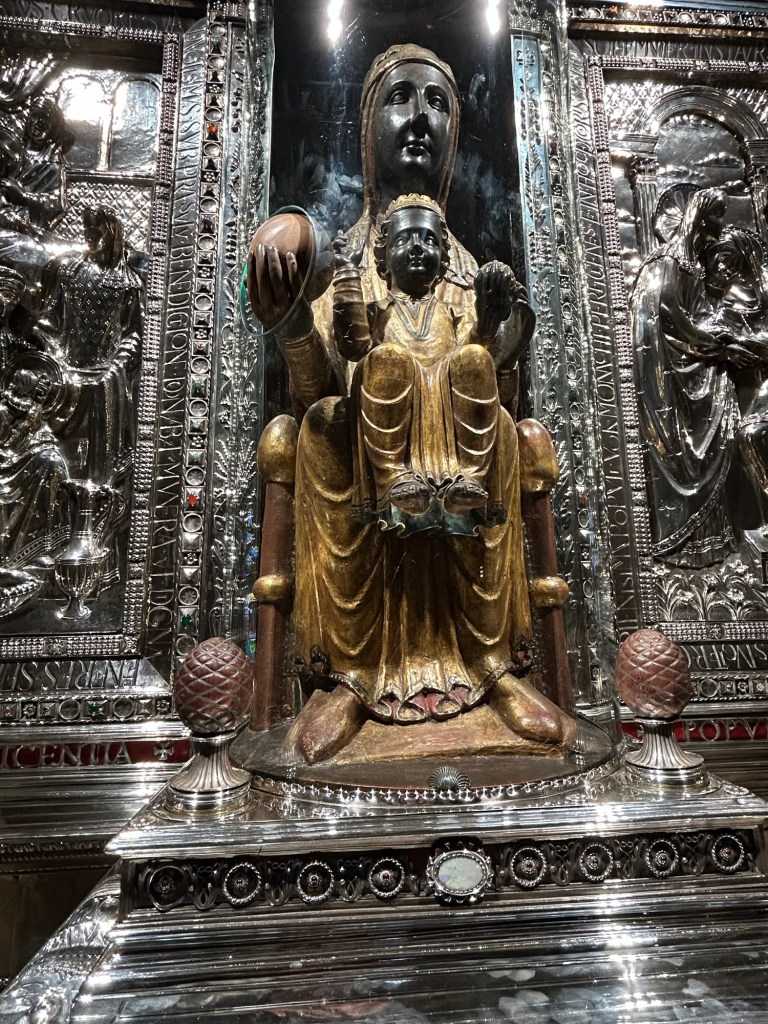
The Black Madonna is sometimes referred to by other names, including ‘The Virgin of Montserrat’ and ‘La Moreneta’, sits behind a sheet of glass high above overlooking the alter. One hand holding a sphere is not behind the glass. Her hand sticks though the glass and is available to touch or kiss if you so wish.

Along a corridor and up some steps and then some more to finally come to the chamber where the Black Madonna sits. You proceed in a line past her. Each of us has an opportunity to stop in front of her. To touch her. To pray. I gave thanks to her. And immediately teared up to be with her. To be this close to her. To be able to touch her. I didn’t ask for anything as she is known for granted miracles. I was just happy and grateful to be in her presence.

I journeyed back down to take my seat within the Basilica to then heat the choir song. All the time I can see the Virgin high above the altar looking down on us.

The Choir @ Montserrat

The choir sang for about 15 minutes and gave the congregation a blessing. I’m not religious. I’m spiritual. But I could appreciate the feelings that arose to be within such a remarkable place and to hear such angelic voices rising within the space and vibrating back into my body. Again another emotional moment.

Once the choir retreated. I got myself back into the queue to visit the Black Madonna once again. I was all about getting my money’s worth! No not really, I wanted to say goodbye and just see her up close once again. And as I say, I’m not religious. And I’m not praying or idolising over false idols.

What I see in the Black Madonna is a Black woman. I see myself. I connect with her as she can relate to my suffering. To my body and soul. And I just want to give thanks to her for being there for me at all times. She takes my woes and my joys. She just reflects back to me that we, as Black women, are enough just as we are. No one else needs to bestow any value on us. We see ourselves and we love ourselves. Just the way we are.

After touching her one more time. I walked back into the sun and climbed a steep path up the other side of the mountain, not ready to leave this peaceful sanctuary. A tremendous amount of peace had descended on me during my time within Montserrat and I wanted to carry it with me as I left. Moving became effortless. My heart was light and full of gratitude.

And I didn’t want this feeling to end.

How might we divest from the human?

I’ve been reading. When I read, I feed my wonder and imagination. When I read, I fill up with ideas and dreams and plans.

Reading expands my mind and expands my understanding of the world I navigate.

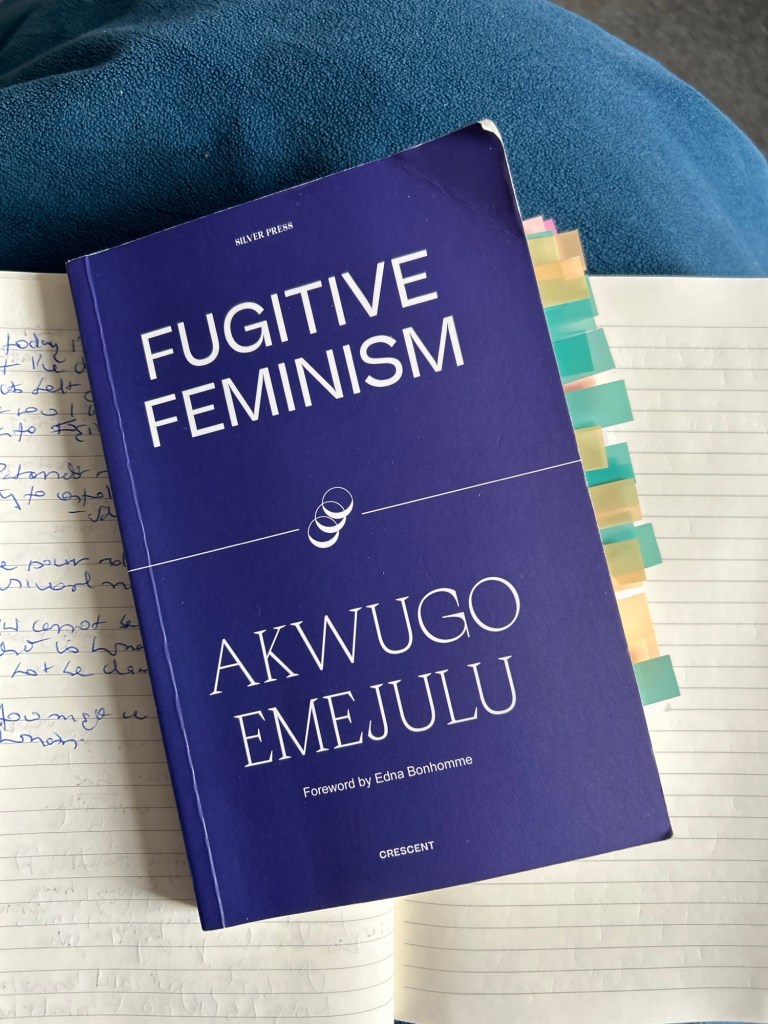
I cannot stress or emphasise enough how much my world has been rocked or even burnt down since my reading and continued reading of Fugitive Feminism by Akwugo Emejulu.

This isn’t like anything I’ve read before because it goes against everything I’ve been trying to do for the last 50 years; to prove the humanity of Black people, of myself so we can finally be accepted and loved.

But what if we’ll never be accepted? Never be accepted as human beings because who gets to claim humanity is bound up with whiteness, bound up with white supremacy culture?

What if being a human is a construct and is defined by those with the power and was never constructed to allow us, people of the global majority to be as such?

So if I claim non-human what are the possibilities for my being?

This is where I’m heading. This is the space I’m navigating now. I’m making changes from the inside out. In a cellular level this speaks truth and blessings to me. How I {BE} is changing and it includes a whole more ‘fuck offs’. Well that’s how it’s shown up my so far!