I applied to Arts Council England for a Developing Your Creative Practice grant mid 2025. It was unsuccessful.
Undeterred, I resubmitted it under the project grant scheme. I was notified of being successful just before Christmas 2025.
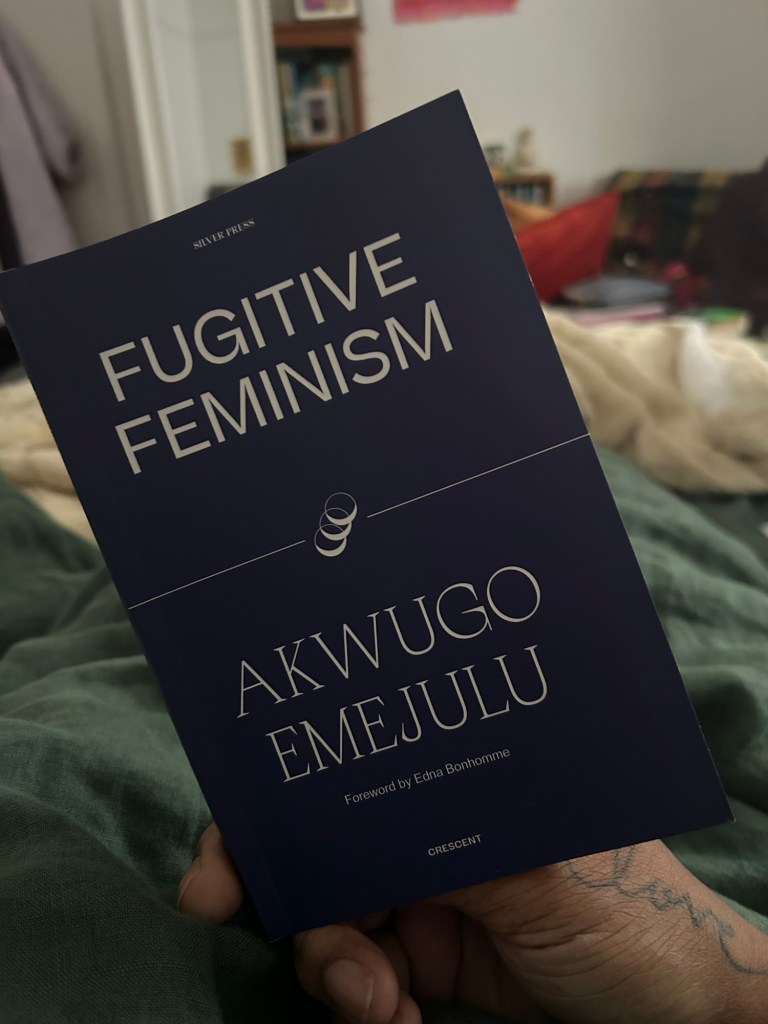
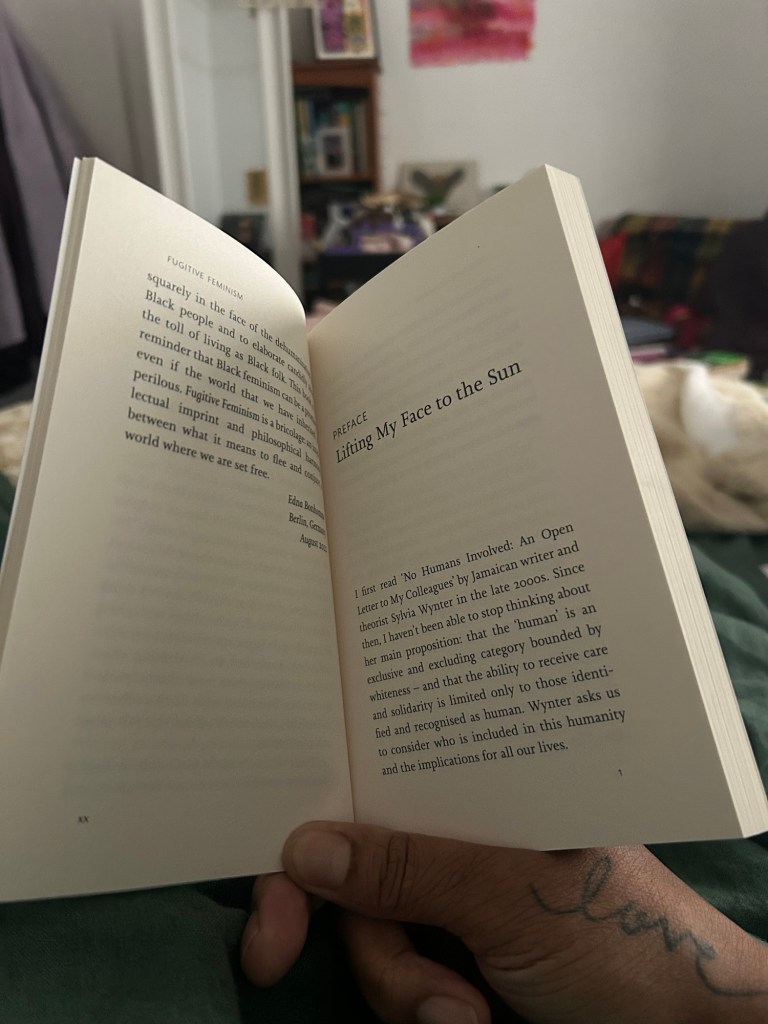
Practicing Creative Fugitivity is its name, and it involves researching fugitive practice. It also involves reading in community Fugitive Feminism by Akwugo Emejulu.
A study circle of women of the global majority.
When did you first learn that you were a non-human?
The question that opens the first chapter of the text Fugitive Feminism.
A question that hits me in my gut with its open, blatant honesty and curiosity.
A question which niggles at a truth that I’ve not wanted to face up to as it would mean that I’ve spent a lifetime trying to demonstrate, prove, live up to an unattainable category of being human.
Human as a category was never created to include someone like me within it.
Human = Whiteness
Human v Non-Human
You can’t have the light without the dark.
All constructs to create hierarchies. A hierarchy where white, EuroAmerican, able bodied, middle class, cis-gendered, college educated and suburban men reign supreme. Superior.
Conceptual Other. No Humans Involved. The Lack of the Human.
Black women. Outside. Out Outside.
Our exclusion determines the borders/ boundaries of the human.
But consider this …
If Black women were free, it would mean that everyone else would have to be free since our freedom would necessitate the destruction of all systems of oppression.
Combahee River Collective
Where the excitement lies for me and others, is once we realise that Black women cannot be human, then with the support of this book in community, let’s consider what if ‘human’ cannot and should not be reclaimed?
Speculate. Speculation. Speculative.
How might we divest from the human?
That the non-human Other actually decentres the human. Move beyond human to something otherwise.
Something else.
Becoming ( something else).
Thinking of how to be/ how to live beyond the binary of human v non-human could produce the means of improving our community/society/our planet.
Centring the human ( v non-human/ othering all else) has got us into the shit we’re facing now in terms of ecological disaster.
Finding a way to decentre the human, divest from what this concept / construction means and how it operates has to be the way forward.
Fugitive Feminism is the doorway into another way of being. A portal into an alternative world built upon the Black Feminist politics of liberation.
The path ahead is not clear or defined. It’s slippery and ambiguous. It’s experiential and experimental. Yet full of possibilities. Caring not harmful possibilities.
Speculative. Suggestive. Spacious.
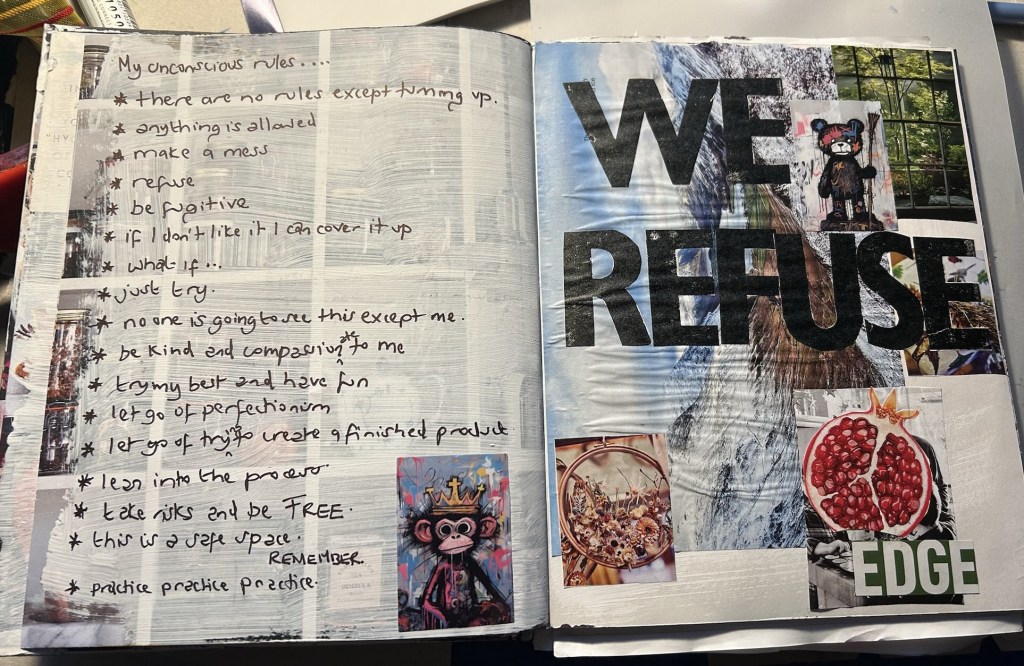
And it starts and continues with the act of refusal. Refusal of the way things are right now.
Refusal of being defined by others to fit into their definition of humanity ( whiteness).
Refusal of being extracted and exploited for the benefits of a few.
Refusal of being non-human.
Refusal of being outside of humanity.
Refusal of the whole concept of human/whiteness/ fascist.
Refusal of these limitations when i, we, i and i can be something else beyond humans.
I started reading this book, hardback, a few years ago from the university library. It got recalled before I could finish it.
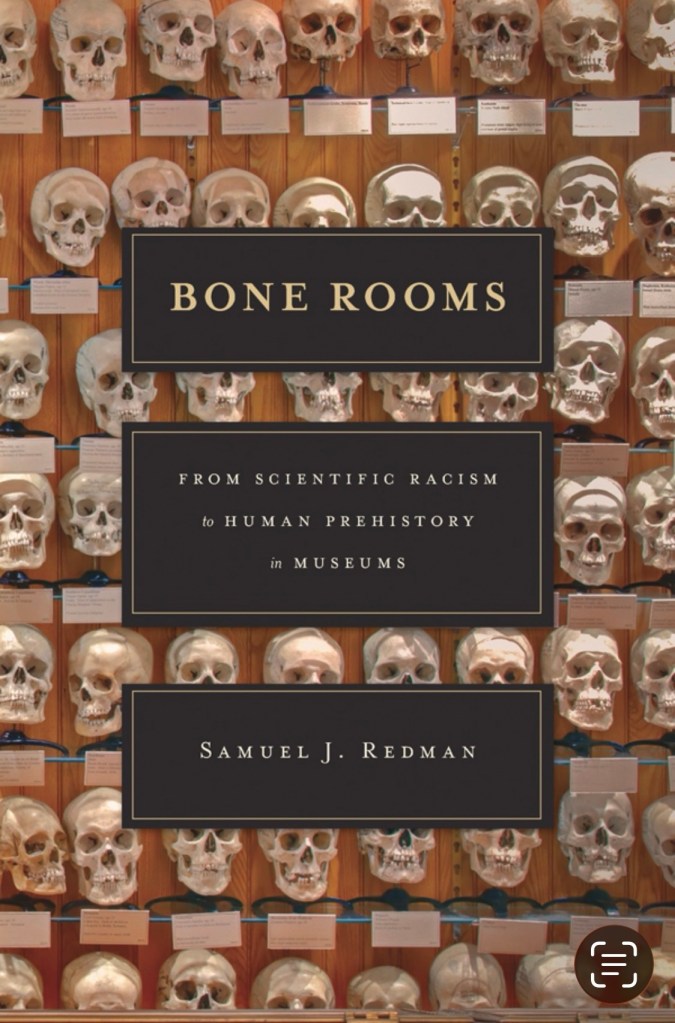
I was reading it after reading about how for decades the remains of two MOVE children had been kept at Penn Museum and later Princeton University illegally.
How they were using these children’s remains ( bones) in an online course for demonstration purposes as if they were nothing. Just fine specimens to illustrate a scientific point and not actually once being human and that their family was still alive and none the wiser. They thought they’d buried their children after they were bombs but piece of them were missing. And this wasn’t a mistake or oversight, the family had been lead to believe that all remains had been released to them to lay their children to rest.
I took an interest in this case along with the fascination of bone collecting/ salvaging/ pillaging to study and use as evidence of race hierarchies.
I even started a creative hybrid piece around it all as a means of trying to understand it as well as shed light in the continued extraction and exploitation of black bodies even beyond death.
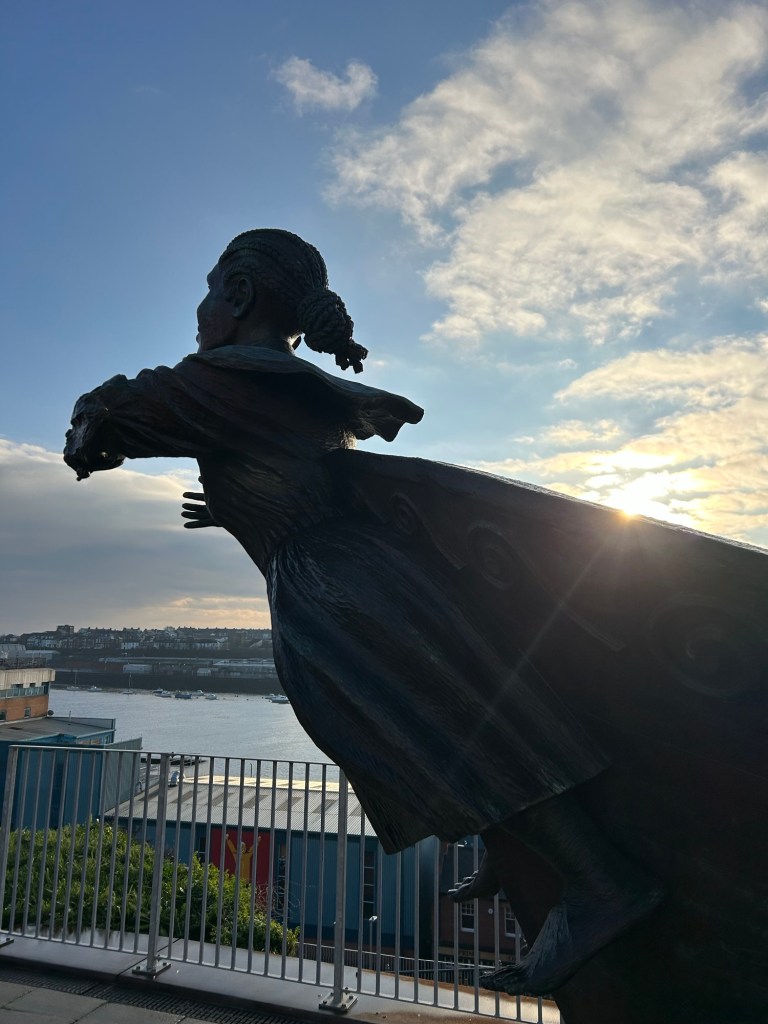
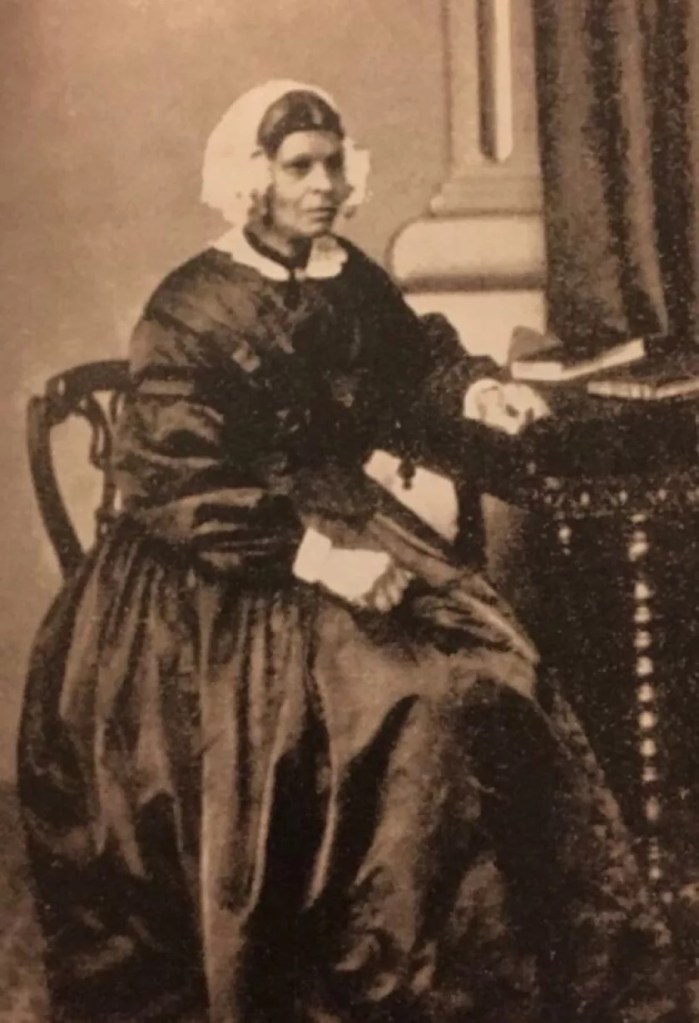
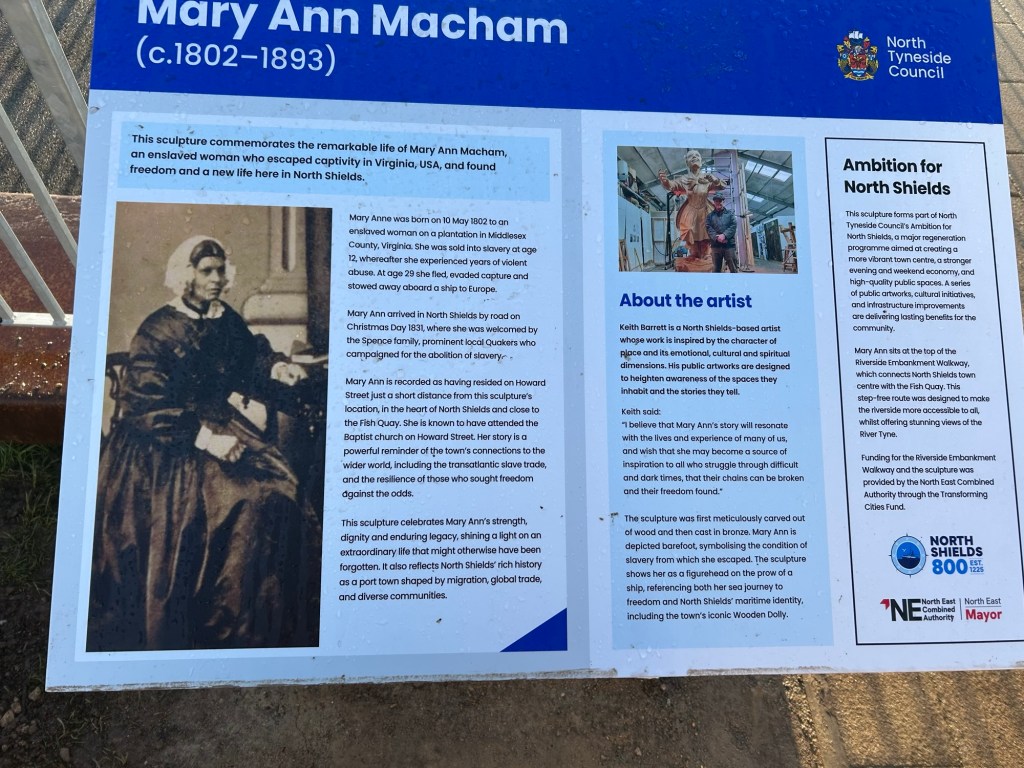
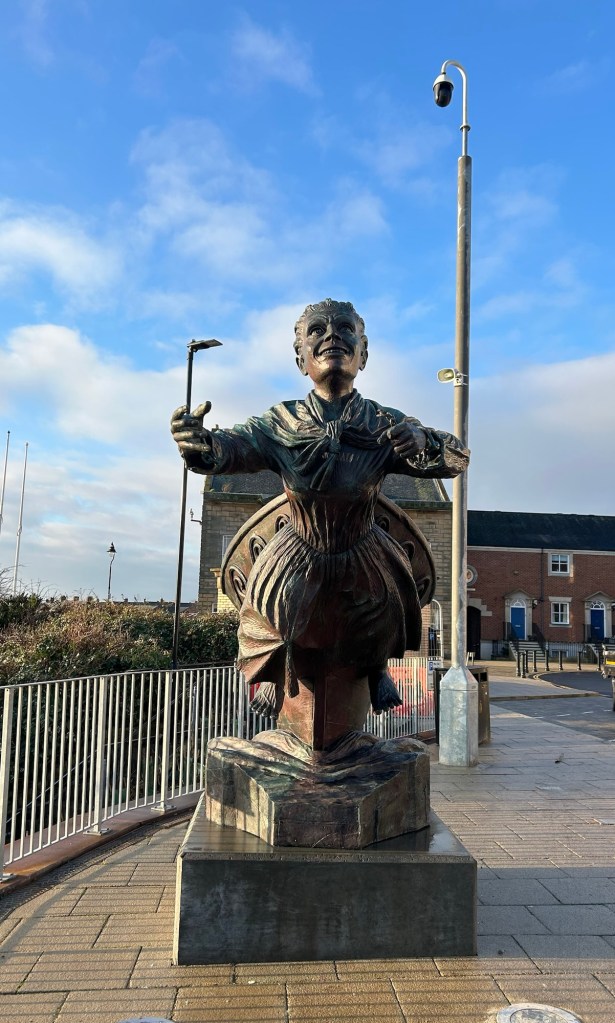
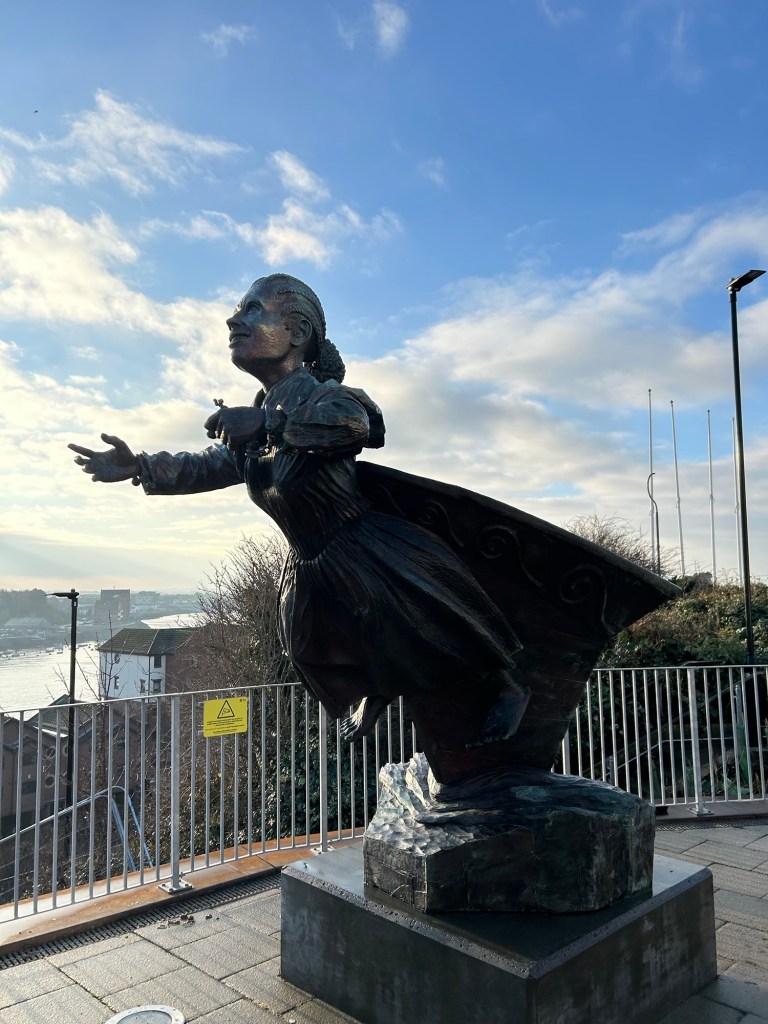
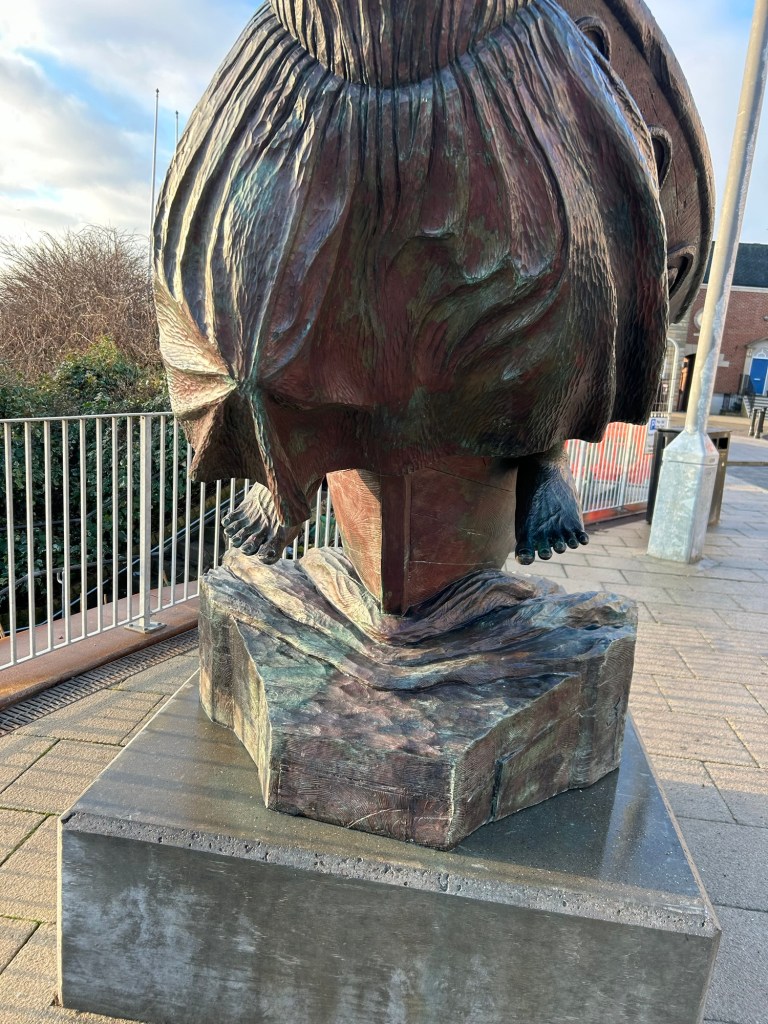
Walking into North Shields the other day, walking towards the Fish Quay where there is now accessible access connecting the centre of town down to the River Tyne, I caught sight of this sculpture of Mary Ann Macham.
I first learned about Mary Ann in 2007, when I was researching the North-East’s involvement in the transatlantic slave trade to mark the bicentenary of its abolition.
I was writer in residence within the Literary and Philosophical society, researching their tracts and unearthing the names and lives of the once enslaved people who passed through and/or settled here.
I wrote a poem about Mary Ann, her escape and travel up to the North, and with the help of the Quakers, made a life for herself through working in service and getting married and living in North Shields. This was back in 1831 when she arrived here and lived for a further 60+ years as a free woman.
An aside here is how the Quakers at the forefront of the abolition movement here in the North- East, were against the slave trade and worked for the abolition but still held the racist beliefs of the day that white people were still superior to black people.
Mary Ann Macham told her story to a member of the Spence family, who she was in service to. There’s a lot that can be argued about the practice of black people, telling their stories to white people who wrote them down and how accurate these are as a true representation of their stories. But this is all we have now as ‘evidence’.
African Lives in Northern England completed research on Mary Ann Macham before this public statue and the local groups ‘found’ her.
I should be grateful and overjoyed that finally Mary Ann Macham is being remembered. That there is a public statue dedicated to her and that she is being reclaimed as part of the local community.
But something just doesn’t sit well with me. Maybe I’m being far too critical. Or maybe I’m just coming at it from a black woman’s point of view living within white supremacy culture?
The press releases for this unveiling of the statue in November 2025, proceed to paint the impression that Mary Ann Macham has just been discovered. That this was hidden history that the locals have just uncovered and became fascinated with and had to find out more about. But unknown to whom?
If they had done their research they would have seen and also acknowledged the work completed in the past to shine a light on Mary Ann. But the story goes that they have just discovered her story. Or decided to just focused on only part of her story/life? Mary Ann Macham ( later Blyth through marriage lived until she was 92 years old).
The local Sculptor Keith Barratt who created the piece has said to the local media that he wanted this sculpture to show that “she came from a place of great pain, but it’s also a story of human liberation, of breaking the chains and I feel that this is something universal that many people will understand”.
I suppose I have issue with how Mary Ann is framed within the story of her own life, which she doesn’t have control over maybe a bit then but definitely not now with how she is remembered.
I Love North Shields has more details about her life and attempts to create a bigger picture of her life before enslavement and after as a free woman living her life here in the north east. But frequently it has to be argued, the majority of time, Mary Ann is trapped within the ‘slave’ narrative perpetuated by white people. Although seeing her as ‘brave’ for plotting her escape, they still frame Mary Ann, tell her story within the role of once enslaved, and needing the help and support of kind Quakers. Sounds a lot like white saviorism. Then and now.
It’s almost like Mary Ann is stuck, encased in bronze, and barefoot to symbolise the condition of slavery. Enslavement she escaped from physically during her life, but trapped forever within this role in memorial because the white imagination cannot see/ grant Mary Ann her full humanity . The fullness of her life.
Time and time again, the mainstream constructs the stories they want to shed a light on and tell about people of the global majority which suits the narratives they’ve been running for centuries. The narratives where we don’t have agency or self-definition but are the objects, less than and victims. This is a means of control and domination.
This is why it’s important that we take every opportunity to tell our own stories. To control our own narratives. To leave these as archives for the people that come after we so they can be in no doubt that we lived big, beautiful, full lives on our own terms.
And is it me, or does the statue of Mary Ann Macham make her look like she’s white?
I’ll tell you the truth, I heard about Keith Porter Jr. 1 day ago.
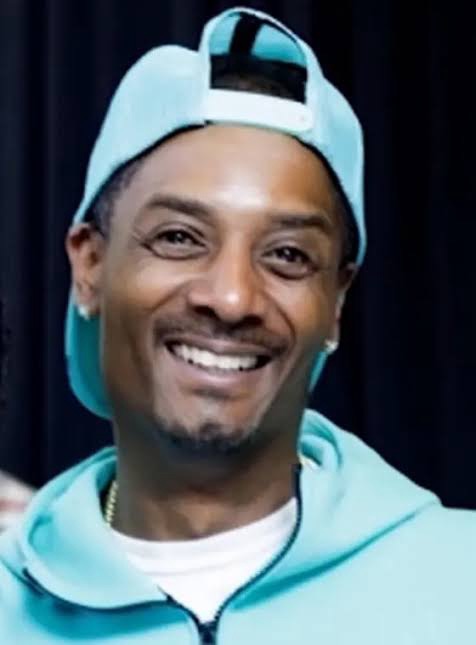
Keith Porter Jr., a 43 year old father of two girls. He loves fishing and spending time with his family. Laughing.
Keith fundraised for battered women’s shelters, supported street artists, advocated for health services. With real family and friends, real daughters and a real presence in his community, Keith Porter Jr. is no longer with us.
Rest in Power Keith.
On New Year’s Eve, in Northridge, Los Angeles, Keith was seeing in the new year with family and friends in his neighbourhood. Tradition was to fire a gun into the air in celebration.
An off duty ICE agent, heard the shots, and inserted himself into the situation. A situation he shouldn’t have been in as an ICE agent is supposedly trained in compliance, transportation, custody paperwork. Immigration.
ICE is not designed or trained in community engagement responses. community law enforcement.
It is argued that after a short verbal exchange, the ICE agent shot and killed Keith.
Official reports from federal agencies say the ICE agent was responding to an ‘active shooter situation’. The department of homeland security says Porter fired at the agent before he was killed (in cold blood).
Watch how they change the narrative. Remember Keith Porter Jr. the man laughing with his family, caring and empathetic will become the monster who deserves to be dead.
Family and community advocates dispute this claim, stating that there is no independent released video evidence showing Keith Porter Jr. posed an imminent threat or fired at the agent.
Rather than lethal force, this off duty ICE agent should have done his citizen’s duty and called local Police as this was not an immigration issue. This was not his jurisdiction, his authority.
Keith Porter Jr. became an imminent threat only when this ICE agent turned up.
ICE has no community engagement training. They might have authority but not in the community, they don’t have the judgement and empathy to be on the streets. But obviously this ICE agent, off duty, thought otherwise.
Nearly two weeks ago Keith Porter Jr. was shot and killed. And people, the average person, even those online are just starting to find out about this murder. Only after Renee Good’s cold bloodied murder.
There is selective outrage in America. As I wrote last week, I have no issue with the response to Renee Good – that’s how we should be respond in this situation.
But
#SayHisName
Keith Porter Jr.
His family had been struggling to get his story, his unlawful killing into the current media cycle. This just compounds what I’ve been saying about the lack of visibility in mainstream media of black people being unlawfully killed by law enforcement.
Be honest have you heard of Keith Porter Jr? But you’ve heard of Renee Good?
There are arguments we can put in place here . You might not have heard his name, Keith Porter Jr. because he was killed by an off duty ICE agent not on duty with a large crowd there. Might be because there’s little video evidence circulating around. But the main reason is because Keith Porter Jr. was a black man.
This is part of the reason for not using #SayHerName for Renee Good.
No one’s even heard of Keith Porter Jr. No national attention for his murder but within 24 hours everybody knew Renee Good’s name.
This is the very reason #SayHerName was created for the invisible black women and black men who are causalities of the state, of state terror.
And it’s only now that white people are waking up to this terror when black people have been enduring if for centuries. This is why I argue to consider the language used and to give credit and recognition for where it originated, why it was created in the first place.
And yet the same stories are being used to justify the unlawful killings of Renee Good and Keith Porter Jr. They were both pointing weapons at ICE agents, posed a threat and had to be eliminated.
I say
2 different people
2 different cities
but the same structural problem.
Later down the line this might get read as the one bad apple or one bad moment. But this is clearly a system which once hidden no longer neededs to remain hidden.
A system that is built without limits or accountability.
De facto special powers bestowed by the Trump administration on ICE that seem to supersede police powers. ICE is now inserting itself into everyday life and every day neighbourhoods. And as we are witnessing this very presence is killing people. Killing more and more people who weren’t even their targets.
But that no longer seems to matter.
As I’ve said before and I’ll say again, I don’t have an issue with the response to Renee Good – that’s how we should be responding in a situation like this. I just argue that the others, and there’s a long list that is growing of people who have been killed by ICE during this administration, deserve the same energy that is surrounding the murder of Renee Good.
As last time I checked, these are not animals, criminals or just talking points but human beings. Real human beings with grieving families. And this is something that gets forgotten in the media.
We need to continue to have these conversations and we need to keep fighting, on the small and large scale, against fascism near and far.
If you’ve been watching the news this week, you’ve seen that it’s been dominated by what is happening in America. Or the actions America has taken elsewhere in the world. Flexing their muscles, going in for the strike.
In my opinion, what is happening, right now, is that white people can see the power of the state being used against people who look just like them.
This is where AfroSurrealism takes on significance – because the reality of blackness is the power of the state is always and, repeated for centuries and generations, been used against black people. Being black is a surreal experience. THEN. RIGHT NOW. ALWAYS.
The abuse of power has been turned up to the max so that no one is safe. But some people can’t see this yet. Maybe even deny it, spin a false narrative around it.
There’s a quote somewhere that I remember which goes something along the lines as, they’ll come for me in the evening, but then they’ll come for you in the morning.
Fascism had raised its head once again. But did it ever go away for black and brown bodies? Did it not just change its mask, switched up its playbook?
There’s protests across American cities against the unlawful killing of a white woman/ mother by an ICE agent. These protesters scream out, “say her name.”
The thing is this – no disrespect or condoning of this violence or unlawful killing as it is an abuse of power and murder. I am outraged but …
I am also outraged because #SayHerName was an awareness campaign started by Kimberle Crenshaw to bring attention to the unlawful killings of black women by law enforcement that were going unreported/ not getting the same level of outrage and attention as when black men and boys are killed by law enforcement, in comparison. And this doesn’t even start into the ‘white woman syndrome.’
#SayHerName was needed to highlight and remember and get justice (?) for black women who have been killed in custody, or when calling 911 for help, or when sleeping in their beds, or for just breathing while black.
#SayHerName is needed for these unlawful killings of black women not for the white woman killed in Minneapolis on Wednesday because everybody knows her name and everybody is saying her name.
What happened in Minneapolis was wrong and the Trump administration is lying about it and blaming the victim. This is an abuse of power and is being played out, as the images of the bloodied seat and the bullet hole in the windshield, as a threat.
You get in the way of us, protest our regime then this is what happens to you, is the message. They rule with fear, threats and intimidation. The ICE agent is immune from prosecution because he was just doing his job. His job for the state. Above the law. Lawlessness is the state. This is the only way to get the mass of population behind a fascist society. Fear, threats and intimidation.
Check the historical playbook.
The reality though, the truth that has to be stated otherwise I’d be silenced through fear and intimidation, is that #SayHerNane centred black women, centred blackness. But using it here in this instance for the murder of a white woman, this is just another thing that is whitewashed and co-opted by white people.
I’m thinking this and berating myself for thinking this. Condemning myself for seeing this play out in reality. I had to go online and check myself. Check that I’m not being unreasonable, or hateful or wrong. But I’m not alone in seeing this reality.
This truth.
( And do you also notice how much and often I’m couching my opinion in diplomatic ways, highlighting my intentions not to cause harm. Obviously needed as far too often people choose to see only part of the argument. Take issue with what isn’t the real issue as a means of not listening and not addressing the real issue! Kill the messenger and all that!)
I also have to ask ( myself, anybody else) if the woman who was killed by ICE was black or brown would there be such media attention, protests, calls for justice? Would her unlawful killing/ murder be used as a touchstone, as a moment that changes American history moving forward? Or would that be another case of #SayHerName?
I say this not to distract from the horrendous crime that has been committed by the state against a white woman. I say this because it’s all part of the same system that has been operating for centuries and it is just now, in this moment, that more people, white people are seeing that this shit is killing them too. It has been all along but just slower than black people (Fred Moten).
These are strange times (white) people are arguing. Democracy is being eroded. Violence is no longer buried and concealed. Violence is (now) at their (white) doors.
AfroSurreal. This has always been the reality of blackness. The violence. The absurdity of it all. No rhyme or reason except profits and power.
Now white people are waking up to seeing on their feeds people who look like them being murdered by the state. Unlawfully murdered by the state for demanding justice and fairness.
It’s awful that some (white) people are just starting to experience the dangers of oppression right now.
This is nothing new for / to black people. And saying this isn’t to wish ill will on anyone else or to take glee or satisfaction in violence inflicted on anybody.
This is one of my favourite images from my extensive collection.
I know exactly when and where it was taken. Westfjords Residency, Iceland, Feb/March 2017.
This was my go to breakfast. Coffee, cornflakes and Skyr, Icelandic protein enriched yogurt. I love the colours, the composition. The items included. But most of all, I love the memories and feelings just looking at this image evokes.
It takes me back to that time of wonder and discovery during my second time to Iceland. A residency I gifted to myself, writing the application while teaching temporally; frustrated, longing to get out and create.
I stayed for two weeks in the shadows of the mountains, knee deep in snow most days until the thaw came with some greening of the landscape.
I didn’t know what the fuck I was doing there back then. I just knew in my body that I needed to get away, gain inspiration from the landscape and {BE}.
I might not have completed much when I was out there, but I know when I returned the experience shifted my creativity and how I saw myself as a creative.
I saw glimmers of the Northern Lights during this retreat. Pale creamy wisps and trails in a dark navy sky. It was magical and a mystery.
This makes me think about my art-making practice and how most of the time I’m working in the dark, moving out of my comfort zone into the unknown, looking and listening hoping to catch a glimpses of magic and mystery in the process.
What’s created on the page, like this photography, is an archive, a record which when looked upon brings to the surface all the memories and feelings of the process, the experience once again experienced to the full with wonder and a smile.
This was quickly followed with the writings and (re)drafts of Darkling, my poetry/hybrid collection published in October 2024.
After this 2025 has been a period of extended rest and refusal.
But something has been niggling me. The desire to create with paint again. the desire to play without expectations and outcomes/ products.
I’ve just scratched the itch through scrolling through Pinterest. Adding another abstract or landscape painting to a board that I’ll probably not look at again.
But it satisfied this niggling feeling. Until it didn’t.
It was going back into the classroom. Completing a few days of supply that pushed me over the edge.
The time I gave away for money. The time I’d lost pursuing my own pursuits. And realising that I wasn’t pursuing all the pursuits I wanted to pursue in the time I had/have.
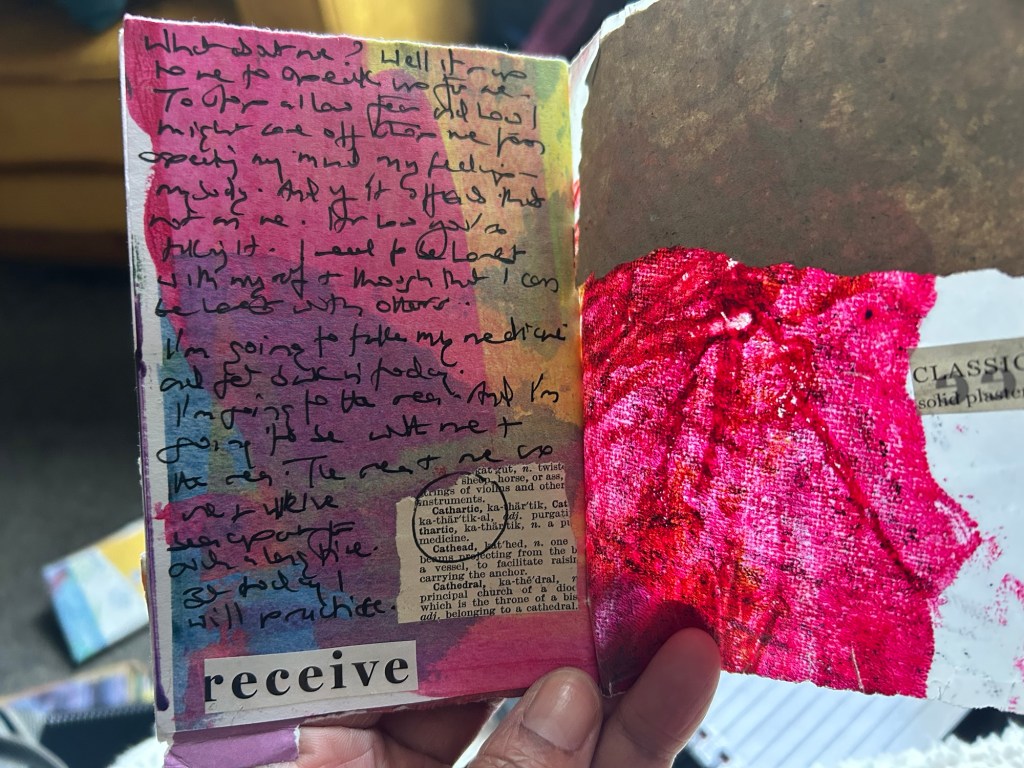
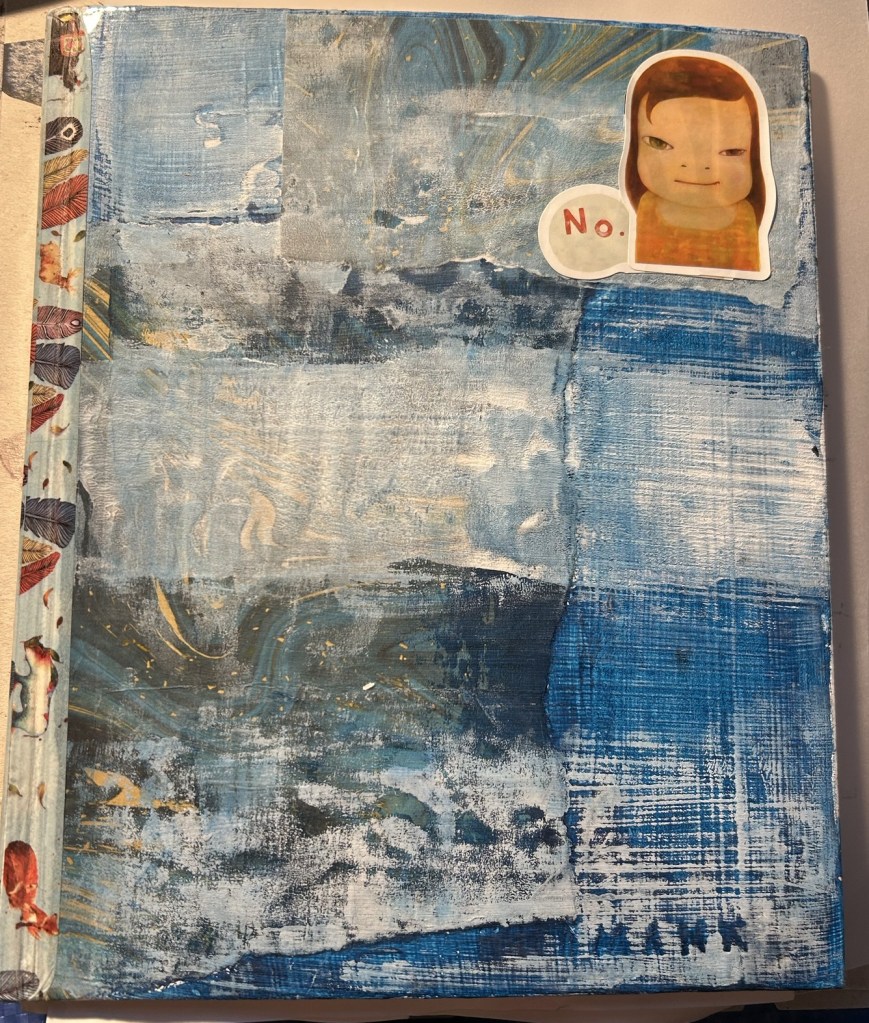
So out came a creative sketchbook, inspired by the 30 days sketchbook challenge created by Cheryl Taves over at Insight Creative.
This is as much as I’m willing to share for now about the challenge, my creative sketchbook, processes and insights.
One of my rules is that it’s just for my eyes only. I want to see how this rule changes my practice. I want to create without fear but with curiosity. I want to give myself all the freedom without worrying about what others will think or say or comment on.
It’s not like I’m hanging on other people’s responses and reactions but I have gotten into a habit of just sharing anything and everything on my blog and I’m curious to see what happens when I keep things to myself.
Just for my eyes, heart, and soul only.
So far I’m enjoying the process of the challenge and I’m reflecting and paying attention to what makes my heart sing, what’s my creative vocabulary, what pushes my energies.
Do doubt whatever I explore within my creative sketchbook will be showing up in everything that I create. In everything who I {BE}. For sure.


 Living Wild Studios