The Afro-Surreal Manifesto

Considering D. Scot. Miller’s essay , Afrosurreal Manifesto
“I was there…” – Black is the New Black, a 21st century Manifesto
.

In an introduction to prophet Henry Dumas‘ 1974 book Ark Of Bones and Other StoriesAmiri Baraka puts forth a term for what he describes as Dumas’ “skill at creating an entirely different world organically connected to this one … the Black aesthetic in its actual contemporary and lived life.” The term he puts forth is Afro-Surreal Expressionism.

Dumas had seen it. Baraka had named it.

This is Afro-Surreal!

This was my first brush up against the term Afro-Surreal, even though as soon as I read what it means/ what it is, I knew in my bones that I’ve been living it, I’ve been experiencing it from time.

Miller takes the time to lay out what Afro-Surrealism is NOT.

Afro-Surrealism is not SURREALISM or AFRO-FUTURISM

SURREALISM is a white, European, literary and artistic movement that attempts to express the subconscious. It’s dreamlike, fantastic imagery and an illogical juxtaposition of subject matter.

Leopold Senghor, poet, first president of Senegal, and African Surrealist, made this distinction: “European Surrealism is empirical. African Surrealism is mystical and metaphorical. Jean-Paul Sartre said that the art of Senghor and the African Surrealist (or Negritude) movement “is revolutionary because it is surrealist, but itself is surrealist because it is black.”

AFRO-FUTURISM

Afro-Futurism is a diaspora intellectual and artistic movement that turns to science, technology, and science fiction to speculate on black possibilities in the future. 

Afro-Surrealism is about the present. There is no need to speculate about the disasters that are coming our way or are just around the corner, somewhere in the future. The worst case scenarios of bombs, genocide, floods, fires and destruction are here now.

What is the future? The future has been around so long it is now the past.

Afro-Surrealists expose this from a “future-past” called RIGHT NOW.

RIGHT NOW. Trump is President of USA and is destroying/ dismantling democracy over there, at the same time as creating wars and genocide around the world.

RIGHT NOW, Afro-Surreal is the best description to the reactions, the genuflections, the twists, and the unexpected turns this “browning” of White-Straight-Male-Western-Civilization has produced.

Miller, at the time of writing this manifesto, professes that San Francisco is the land of Afro-Surreal poet laureate Bob Kaufman. San Francisco where black artists are changing the narrative , to transform how we see things now, how we look at what happened then, and what we can expect to see in the future.”

Briefly, the ‘A MANIFESTO OF AFRO-SURREAL’ includes:

  1. The unknown worlds and wonders are emerging in the works of Wifredo Lam, Jean-Michel Basquiat,Frantz Fanon to Jean Genet, Zora Neale, Chester Himes etc.
  2. Afro-Surreal presupposes that beyond this visible world, there is an invisible world striving to manifest, and it is our job to uncover it.
  3. Afro-Surrealists restore the cult of the past, revisiting the old ways with new eyes. Appropriating symbols of the past, conjuring the ancients for now.
  4. Like the collage of Romare Bearden and Wangechi Mutu, the use of excess is used as subversion. Hybridization is a form of rebellion, refusal, disobedience.
  5. Afro-Surrealists strive for rococo: the beautiful, the sensuous, and the whimsical. We turn to Sun Ra, Toni Morrison, and Ghostface Killa. We look to Kehinde Wiley.
  6. The Afro-Surrealist life is fluid, cannot be pinned down. Afro-Surrealists are ambiguous and reject servitude.
  7. The Afro-Surrealist wears a mask while reading Leopold Senghor.
  8. Think Prince. The Afro-Surrealist seeks definition in the absurdity of a “post-racial” world.
  9. In fashion (John Galliano; Yohji Yamamoto) and the theater (Suzan Lori-Parks), Afro-Surreal excavates the remnants of this post-apocalypse with dandified flair, a smooth tongue and a heartless heart.
  10. Afro-Surrealists create sensuous gods to hunt down beautiful collapsed icons.

This Afro-Surreal Manifesto is Afro-Surreal.
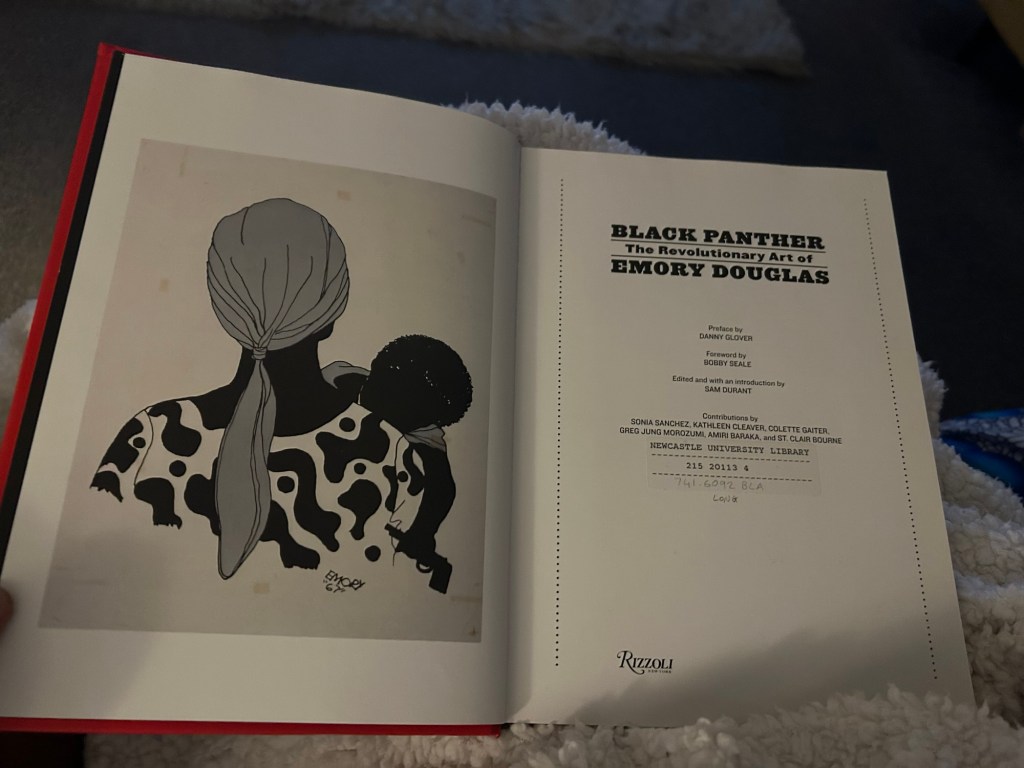
Black Power – Revolutionary Art

I got out earlier than expected from my gig today. So I used the time to get to the library and pick up a book I’d spied

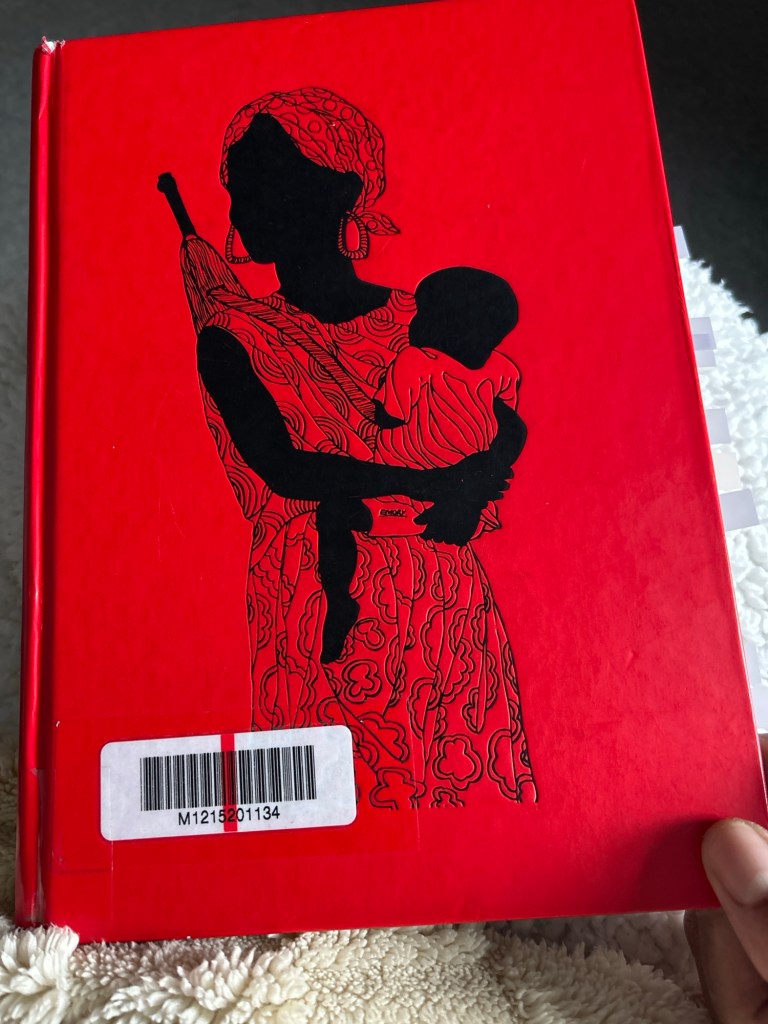
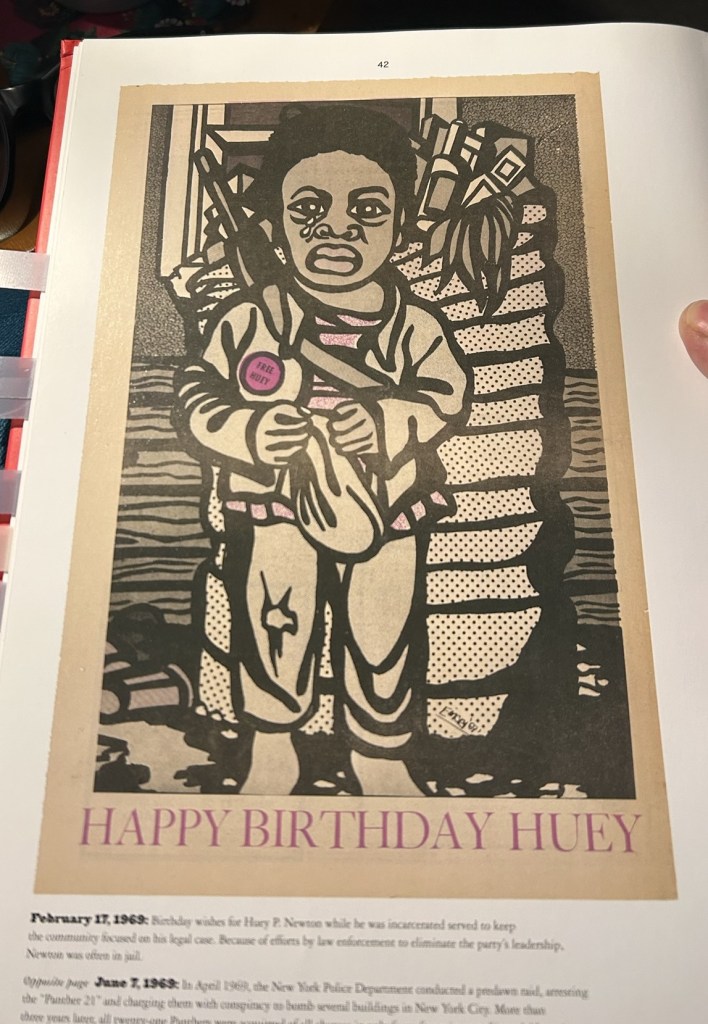
Black Panther: The Revolutionary Art of Emory Douglas.

I’ve seen the posters created by Emory Douglas as part of exhibitions such as in the Soul of the Nation: Art in the Age of Black Power (2017), but never before have I seen his extensive artwork all together.

This monograph edited and introduced by Sam Durant is a gem.

Along with my exploration of Paul Amos Kennedy Jr. last year (and continuing into this year too) and this dive into the artworks of Douglas gets me thinking that I might be feeling the need to create some social justice/ black power artworks myself.

Who knows. My interest has been caught and this book is feeding me with inspiration to the max.

In The Thick Of It

BALTIC commission process journal

“The most effective way to do it is to do it.”

Toni Cade Bambara

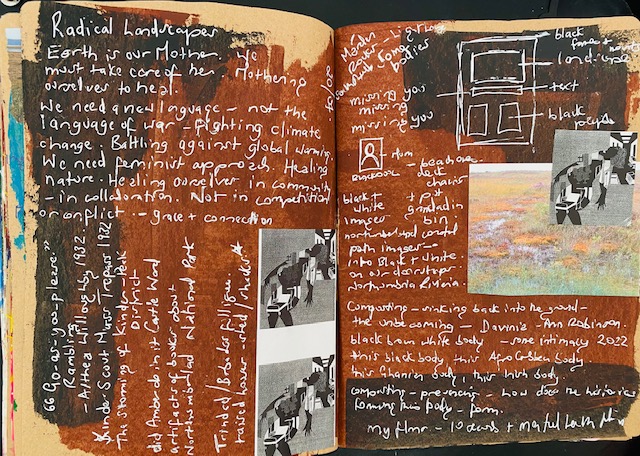
I set myself the task of touching the Hinterlands commission every day for the next 100 days from the beginning of July. And on the whole, I have succeeded so far in this task. Day 23 of July and I’ll be honest, this commission is filling my waking and sleeping hours, as I agonise over how to bring my ideas and concepts to fruition. How to communicate what I think, or feel or see to others. How to make that connection of understanding, empathy and solidarity when exploring the Black woman’s body with/in nature.

This is not an easy task. And I think I’ve made the task more difficult for myself by trying to incorporate multiple and diverse art form into the brief. It’s that same old story, that fear of never getting another chance like this so I have to say everything I’ve ever wanted to say on the subject all at once to make sure I get my message across. That I use this opportunity to it’s limits as this might be my only shot, my only slot, my only opportunity to speak and shine.

Of course this is not based on fantasy. This is based on fact. Did you know that just 2,000 artworks in the UK’s permanent art collections are by Black artists – most of which aren’t on display?

And even though over the last couple of years, there has been more visibility and opportunities for Black and People of Colour artists to be part of the British art scene/establishment, for example with Sonia Boyce winning the top prize, the Golden Lion as she became the first Black female artist to represent Britain at the Venice Biennale. This is still a rarity and not the norm.

“It seems almost ridiculous that it takes into the 21st century for a Black British female artist to be invited to do Venice,”

Sonia Boyce

We are still operating in a highly racist, discriminatory system. FACT. I can continue to keep chipping away at this. And I will. But …

For here and now, I think it comes down to confidence and belief in what I’m doing. To silence the outside noise. Ignore the internal critic and just do it. Do the things I want to do and move on.

At the end of these 100 days, I’ll have a collection of items, products, creations that I will then pull together into a whole. Into saying something about something.

We will have to wait and see. But I’m enjoying the process.

So already I feel as it I’m winning.

Fear to Fury

James Baldwin when interviewed after the SNCC Freedom Day demonstration in Selma, Alabama, October 1963 described what he saw there.

When was asked if he was afraid in the moment when the police were moving in on the African Americans waiting patiently to vote with guns and clubs and cattle prodders, Baldwin replied,

“ The thing is you get – you’re so scared – I was scared in the morning. Before it all began. And I was scared the first time I walked around there. But, later on, I wasn’t scared at all … Your fear is swallowed up by, you know … fury. What you really want to do is kill all those people.”*

* Quoted in Begin Again: James Baldwin’s America And It’s Urgent Lessons For Our Own, by Eddie S. Glaude Jr.

“The helmets were, you know, like a garden. So many colours.” James Baldwin *