I don’t know about you but I love me a good book cover.
You must have chosen to read a book because of the cover, right?
That’s what I’ve just done.
I recognised the artist as Laylie Frazier. I knew her work from reading Christena Cleveland’s work The Black Madonna.
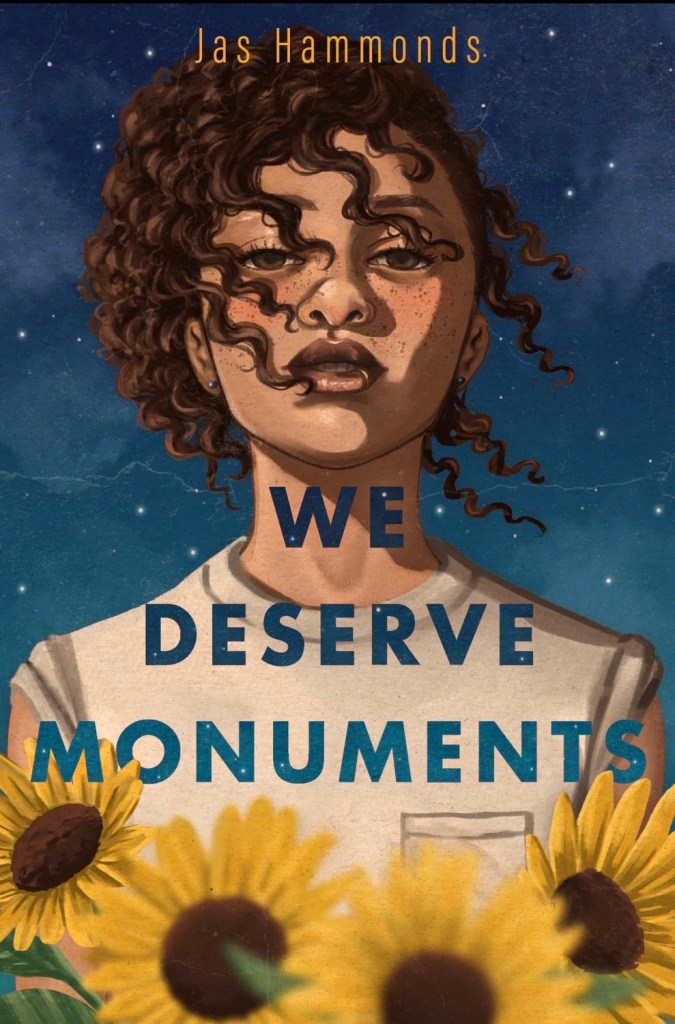
Researching up more of Laylie Frazer’s work, I found this book over for We Deserve Monuments.
A mixed race teenager with freckles and a lip piercing, defiantly holding the viewers gaze. Yes.
I had to start reading this book. Then to find out it’s a young adult book, and the main character from the cover is Avery and is gay. Yes. Then read on.
In my Summer Field Guide, which I have to fill you in on as there’s been developments, this week was earmarked for a YA read to fit in with how I’m summering like it’s 1985.
Everything is aligning. And the book does not disappoint.
Avery is uprooted from DC to her mum’s childhood home in rural Bardell, Georgia, because Mama Letty ( Avery’s grandma) is dying. The family hasn’t been back for years because of some family rift and secret, which no one will talk about. Avery makes new friends and starts to settle into her new life, even though there’s talk of one of her friend’s mum being murdered by her rich dad who’s linked to the past of slavery, slaves and plantations.
And still no one wants to talk about the past but everything is linked to the present and what happens moving forward.
Right, after sharing this with you, I continue to read now.