I’ve just been over on my Patreon page sharing about the first zine of the year. Do you want to know what I shared about it?
Okay, I’ll tell yo here too!
A few years ago, I gave myself the challenge of creating a zine a month. Check back using the ‘zine’ tags and no doubt you’ll find them, still there ready to download and peruse.
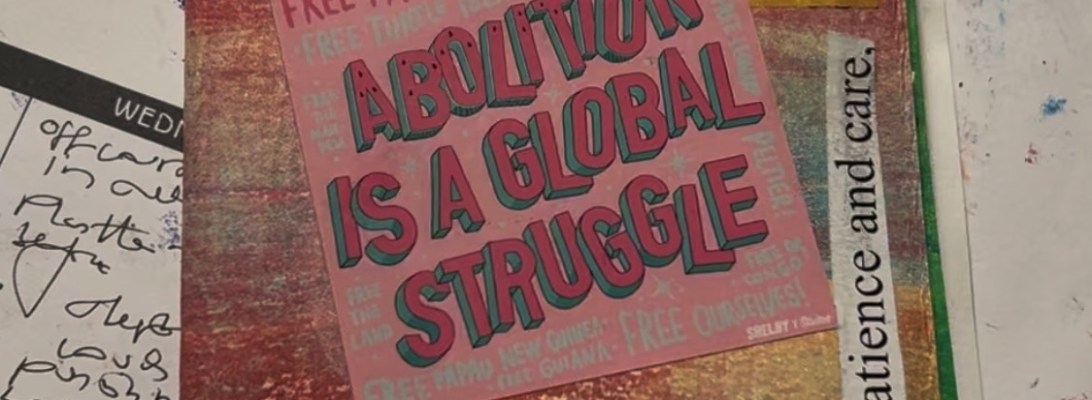
This year, I vaguely set myself this challenge again, to create a zine a month and share it here. I think. As I’m still in the process of committing. But last night, at a Zinester Sanctuary that I’m creating witha fellow fugitive, I had the time to create my first zine of the year. See the video above.
I looked back at one of my zines from my first challenge, this was a zine about the zines I wanted to create. I looked back to see if this list of zines with illustrations were still zines I wanted to create.
After this reflection, I then set forth to create the zine that hopefully is the blueprint for 2026 creations.
In the video what you are seeing is the front cover stating that ‘Abolition is a Global Struggle’ with FREE PALESTINE but also the caveat that this has to be completed ‘with patience and care’.
The next page with a wheel of a VW Campervan and the text ‘ like a bird flying into’, is a nod towards my love of nature and how she will always appear in my zine creating, some way or another.
The next double spread with an image of two little girls standing on the beach, myself and my estranged sister and the text reads, ‘me in all my fucked up glory’. This signifies the task of creating perzines, using the format to explore my life stories.
On the green page with a roughly drawn book in black pencil refers to my desire to dive deep into my black studies, studying blackness as fugitivity, fugitive spaces. ‘You will find comfort in blackness’ the text reads to accompany this intention.
The next page is a quote from Octavia E Butler, from Parable of the Sower which states, ‘All that you touch you change, all that you change, changes you. The only lasting truth is change.’ This was a small print I received from a printmaker friend called Theresa Easton.
The second double spread, because I hadn’t finished yet with my intentions (so who says you can’t add in another page?) is a recognition of my word of the year which is AFROSURREAL. I’ll be exploring what this means further throughout the year here and on my website.
This is partnered with a splash of purple/ mauve as the text reads, ‘ in mauve there is a quiet power.’ This is a reminder for myself to use my zines to share my poetry. My voice is my power. This was how I started making small zines, booklets before my first collection of poetry, Family Album was published. Because I was reading at all these gigs and people would come up afterwards and say where can I buy your work and I had no where to point them to. So I got creative and created these little zines , one dedicated to the poems I’d written about my daddy and one other dedicated to my mummy, and sold them for £1 each. I’d forgotten about them until I just wrote about them here now. Don’ you just love the creative process?
And then moving towards the end of this first zine of 2026, which apparently has been announced as the year of the zine – 2026, we’ll see what happens there as zines could become if not already commercialised and co-opted and become unrecognisable from their origins ( which I’ll be exploring and sharing further about here), there is a polaroid photo of myself smiling. This was taken last year at a Outdoor Citizen gathering, and these were taken to put on the wall with details about ourselves so we could be putting names to face,s be recognised within the crowds. This image is here with the title ‘fugitive sista’ as a reminder of who I {BE} but also who I {BE}coming through my continuing thoughts and praxis around fugitivity.
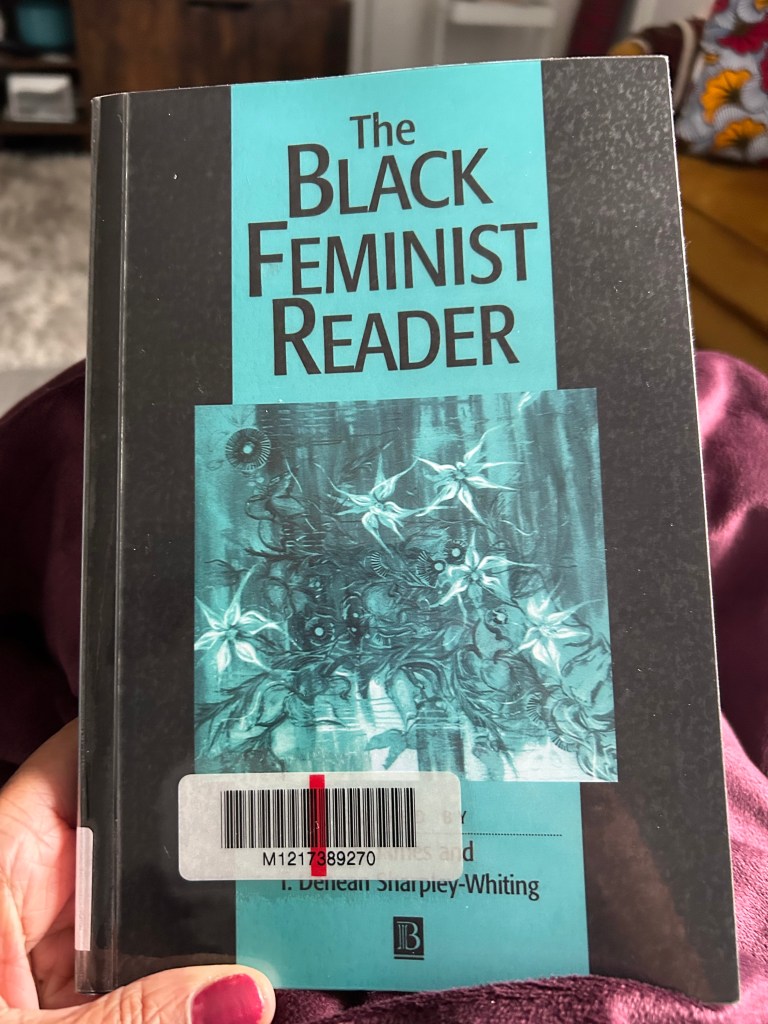
The final page with the outline of a goddess in black pencil and spiral within her gut/ womb and the text, ‘ Today I will praise. I will praise The Black Woman.’ Today ,tomorrow and always, I will praise the Black Woman. I support this praise with my continuing reading and practicing of Black Feminist thought and praxis. This is my foundation always.
The back cover ends with another sticker and this time it states, ‘ From the river to the sea, Palestine will be free.’ Again reminding myself that I do this work, explore my creativity and share whatever comes up within a constantly changing context of struggles, struggles for liberation, peace, justice, self-determination and love.
2026, the year of the zines. Let’s make it the year of the zines that give voice to the struggles near and far , struggles for liberation, peace, justice, self-determination and love.
 Living Wild Studios