I’m been talking here about finding my tribe. About my search for comrades in solidarity. I’ve remained pine in the process, for real. From one particular source I asked for further reading, as something was niggling me. Id expressed my concerns in terms of using the oppressors language as well as, well I felt as, the lack of warmth, kindness, care and love. And then through the further reading it all became clear. This was my response.
I believe that there needs to be unity to fight all oppressions. You can’t fight racism without fighting against capitalism.
But I realise through this further reading where my concerns lie. It’s not in the socialist/Marxist movement as a whole but it’s with the people who make up the movement.
I’m not sure if the people of the movement have/ or continue to take the time to work on their own racism. There seems to be a given that because the movement is against all oppressions that it means those who are part of the movement can’t be racist or sexist because they say they are against all forms of oppression. Saying it is one thing. Practising it is another.
In practice there is still the use of the oppressors language as I’ve mentioned before. Using ‘non-white’ or ‘minorities’ is offence as they still centre whiteness which is used for division and oppression.
The articles mention the BPP alienating white people because of their support for Black Nationalism and Separatism, and their language used around Black Power. You even mentioned yourself that we can’t fight capitalism through language and its use. Modifying language is not going to bring about material change you say.
And yet it is language the party is using to rally the masses, to bring people together. Language is the tool of persuasion no? Language is the tool of education.
But if that language continues to use the language of the oppressor and is offensive to certain groups of people, they are accused of being confused, ill informed and falling into the identity politics trap again.
However, from my experience, through reading the literature of the party, I feel that the language used reflects a party line where the people behind that line are not continuing to work on their own racism/ biases while focusing their efforts on society’s ills, outside of themselves.
I do not feed into white supremacy culture with the characteristics of either/or. I believe in and/both. That means for me, there has to be the work on the individual’s internalised racism and sexism at the same time as working against oppressions within society. Working on our own blind spots and prejudices can only benefit the movement as a whole. Where this fails to take place is where the oppressors divide and rule become fixed without our recognition of it.
To say that ‘non-white’ is every day language, quote, ‘commonly understood by ordinary people as respectful ways to refer to some people who are oppressed’, as a black person being referred to as ‘non-white’ is offensive to me and I’m not really bothered if other black people are okay with it. I might be falling into an identity police trap but one my identity is not built on my relation to whiteness that is racism. Two, if someone says they find it offensive and that is not recognised or is questioned and explained away as being the norm is denying that person’s experience which is racist. Three, to bring this up then to have it dismissed as being defensive and accusing someone of being a bigot/ racist and dismissed as a distraction from the cause is another example of an individual failing to check themselves and work on themselves to combat their racism/ discrimination tendencies.
I work on myself daily to check my prejudices or biases or judgments and blind spots. I only wish more people would also as I do believe the world would be a better place because of it. Movements and societies are groupings made up of individuals. Working on the individual at the same time as the collective can only strengthen that connection and keep moving it forward in an effective way, I believe.
If we think about what is happen in the USA today, and the ICE raids within every community. The Latino community is coming out and asking where are the black people why are they not out here on the streets with them protesting? Why are they sitting this fight out etc.? Black people are tired, esp. black women. Black people told everyone to vote for Kamala Harris and they didn’t listen. They voted for Trump. And now he is doing all that he said he would do.
Now people are asking for black people once again to put their bodies on the line. And yeah this is a prime example of the ruling class dividing and ruling. Pitting one group against another. But what is true there and what is true here, black people only make up a small percentage of the population. In the states 12% here 4% with other ethnicities. And yet it is expected for us to save the world. ( Aside here we might be termed ‘minorities’ within these countries but we are the global majority. I don’t use ‘minorities’ because it is used as language of control. Black Feminism or Third World Feminism has always been global in its remit).
It is expected for black people to put aside those differences which on a daily effect our life chances. Our lives in terms of life and death. And this is not feeding into a victim hierarchy and who’s suffering is more than someone else’s. It’s a reality. Black people, black women do not just suffer violence and brutality from the state but do so from person to person in their every day and yet black feminism still criticises and attempts to bring material change for all through fighting all oppressions including capitalism and yet if they ‘fail’ to bring about material change it is because of ill-fighting or confusion in their ideology but no mention of doing this within a racist/ sexist society that does not see Black women as anything except mules of the world. Not either/or but and/both.
As black women we continue to not be seen as human. Read Fugitive Feminism by Akuwgo Emejulu to understand this, which is anti-capitalist, anti-imperialist and anti-colonialist. It’s arguing for a rejection of the whole system. A refusal of what has already been refused to us. Other ways of being are possible.
Marx himself saw the future of capitalism as self-destruction and a social mode of production being the outcome. Fugitive Feminism is being/working now with the other possibilities. It’s about creating an outside while still on the inside. Creating spaces of liberation and joy on our own terms. It’s not waiting until then for it to be now. It’s collective and speculative and might be fostered by black women but can be utilised for all, all oppressions including capitalism and the class struggle. It is probably dismissed though because it comes from the mouths, minds and hearts of black women.
Thanks for all these readings. They have helped in clarifying where I stand. In solidarity but at the same time in my own fullness and power which I lend to any movement which recognises this and works with me to bring about dismantling all oppressions for all people.
The reply I got, was thanks, I’ll reflect on it, and wish you luck on finding your people.
I’m sharing it here as I don’t want my realisation to do to waste. The words I shared to go to waste, as I’m still open for the conversation, still open to standing together.
I’ve been seeking people, groups and organisations that I can become part of.
After a life changing anti-racism training session, which I no longer call it as such, where I realised that what I’ve been doing is really just continuing to centre whiteness and uphold white supremacy culture through this training, I feel the need to not be alone any longer in my views and activism.
I need comrades and solidarity in action.
This search for my tribe has seen me reaching out to the Revolutionary Communist Party( RCP) and the Revolutionary Communist Group – Fight Racism, Fight Imperialism, The Ella Baker School of Organising and their recent conference in London titled Defeating Narratives of Division and just yesterday, attending a meeting of the North East Anti-Racism Coalition. Let’s explore each of these experiences in turn as there has been much learning as well as clarification of where I stand in the mix.
First, my main concern around the anti-racism training I’d been doing for the last five years was that it wasn’t looking at the class system, oppression through class which is a result of capitalism. It really isn’t critical enough, or even analysing capitalism and how this is our common enemy. Through focusing on whiteness, white privilege and white supremacy culture is fails to acknowledge and really get to the roots of what and where racism came about. Race was the creation of the rich landowners afraid of the workers, both black and white, rising up and revolting. So they created the elevated status of whiteness, and the white class to bestow certain right and privileges on to the poor white workers who shipped over to the Americas for a better life form England as a means of separating them from this black workers they were so recently working side by side with. To continue to maximise profit through brutal working conditions the white working class was created, whiteness was now at the top of the hierarchy and could weld power over black workers who were once their comrades and fellow sufferers.
I realised that the common enemy is capitalism. We may have differences but we can find that common ground and come together to fight for better lives and conditions, or even destroy the whole capitalist system as then everyone, every worker would be better off. The means of production and money and gains within society would the shared out equally to all members of community. No one would be ruling over another, no bourgeois as Marxists would say.
I was looking for comrades and solidarity not allyship so I started to explore the Revolutionary Communist Party UK which split off from the Revolutionary Communist Group ( Fight Racism, Fight Imperialism) in 1978. I’ve been exploring them both really once I established the distinction between them. I’ve reached out to both, subscribed to the newspaper, Fight Racism, Fight Imperialism and bought some books. I must say it’s kind of like a labyrinth to try and get involved. The need for some connection or someone to just respond in an email what they are doing and how someone like me could get involved was needed. They want to talk to you on the phone and share what they are doing and almost interview me in terms of what I’m looking for or do or think. I’ve felt at times as if I was being tested for something.
Then I received a long essay to read. Marxism ‘v’ Identity Politics, which is what the RCP stands behind and I assume RCG ( FRFI) do also. It’s a long read but I persevered. From the beginning by back was up because they were talking about women, and women being slaves to men and being oppressed before capitalism was created. I got the feeling that when they were mentioning women they were referring to white women. But I read on. And in all honesty I cannot stand behind this document if this is what Marxist and Communists stand for.
I know within this document , it is repeated that Marxists stand against all oppressions and yet it still uses the language of the oppressor in terms of using ‘immigrants and non-whites’ and ‘oppressed minorities’ . I find its tone offensive, condescending and dismissive.
Failing to acknowledge that Third World/ Black Feminism has always been about fighting all oppressions for the betterment of all, being anti-capitalist, anti-imperialist etc. I feel where feminism is mentioned within the article it is just referring to white feminism.
I do take on board and agree to a certain degree that intersectionality and identity politics are divisive. I have tended to adopt an intersectional approach to issues now. But I have to take issue with the lack of respect and care demonstrated towards people’s difference within the piece. It almost feels as if the document is calling people who fight along identity lines against oppression as stupid or near sighted and just thinking of the individual.
There is a case for being forceful and adamant about what Marxism stands for, but I just didn’t feel the care and kindness and joy within the piece which I seek within any movement I am part of.
So I’ve left my Marxist/ Communist involvements there as they focus on the workers, as capitalism, imperialism, colonialism are the problems, we can come together and fight together on but not at the expense of love as the foundation. I felt the love and joy at the recent Defeating Narratives of Division conference in London with the Ella Baker School of Organising but I think this was coming directly from the creatives present as well as the gay and trans-people present. That’s how we want our movement to feel, joyful , respectful and loving and caring for each other. I am still waiting to hear back from the organisers of this conference in how I can get more involved.
Finally, yesterday I took a trip to Hartlepool to attend the North East Anti-Racism Coalition gathering so find out what they are all about and up to. Formed in 2024, they aim to make the North East a region that actively opposes racism and hatred based on religious identity. I was interested in finding out about their journey this far, what they stand for and what are their next steps. It was well attended, with the majority of people being white. After details about how the coalition has developed and where they see things going focusing on campaigns, membership, raising awareness and learning, we were tasked, our tables, to introduce ourselves and why we were there. I was the only black person on the table and while I said I was there to agitate, others were there to gain information to take back to their organisations, maybe not realising that they were also there to give not just take. But let’s go on.
Next was the keynote speaker, Matt Storey from Cleveland Office of the Police and Crimes Commission. He gave a powerful speech about how diversity within the region is a positive, a strength and how they are standing up against the racist riots of last summer, but he frequently referred to people of the global majority within the region as immigrants, or refugees and asylum seekers, people who had come here on boats so to speak, not once referring to the black and brown people who were born here in the UK, or the region who have been here for hundreds of years. For me this is just playing into the narrative that we do not belong here. There was talk of fighting and defending these diverse groups of people, again falling into the white savourism narrative. I am not your victim, I do not need saving, I need comrades and solidarity. We don’t need any more heroes thank you.
From here it was to get into working groups to focus on such things as membership, campaigns, learning hubs, and research. Let’s just say something about their research. It was billed as if the coalition was going to share some research. The person presenting their findings another white person came to the conclusion that more research was needed and was beyond the scope of the working group and should be taken on board by the wider/ whole coalition. The research proposed, you guess it, a survey of black and brown people in the region to share their experiences of racism. It can be done anonymously but if you give your contact details you will be put into a prize draw to win £100 in shopping vouchers. So please share with your networks as the deadline is 18 July.
Of course everything I’ve just said there about the survey is done in a sarcastic tone as I am not promoting people of the global majority in the region to complete this survey as from my point of view there is plenty of research completed which demonstrate racism exists. Maybe they want some up to date data after the riots of 2024, but still I’m sure there is research out there where they wouldn’t have to exploit or expect us to share our experiences once more or fall into this habit of having to prove it exists once again. There was no mention or indication as to what this research would be used for afterwards either.
I joined the campaign working group to see what was happening there. One question we talked about in smaller groups was how can we build better connections across difference. Things that came up was attempting to find that common ground, where there is mutuality over issues that we can come together on and work together on to bring about change for everyone. Yes I can get behind this.
But then, from the few other black and brown people who were part of this small group, I got the impression that is was a competition to share as many stories and instances of when and where they experienced racism. Of course the white people in the group were lapping this up but I felt it was again a way to prove that racism exists and is happening or has been happening within the region for generations. And this is true, but for me I am past trying to convince anyone that racism exists. For me it is a given, let’s move on. For me it’s just treading water.
And the last point, from another group’s feedback, a white woman speaking said that it would be really important for building connections to hear first hand from black and brown people about their lived experiences around racism. It helps others to understand it, she said. And I disagreed saying it just re-traumatises someone to retell their experiences of racism again and again to strangers, no doubt. A black man disagreed stating that we should be sharing, telling our stories. And I just said well from personal experience, I’d rather not be triggered and again it’s as if we are spending our energy on trying to prove it exists. That racism exists. I’d rather focus on our joy, black joy which white people do fin threatening but at least ti would demonstrate we’re not just cardboard cut outs created to experience race and racism.
After this I left. I left early because I’d had enough. I felt as if I was on different page to people who where at the event. I know it’s not an either/ or, it’s a both/and. But for me what was lacking was listening to each other. People were talking over each other, people were there to take at the same time as be heard, but there wasn’t much giving and listening.
I know I’m a lone wolf in terms of being fugitive. In terms of the way I think and operate. I listen and consolidate and try to meet a consensus but there was just not enough respect and comradeship within the room for me. It was very transactional and very little care and love and kindness.
So I’m still on the hunt for my tribe. I wanted to contribute to whatever was happening already. Contribute to the flow already happening. But as of yet I have not found this space. Maybe need to create my own that can hold all the contradictions and differences but is build on solidarity, respect, kindness, care and love.
It was so good to have a deep dive into my practice, my work around fugitivity and refusing to perpetuate white supremacy culture. And it was all welcome at Feral Words. Nothing off limits and it was so liberating to try and make sense of all the concepts and ideas and feelings that are circulating within and without of me at the moment in time. A very disturbing time.
It makes a difference when we’ve got the light. And it’s warm with it.
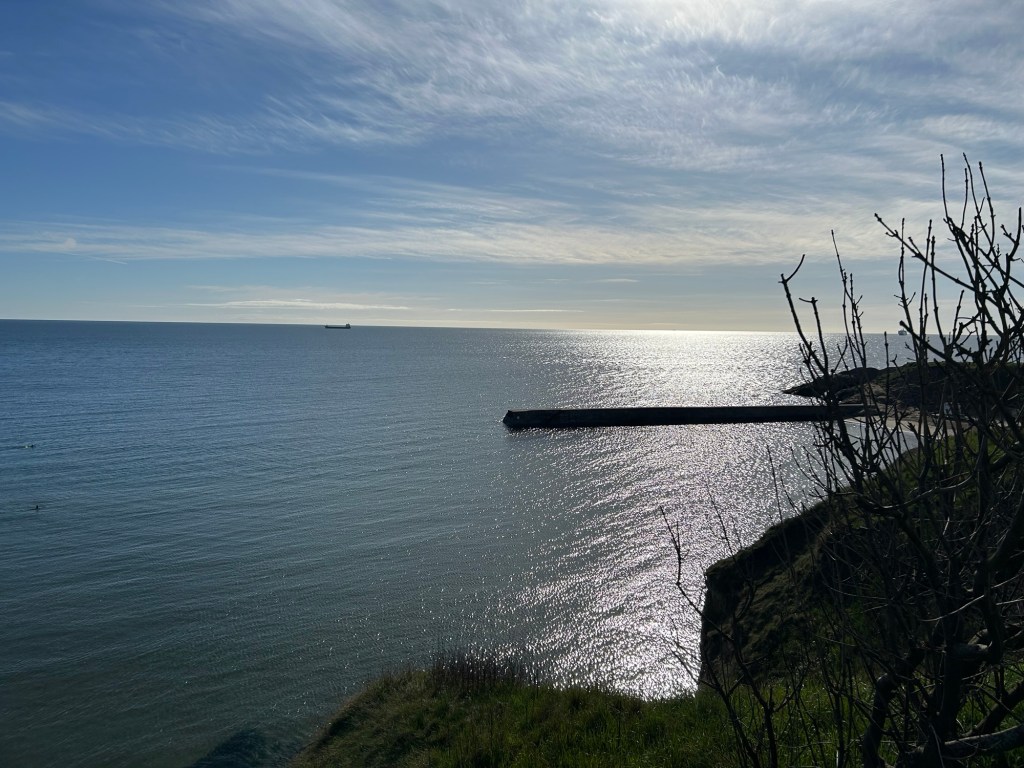
I’m in a three day streak of getting into the sea, straight after the school run. The tide has been in too. Which I love.
I love it when the bay is full to the brim with sea. I don’t have to walk far before I meet the water.
I give thanks when I greet the sea. Because she’s always there for me. Not judging me. Not rejecting me. Just welcoming me.
In the past, the sea has healed me again and again. The first time of any significance was when I miscarried our second child, back in 2009. We moved to the coast soon after as I needed to heal.
And to be healed is not a one time thing. Healing is a life long process. Sometimes I’m locked into my healing journey and sometimes I veer off course and need something or someone to remind me to get back into the practice. The practice of healing.
So with a new month comes a renewal. And this is the time of year to renew. Spring is well and truly with us now. And the blossom may be receding and just pink petals on the wind, or white even. But I’m catching hints of bluebells.
So my list of habits and actions to lean into for a May of Healing includes:
A high protein breakfast.
Making sure I get 8+ hours of sleep each night. Priority!
Getting lost in a few good books.
Walking each day. Getting outside into the light.
Getting into the sea as often as possible, at home and away.
Visual journaling daily.
Getting back into painting for pleasure. To hell with the results.
Increasing my fruit and veg intake.
Increasing my water intake. At least 2litres a day.
Continue on my strength training journey.
Insight timer daily.
Reconnecting with friends and family I haven’t talked to for a while.
Solo dates like to the cinema or a museum. Or a delicious meal out for one!
Acquire some new plant friends.
Create a zine or two.
Plan the summer holidays for Miss Ella and me. And also solo me!
Keep traveling for pleasure and joy instead of work commitments and responsibilities.
A book is much more faithful than a lover I think.
A book can open you up to so many different experiences at the same time as reaffirming everything you’ve been feeling and thinking and struggling with.
I’m not sure a lover can do all that for me. But many more than one lover could?
Hence spending copious amounts of time in bed with books.
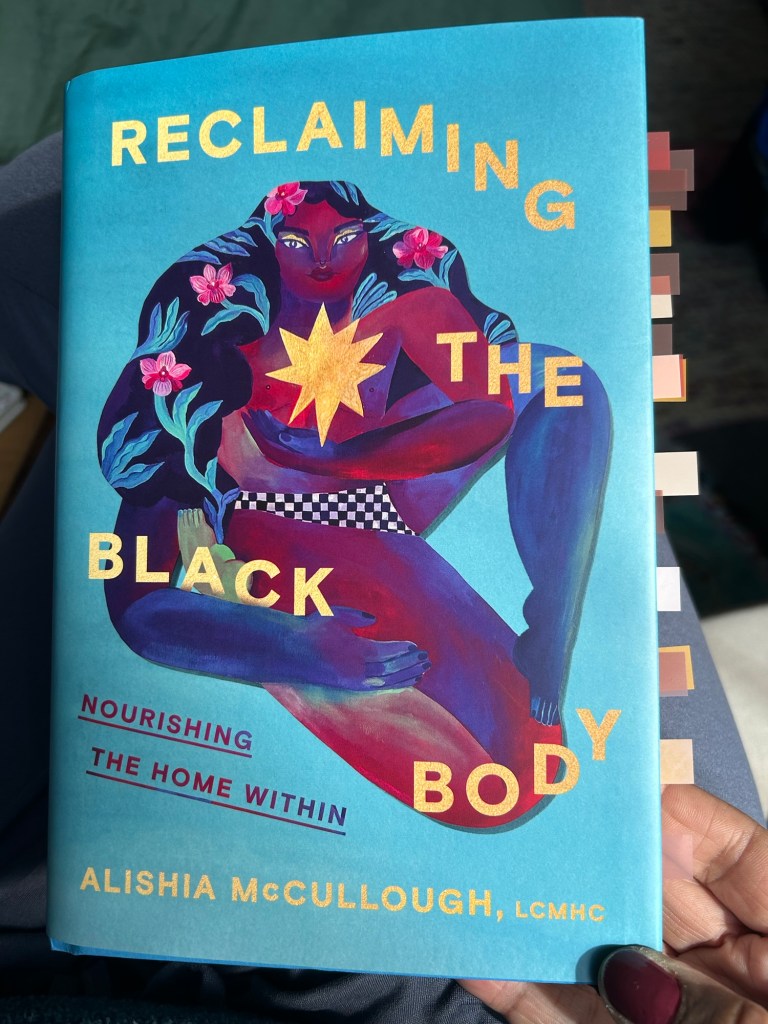
Reclaiming the Black Body: Nourishing the Home Within by Alisha McCullough is one of my current reads.
I used to be of the persuasion to read one book at a time. Devote all my time, focus and attention to one book in order to reap the glory/ knowledge/ whatever!
But these past few years, as I’ve become thirsty for stimulation and attempting to find like-minded people/ theories/ lovers, I’m moved into reading multiple books simultaneously, also known as “syntopical reading”.
And these books are not on the same topic either. They range from poetry around grief, non-fiction on gardening, personal essays around deep time, romantic and crime novels and short stories about myths and history. The list goes on!
I’m so enjoying this eclectic and multiple reading practice as it’s keeping me engaged, creating unique and original connections and it’s keeping me feeling loved.
By me.
So one of my current squeezes is Reclaiming the Black Body and I’m devouring it in small digestible bites because it is speaking to my soul.
This book is calling to attention the deep-seated, long-time, disproportionate amount of trauma, violence, marginalisation, discrimination, and adverse childhood experiences of Black women and femmes, and confounded by misognoir and racism, how we have learned to cope with it all through increased imbalanced eating behaviours.
Usually called “eating disorders” but even using that language implies that the individual is to blame and implying that some of us are just not equipped to nourish our bodies and do not know how to look after ourselves.
‘Disorder’ implies stigma and comes from the Western health ‘care’ system which from time has excluded and harmed Black people.
So this book is a balm for the wounds of silent struggles Black women and femmes have been going through around eating imbalances including myself. And is a vindication that we’re not fucked up and broken and just beasts, being less than human but that we are doing our best with the tools that we have to strive and thrive within a system that is hell-bent, historically and now, to demonise the Black body.
I will continue to cosy up with this book and others in bed, night and day, as reading is hitting the spot!
I’ve got time on my hands to read. A reading week as we used to say at Uni. Why? Well that’s another story, I’ll tell you at another time, maybe.
For now, I’m getting my teeth into something that will make me feel better, or feel as if I’m getting somewhere with my self-study/permaculture diploma design/ ways of being.
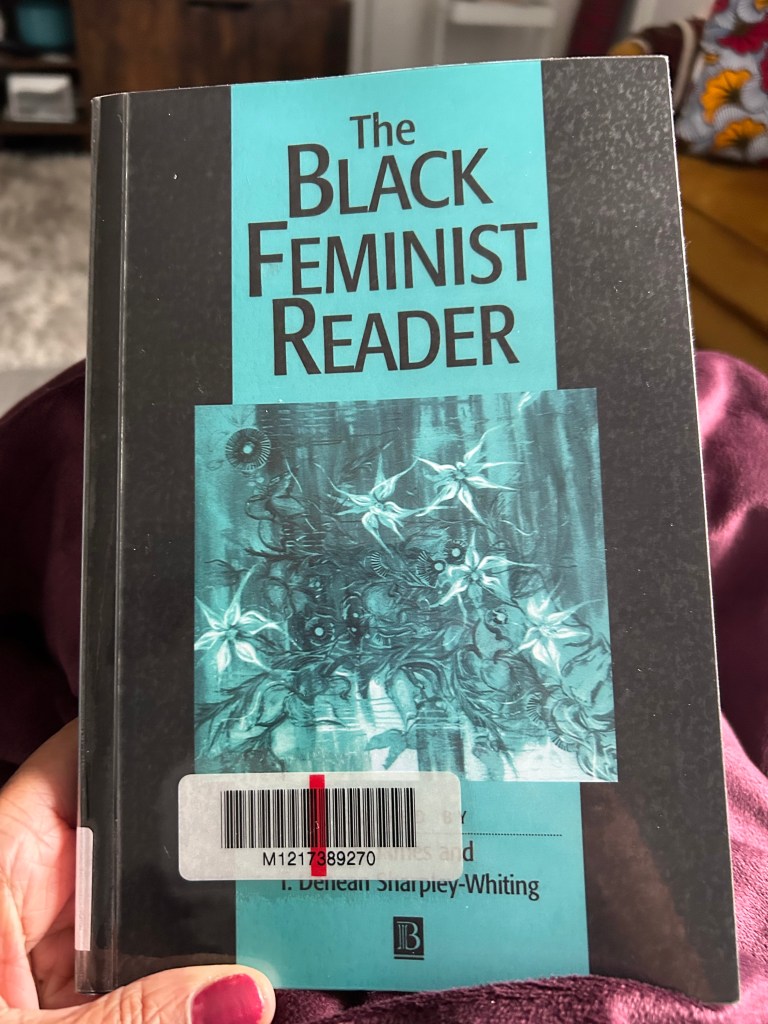
I’m reading The Black Feminist Reader edited by Joy James and T. Denean Sharpley-Whiting. And I’m heartened to read in the first essay in the collection by Barbara Christian, ‘The Race for Theory’, that along with her Black sisters, Christian has not rushed to create abstract theories around how to read Black women writers/ Black women’s literature. The argument goes that there are countless Black women around the world, women colour around the world, and one single set of ideas cannot be applied to such diversity.
As Christian goes on to argue, “There is, therefore, a caution we feel about pronouncing black feminist theory that might be seen as a decisive statement about third world women. This is not to say we are not theorizing. Certainly our literature is an indication of the ways in which our theorizing, of necessity, is based on our multiplicity of experiences.” ( p.20)
Instead of being seduced into the academy, being at the centre, desiring/ claiming what might seem like power within the hierarchy of old traditional departments of knowledge, where the Black female experience is subordinate to others, ” We can pursue ourselves as subjects”. ( p.21)
This is music to my ears as I have always found it difficult to pin down what is Black Feminist Theory. What does it entail? What are the tools of engagement? What methods should be employed to reading Black women writers?
But that’s where I’ve been going wrong, thinking about theory. As for me theory was legitimisation. Writing dies if it’s not being talking about, theorised. But now I understand that :
Theory has been their way, their terms, their approaches ( p. 16)
Theory has been more about how clever the theorist is than about the writing or writer
Theory is prescriptive and it ought to have something to do with practice (p.13)
Theory is about those masters who have long gone and not about the here and now.
And as Christian states, and I totally agree, “But what I write and how I write is done in order to save my own life. And for me I mean that literally. For me literature is a way of knowing that I am not hallucinating, that whatever I feel/ know is.”(p. 21)
So I’m following Christian in my pursuit of what Black Feminism(s) is by having no fixed method of enquiry or even results. My method relates to what I read and the historical context of the writers I read and “to the many critical activities in which I am engaged, which may or not involve writing.” ( p.22)
So there is no set method within Black Feminist Theory and is influenced by practice, no prerequisite of a new theory as every work suggests a new approach, forcing me to think differently.
“As risky as that might seem, it is, I believe, what intelligent means – a tuned sensitivity to that which is alive and therefore cannot be known until it is known.”( p. 22)
My mind and body are hurting with the constant stream of information and images of this and that atrocity, and there is very little space to breathe, rest and take stock. I’ll be honest, I’ve been checking out. Checking out into Netflix boxsets, mindlessly watching episode after episode, numbing the pain and feelings of being inadequate , or not doing enough, being enough. Enough.
I don’t know about you, but it’s an overload at times of these times, which feel cruel and oppressive, evil and violent and unbelievable and yet we accept. There are no quick fix solutions but my heart and soul wants to feel that all will be well.
Society and culture ( the whole world) at the moment feels toxic and dangerous and I’m all for just slowing down and connecting in more deeper, honest and nourishing ways. I’m still leaning into my joys. Still bending towards the light as I don’t want to lose myself in this crippling spiral.
I’m slowing down alone and I’m slowing down in groups that I’m supporting and who are supporting me. I’m not by-passing the pain, the harsh realities, the genocides ( as there are multiple happening at the same time just now or have always been going on), but I’m also acknowledging how much I can endure and not beating myself up if I choose silence instead of performance. I know this is a privilege which I recognise, voice and keep checking.
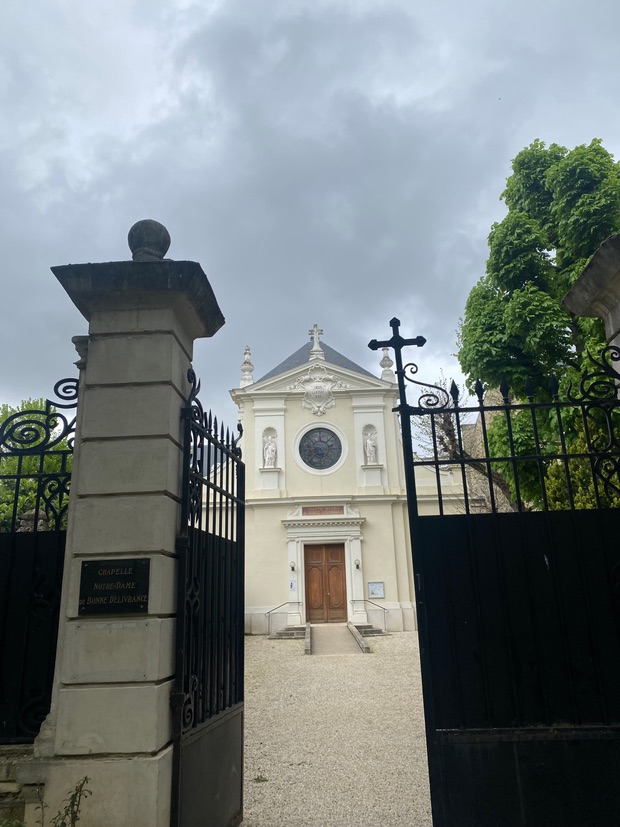
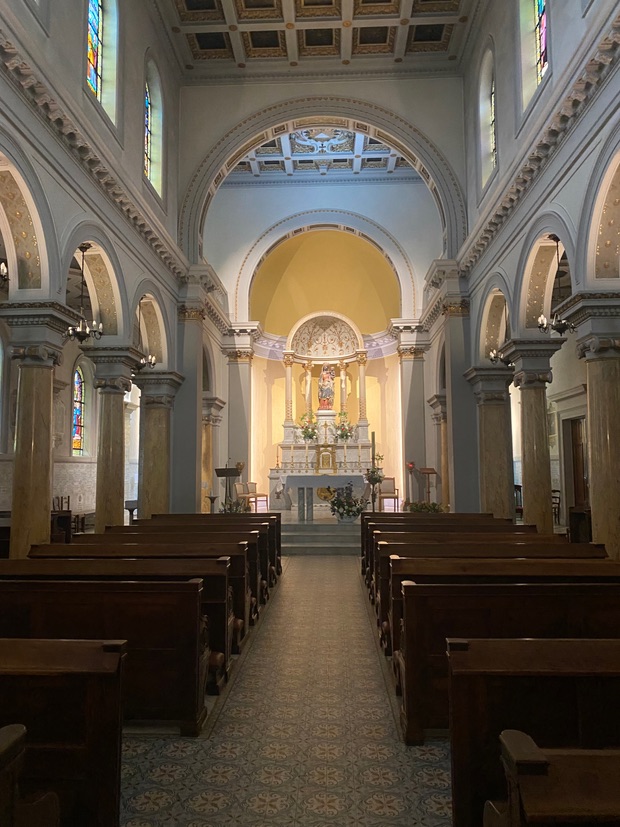
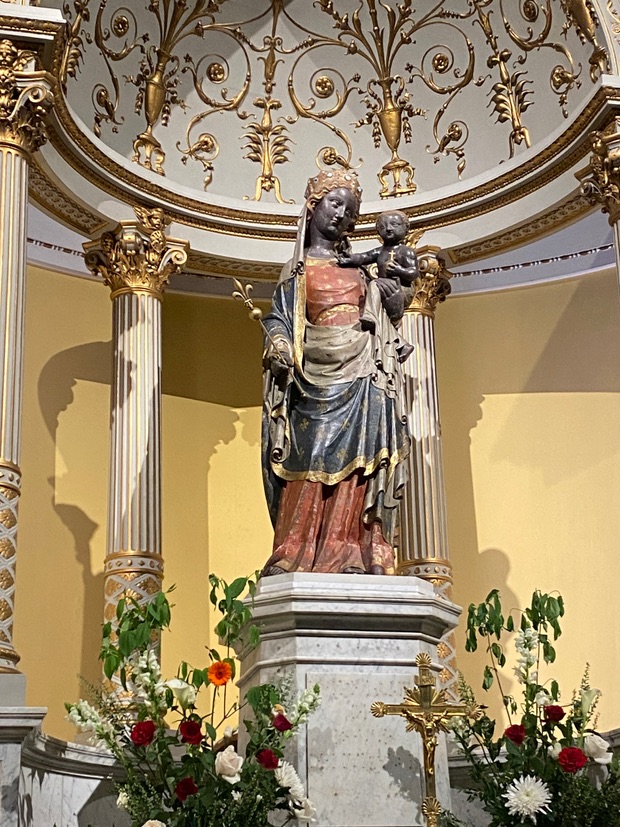
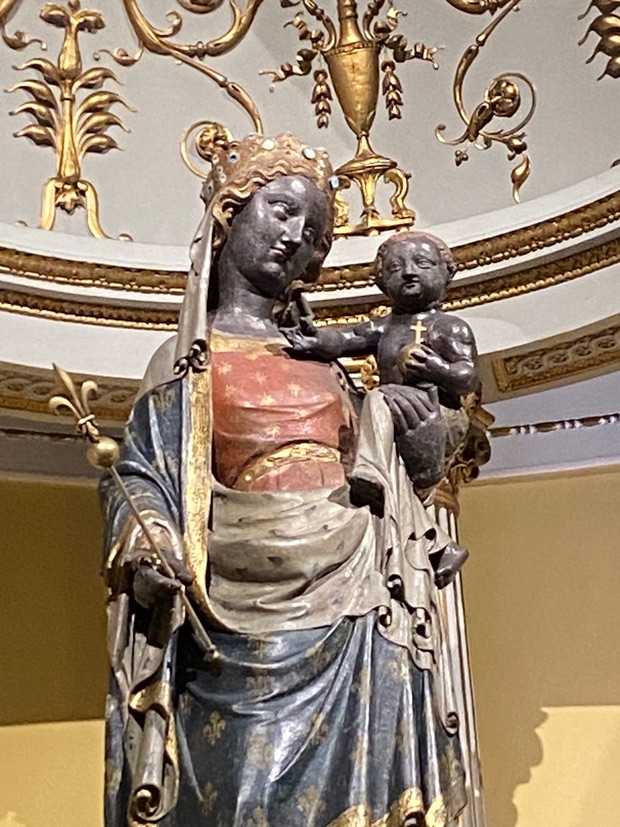
Below I share the images from my Paris trip of Our Lady of Good Deliverance, often referred to as the Black Madonna of Paris. Over a 6 miles walk to see her, I covered more miles within my mind with my thoughts and feelings wondering and wandering, which were silenced or put to one side when I met this Black Madonna. I had the small chapel , in the suburb Neuilly-sur-Seine, all to myself when I visited. I walked around, I sat and looked and I lit a candle and remembered my ancestors and give thanks for this deliverance.
Deliverance: being rescued or being set free. How apt she comes back to me today. How I must have unconsciously known I needed her guidance today, needed her love and reassurances that liberty, salvation, change is possible. I’m not religious or spouting anything remotely religious or pious. I’m not preaching or looking to convert.
I’m spiritual and believe in love. I believe in the good in people and try to connect there on that common ground rather than separation and hatred.
What I do know is this isn’t a neat, tie-it-all-up-ending, with ‘this is what I want to say and you to take away’ as that would be another construct and false prophet.
I just know starting to look/ believe that ‘God is a Black Woman’, that the Black Madonnas are here to support and love us through difficult times ( as well as good times, our pleasures and joys) feels like a blessing to me that I will continue to lean into during these slowing down, turning away from exploitative and extractive society and culture times and continue to nurture others ways of {BEING} in this world.
I’m onto the second reading of this book. I think I heard Christena Cleveland on a podcast talking about her journey and I knew I just had to get her book. I’ve used the saying myself, “God is a Blackwoman.” But I didn’t know there was a book all about it.
The book explores Cleveland’s spiritual/ religious journey as she falls out of love with Christianity as its essentially fathetskygod/white make good and is used to uphold white supremacy, patriarchy and capitalism. Basically just looking out for white cis males.
The book also follows Cleveland’s four-hundred-mile walking pilgrimage across the Auvergne to visit eighteen Black Madonnas. The book manifests Cleveland’s transformation through the Sacred Black Feminine, healing her Black female embodied soul.
Each chapter takes the reader on a journey in the present as Cleveland walks and also into the past as she reflects on her upbringing within her family, the church and society. How she grew up feeling unloved by God, unseen and not looked after. Each chapter also introduces the reader to a Black Madonna, each one Cleveland encounters along her pilgrimage.
It was when I read Chapter 5 and Cleveland introduced us to ‘She who cherishes our hot mess’, the Black Madonna Our Lady of the Sick in Vichy, that I got it into my head I needed to go see this one for myself.
Now I’ve seen the Black Madonna in Le Seu, Barcelona. Even climbed a mountain to see the Black Madonna of Montserrat, just outside Barcelona. But this time, this need felt different. A lot has changed for me since I’ve last seen these Black Madonnas and a lot more life experiences to heal from/ through/ round/over/in.
The Black Madonna of Vichy was decapitated during the French Revolution but the people who were oppressed loved her. They tracked down her head and built her new body out of walnut and put her back together again.
I love this story and it spoke deeply to my soul because I know what it feels like to be separated from my body in an act to fit in. To be disconnected from my body, living in just my mental space and not listening to my physical pains and discomforts but soldiering on. Denying my needs and wants as these are seen as weaknesses, produce feelings of shame and are not welcome here. Squeezing myself into smaller and smaller spaces so as not to take up any room and apologising for the space I do take up.
Been there, done that. Now I intentionally practice being with/in my body. I enjoy an embodied presence in the present. My head has been reattached to my body and I’m allowing my body to lead the way with practice. I’m no lover afraid to express my needs and wants or to walk away if these are not being met.
So once I realised I was definitely coming to Paris this year, I made the arrangements to go that extra mile or two ( well 450 round trip) to see ‘She who cherishes our hot mess’ in the flesh.
It would involve a 3 hour train journey each way. An over night stay and a little hope skip and a jump up to the Notre Dame des Malades, the new church where she stands.
And for a minute there I thought the church was locked …
I’ll leave it here for now because trying to see this Black Madonna turned into a bit of a crusade to see her again and again during my time in Paris. More to follow!


 Living Wild Studios