Reading Poetry (ish)

As I mentioned earlier in the month, reading and writing/ writing and reading go hand in hand. As I’ve tasked myself with a poem a day this month, I’ve also tasked myself with reading poetry and wider as it all feeds into the creative process.

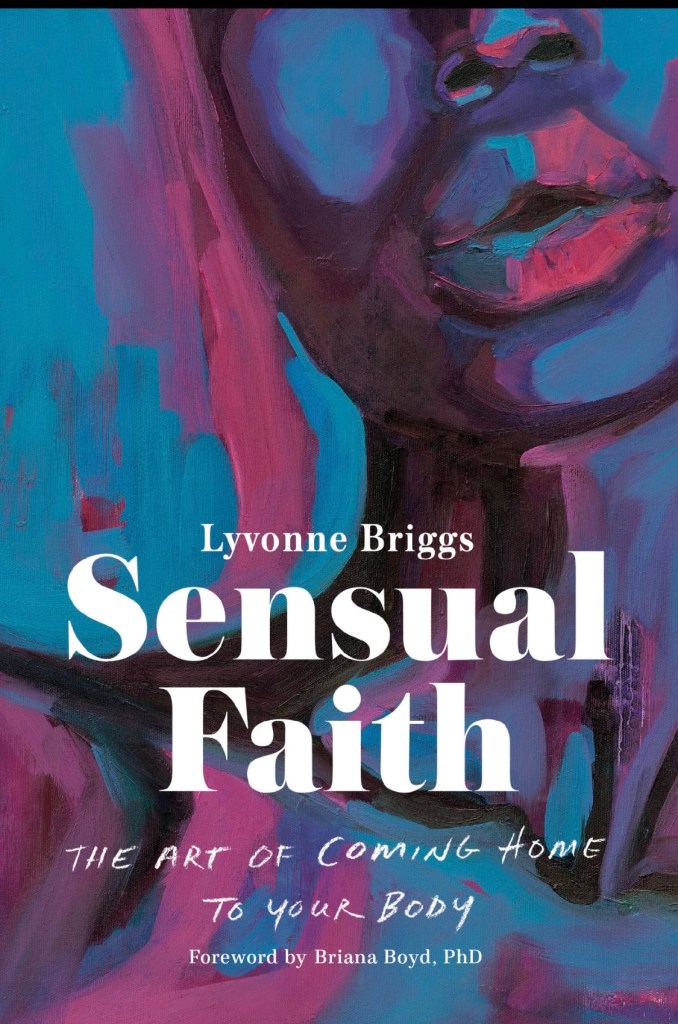
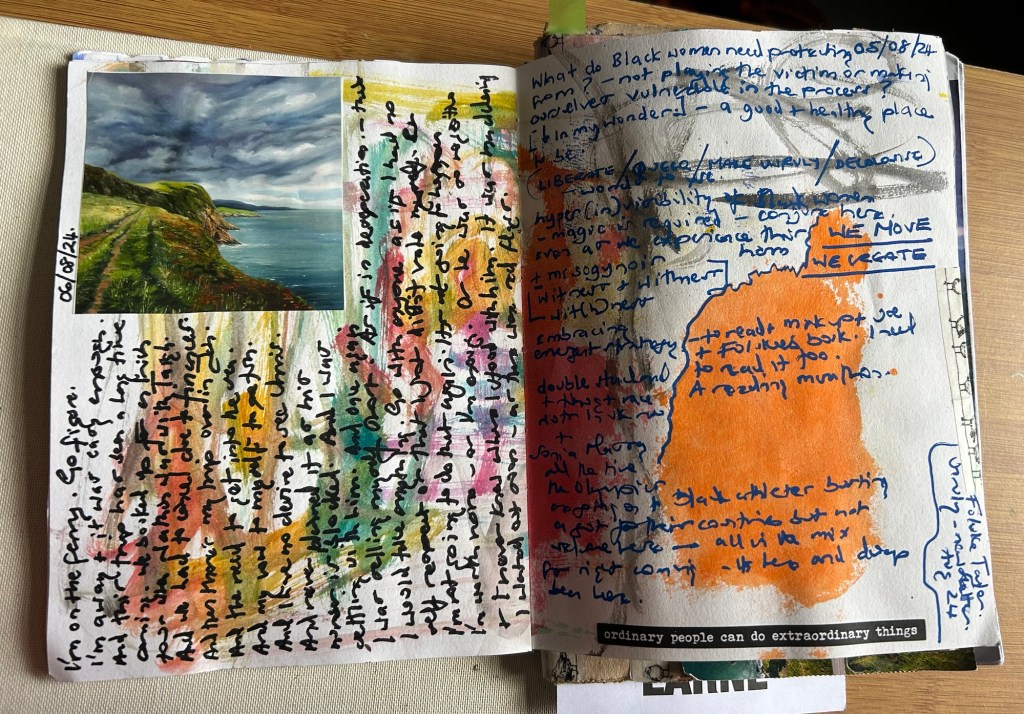
Dal Kular, a dear friend and awesome imagineer, brought Foluke Taylor and their writings to my attention. I’ve been taken by Foluke’s writing around creativity and repetition so when Dal mentioned the book, Unruly Therapeutic, I knew I had to pick this book up and read it. And I’m so glad I have done just that ( well still reading it in fact!).

This is a hybrid, break down the structures kind of book in terms of how it’s written but also how it centres the Black woman’s experience. It’s music to my ears on so many levels. More so in being real, and allowing the thoughts and concepts presented to meander. To double back and repeat. There’s even a music playlist at the end go each chapter as an indication of what Foluke was listening to while the book was under construction.

I’ll return here with a review of length, but for now I just wanted to mark the reading of this text and a recommendation to get out and buy your own copy, as I’m not lending mine out!

The Motherhood Essay

I think I heard back about my abstract being accepted for Demeter Press collection The Mother Wave: Matricentric Feminism as Theory, Activism, and Practice back in November 2022. And really haven’t engaged much with it since.

I submitted it on a whim off the back of the afterglow from BALTIC exhibition A Country Journal of a Blackwoman( Northumberland). 

I wanted to continue this work as I felt as if I’d just got started mining this seam. But really I feel as if I’ve always been working with memory, family and archives throughout my whole creative journey. There’s always been a desire to fill in the gaps around my origins. Who be my people? Where did we come from? What makes us tick?

So I submitted the abstract changing Blackwoman to Black Mothers, as that’s what I’ve been exploring my matrilineage, our bodies with/in nature and healing.  I just wanted to continue this through a different medium; before ‘art’ now ‘word’. But really all hybrid.

I’ve surrendered more and more with each creation, that to fully express myself, my identity, ideas, passions and preoccupations, hybridity, multidisciplinary creations/ renditions are a truer take on things. More of a fuller picture/ form is rendered. 

My first draft of the essay has to be submitted by May 1st ( now changed to 10 June!). As it happens, I’ve been away house/ dog sitting for the first two weeks of April, alone in Buckinghamshire. Prime time I thought to dive deep and immerse myself in the writing process.

I’ve been using my Patreon supporters as accountability buddies, these past few weeks while working on this essay. I’ve been updating them on progress reports along the away. With my time coming to an end down here, I thought I’d use what time I have left to reflect on the process and progress so far. And I’m sharing the post with you here.

I’m using this reflection as a place marker for progress as well as evidence for when I go home and think I could have done more, or start to beat myself up about wasting time. At least I’ll have this reflection to fall back on.

PAD/011 – Carnival, 1976

Each August Bank Holiday weekend,

Notting Hill’s West Indian community 

celebrates Caribbean culture. Calypso.

Crates of records. Stacks of speakers. 

Reggae, ska, groove, and samba 

vibrations of Carnival.

Mid parade, sweaty bodies wining

bodies growing, red stripe flowing. 

Pure joy seen as suspicious. 

The boys in blue are sent in, in force.

Black batons meet black arms, legs and heads.

Slicing through bodies like cutlass through cane. 

Cutdown revellers hauled into hospital 

or prison cells. Carnival; a unique

expression of love of self, freedom 

and resistance. Therefore it’s spirit

has to be demonised and destroyed.

It continues this write for life

If I was following the book along meticulous, then I’d be starting week 4, of the Julia Cameron book, Write for Life. But hey life gets in the way and SLOW is my mantra. I wouldn’t be digging deep if I was to rush through this text as it’s like mining gold really, there are gems everywhere.

What I’m reading is speaking to my soul. I mean receiving reminders that my best writing, the only good writing comes from being vulnerable. Which means I have to lead the own with my heart, through by heart, by my heart. Otherwise, it would be false, untrue, and boring.

Being vulnerable is my strength. It’s one of my superpowers!( You see what I did there, right? I said ‘one of’. Because I have many superpowers).

Being vulnerable on the page means writing what disturbs me, what fills me with fear and what I’m unwilling to say but will share it anyway.

Being vulnerable means being willing to spilt myself open again and again on the page as Natalie Goldberg says. Because then I’m being honest, daring and authentic. Writing how I really feel opens myself up to myself.

I might be behind in the book reading, but I’m not behind in terms of being vulnerable and writing from the heart. And this means I have to be patience with myself and tender. As writing with heart is a tender way of being. And takes care, attention and love.

Reading Poetry Too

Filling My Pot

Writing comes from reading, and reading is the finest teacher of how to write.

Annie Proulx

April is National Poetry Month. Yes and as I’ve mentioned a good time to write poetry. But for me writing and reading/ reading and writing goes hand in hand.

Not only am I inspired by other people’s words, I’m invited into other worlds, internal and external worlds. Possibilities around structure, themes, ideas and voices are opened up for me.

Reading feeds my soul. Something I forget from time to time when things go awry ( I love that word ‘awry’. I first came to this word through Lucille Clifton’s poem, ‘Signs’).

You see what reading can do to my writing? Introduce new vocabulary. Expand my horizons. Make me smile.

So along with the writing this month, I’ll be reading poetry. I usual read at least one poem a day, after signing up to Poetry Daily , a few years ago now and not unsubscribing as I have in the past.

Add to that one poem a day, collections of poems, whole book collections and then you’ve got yourself a sweet honey pot of inspiration and ideas and joy.

So look out for the poetry I’ll be reading and sharing here over this coming month.

Today, I dive into Katie Marya’s debut collection, Sugar Work, which came to my notice through Poetry Daily, with her poem titled, ‘A Response to the 2018 IPCC Report’.What I loved about this poem was how issues about the environment through the report were being looked at from a slanted angle. Through our bodies and babies and families and friends. How in order to see what we are doing to the planet it has to come to our doorsteps, our bodies first. But of course we are all connected.

I’ll let you know what I think as I go on with Marya’s collection. I’m looking forward to diving in.

Crime Fiction – Page 1, redraft

Yesterday I shared the first page of a crime novel I’m attempting to write one page at a time. And who know when or where this is going to happen, I just know I’m going to try.

Page 1 – The redraft

The beach is empty. The sky cloudless, grey moving to blue with the sun being up for over an hour. The usual dog walkers are out marking the sand with prints and shit. Some clean up after their dogs like good citizens. While others never look back.

Littered with glossy seaweed and feathers, as if a bird battle has gone down, the beach is flanked by a rotting pier. Or wooden construction used in the past to mark out bays within the sea for long forgotten trade. Now just an eye sore and gathering point for the bored youth trapped in this seaside resort.

But down there within the shadows and the shallows is one naked white blue – black body. A woman, lying on her stomach, arms beside her sides, palms turned up. Her blond black head is turned towards the sea, tangled threaded with seaweed and sand. The sun beams down on her bare arse resembling a dark conch. Her swollen face reveals gaping blue lips around cracked teeth.

It’s a chocolate lab sniffing out crabs around the pier who finds her body. Barking to its owner to come see, gulls flocking down to squark the find too. Then they circle, eyes piercing the sea, maybe looking for her missing feet.

The Commentary

Redrafting page one was a no brainier for me. I didn’t want to follow the stereotypes of crime fiction. The white female victim found alone in her flat or down a dark alley.

Yes I’ve kept some of the usual characteristics of the genre, the victim is female but Black. This is what I crave in crime fiction, Black characters, be them the detective, the victims, the society.

I found a few. Like I love Elouise Norton, the Black female detective series by Rachel Howzell Hall. And then the books by Attica Locke. But I’m craving me some Black British crime fiction. On my doorstep.

It seems natural to base the novel within my region and my space of familiarity the seaside as then I don’t have to go to any far flung place for research and authenticity. If I’m walking the coast, all is fodder for the one image at a time process. #onwards.

Women and Wetlands

Last night I was part of a panel discussion which tackled the subject of women and wetlands.

Crag Lough, seen from Peel Crags, Hadrian’s Wall

I was asked by Elizabeth-Jane Burnett at Northumbria University to be part of this event and share my work around my residence at Northumberland National Park and my explorations of peat bogs.

I wasn’t really sure what to expect about this event or what I was going to share. But on reflection now, I’m so glad that I was invited to take part because I learned so much about peatlands within the UK, around the world and the special place they hold within the global climate crisis.

So much of my language around nature and the environment has been formed through white supremacy culture which has been biased on colonialism and imperialism and capitalist consumption. And of which I am at great pains now to unlearn and find a new language or it is just a re-memory of the language of my ancestors where there is no separation between us and nature.

Something that was raised last night by Khairani Barokka, which was totally new to my knowledge and way of thinking was that within indigenous communities gender was much more fluid and diverse. The binary system of male and female/ he and she which we take as a given now, as the norm, is a construction and part of the colonist program.

That the idea of “the coloniality of gender,” which might have seen the binary gender system in Europe but was not the case for indigenous populations around the world who were brutalised, moved off the lands and eliminated through genocide. This is going to require more reading on my part but it will be completed eagerly as it’s more evidence of how this system to live and breathe is a construct of power for a few white people over the rest of us all.

I share an extract of my presentation here.

“Femme Noire” de Léopold Sédar Senghor / “Black Woman” by Léopold Sédar Senghor

Léopold Sédar Senghor I would like to share with you this poem of the late president of Senegal, Léopold Sédar Senghor. This poem is an ode to the…

“Femme Noire” de Léopold Sédar Senghor / “Black Woman” by Léopold Sédar Senghor

I reblog this post African Heritage here as a marker. As a tag. As a note to follow up in conjunction with a project/commission I’m working on. All will become clear when I create a new project page within my portfolio.

But for now, enjoy this beautiful poem from Léopold Sédar Senghor, which speaks of the Black Woman which can also be read as the country, Senegal. Enjoy. More details coming soon.