Feral Words POdcast

Ohhh I love coming on here and sharing goodness. 

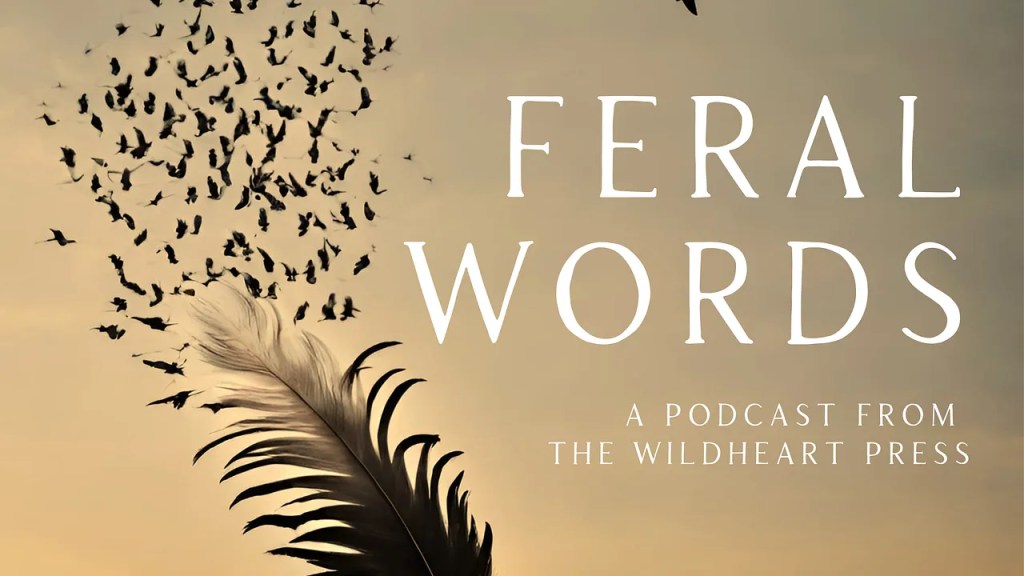
I had the pleasure of talking to Eleanor Cheetham from The Wildheart Papers on their podcast Feral Words last week.

It was so good to have a deep dive into my practice, my work around fugitivity and refusing to perpetuate white supremacy culture. And it was all welcome at Feral Words. Nothing off limits and it was so liberating to try and make sense of all the concepts and ideas and feelings that are circulating within and without of me at the moment in time. A very disturbing time. 

Writing as Resistance, Reclamation and Ritual, is the episode.

I’d like to thanks Eleanor for again holding space for me and my creations with care, grace and joy.

Here’s the link for the podcast . Please take a minute when you get a minute or two. 

And also check out The Wildheart Papers here on Substack too.

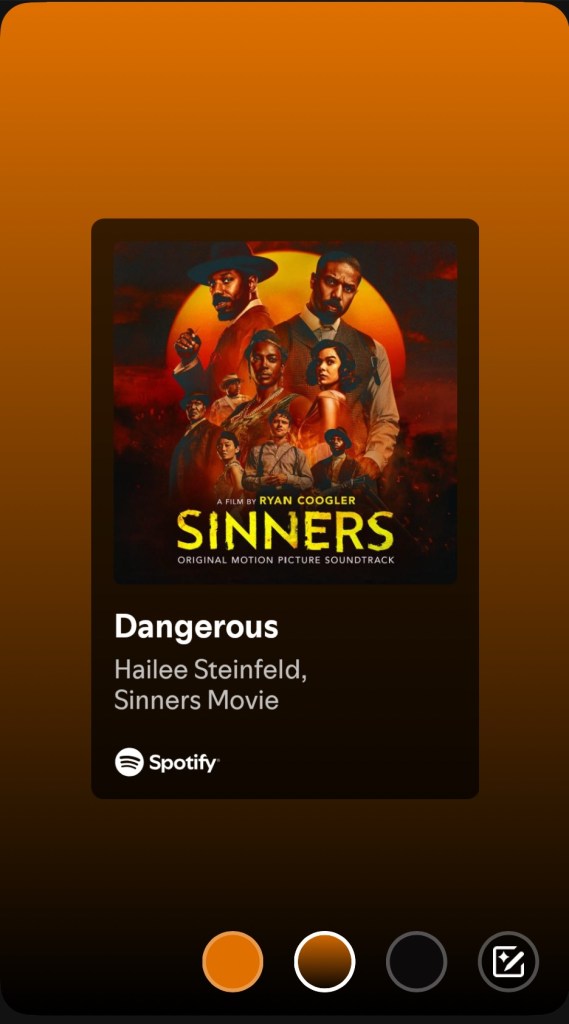
The Sinners Series – 002

I’d seen the trailers. And forgot. It was already out a week or so when I realised and I only had a small window of time before I was off on my travels again.

So on the spur of the moment. I booked my ticket, walked and bussed there. A late night showing. I’d be coming home in the dark.

I should say, I have a love /hate relationship with horror movies. I get scared easily. I’m very impressionable. And images especially horrific ones haunt me afterwards. But I also enjoy being scared. In a weird twisted way. It’s an adrenaline rush.

This film has vampires. And I was travelling home alone. Considering walking ( I didn’t my after all).

The cinema wasn’t really full. I settled in and right from the beginning of Sinners directed my Ryan Coogler, I knew I was going to be in for a treat. The cinematic colours and quality of the film, shot in IMAX and 70mm film, pulled me into the world created.

Set on 1932 in the Mississippi Delta, during Jim Crow, a musical supernatural action film was a beauty to behold. Michael B Jordan playing a double role as the twins Smoke and Stake, I was gripped.

Of course I jumped and screamed all at the right parts but I also got lost in the characters and their relationships and the horror of it all. The death, grief, pain and joy.

If you haven’t seen Sinners, please go see it. Best movie for this year, best movie by far for a long time. This is a movie I have no qualms about haunting me.

My bedtime lover(s)

A book is much more faithful than a lover I think.

A book can open you up to so many different experiences at the same time as reaffirming everything you’ve been feeling and thinking and struggling with.

I’m not sure a lover can do all that for me. But many more than one lover could?

Hence spending copious amounts of time in bed with books.

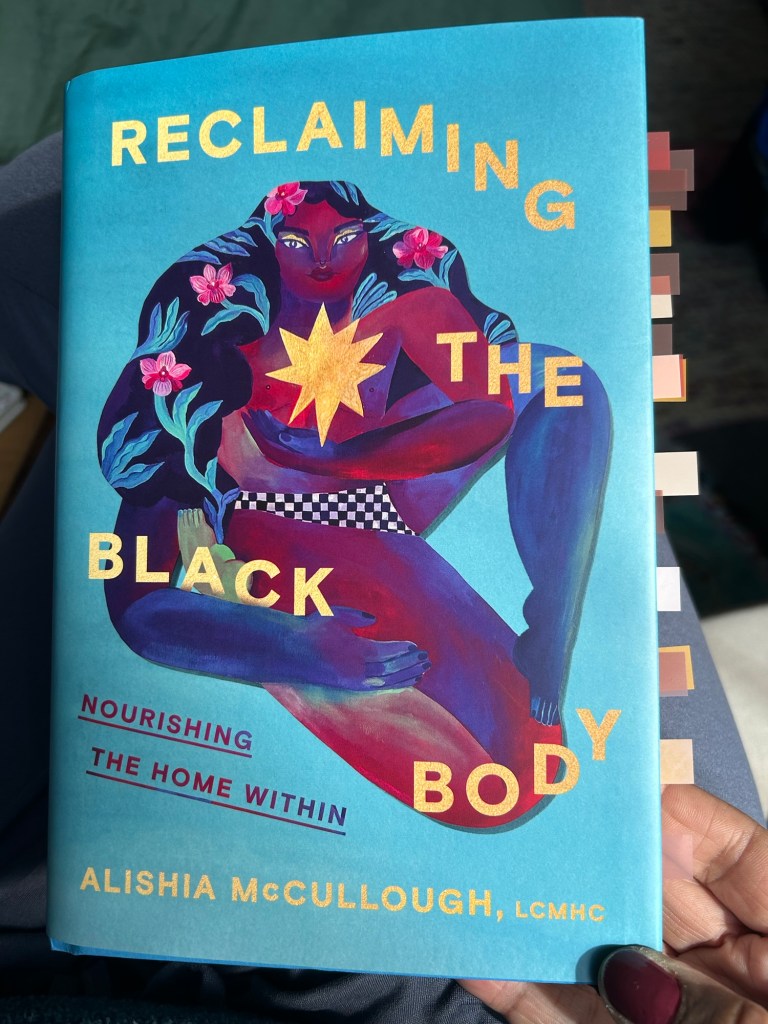
Reclaiming the Black Body: Nourishing the Home Within by Alisha McCullough is one of my current reads.

I used to be of the persuasion to read one book at a time. Devote all my time, focus and attention to one book in order to reap the glory/ knowledge/ whatever!

But these past few years, as I’ve become thirsty for stimulation and attempting to find like-minded people/ theories/ lovers, I’m moved into reading multiple books simultaneously, also known as “syntopical reading”.

And these books are not on the same topic either. They range from poetry around grief, non-fiction on gardening, personal essays around deep time, romantic and crime novels and short stories about myths and history. The list goes on!

I’m so enjoying this eclectic and multiple reading practice as it’s keeping me engaged, creating unique and original connections and it’s keeping me feeling loved.

By me.

So one of my current squeezes is Reclaiming the Black Body and I’m devouring it in small digestible bites because it is speaking to my soul.

This book is calling to attention the deep-seated, long-time, disproportionate amount of trauma, violence, marginalisation, discrimination, and adverse childhood experiences of Black women and femmes, and confounded by misognoir and racism, how we have learned to cope with it all through increased imbalanced eating behaviours.

Usually called “eating disorders” but even using that language implies that the individual is to blame and implying that some of us are just not equipped to nourish our bodies and do not know how to look after ourselves.

‘Disorder’ implies stigma and comes from the Western health ‘care’ system which from time has excluded and harmed Black people.

So this book is a balm for the wounds of silent struggles Black women and femmes have been going through around eating imbalances including myself. And is a vindication that we’re not fucked up and broken and just beasts, being less than human but that we are doing our best with the tools that we have to strive and thrive within a system that is hell-bent, historically and now, to demonise the Black body.

I will continue to cosy up with this book and others in bed, night and day, as reading is hitting the spot!

Drinking Fugitivity – Found PoetryFilm

Drinking Fugitivity: Found PoetryFilm

This short piece is a mash up of a certain clip from Joaquina de Angola: Memory of a Liberation by Aida Bueno Sarduy and music from Insight Timer, called You.

Seen recently in Barcelona at CCCB, Joaquina de Angola: Memory of a Liberation by Aida Bueno Sarduy is an audiovisual installation that recovers the story of Joaquina, a young woman enslaved on a plantation in Brazil, and her escape.

From the exhibition’s text details it reads:

“A work about archived, forgotten, and silenced voices in the history of slavery and colonialism.
This audiovisual installation brings to life the act of “unarchiving” an event recorded in colonial history as an escape. A 15-year-old enslaved girl fled the plantation where she lived, and her owner, after an unsuccessful search, placed an ad in the newspaper offering a reward to whoever found her. The archive reveals nothing more about this incident: it merely collects it as a piece of data.
This piece challenges the oblivion, archiving, and silencing of this character. To unarchive, in this context, becomes an artistic and political act that brings Joaquina de Angola out of the shadows of the document, removing her gag and chains so that she can tell her own story. This act not only questions the record but also raises questions and delves into its details. It is an inquiry that brings Joaquina back to life and acknowledges her as a cimarrona, calling upon ancestral memory as well as imagination, intuition, and spirituality.
Since the beginning of colonization in Brazil, alliances and exchanges of extraordinary significance have taken place between Indigenous peoples and enslaved Africans, but these have also been silenced. The presence of entities known as caboclos (Indigenous spirits) in all Afro-Brazilian religions is perhaps the most consistent and profound evidence of this. Amazonian peoples, Indigenous peoples from across Brazil, and quilombola communities—formed by Afro-descendant peoples—have shared ancestral struggles for the defense of their territories and against colonization and exploitation. The installation speculates on these possible Afro-Indigenous alliances in Joaquina de Angola’s journey toward freedom.”

This extracted masheup with music created above by myself, hence a found poetry film, is my take at a beginning of exploring fugitivity. I’ve been living, breathing, talking, practicing fugitivity for a few years now. I’ve mentioned it before, and it was Dal Kular who first introduced the term of me via her then newsletter, Field Notes. Dal said at the beginning of Jan 2023,

“Whatever the out-there-in-the-world fuckery is going on in 2023, I declare myself a CREATIVE FUGITIVE. A way of living in this world but not of it.”

Her take on creative fugitivity has stuck with me. I’ve gone on to read more around fugitivity. I’m even writing a chapter, at the moment, around black mothering and fugitivity. Fugitivity is taking over my life. And again I’m creating a project here in my portfolio to collect my wanderings and wonderings around this concept and way of being.

For me in a nutshell, fugitivity is the act of flight. It is the withdrawing of my labour and consent in the current system of white supremacy culture, capitalism, imperialism, colonialism. Fugivitiy is refusal and resistance. Divesting from the current way things are playing out as the few hoard the wealth of the world at the expense of the many.

Originally the fugitive was the runaway, the escapee. Hence why the audio-visual installation and consequent fugitive poetry film was created. I’m starting from the origins of the escaping enslaved. Running, fleeing captivity towards freedom. Freedom being the end point, the destination but in the process of escaping, there is the in-between space between what they were fleeing from and fleeing to. And here in this liminal space is where fugitivity is ripe.

There/ here is the lingering in the midst of flight, where I choose to SLOW down and be. To linger with nature. To seek my joy and pleasure in the world around me on my own terms.
Fred Moten in conversation with Saidiya Hartman, both of whom we will be exploring further, said,

“I often use – and I always think of it in relation to Fannie Lou Hamer, because it’s just me giving a theoretical spin on a formulation she made in practice: to refuse that which has been refused to you. And that’s what I’m interested in.”

That is fugitivity as a method, kin-making and place-making, as a practice that I intend to explore within this project archive.