This weekend we’ve had the light. Having the light with a bit of warmth makes a difference. To the mood. To the outlook.
This March I’m seizing the light and going to work behind the scenes on a project I’ve been putting off but one which is close to my heart.
I’ve been divorcing myself from big tech, rich oligarch run social media and platforms. I’ve been going more analogue than digital. And I’ve definitely been refusing AI.
This month I’m working on my archives. The archives of this website. These blogposts. So that my legacy, this work and practice lives on beyond WordPress, beyond myself. Beyond the internet.
I’m taking ownership of my creativity and taking records. Backing things up, creating a trace of my presence here which isn’t dependant on technology.
This is gonna take some time, so I’ve taking the time away from posting here to archives there.
the zine that documents the zines I want to create moving forward into 2026
I’ve just been over on my Patreon page sharing about the first zine of the year. Do you want to know what I shared about it?
Okay, I’ll tell yo here too!
A few years ago, I gave myself the challenge of creating a zine a month. Check back using the ‘zine’ tags and no doubt you’ll find them, still there ready to download and peruse.
This year, I vaguely set myself this challenge again, to create a zine a month and share it here. I think. As I’m still in the process of committing. But last night, at a Zinester Sanctuary that I’m creating witha fellow fugitive, I had the time to create my first zine of the year. See the video above.
I looked back at one of my zines from my first challenge, this was a zine about the zines I wanted to create. I looked back to see if this list of zines with illustrations were still zines I wanted to create.
After this reflection, I then set forth to create the zine that hopefully is the blueprint for 2026 creations.
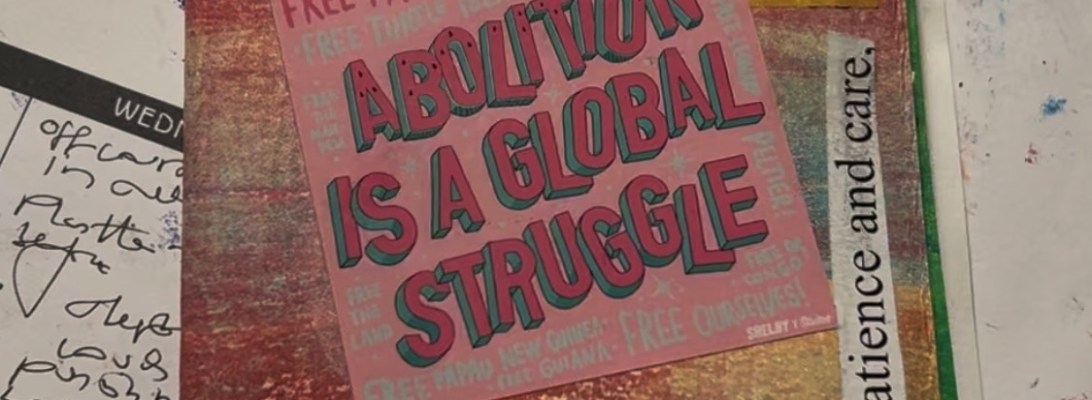
In the video what you are seeing is the front cover stating that ‘Abolition is a Global Struggle’ with FREE PALESTINE but also the caveat that this has to be completed ‘with patience and care’.
The next page with a wheel of a VW Campervan and the text ‘ like a bird flying into’, is a nod towards my love of nature and how she will always appear in my zine creating, some way or another.
The next double spread with an image of two little girls standing on the beach, myself and my estranged sister and the text reads, ‘me in all my fucked up glory’. This signifies the task of creating perzines, using the format to explore my life stories.
On the green page with a roughly drawn book in black pencil refers to my desire to dive deep into my black studies, studying blackness as fugitivity, fugitive spaces. ‘You will find comfort in blackness’ the text reads to accompany this intention.
The next page is a quote from Octavia E Butler, from Parable of the Sower which states, ‘All that you touch you change, all that you change, changes you. The only lasting truth is change.’ This was a small print I received from a printmaker friend called Theresa Easton.
The second double spread, because I hadn’t finished yet with my intentions (so who says you can’t add in another page?) is a recognition of my word of the year which is AFROSURREAL. I’ll be exploring what this means further throughout the year here and on my website.
This is partnered with a splash of purple/ mauve as the text reads, ‘ in mauve there is a quiet power.’ This is a reminder for myself to use my zines to share my poetry. My voice is my power. This was how I started making small zines, booklets before my first collection of poetry, Family Album was published. Because I was reading at all these gigs and people would come up afterwards and say where can I buy your work and I had no where to point them to. So I got creative and created these little zines , one dedicated to the poems I’d written about my daddy and one other dedicated to my mummy, and sold them for £1 each. I’d forgotten about them until I just wrote about them here now. Don’ you just love the creative process?
And then moving towards the end of this first zine of 2026, which apparently has been announced as the year of the zine – 2026, we’ll see what happens there as zines could become if not already commercialised and co-opted and become unrecognisable from their origins ( which I’ll be exploring and sharing further about here), there is a polaroid photo of myself smiling. This was taken last year at a Outdoor Citizen gathering, and these were taken to put on the wall with details about ourselves so we could be putting names to face,s be recognised within the crowds. This image is here with the title ‘fugitive sista’ as a reminder of who I {BE} but also who I {BE}coming through my continuing thoughts and praxis around fugitivity.
The final page with the outline of a goddess in black pencil and spiral within her gut/ womb and the text, ‘ Today I will praise. I will praise The Black Woman.’ Today ,tomorrow and always, I will praise the Black Woman. I support this praise with my continuing reading and practicing of Black Feminist thought and praxis. This is my foundation always.
The back cover ends with another sticker and this time it states, ‘ From the river to the sea, Palestine will be free.’ Again reminding myself that I do this work, explore my creativity and share whatever comes up within a constantly changing context of struggles, struggles for liberation, peace, justice, self-determination and love.
2026, the year of the zines. Let’s make it the year of the zines that give voice to the struggles near and far , struggles for liberation, peace, justice, self-determination and love.
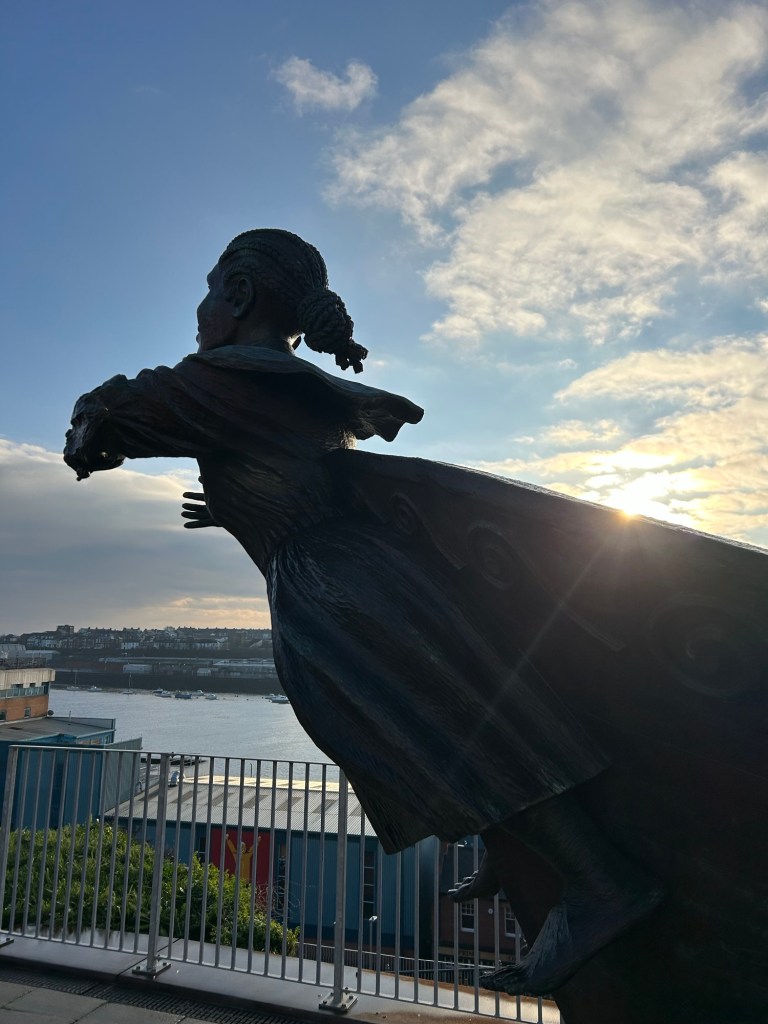
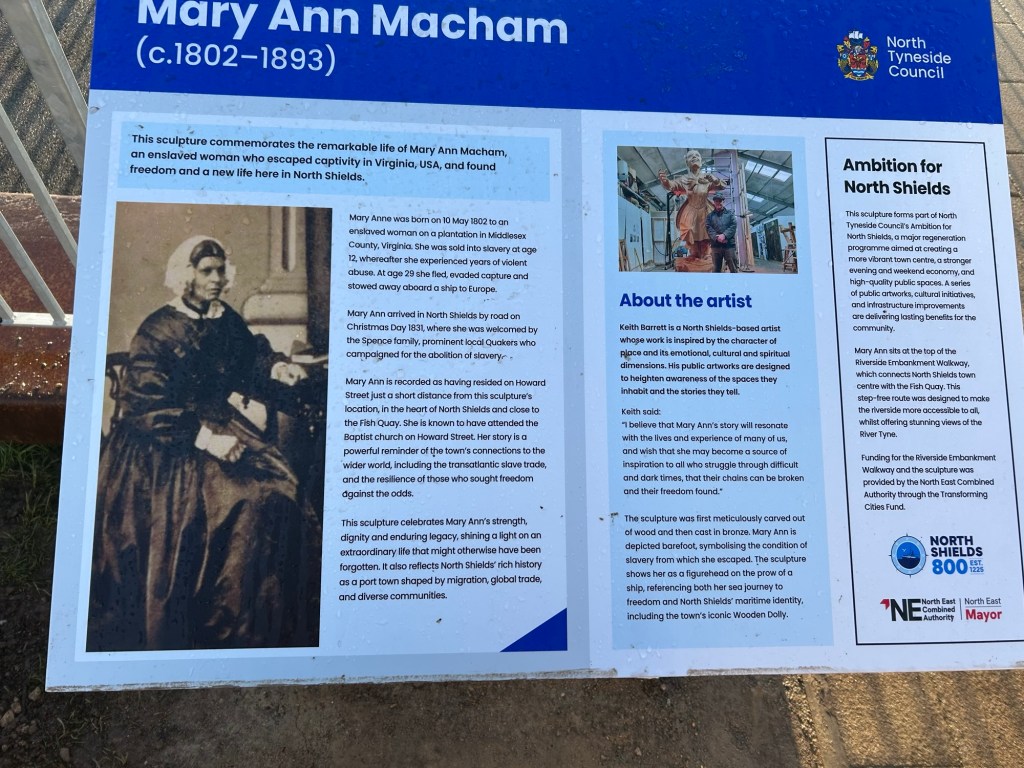
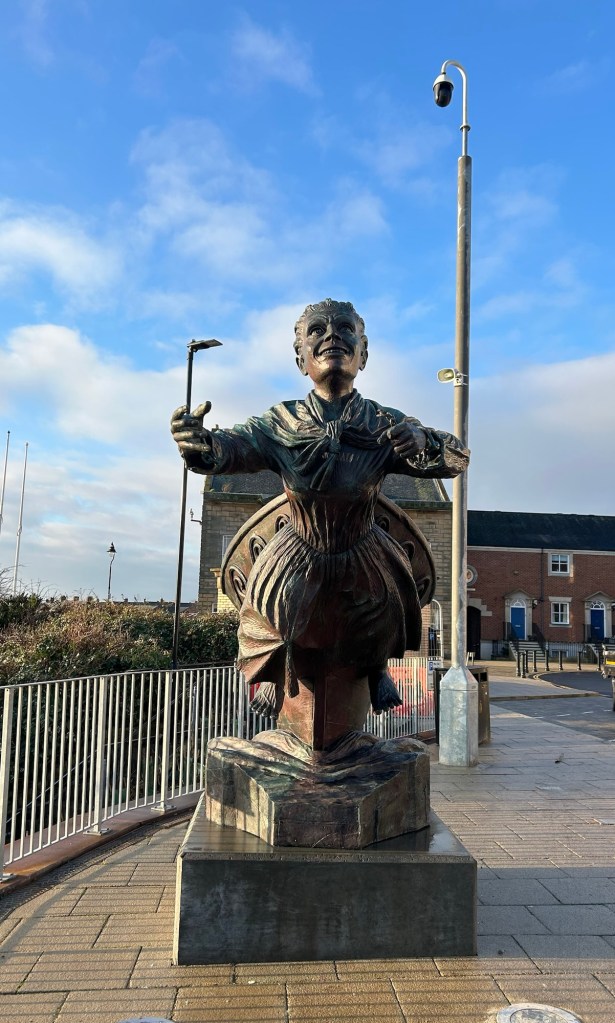
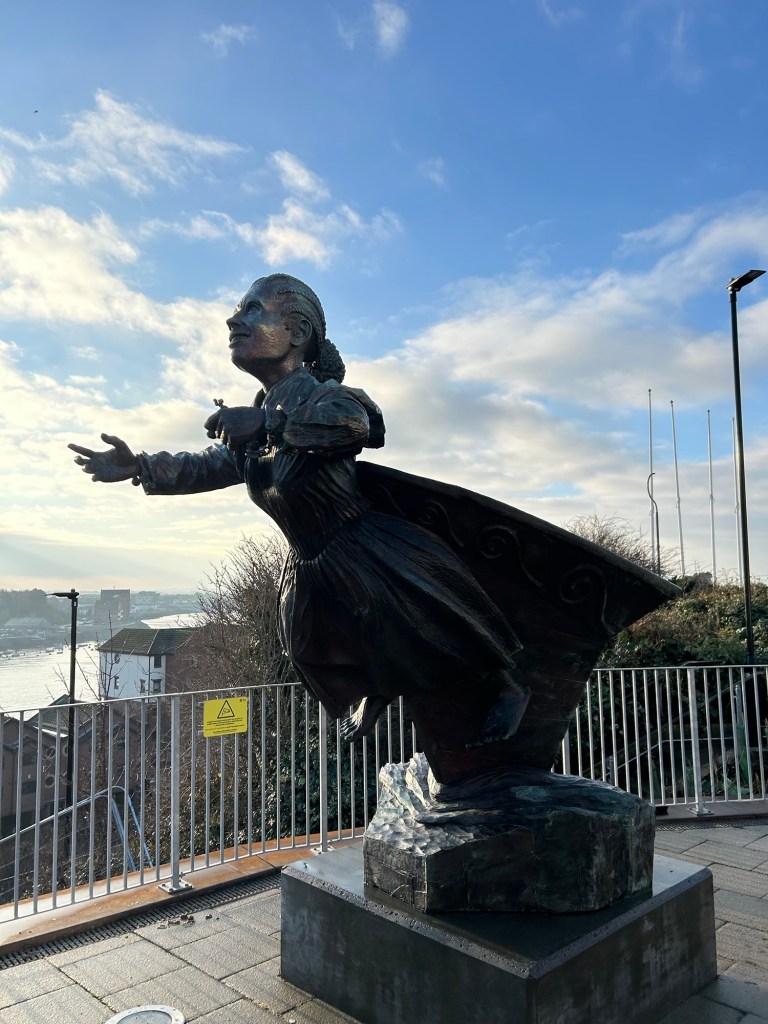
Walking into North Shields the other day, walking towards the Fish Quay where there is now accessible access connecting the centre of town down to the River Tyne, I caught sight of this sculpture of Mary Ann Macham.
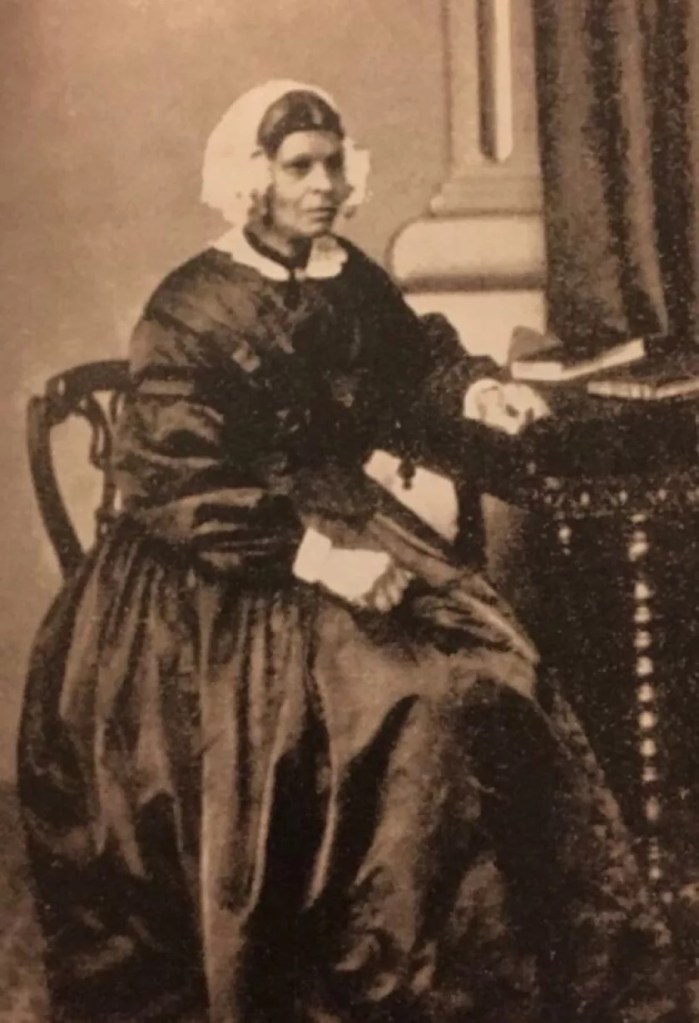
I first learned about Mary Ann in 2007, when I was researching the North-East’s involvement in the transatlantic slave trade to mark the bicentenary of its abolition.
I was writer in residence within the Literary and Philosophical society, researching their tracts and unearthing the names and lives of the once enslaved people who passed through and/or settled here.
I wrote a poem about Mary Ann, her escape and travel up to the North, and with the help of the Quakers, made a life for herself through working in service and getting married and living in North Shields. This was back in 1831 when she arrived here and lived for a further 60+ years as a free woman.
An aside here is how the Quakers at the forefront of the abolition movement here in the North- East, were against the slave trade and worked for the abolition but still held the racist beliefs of the day that white people were still superior to black people.
Mary Ann Macham told her story to a member of the Spence family, who she was in service to. There’s a lot that can be argued about the practice of black people, telling their stories to white people who wrote them down and how accurate these are as a true representation of their stories. But this is all we have now as ‘evidence’.
African Lives in Northern England completed research on Mary Ann Macham before this public statue and the local groups ‘found’ her.
I should be grateful and overjoyed that finally Mary Ann Macham is being remembered. That there is a public statue dedicated to her and that she is being reclaimed as part of the local community.
But something just doesn’t sit well with me. Maybe I’m being far too critical. Or maybe I’m just coming at it from a black woman’s point of view living within white supremacy culture?
The press releases for this unveiling of the statue in November 2025, proceed to paint the impression that Mary Ann Macham has just been discovered. That this was hidden history that the locals have just uncovered and became fascinated with and had to find out more about. But unknown to whom?
If they had done their research they would have seen and also acknowledged the work completed in the past to shine a light on Mary Ann. But the story goes that they have just discovered her story. Or decided to just focused on only part of her story/life? Mary Ann Macham ( later Blyth through marriage lived until she was 92 years old).
The local Sculptor Keith Barratt who created the piece has said to the local media that he wanted this sculpture to show that “she came from a place of great pain, but it’s also a story of human liberation, of breaking the chains and I feel that this is something universal that many people will understand”.
I suppose I have issue with how Mary Ann is framed within the story of her own life, which she doesn’t have control over maybe a bit then but definitely not now with how she is remembered.
I Love North Shields has more details about her life and attempts to create a bigger picture of her life before enslavement and after as a free woman living her life here in the north east. But frequently it has to be argued, the majority of time, Mary Ann is trapped within the ‘slave’ narrative perpetuated by white people. Although seeing her as ‘brave’ for plotting her escape, they still frame Mary Ann, tell her story within the role of once enslaved, and needing the help and support of kind Quakers. Sounds a lot like white saviorism. Then and now.
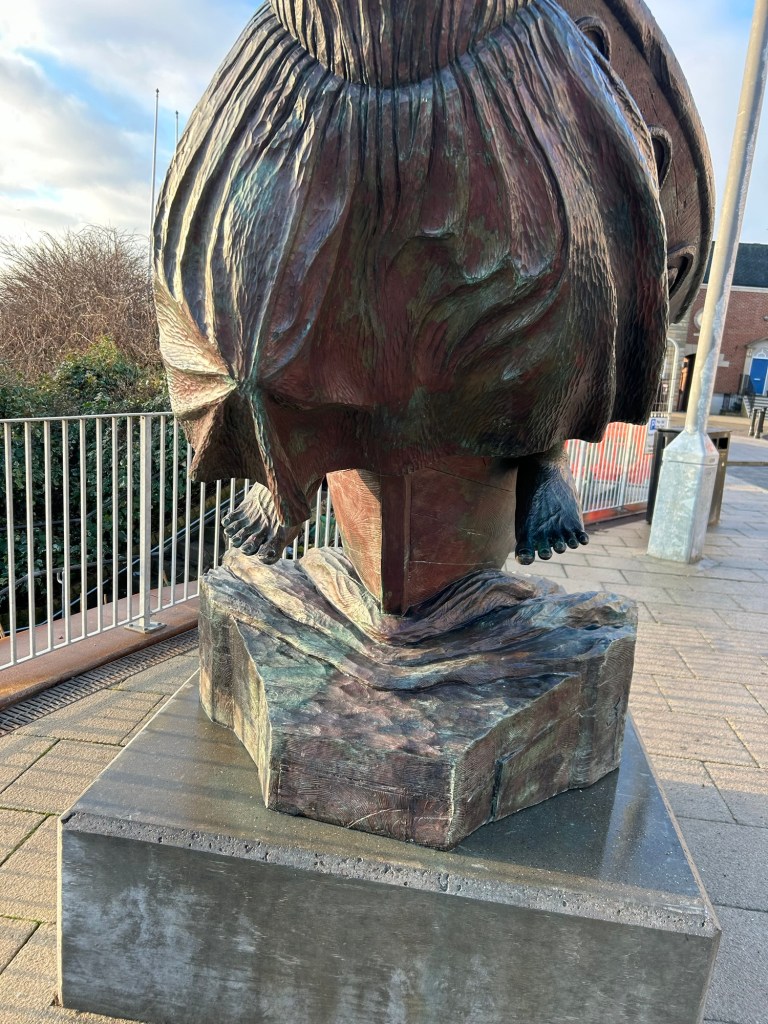
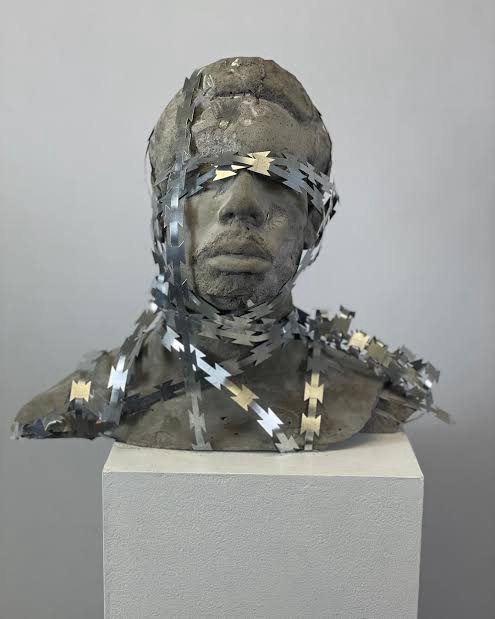
It’s almost like Mary Ann is stuck, encased in bronze, and barefoot to symbolise the condition of slavery. Enslavement she escaped from physically during her life, but trapped forever within this role in memorial because the white imagination cannot see/ grant Mary Ann her full humanity . The fullness of her life.
Time and time again, the mainstream constructs the stories they want to shed a light on and tell about people of the global majority which suits the narratives they’ve been running for centuries. The narratives where we don’t have agency or self-definition but are the objects, less than and victims. This is a means of control and domination.
This is why it’s important that we take every opportunity to tell our own stories. To control our own narratives. To leave these as archives for the people that come after we so they can be in no doubt that we lived big, beautiful, full lives on our own terms.
And is it me, or does the statue of Mary Ann Macham make her look like she’s white?
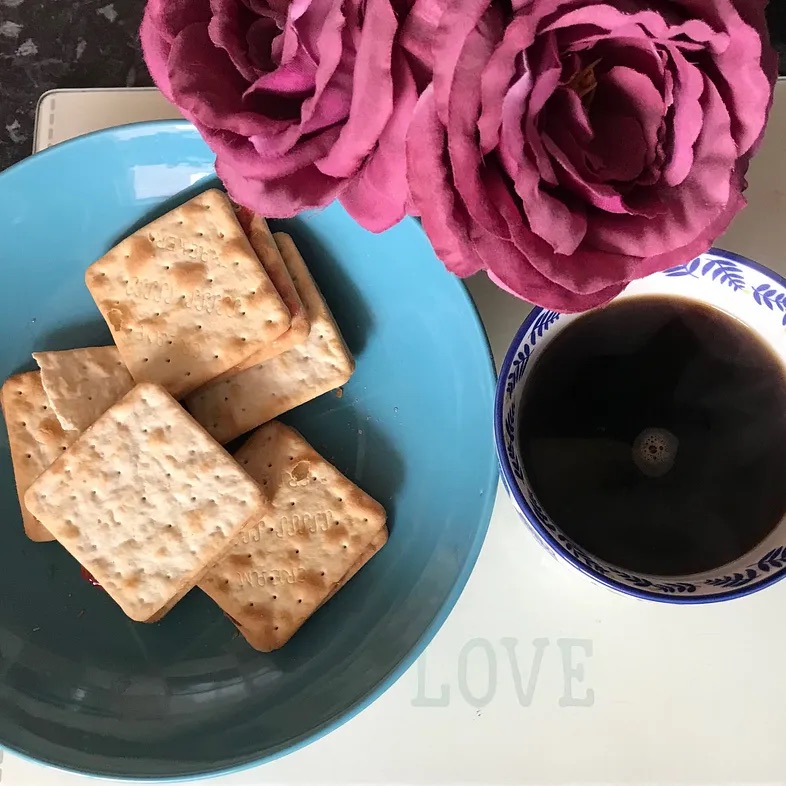
This is one of my favourite images from my extensive collection.
I know exactly when and where it was taken. Westfjords Residency, Iceland, Feb/March 2017.
This was my go to breakfast. Coffee, cornflakes and Skyr, Icelandic protein enriched yogurt. I love the colours, the composition. The items included. But most of all, I love the memories and feelings just looking at this image evokes.
It takes me back to that time of wonder and discovery during my second time to Iceland. A residency I gifted to myself, writing the application while teaching temporally; frustrated, longing to get out and create.
I stayed for two weeks in the shadows of the mountains, knee deep in snow most days until the thaw came with some greening of the landscape.
I didn’t know what the fuck I was doing there back then. I just knew in my body that I needed to get away, gain inspiration from the landscape and {BE}.
I might not have completed much when I was out there, but I know when I returned the experience shifted my creativity and how I saw myself as a creative.
I saw glimmers of the Northern Lights during this retreat. Pale creamy wisps and trails in a dark navy sky. It was magical and a mystery.
This makes me think about my art-making practice and how most of the time I’m working in the dark, moving out of my comfort zone into the unknown, looking and listening hoping to catch a glimpses of magic and mystery in the process.
What’s created on the page, like this photography, is an archive, a record which when looked upon brings to the surface all the memories and feelings of the process, the experience once again experienced to the full with wonder and a smile.
If you’ve been around here for a few years then you’ll know that I choose a word each year to act as a guiding source for the year ahead.
I hold this word lightly as a beacon to support my movement through the year as I navigate through society, this world, with the ebb and flow of commitments, responsibilities, projects and inspirations.
Last year, fugitivity took hold of me and kept me refusing those things that have already been refused of me throughout the year.
Fugitivity and visual journaling went hand in hand in 2025 to the point that I was able to create a loophole of retreat, a space of freedom and play for most of 2025. No doubt fugitivity is changing my life and remains in my rucksack as I traverse into 2026. The year of the horse ( more on that later).
So what is my word of 2026?
Usually I have something chosen at the back end of Oct moving into November. It just comes to me, lands and takes up root as something that just feels right. And something I want to carry for a year or more and explore.
That didn’t happen this year.
I had the feeling of being ‘unapologetic’ to the max but that felt, as a word, so dated. I feel it has been co-opted by mainstream and capitalist culture that to hear it now feel so twee for me. It’s original radical power being neutered.
Then we had radicale ( with an ‘e’) meaning to get to the basic root of something. Its natural origin. It’s fundamental and essential, changing from the roots. As well as radical being judged as unconventional, pushing things to the limits.
But again this word didn’t sit well within my gut. I wasn’t feeling it.
For me my word of the year has to be embrewed with feelings as well as be able to stand the test of time, the year and beyond, as well as act as talisman, inspiration and haven. Words of the past has included voice, water, shakti, open, listen, love etc.
I have a tall ask for my word of the year but none of my words of the year so far has let me down. I suppose it’s a difficult act to follow after fugitivity as this practice has changed my life in so many ways.
But choose a word of the year I will because after so long in this practice, I would feel naked walking into 2026 without some word(s) at my back as support and/both motivator.
I’m making the commitment here now to go with – AfroSurreal – as my words of 2026.
Of course AfroSurreal is much more than a word it’s a whole artist and literary movement which blends the weird and absurd with the reality of blackness. That the reality of blackness, being black today is surreal.
AfroSurreal is also a way of {BEING} that roots me further into the RIGHT NOW. Creating the future that has to happen right now.
I’ll be exploring more and sharing about AfroSurreal over the next couple of days to get my basis understanding and direction down. And then look out for more posts about how I’m moving and shaking with AfroSurreal(ism) for the coming year.
I’m excited to see where this word will take me. A good sign if any that I’m chosen the right word ( movement) for 2026.
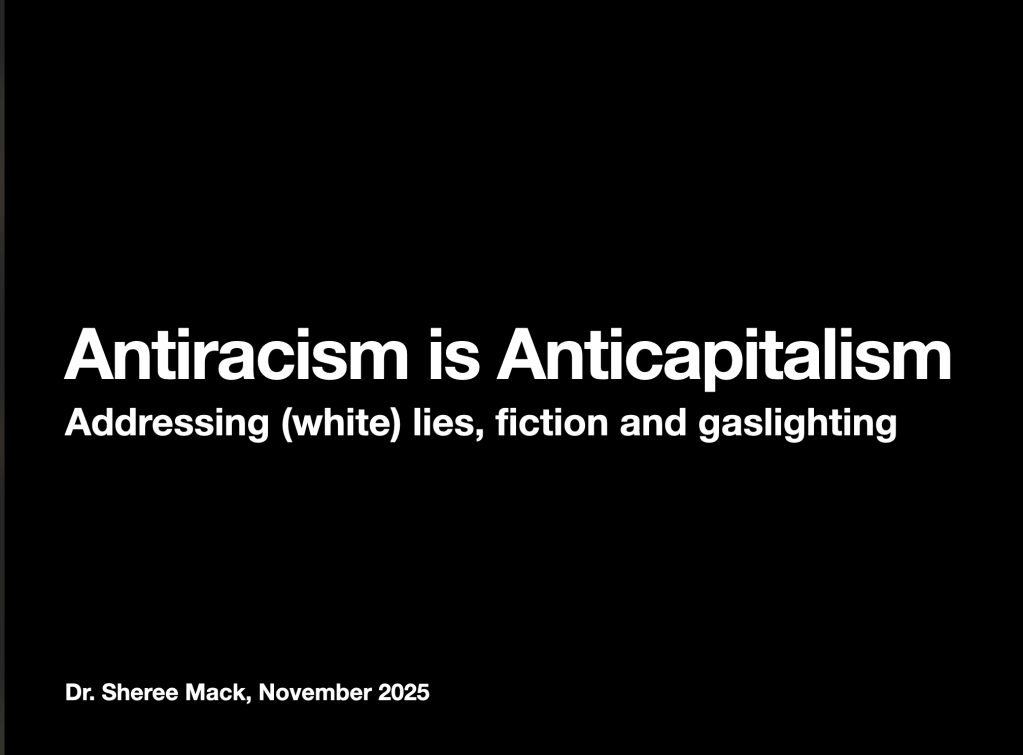
I spend so much time and energy on the work I share at Sunderland University, one or two sessions, out of their social work studies that I’ve decided the share what I create over on my Patreon in a special collection.
It’s just the power points for now. I’ll go back in at some point and share the resources as well. But I just thought it might be of some use for someone else. I’m not expert either. And my style and message has changed over the six years of doing it. I’m mighty please withy last one, November 2025, because I just centred blackness all the way. I was unapologetic and intend to stay this way.
This piece originally was published over on Medium with Binderful. I’m drawing this piece into the Living Wild Studios archives. Because I can!
Image credit — Donovan Valdivia
“How difficult is it for one body to feel the injustice wheeled at another? Are the tensions, the recognition, the disappointments, and the failures that exploded in the riots too foreign?”
Claudia Rankin
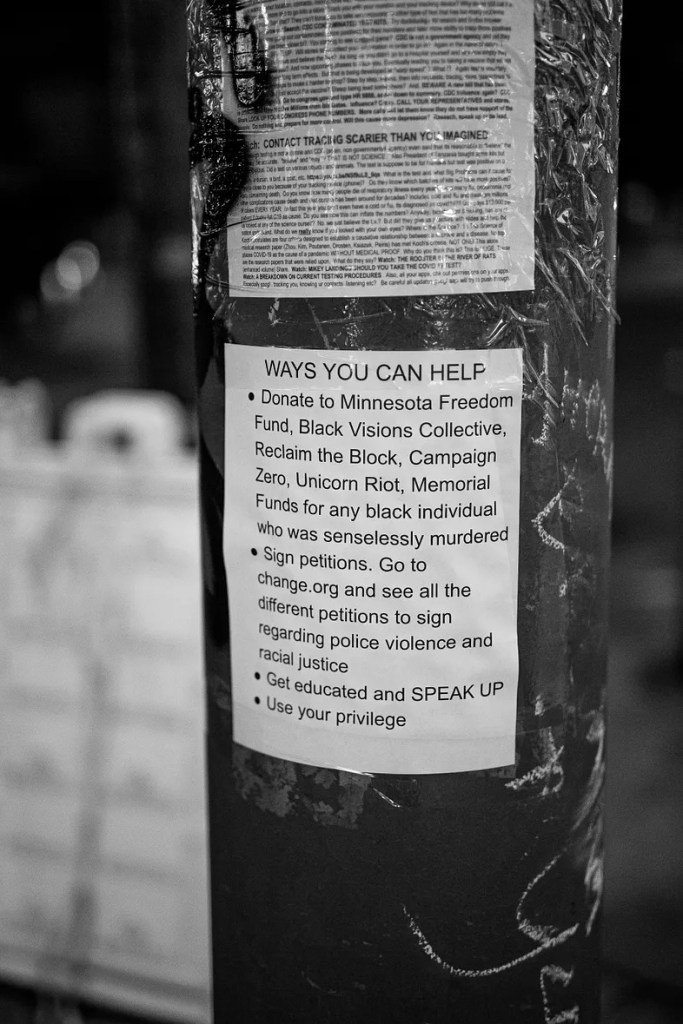
In August 2014, there’s a summer of “hands up, don’t shoot” protests, in Ferguson, Missouri, in response to the unlawful shooting of Michael Brown Jr.. In November, Darren Wilson, the white Ferguson police officer responsible for Brown’s murder isn’t indicted. In December, filled with rage and helplessness, I organise the first ‘Black Lives Matter’ protest in the North of England; a political poetry reading at our city centre library. Together artists and writers, cram into a hot room on the top floor of a building made of glass, and pour out our rage and pain through our writings. Black people’s words. Our ancestors’ words.
I’m criticised by one Black woman, in particular, because I invite white poets to read. They could only read the words of Black people as this event is centring our lives. Black lives. A white people’s presence is not what this Black woman wants. She wants a safe Black only space. I respect and understand her views. We all want a safe space for Black people. But I feel we can achieve so much more when we work together, Black and white, to solve our society’s problems. I know where she’s coming from though; a place of pain and suffering and hatred. As Black people, for so long, we have endured so much hate and violence from the hands of white people. For far too long, we have been excluded from a share in the economic wealth our ancestors paid for with their lives to create. We’re sick and tired of being excluded from the abundantly spread societal table which our ancestors give the skins off their backs to forge. And this hurts.
In March 2017, there’s a ‘Stand Up to Racism’ demonstration in London, Miss Ella, my seven year old daughter, and I dance behind the sound system truck, towards Trafalgar Square. Crowds behind metal barricades line our route, with the Metropolitan Police shepherding us along. We shout, ‘Refugees are welcome here.’ Miss Ella, dressed as her superhero, Black Widow, looks as if she’s just stepped out of a Black Panther’s meeting. With her long brown hair blowing in the wind and her peachy fist punching the air, she’s learning long before I did how to use her voice to bring about change. She carries her homemade banner stating, ‘Black Lives Matter,’ high with pride and courage. Along the way, a white woman with screwed up face screams at us to shut up and go back home to where we come from. Disallowing our protests, devaluing our presence here.
I recognise where she’s coming from; a place of her ignorance and pain and hatred. As white working class, for so long, she’s been fed the lies that Black people and immigrants come over here and take their homes and jobs. For so long, the poverty they’re experiencing is down to these Black illegal criminal and not a capitalist system rigged in favour of a few priviledged people. We’re just as sick and tired of this too. And we know it hurts.
In May 2020, there’s ‘Black Lives Matter’, protests around the world. In response to the recent killings of George Floyd, Tony McDade, Ahmaud Arbery, and Breonna Taylor, to name just a few, the streets are talking through fire and smoke. Thousands take to the streets, Black and white, to demand justice for all our Black brothers and sisters who have been and continue to be murdered by state sanctioned violence.
I’ve grateful for their voices and bodies. This time, I protest through my words and art. As the Covid-19 pandemic still poses a real threat here in my part of the world. I’m a Black, fat woman carrying yet another target on my back. While protesting, the odds of getting molested and arrested, and not surviving the experience is higher for me than any white person. Just as the odds are greater for me of dying from the Coronavirus than a white person.
Black, Asian, and ethnic minorities in the Western world are dying at a disproportionately higher rate and number than white people during this pandemic. Many explanations for this reality have been voiced with the blame thrown at the feet of Black people. That it is our unhealthy bodies and behaviours which are spreading this disease, conveniently not addressing the inherent racism and systematic inequalities that have operated for over 400 years that has brought about this dis-ease, making our weathered bodies more susceptible to this virus.
‘We rather die on our feet than keep livin’ on our knees,’ taken from the James Brown song, ‘I’m black and I’m proud’, I feel this as we see thousands of Black people (and white people) take to the streets, even though there’s a greater risk to their lives than ever before. But I recognise where’s they’re coming from. We’ve had enough. We’ve endured enough. We’re not prepared to accept Black lives being devalued anymore.
This piece was written back in 2020 and published on Medium. I’ve brought it over here to be part of my writing archive. I also feel that the case needed restating frequently. Did I say daily?
We queue with our shopping basket. This is the norm now. But we don’t complain. It keeps everyone safe. We’re at the front of the queue, for a change. My daughter and I. We’ve only come to the one shop. I let her ride her bike into town. She needs the exercise as she’d be happy in front of her screen all day. I probably would too, as at least she’s inside safe, connecting with her friends, and I get a moment to myself.
Front of the queue, but we hold back as the woman in front of us has just gone into the shop. There’s someone coming out at the same time. The store security guard is standing in the mix too. We allow a gap to form between us; the woman and the entrance and our bodies. Coming across from an adjacent shop, a man and woman stride. Stride into the front of the queue, ready to walk into the shop. I raise my voice just above my normal speaking voice to say to them, There’s a queue. We’re waiting to go into the shop too.
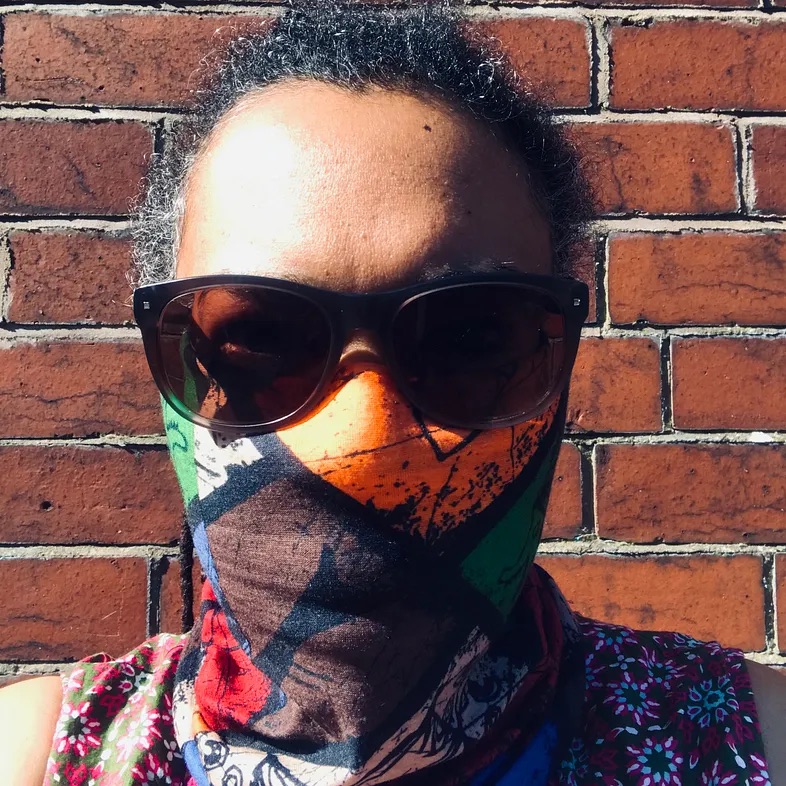
I think I’m smiling but how can they know? How can anyone tell if you’re smiling when you’re wearing face protection? By your eyes. I think by the eyes, you can tell if someone is smiling. It’s a warm, sunny day. I’m wearing sunglasses. Maybe they can’t see my eyes. They can only use my voice as means of communication.
Sorry, they say. We thought the queue was going the other way. They walk to join the queue behind us. I say, in a tone of voice which I think says I understand, No, the lady in front of us has just gone in and we’re waiting back here to giving everyone some space.
In the time it takes for the couple to walk and wait behind us, at the recommended 2 metres, the woman of the couple has already started saying in a loud enough voice for us to hear, Some people are just getting angry about the situation now, and there’s s no need for it. We walk into the shop.
Note: The angry Black woman stereotype portrays a black woman as sassy, ill-mannered, and ill-tempered by nature.
Walking back home, Ella walking with her bike, I approach what happened outside the shop, asking Ella if she heard what the woman said about people getting angry.
She was referring to me. I explained. She saw me as an angry Black woman. Do you think I was angry because you’ve seen me angry?
My daughter knows me. She knows I wasn’t angry and says so.
When you live in a society where you’re powerless, perceived as worthless and inferior, those who have power, believing themselves to be superior, spend their time telling others how they handle the situation isn’t right. They tell you that how you speak or act or response isn’t appropriate. You are wrong. They gaslight you, forcing you to doubt yourself; your actions and capabilities. You are at fault, always. You are wrong. You are silenced.
Back home, I talk to my husband, who’s a white man. I think if he’d been with us, the woman behind us, wouldn’t have uttered the angry line. He disagrees. She sounds like a woman who would have gotten annoyed if anyone had checked her behaviour, he said.
He has the right to think and say that. And maybe he’s right. Who knows? But to accept this explanation, I’d have to disallow what I feel about the situation. I’d have to make allowances once again for someone else’s behaviour, reaction and treatment of me. I’ve spent a lifetime of making allowances for other people’s treatment of me. How can I be sure that when they treat me unfairly, or discriminate against me that this isn’t how they treat everyone else? I don’t know. All I have is the way they make me feel. My lived experience as a Black woman.
All I know is that when I’m walking down the street and someone is coming towards me, it’s me who walks into the road to maintain social distancing. It’s me who walks into the gutter to keep us both safe. Would they do the same? I don’t know. I can’t take the risk to wait and find out either.
I’ve been socialised, fed the stereotype of the angry Black woman for so long, I police myself. I play my part. I don’t raise my voice. I don’t protest or question. It’s part of my make-up to check myself so I appear in society as passive and non-confrontational and unseen.
This piece was originally published on Medium with Binderful back in 2020. I’m sharing this piece here because I was reminded that it existed over there when I made some crackers and jam this morning. It was good to revisit it. I share it with you now.
During these quarantined times with Covid-19, I’m trying to find way to support my well-being. I’m making sure I take the time and space to tune into my needs and wants, beside those of my family. I’m finding joy and memories in my day when I make solitude. This happens, usually in the morning, when I make my breakfast. It’s nothing fancy either. Its crackers and jam and black decaf coffee. The plain taste of the hard crackers against the sweet soft stickiness of raspberry jam (no seeds) is divine. This is a little sweet treat and takes me back to two moments in time.
The first is childhood. Crackers and jam was weekend breakfast when I was a kid. Dad would bring it to our bedroom, my sister and me, and we were allowed to eat them in bed. Crackers and jam is a poor man’s breakfast. But when I ate them as a child, I felt rich. I felt like a princess. I felt loved. Especially because my dad made it. A harsh Trinidadian man who ruled us with beats but who I idolised and always wanted to love me more. These Saturday mornings, tucked up in bed, I felt cosy and safe. As children most of our days were spent inside, with our imaginations and Enid Blyton. And this felt good. Now with my daughter, there isn’t any Enid Blyton more like David Walliams, but there‘s a generous amount of storytelling as we stay safe indoors. Learning from my childhood, when I received anger and beats for questioning why, our kids have been brought up wonder out loud and to receive a reason or answer rather than that feeling of saying or doing something wrong.
The second memory around crackers and jam takes me back to my first artist residency in Iceland. This would be my second time back to the island but the first time remaining in place, the remote Westfjords, for two weeks. Surrounded by white upon white. With the cold biting at all exposed flesh, I searched for any familiar signs, in the landscape, because I felt lost and adrift. I didn’t know why or what I was doing miles away from home, alone, in residence pretending to be an artist. I remember making crackers and jam and coffee one morning, knee deep in my unhinged being and remembering who I was. Memories came back about being a little girl craving love and safety and comfort. And how even though, I’d a harsh upbringing, in some respects, I know discipline and perseverance and self-preservation were forged then.
I suppose this mirrors how I feel and be now, in these uncertain times, and how making crackers and jam satisfies these urges and needs and fuels my desire to survive and thrive.

 Living Wild Studios