Black Power – Revolutionary Art

I got out earlier than expected from my gig today. So I used the time to get to the library and pick up a book I’d spied

Black Panther: The Revolutionary Art of Emory Douglas.

I’ve seen the posters created by Emory Douglas as part of exhibitions such as in the Soul of the Nation: Art in the Age of Black Power (2017), but never before have I seen his extensive artwork all together.

This monograph edited and introduced by Sam Durant is a gem.

Along with my exploration of Paul Amos Kennedy Jr. last year (and continuing into this year too) and this dive into the artworks of Douglas gets me thinking that I might be feeling the need to create some social justice/ black power artworks myself.

Who knows. My interest has been caught and this book is feeding me with inspiration to the max.

Mary Ann Macham

Walking into North Shields the other day, walking towards the Fish Quay where there is now accessible access connecting the centre of town down to the River Tyne, I caught sight of this sculpture of Mary Ann Macham.

I first learned about Mary Ann in 2007, when I was researching the North-East’s involvement in the transatlantic slave trade to mark the bicentenary of its abolition.

I was writer in residence within the Literary and Philosophical society, researching their tracts and unearthing the names and lives of the once enslaved people who passed through and/or settled here.

I wrote a poem about Mary Ann, her escape and travel up to the North, and with the help of the Quakers, made a life for herself through working in service and getting married and living in North Shields. This was back in 1831 when she arrived here and lived for a further 60+ years as a free woman.

An aside here is how the Quakers at the forefront of the abolition movement here in the North- East, were against the slave trade and worked for the abolition but still held the racist beliefs of the day that white people were still superior to black people.

Mary Ann Macham told her story to a member of the Spence family, who she was in service to. There’s a lot that can be argued about the practice of black people, telling their stories to white people who wrote them down and how accurate these are as a true representation of their stories. But this is all we have now as ‘evidence’.

African Lives in Northern England completed research on Mary Ann Macham before this public statue and the local groups ‘found’ her.

I should be grateful and overjoyed that finally Mary Ann Macham is being remembered. That there is a public statue dedicated to her and that she is being reclaimed as part of the local community.

But something just doesn’t sit well with me. Maybe I’m being far too critical. Or maybe I’m just coming at it from a black woman’s point of view living within white supremacy culture?

The press releases for this unveiling of the statue in November 2025, proceed to paint the impression that Mary Ann Macham has just been discovered. That this was hidden history that the locals have just uncovered and became fascinated with and had to find out more about. But unknown to whom?

If they had done their research they would have seen and also acknowledged the work completed in the past to shine a light on Mary Ann. But the story goes that they have just discovered her story. Or decided to just focused on only part of her story/life? Mary Ann Macham ( later Blyth through marriage lived until she was 92 years old).

The local Sculptor Keith Barratt who created the piece has said to the local media that he wanted this sculpture to show that “she came from a place of great pain, but it’s also a story of human liberation, of breaking the chains and I feel that this is something universal that many people will understand”.

I suppose I have issue with how Mary Ann is framed within the story of her own life, which she doesn’t have control over maybe a bit then but definitely not now with how she is remembered.

I Love North Shields has more details about her life and attempts to create a bigger picture of her life before enslavement and after as a free woman living her life here in the north east. But frequently it has to be argued, the majority of time, Mary Ann is trapped within the ‘slave’ narrative perpetuated by white people. Although seeing her as ‘brave’ for plotting her escape, they still frame Mary Ann, tell her story within the role of once enslaved, and needing the help and support of kind Quakers. Sounds a lot like white saviorism. Then and now.

It’s almost like Mary Ann is stuck, encased in bronze, and barefoot to symbolise the condition of slavery. Enslavement she escaped from physically during her life, but trapped forever within this role in memorial because the white imagination cannot see/ grant Mary Ann her full humanity . The fullness of her life.

Time and time again, the mainstream constructs the stories they want to shed a light on and tell about people of the global majority which suits the narratives they’ve been running for centuries. The narratives where we don’t have agency or self-definition but are the objects, less than and victims. This is a means of control and domination.

This is why it’s important that we take every opportunity to tell our own stories. To control our own narratives. To leave these as archives for the people that come after we so they can be in no doubt that we lived big, beautiful, full lives on our own terms.

And is it me, or does the statue of Mary Ann Macham make her look like she’s white?

At last, let’s explore time

When a planned work gig falls through, time can take on a precious meaning.

Instead of attempting to fill time with all the things I ‘should’ do, I’m choosing to rest and finally bury my nose in a book I’ve been itching to read all last year. But some how shit got in the way.

You know the feeling when you find a book that is probably going to speak to your soul and underline all the arguments you’ve been putting forward in the last couple of years but you procrastinate in the reading of it.

For me maybe there’s been a fear factor. That I’ll have more evidence and weapons to add to my arsenal that makes me even more ‘other’, on the edges outside the mainstreams.

And just sometimes occupying this space and moving against the grain is tiring.

It’s like when your eyes have been opened, once you’ve seen it, once you’ve seen those zeroes and ones of the system behind the surface fake-arse narrative, you can’t unsee it and you can’t continue to move and act in ways that support and perpetuate the systems of oppression and hierarchy.

Yes that kind of reading and knowledge. That kind of book. Well that’s what I feel Dismantling The Master’s Clock: on race, space and time by Rasheedah Phillips will do to/for me.

I’ll let you know how I get on!

Mood

Walking into North Shields to attend a useless ‘interview’, I gave thanks for the light after days of grey rain.

Walking and listening to music,and this song comes on and acts as a reminder.

I’ve been forgetting myself, forgetting who I come from.

What would my life feel like if I prioritised my creativity, always. That the risk taking I’m exploring in my creative sketchbook spread into my reality, my day to day life? What would my life feel like then?

I was thinking today …

Past Visual Journal Spread

While completing my visual journaling this morning, at my old wooden table moved in front of my bedroom bay window looking out onto my rainy, foggy street, I had the thought that I’ve lived most of my life already.

This year I’ll turn 55 in October and it just struck me how the majority of my life/ living is behind me.

Then it got me thinking about how many years do I have left. I played with the idea of thinking, what if I’m just reaching the mid-point of my life? What if I have another 55 years of living ahead of me?

How would I feel about that? What would I need to do now to make that happen? Do I want to live to 110 years?

It has been done. It can be done even though those ‘blue zones’ where the majority ofcentenarians live are shrinking.

I feel I’d have to change a few habits first to give it a good shot at living until 110.

I know I could have been looking after my body better up until this point. But it’s never too late right, to start using food as medicine and to stop punishing my body for being black fat and ageing.

There’s still time right? There’s still a lot of twists and turns and bumps in this road left of this journey, right?

I’m not sure as nothings certain. But what if …

a morning well spent

Visual journaling in community is always time well spent.

Even if it’s their first rodeo, to witness the freedom, the mess, the expansion as paint meets paper meets card. Bliss. Magic. A gift.

Walking out with their own visual journals clutched close to their chests, promising to carry on the practice themselves, now they’ve got the power within their hands, hearts and soul.

A job well done any time the visual journaling practice is passed on.

I do believe it makes us better human beings. Better to each other and ourselves. Softer, caring and well-nourished.

Healing.

we warned you

we have always been experimented on

they experimented on us

and then rolled it out to everyone

we warned you

but you didn’t listen

we were just the beginning

the prototype

they perfected their violence on us

and now it’s reaching everyone

no escaping now

there’s nothing more dangerous and hideous than whiteness

A archive of dreams

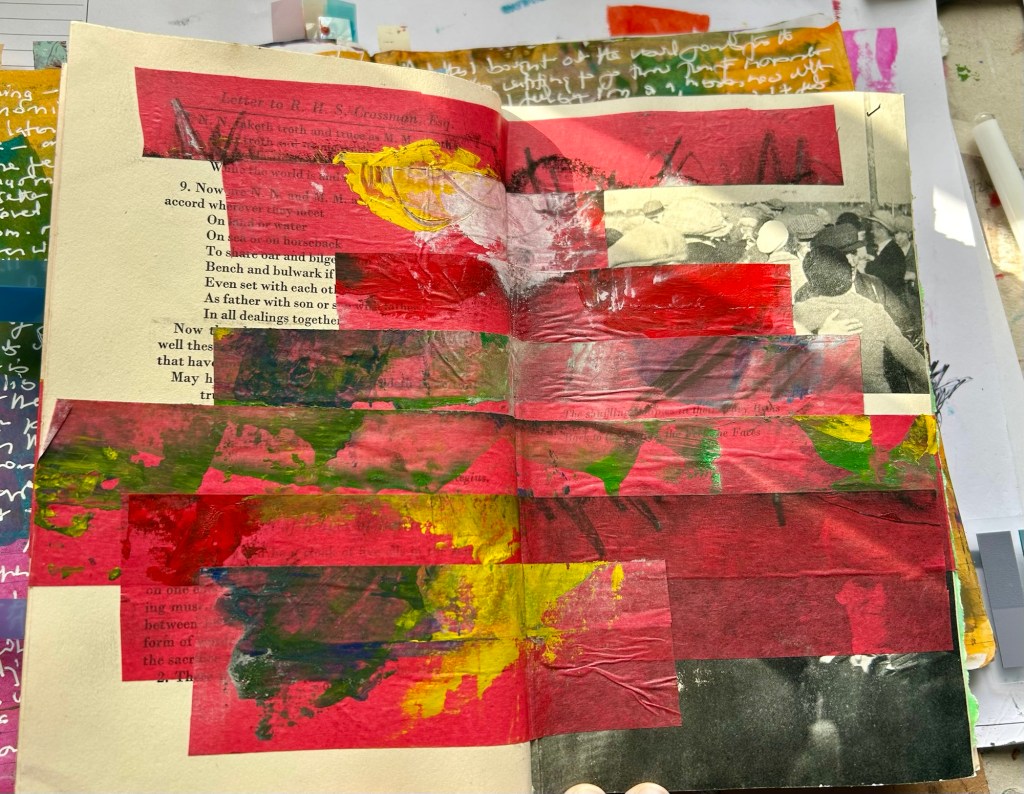
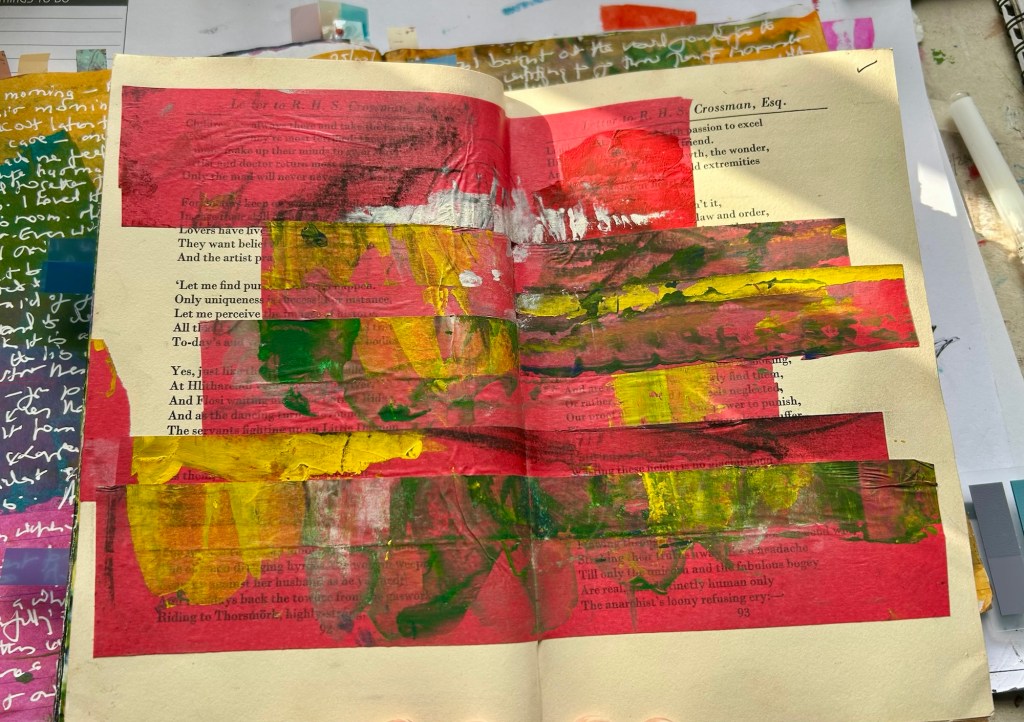
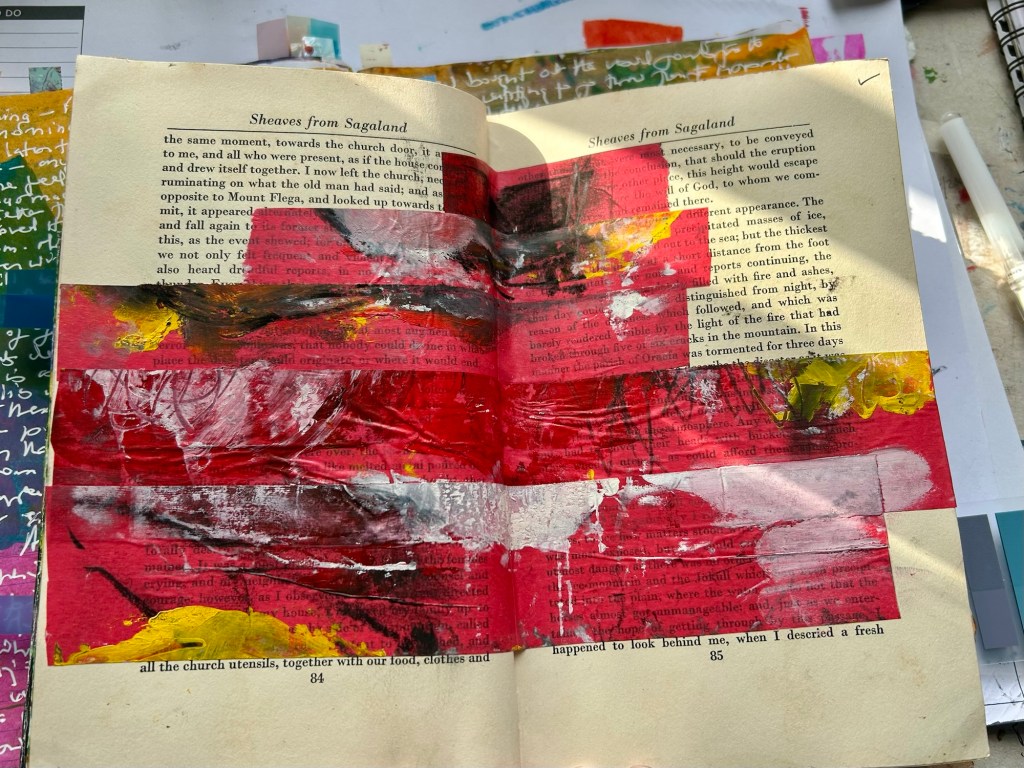
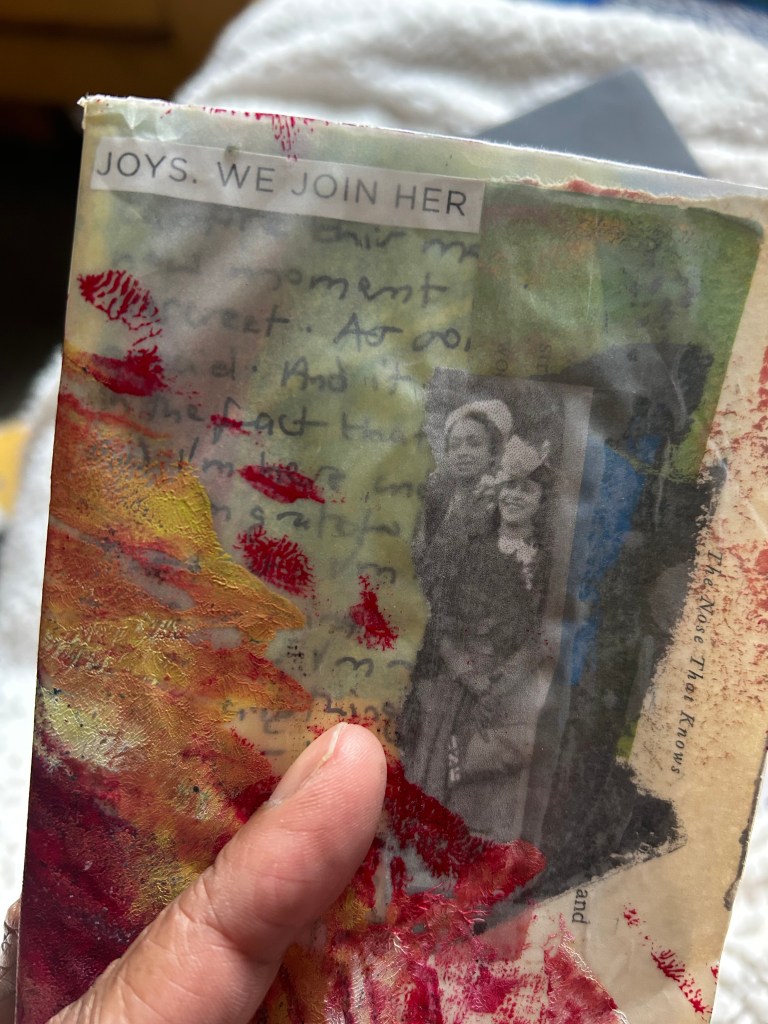
In preparation for a visual journaling workshop over the weekend, I’ve been going through past journal spreads.

I started visual journaling in August 2015. This image above is from a journal I created later that year. Back then visual journaling was a life line. It provided me with a path out of rock bottom and all it was, was dreaming on paper. Creating a safe space where I wouldn’t be judged or dismissed but where I was held.

Since this time, my visual journaling has morphed and changed. It’s needed to because my life and circumstances have changed so much since then. The world has also.

But the main premise remains – it’s a simple but powerful tool of connection with myself. It supports me in turning up in this world in all my fullness.

Wanted or not, I’m here and this practice keeps me present. Makes me present. Makes me pay attention and breathe.