Let us linger here in this room with the curtains closed with our other lives forgotten for a little while longer.
Let us not use words when our hands, lips and tongues can communicate our needs, our wants.
Let our breath be silken on our skin, let our bodies entwine still able to promise bloom and ripple.
Let us slow it all the way down, slowly, slow, so we can feel each stroke, each gliding smooth folding into each other.
Let us hear each others moans of joy, of wonder as our bodies wander together away from this room, this bed into our happy place where we can ride out the rest of our time here on earth.
Let us dream this lushness as we reach for each other, conjuring connection beyond the here and now, in the here and now.
Let us linger in the lingering light and just enjoy this afterglow, this pleasured pain like passing ships never to traverse these same desire lines ever again.
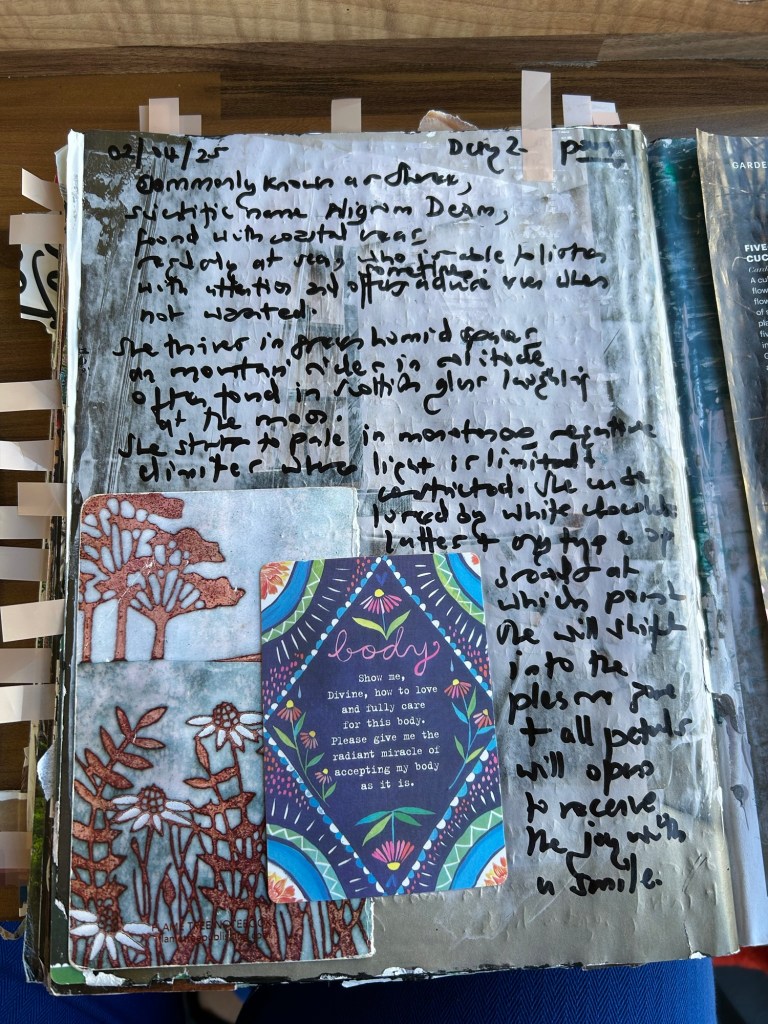
Commonly known as Sheree, with the scientific name being Nigtum Deam, found mostly within coastal areas, regularly at sea.
She is able to listen with attention and sometimes offers unwarranted advise. Her heart is in the right place.
She thrives in green humid spaces, on mountain sides in solitude, often retreating to Scottish glens to laugh at the moon.
She starts to pale and fade in monotonous, negative climates where light is limited and restricted.
She can be lured by white chocolate lattes and any variety of breads. At which point, she will shift into the pleasure zone, all petals opening to receive joys with a smile.
after Adam Zagajewski, translated by Clare Cavanagh
Try to praise this chaotic world, as the first of April dawns fresh, with welcome light, and slight breeze of delight. The blossom is waiting to bloom as the fruit trees inch towards the sky. You must praise this chaotic world. You must keep hope when things go awry while those few, usually white and male, act like stewards for all humankind, communities they have very little contact with let alone care about. You should praise the chaotic world. Remember you are not alone, within you are generations of people who have been here before. Who did not moan or falter but protested. They survived so we could thrive in companionship with the trees, seas, hummingbirds and ferns. Praise the chaotic world and the chance to emerge as Spring light has returned after when we think that all was lost.
It really wasn’t on my radar. But I must have signed up for a co-writing salon with Lemon Grove Writers. And you know how it is, afterwards they send you they send you other emails, sharing the stuff to buy into. Well one such email was sharing that the Lemon Grove Writerswere offering a free 30 day poetry prompt email send out for the month of April to coincide with National Poetry Month in the States. As you know I’ve tried a number of years to write a poem a day in April, some years more successful than others.
It’s free, what did I have to lose? So expect to find a poem a day here for the month of April as I try to create something to the given prompt. I begin today with the weather. If you want to receive these poetry prompts in your inbox, just sign up here. Happy writing.
From about mid November 2024, I took myself off on a self-directed hibernation. I might have had to do some work in a school in December but mostly from then until today, the end of March, I’ve been resting. I withdrew from the world of responsibilities and work to take some much needed alone time. I went within, into the darkness and stillness. And now as I attempt to resurface and re-engage with the world, with great difficulty I may add, I’m taking this time to reflect on this practice and process of disappearing from the world for months on end.
Firstly, I think everyone should do it. And I don’t like using ‘should’ but here I’m going to make an exception. I know it’s a privilege to take time out of work and from seeking money for a certain period of time, and I recognise that, but wouldn’t it be a better world for everyone and even living thing, if we all could hit that stop button and rest?
For me through this retreat practice, everything is put into perspective. I give myself the time and space to reflect and process all the shit thats happening in this world. And I may not come back with the solutions but I do come back with an expanded capacity for joy and grace instead of just the feelings of overwhelm and defeat.
My time away has been good for the soul because I’ve been able to remember and reclaim my body-soul-spirit connection. I’ve been able to reclaim my connection to self, nature and other people. I’m been able to come home to myself and work out, gently, what is important to myself. What are my values and morals and am I living my life by them. If not then let’s recalibrate and get back on track. And I don’t mean the capitalist make as much money and the least connection and impact kind of track. I mean the track of being the best version of myself so I can show up for others in my family and community as the best version of myself for them.
I’ve taken this time away for me but at the same time, I hope as a role model. As an example to follow. Yes money is always going to be an issue. There is always not going to be enough to go around and to do the things I want to do or live the life I want to live. But at the same time, I can live more frugal. I can spend my money on experiences rather than on material stuff. And I can take the risk and say I’m not going to work or actively seek work for a few months while I rest, while I work on myself, while I {BE}.
Of course, my bank balance is screaming at the lack of money therein. Credit owed might be rising. And I could slip into panic mode and think I’ve got to get work, quick and fill the pot back up. But if I slipped right back into this panic mode and ran around like a chicken with no head, what would have been the point of the rest and withdrawal? All that calm and serenity and centred-ness that I’ve created over the last few months would have been for nothing. Gone in the blink of an eye, just like this time away seems to have passed.
This practice of rest and slowness, is part of my practice forever! There’s no switch that I switch back on to go back into work mode. I’m not a machine or a robot. I’m a living, breathing, feeling human being, even though there are some who have made me believe otherwise. I want and need to make sure that my life reflects my priorities and values and not just plays into the system which has never got my back.
As I’ve mentioned before, I writing about fugitivity. And for me part of using fugitivity as a method or practice, is me to take my body out of the systems of production and run. Run away from the rat race, run away from extraction and exploration and stop. Or linger in the time and space of rest and nothingness. Breathe deep and allow my body to come back to life. Allow my joyathon-o-meter to rise by feeding my soul with beauty which is there to see in the every day if only we allow ourselves that time and space to {BE}.
I haven’t just been sitting on my arse and doing nothing during this hibernation, even though a lot of the time was spent on doing nothing, allowing myself to get bored and seeing how it feels and what comes up and seeing what are my go tos to stop feeling all the feels. This has been a period of getting to know myself again, which is difficult if you’re bouncing from one job to another, one project to another, where the aims and intentions are not in my control or even anything I’ve agreed to.
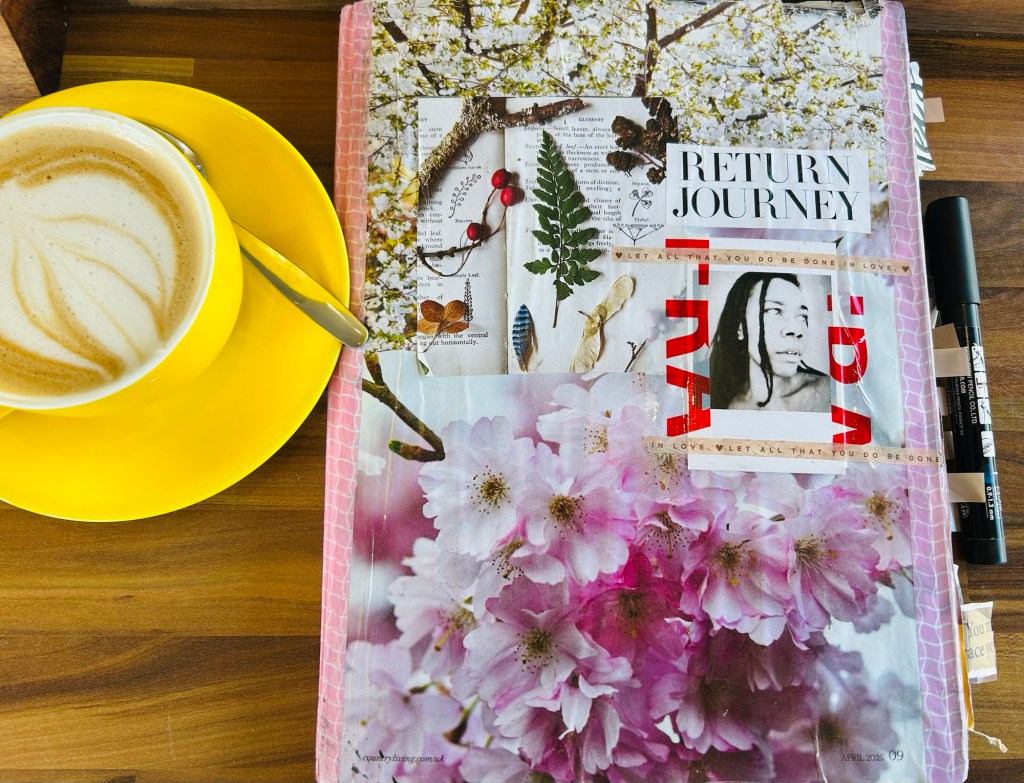
So yes day dreaming did enter the hibernation period. What also featured was reading and writing and walking. And sea swims and travel and alone time with nature. Home cooking, time with family and friends. Music and dancing and artwork and journalling. A lot of visual journalling. Nothing earth shattering but enough. Enough to make me realise that I’ve been running on empty, exhausted really and how harm was caused towards me and how I needed to heal.
Yes if anything, this time has been a time of healing. And this is an on-going process but I feel better equipped now to continue the healing journey.
So April is around the corner and I’ve really not got a lot of work on still. As I made the decision not to actively seek work while in hibernation also. Why take the time away from work commitments and then spend that time searching for work, applying here there and everywhere and getting stressed about finding work for my return? What nonsense is that.
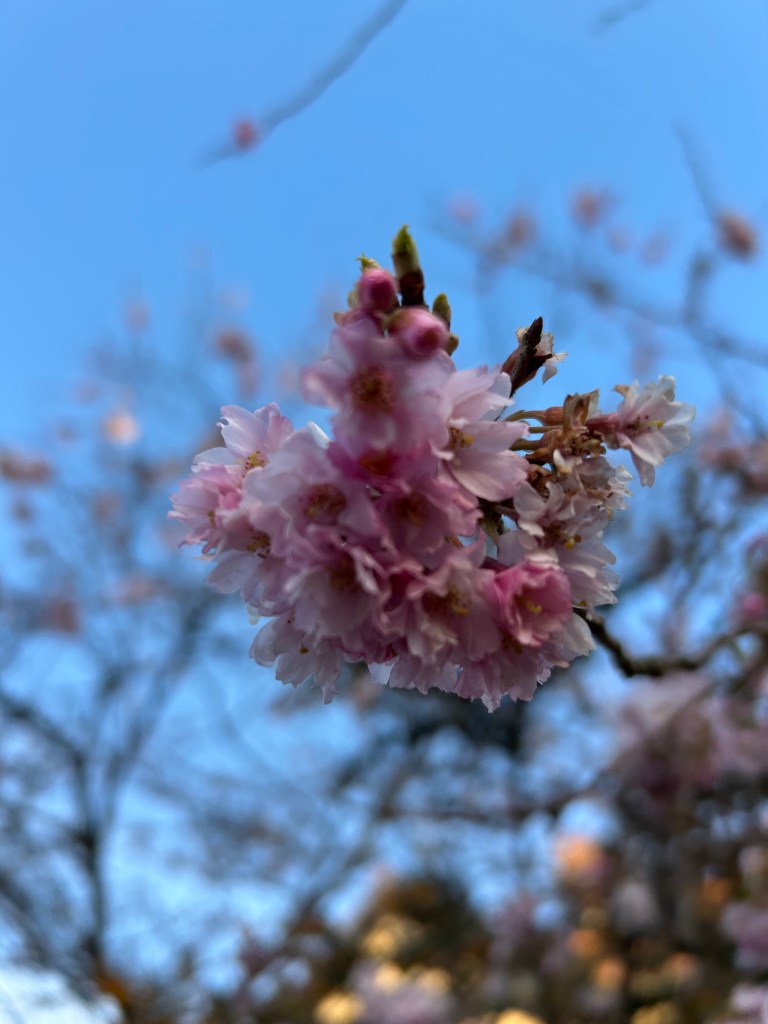
So yes I might officially end my hibernation today, but I know I still have time for me as the work commitments are few and far between. But not stressing about the things I can’t control but will focus on the things I can control. I might start to gear up to putting our feelers for work but not full throttle. Not nice, don’t like. Again, I’m not going to waste this time away on moving out of zero effort into the max. I’m slowly easing out of my bear cave. I’m stretching slowly, reaching for the sky. Scratching my back against a tree trunk, and then I seat back down and admire the cherry blossom coming into bloom. I’m taking the time to thank Mother Earth for being with me and allowing me to rest and to resurface when I’m good and ready. I’m grateful for this time away. And I’m grateful to be able to return in my full glory as me.
I’m practicing how to show up in spaces, alone and with others, in fullness.
I’ve used wholeness before. Striving to get back to that sense of being whole, as we enter as already into this world. And then for the rest of our lives society and culture pull us away from our wholeness. When we realise, usually when much older and not giving a fuck, we spend our time and energy attempting to get back to that wholeness. This is a practice too, but to be whole sounds final and also out of reach.
Fullness. While fullness seems something that can be embraced now. In the present, moment to moment. Fullness for me gives the middle finger to those who have criticised me by saying I’m too much. Too Black. Too fat. Too loud. Too enthusiastic. Too Alive. Too much.
Fullness is me embracing my too-muchness and giving off that ‘don’t care less’ energy.
 Living Wild Studios